Apidura Expedition: Half the Hardware. All the Hold.


The fall colours were stunning, and yellow and orange leaves obscured the trail as I left the gravel into the double track trail network along the Puntledge River. I wasn’t really going anywhere; I was on a mission to get images of the Apidura Expedition Bikepacking Packs I'd been testing all summer. I opted for a backyard loop, from Cumberland, across the river trails, Wildwood, up Dove Creek and home along Duncan Bay Main. It’s the perfect combination of gravel, trails, and just enough pavement to keep the average speed up.
It was almost 20 degrees and sunny, as it had been all week. A month ago, when I was in Canmore, Alberta, I’d been forced to cancel an overnight trip because of an early snowfall. Now, a month later, it was warm enough I could have been convinced it was summer if autumn leaves weren’t covering the trail.
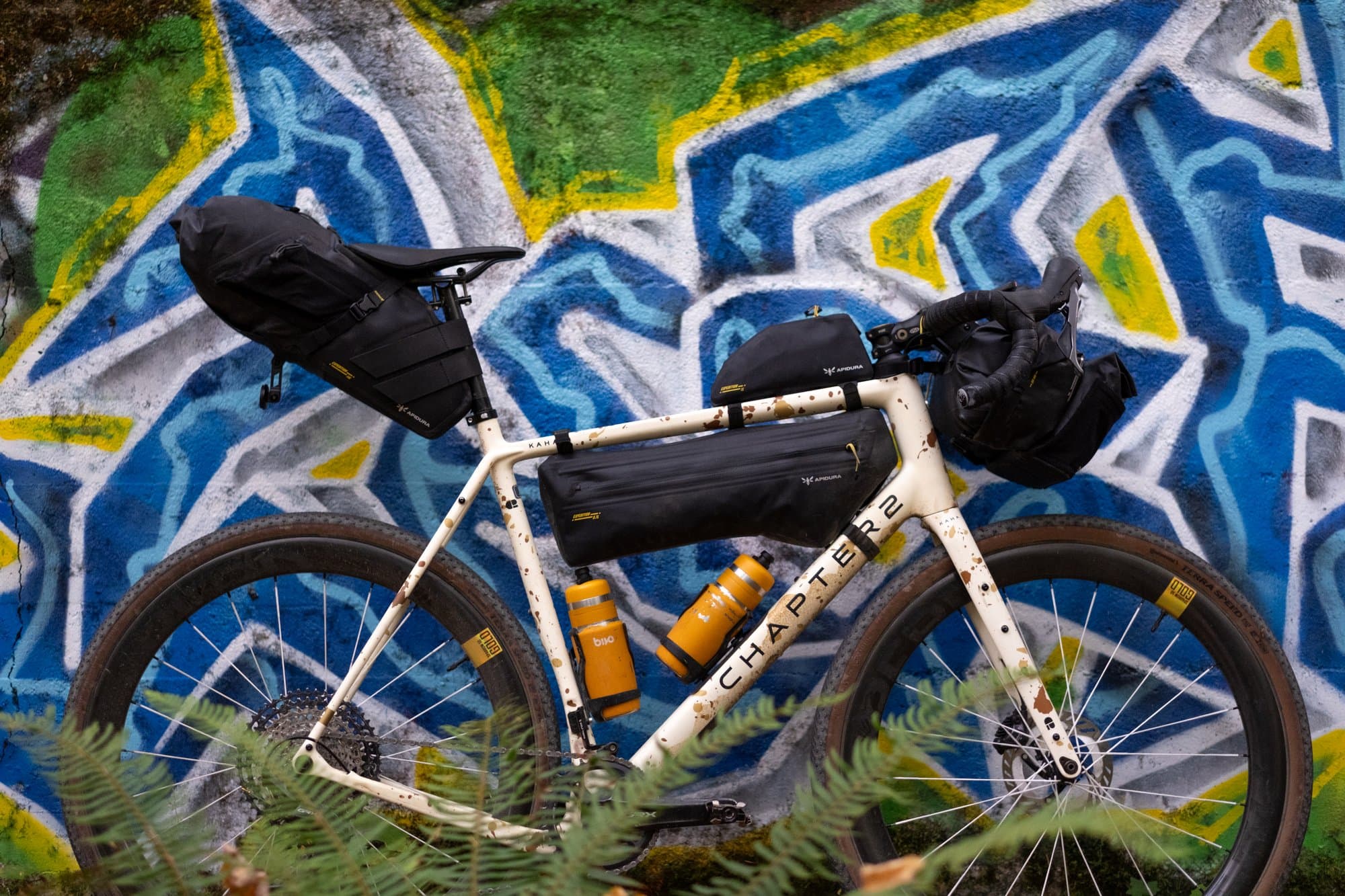
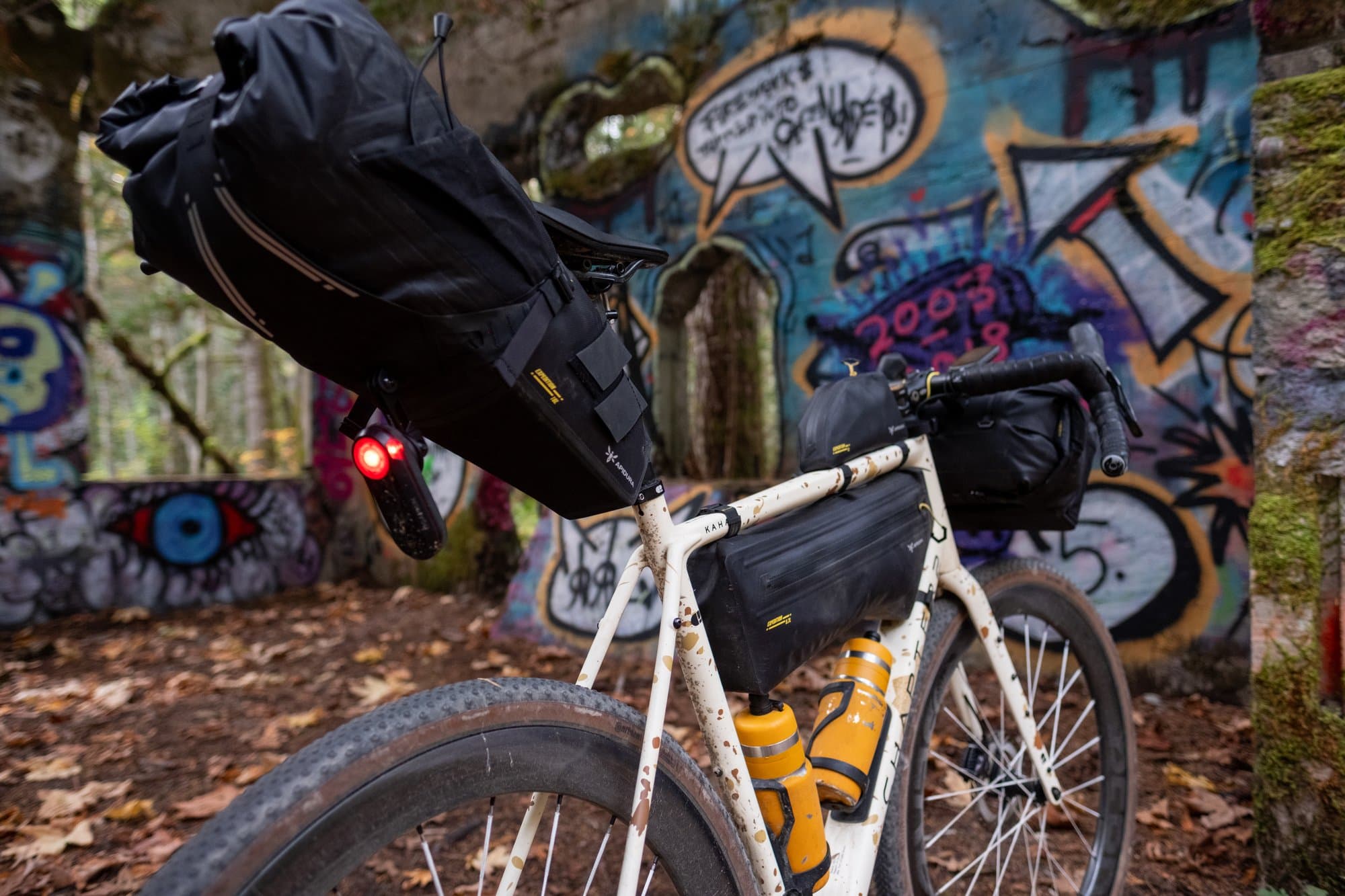
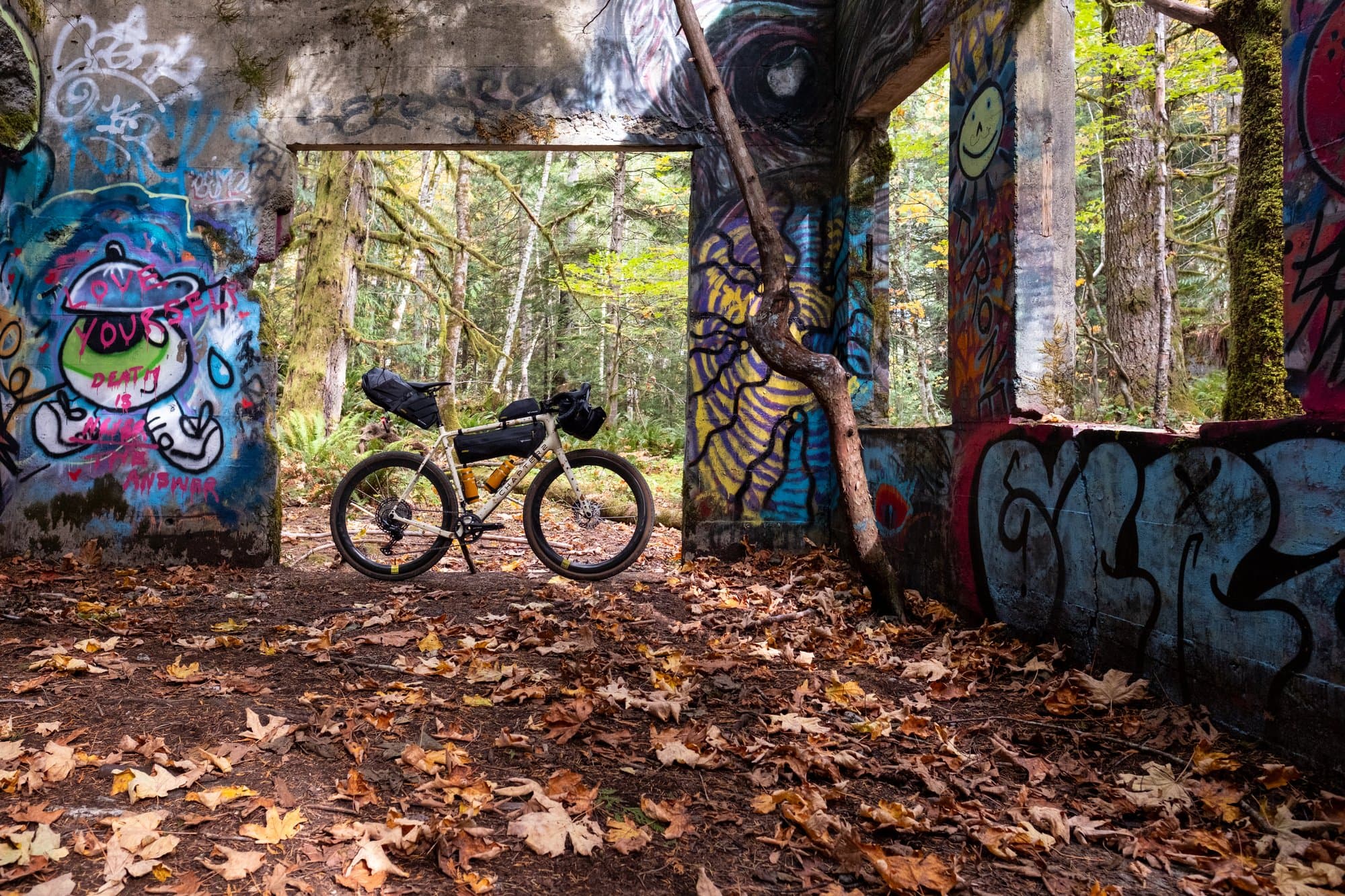
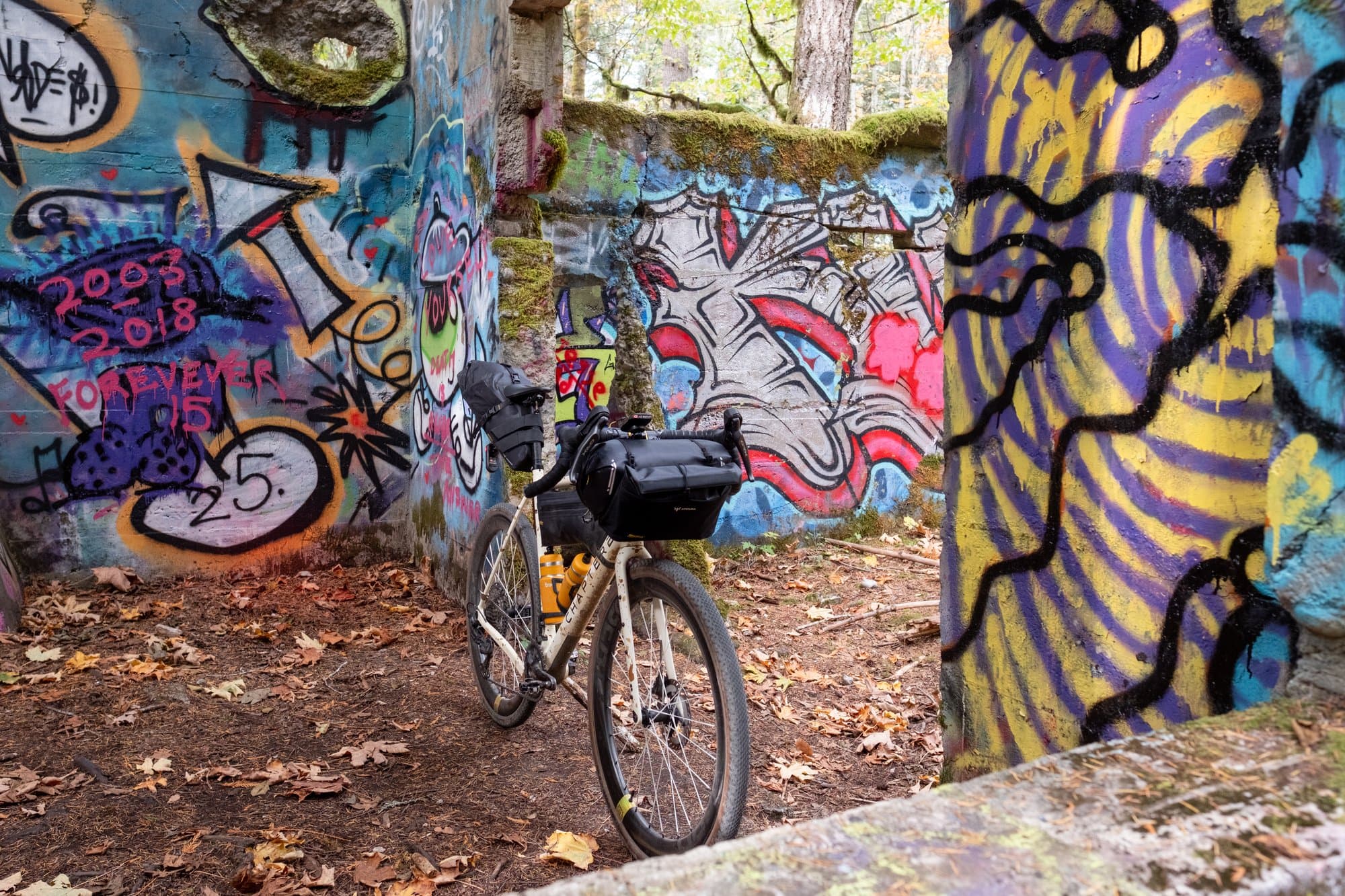
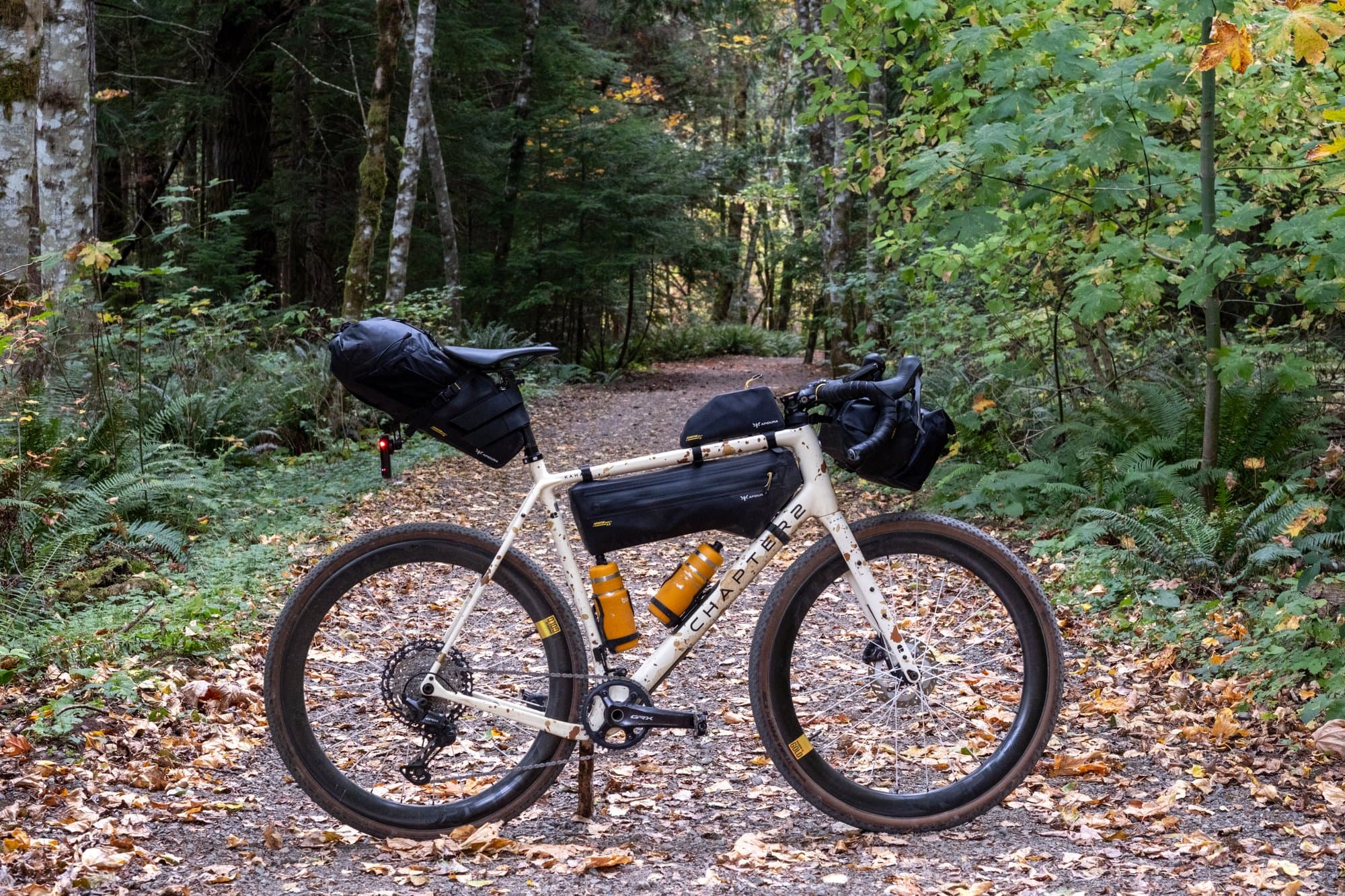
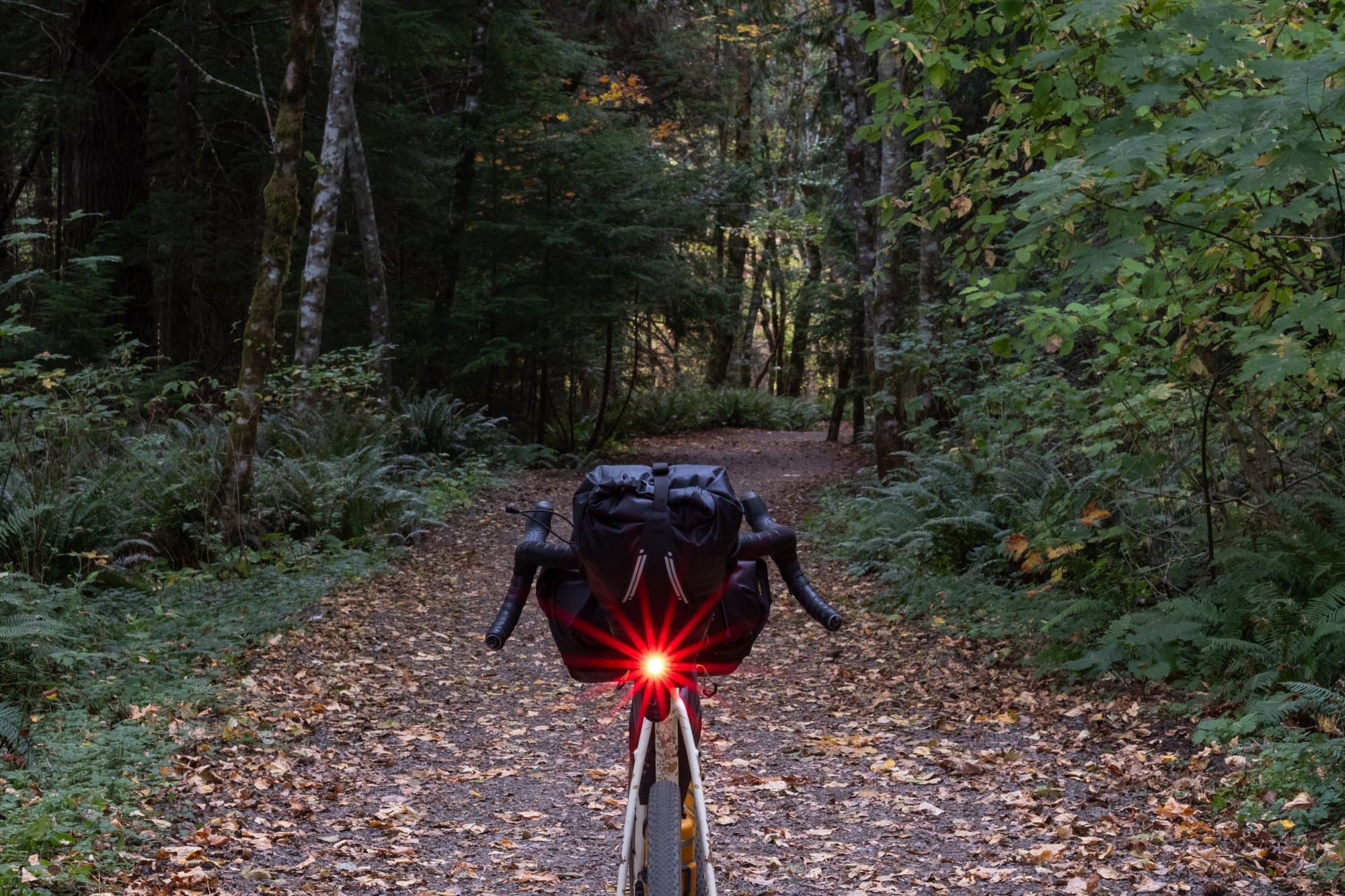
But on this October day, long after I’d put the bags through a summer of testing, I couldn’t help but be impressed. Everything felt perfect. The handlebar bag carried my sleep kit, minus the tent that was stashed in the 16L Saddle Pack alongside a set of camp clothes and enough layers to keep me warm if the weather changed. The frame bag was stuffed with food and rain gear, and the top tube carried enough gels for a marathon XC race. I was packed for an overnighter, too, so I was tempted to just keep heading north and chance that the weather would hold a few more days.
This was not a ride I expected when Apidura sent their latest Expedition Bikepacking kit my way earlier this summer to test on Vancouver Island. I thought I’d use the bags once or twice and then knock out a review. It turns out running an event-based coffee trailer, working a part-time marketing job, and editing Bike Gear Database leads to a constantly evolving schedule. I cancelled more bikepacking plans than I completed.
Before this summer, I’d used Tailfin kit on every bikepacking trip I’d taken on my Chapter 2 Kaha gravel bike. It had held up around Belgium, across Patagonia, and through Spain. For the past few months, my bike had only seen Apidura, giving another UK-based giant a turn in the ring.
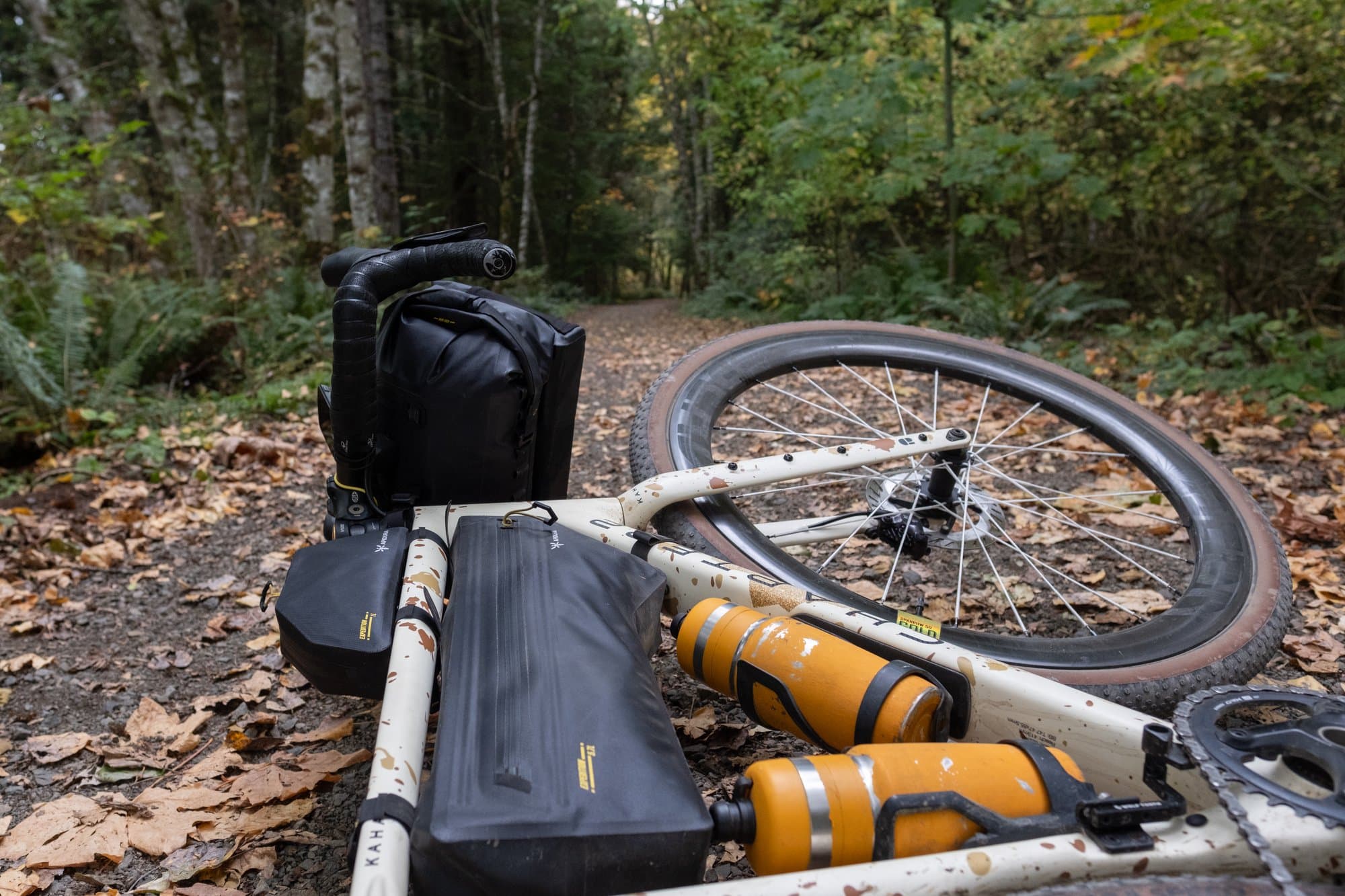
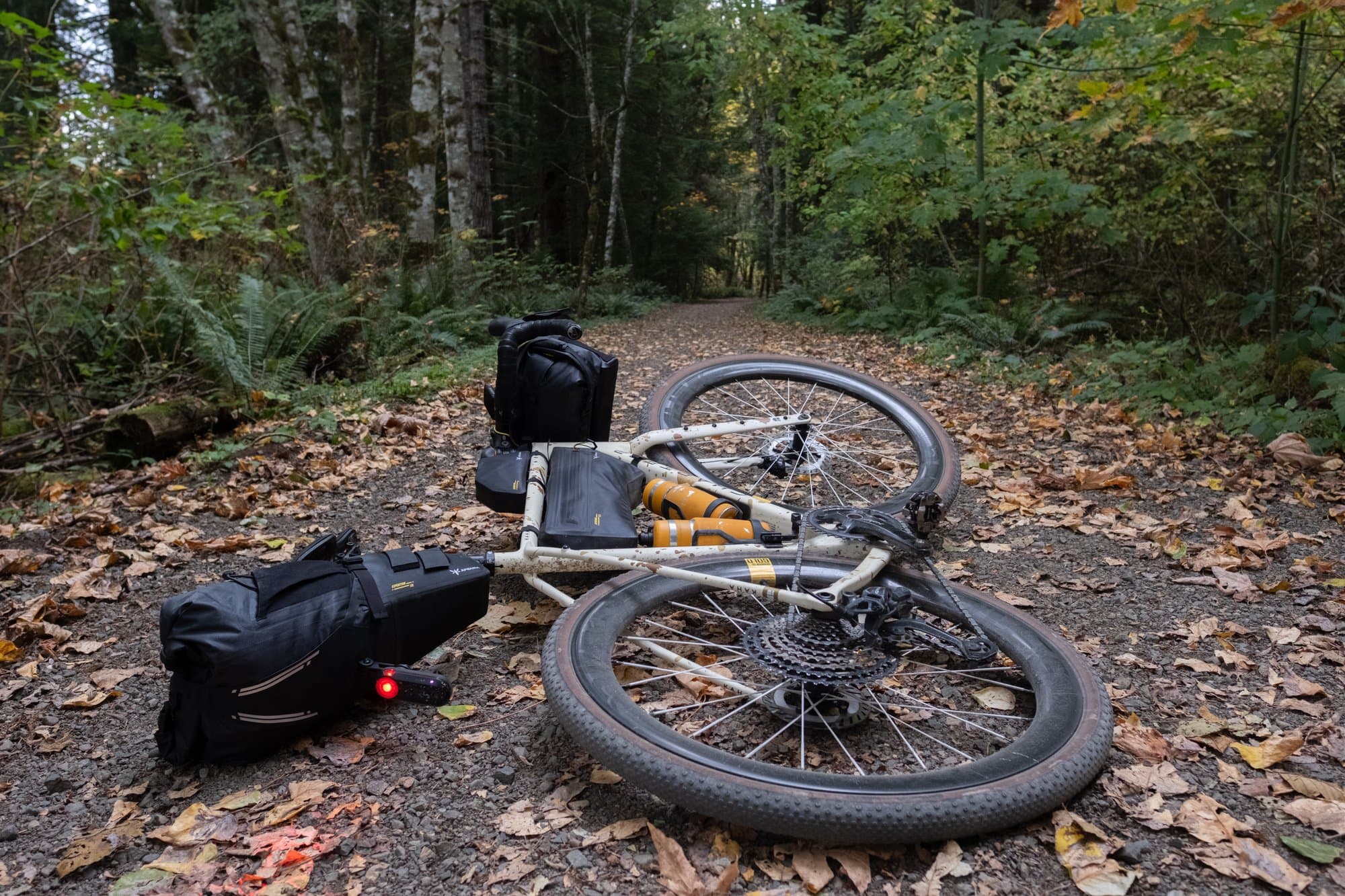
Where They’ve Been
In a normal year, my riding is split between my gravel bike and mountain bike. This year, I’ve mostly stayed on my gravel bike since an early-season trip to Chile and Argentina in February. We dubbed that ride the Volcanoes and Monkey Puzzles, because it strung together sections of the Patagonia Beer Trail, the Dirt Touring Araucania, and a seldom-ridden border crossing first published by Mark Watson at High Lux Photo.
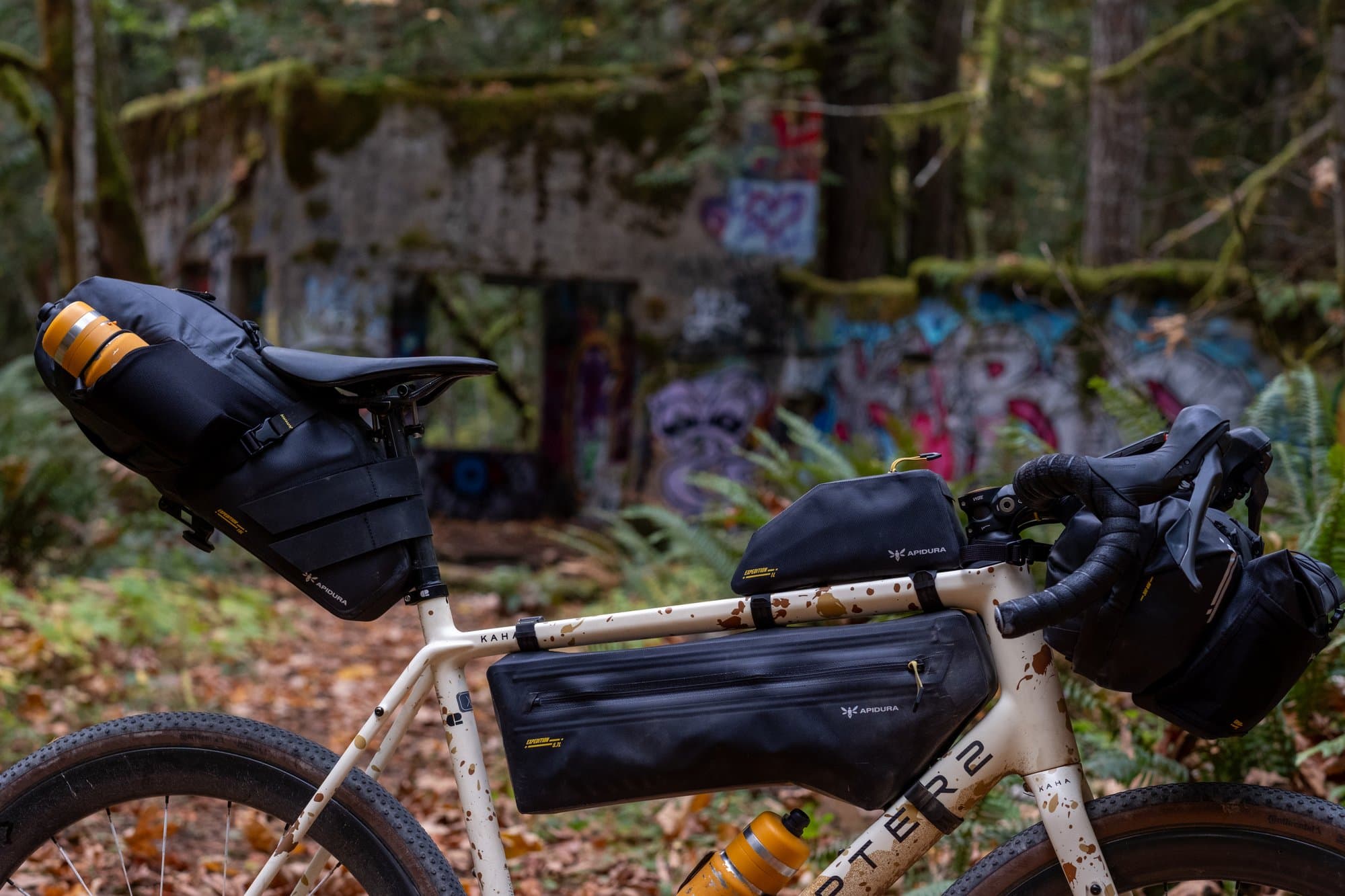
The bike build is straightforward. It’s a size XL (61cm) Chapter 2 Kaha gravel bike running 45mm tires on Berd Sparrow 50 Gold wheels. I run a narrow 420mm Use Component handlebar and a rigid seatpost.
Since the Apidura kit arrived at my house, the 5.7L Expedition Frame Pack and 1L Expedition Top Tube Pack have lived on the bike. They both have 1,000+ km of use and they’ve been out in every weather condition, except the snow that made me bail.
I’ve used the 16L Expedition Saddle Pack both on longer day rides when I needed to carry extra layers and on a couple overnight trips around Vancouver Island. If you've ridden here, you'll know those trips often turn into sparring matches with the gate closures that make legal access such a pain on the Island. The 14L Expedition Handlebar Pack and its 3.5L Front Accessory Pack have seen the least use, just two or three rides, split between the Kaha and my mountain bike. It’s for good reason. We’ll get to that later, but it’s been on the bike enough to score it against the competition.
Tale of the Tape
For years, Tailfin has been my default. I’ve been fortunate to test plenty of it, including the carbon AeroPack Cargo (now the CargoPack). I’ve never had a reason to question their gear. It is built to withstand any weather and road condition. Even though they introduced colours this year, I’m a fan of their simple, sleek, black. I want my bike to stand out, not my bikepacking bags.
When the chance to review Apidura came up, I checked out their catalogue. The sleek, uniform style I like was there with mostly black bags and just a hint of yellow highlights. In many ways, the kit reminded me of my original Porcelain Rocket bikepacking setup that introduced me to the sport. Rather than axle mount racks and handlebar brackets, they kept things simple with straps and cords.
Apidura is based in the UK and a certified B Corp. They run Revive, a program that sells their sample and test packs, cleaned and repaired, rather than letting them go to waste. They back their Expedition line with a three-year producer guarantee.
Their listed weights earned them a spot on my bike. A rack is never light, and neither is the pucker-inducing speed wobble that can be an issue on lighter gravel bikes running one. Almost every upgrade I do to my bike lowers its overall weight, and this was a chance for my bikepacking kit to do the same.
| Pack | Apidura | Tailfin |
|---|---|---|
| Top tube | 112 g | 180 g |
| Frame | 282 g | 382 g |
| Seat | 462 g | 922 g, carbon CargoPack |
| Bar | 448 g | 817 g with mount |
| Accessory pack | 233 g | n/a |
| Total | 1,537 g with pack | 2,301 g |
The Daily Drivers
Since swapping from a full frame bag to a half frame bag, I've had one mounted on my bike. In my mind, it's the perfect setup. Two bottle cages below, and enough storage capacity to carry food and layers to survive most day rides. I also always have a top tube bag, where I stash gummies, gels, and sunscreen. It's my favourite setup and it's almost always on my bike.
Choosing the right size frame bag was easy. The website has an interactive sizing tool that lets you toggle through their various frame bag sizes to find the perfect fit. Although it wasn't a surprise, it was good to see that my XL gravel bike fit their largest 5.7L Expedition Frame Pack ($238 CAD) with ease.
I opted for the 1L Expedition Top Tube Pack ($97 CAD) version that straps on rather than bolts. This was because the two bags are designed to work together. The two straps for the top tube bag pull double duty, replacing the two front straps on the frame bag.
Once mounted on the bike, the bags looked the part. Comparing them to my usual Tailfin setup, I'd given up 0.9L capacity between the two bags and saved 170g total.
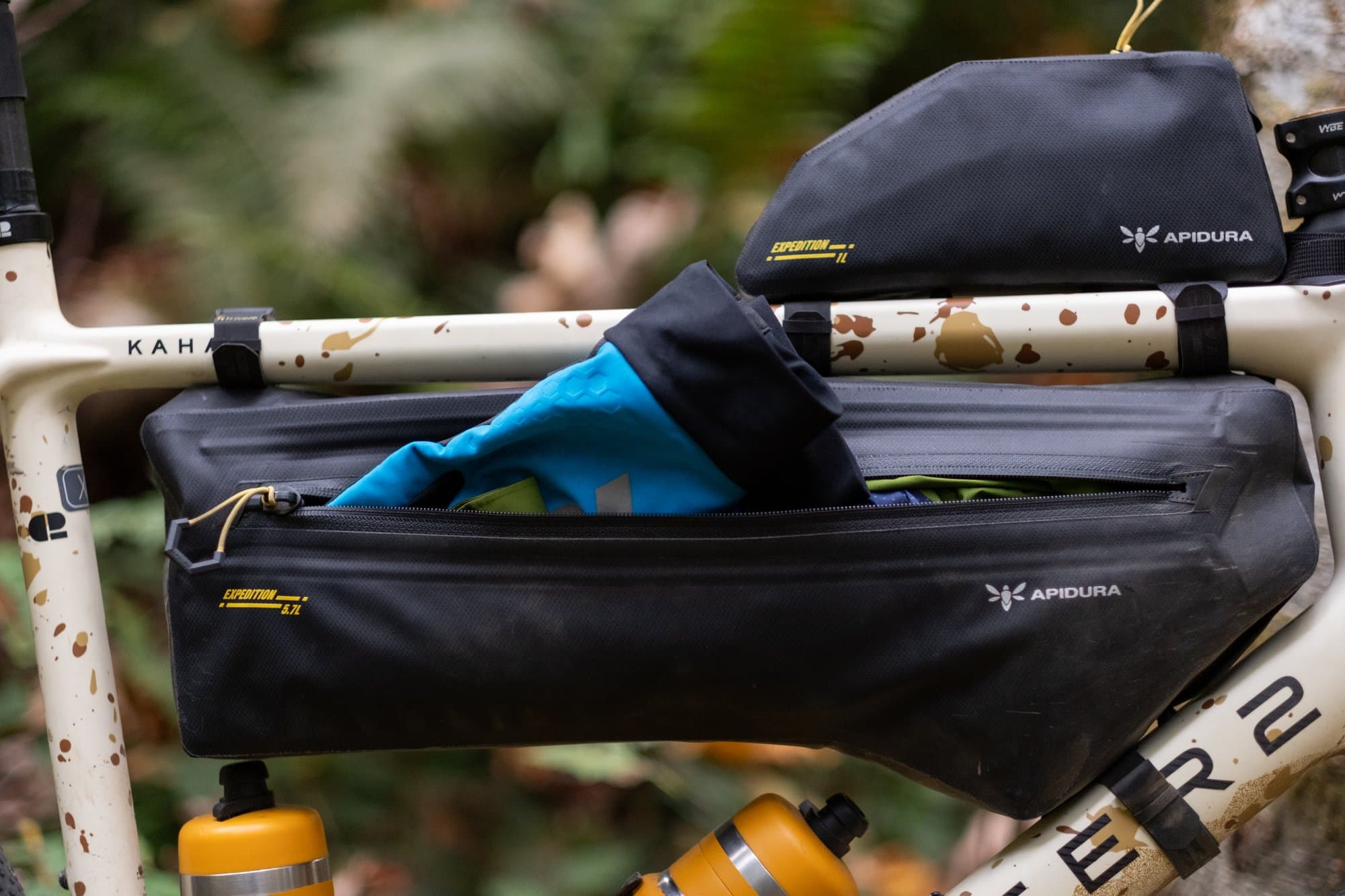
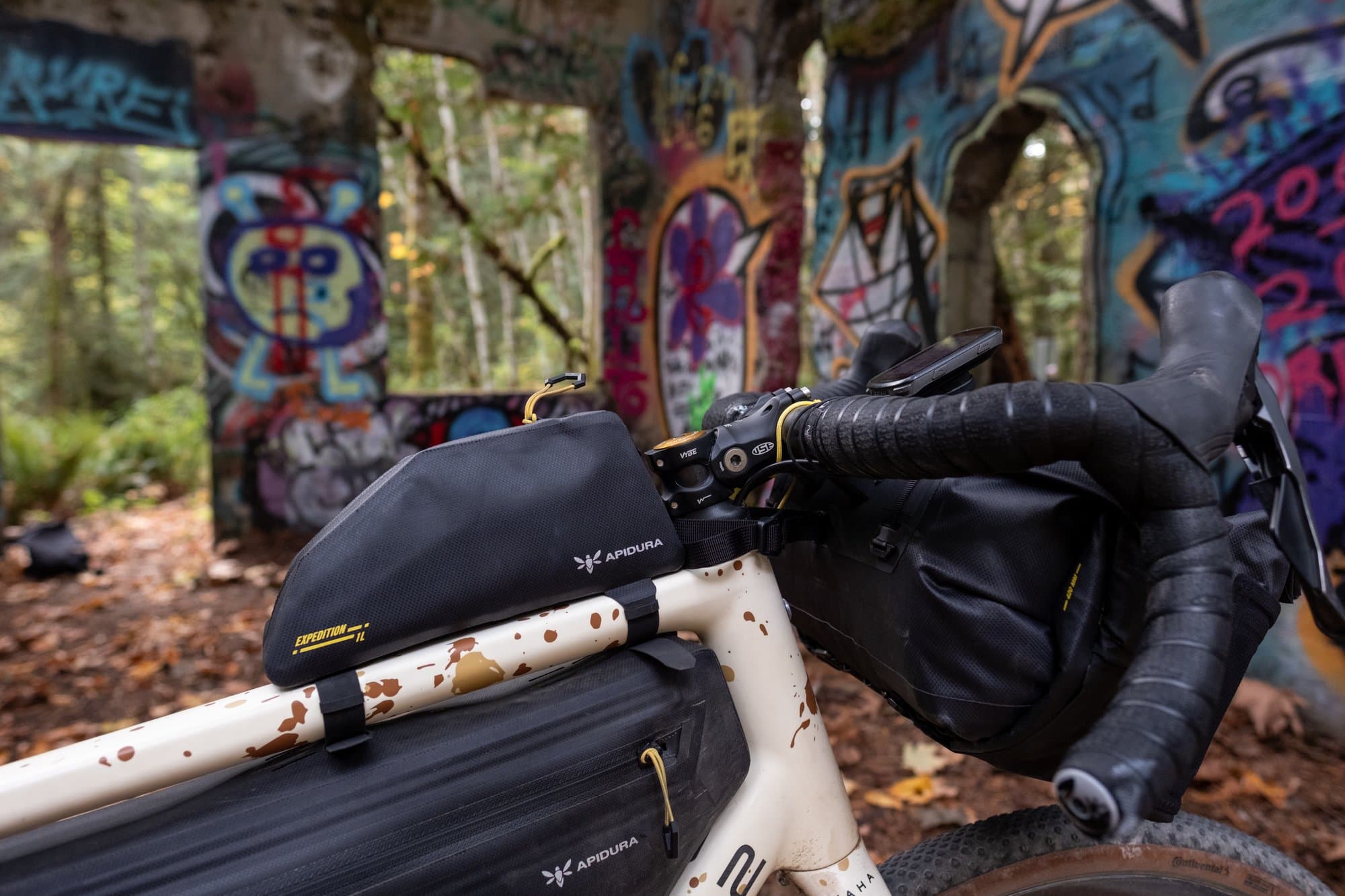
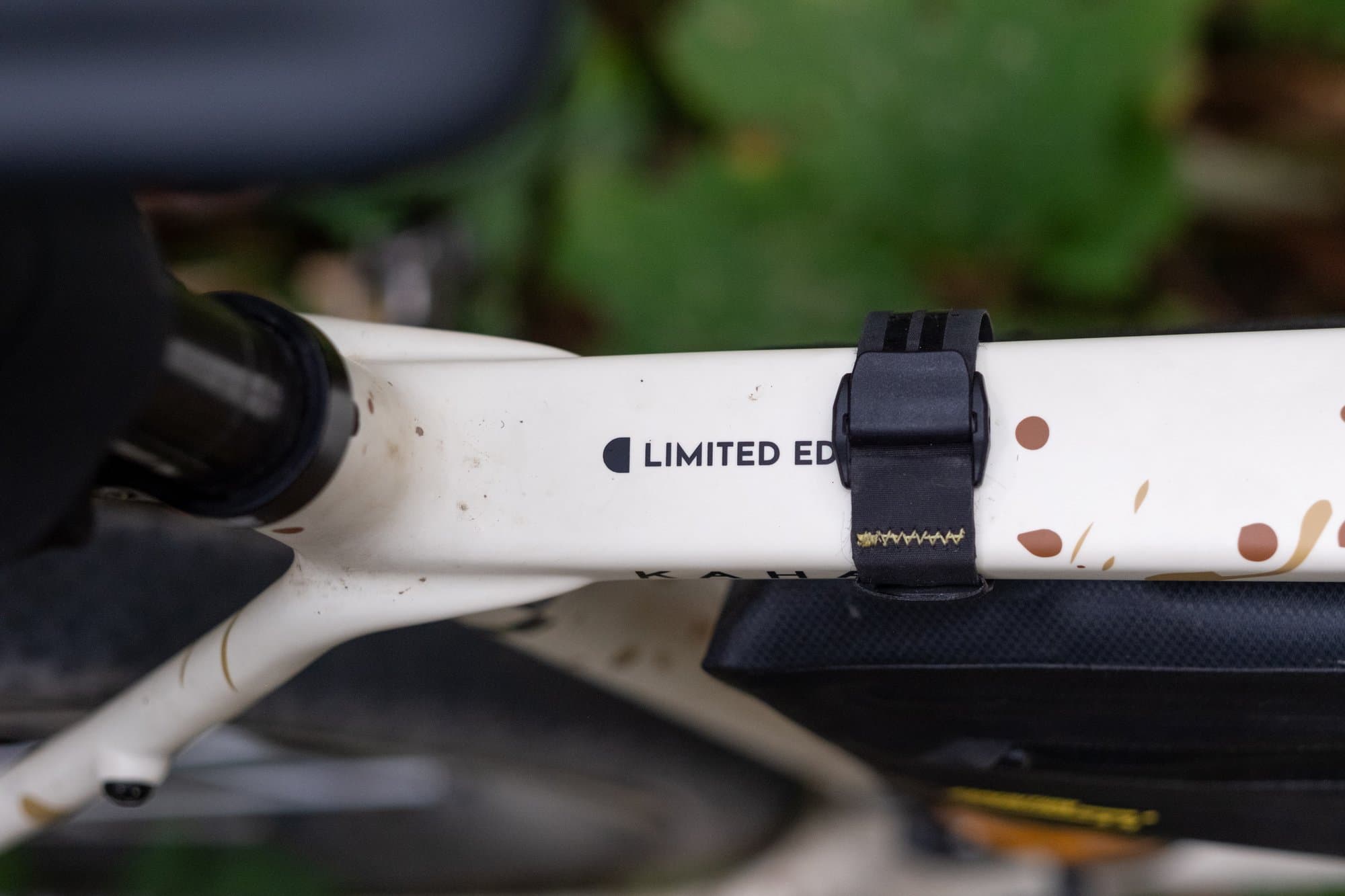
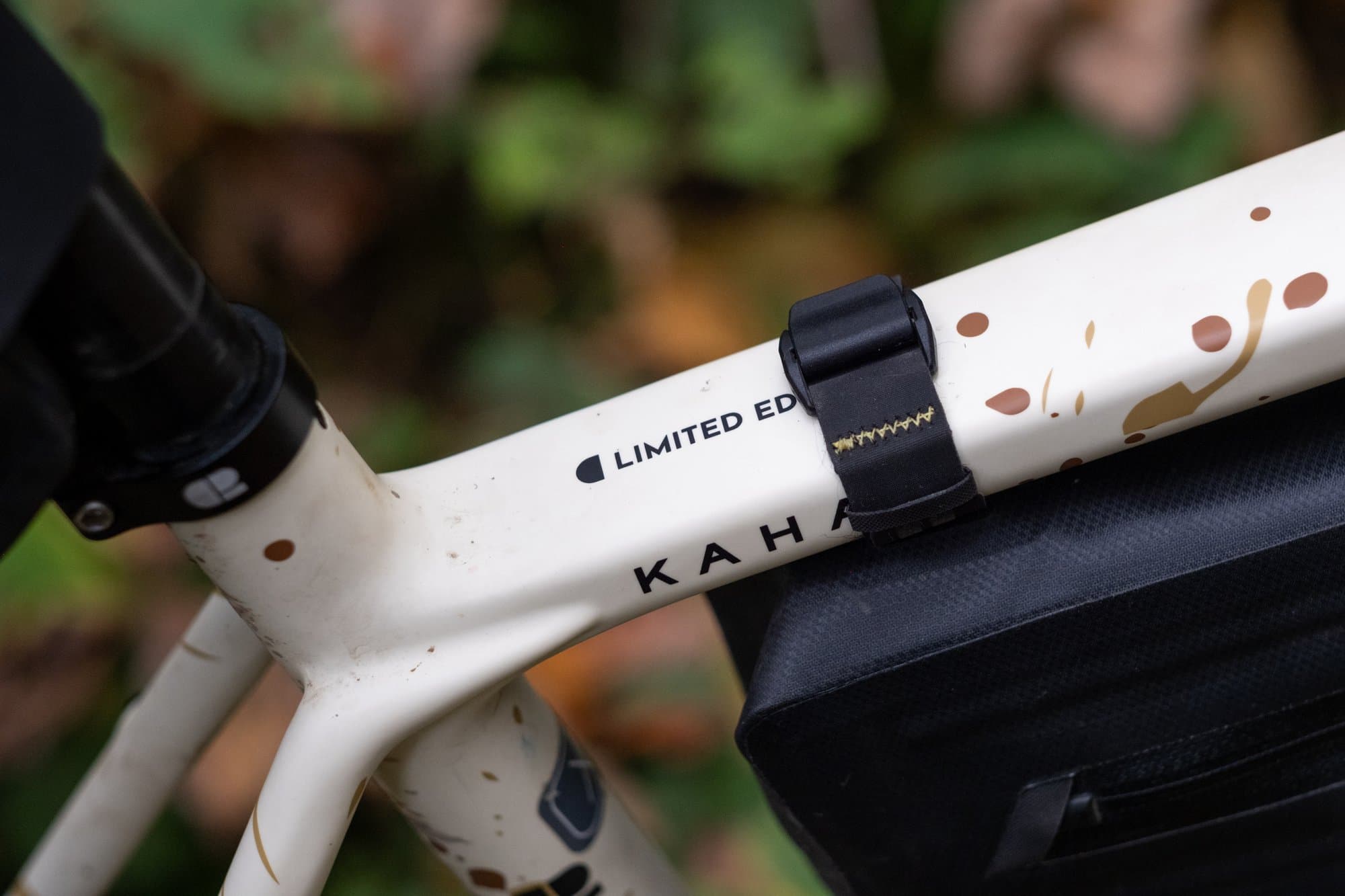
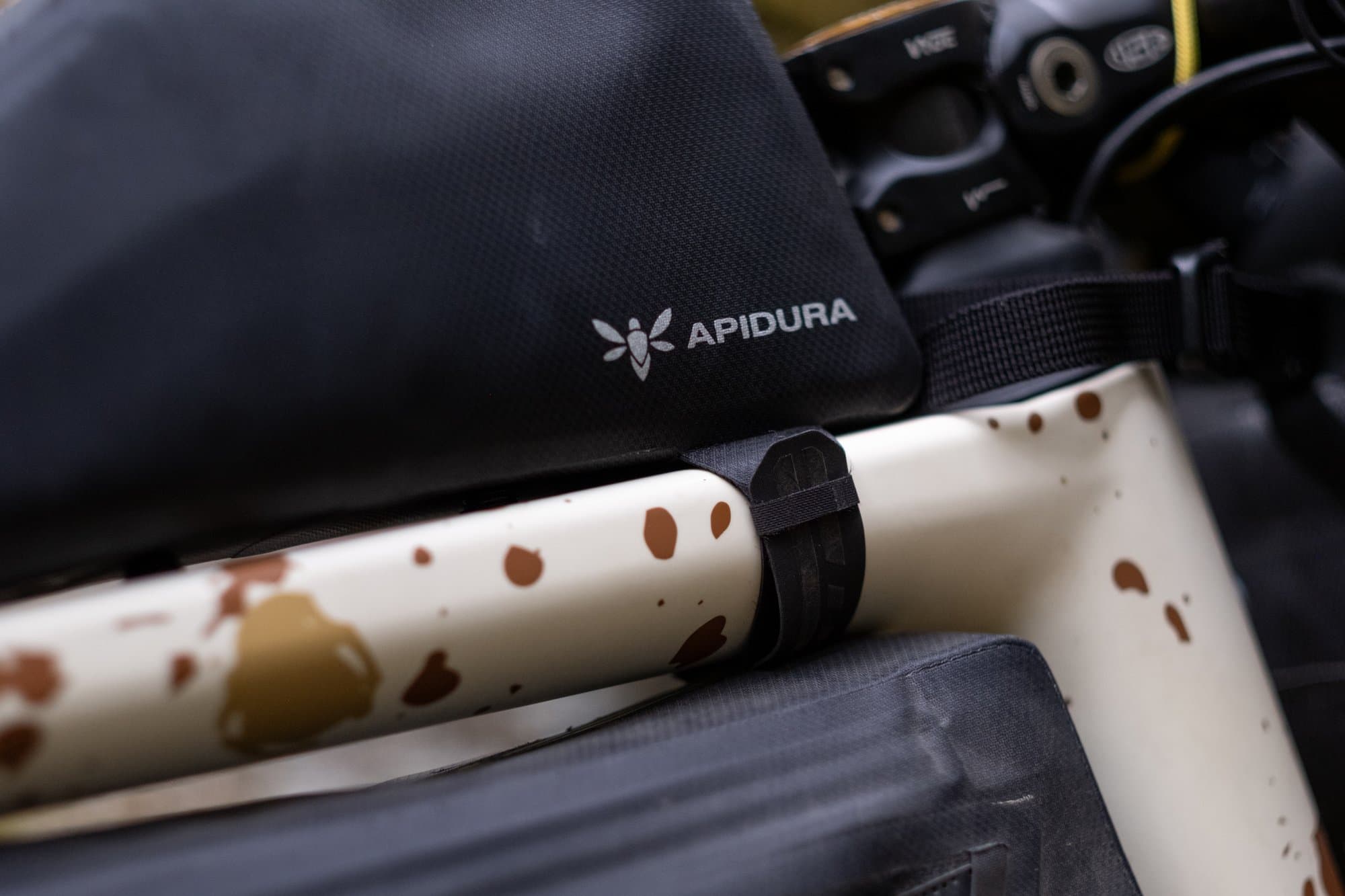
Capacity and weight are only part of the story, because the bags have to perform. Over the past four months, I've ridden 1,000+ kilometres with these two bags. They haven't moved. That alone is a major win reserved for only the best-made bikepacking bags. I am not constantly adjusting straps or straightening bags that wobbled after particularly rough sections of road. The only time I touch the straps is to tuck the tails back into place. They do fall out of their little keepers quite often.
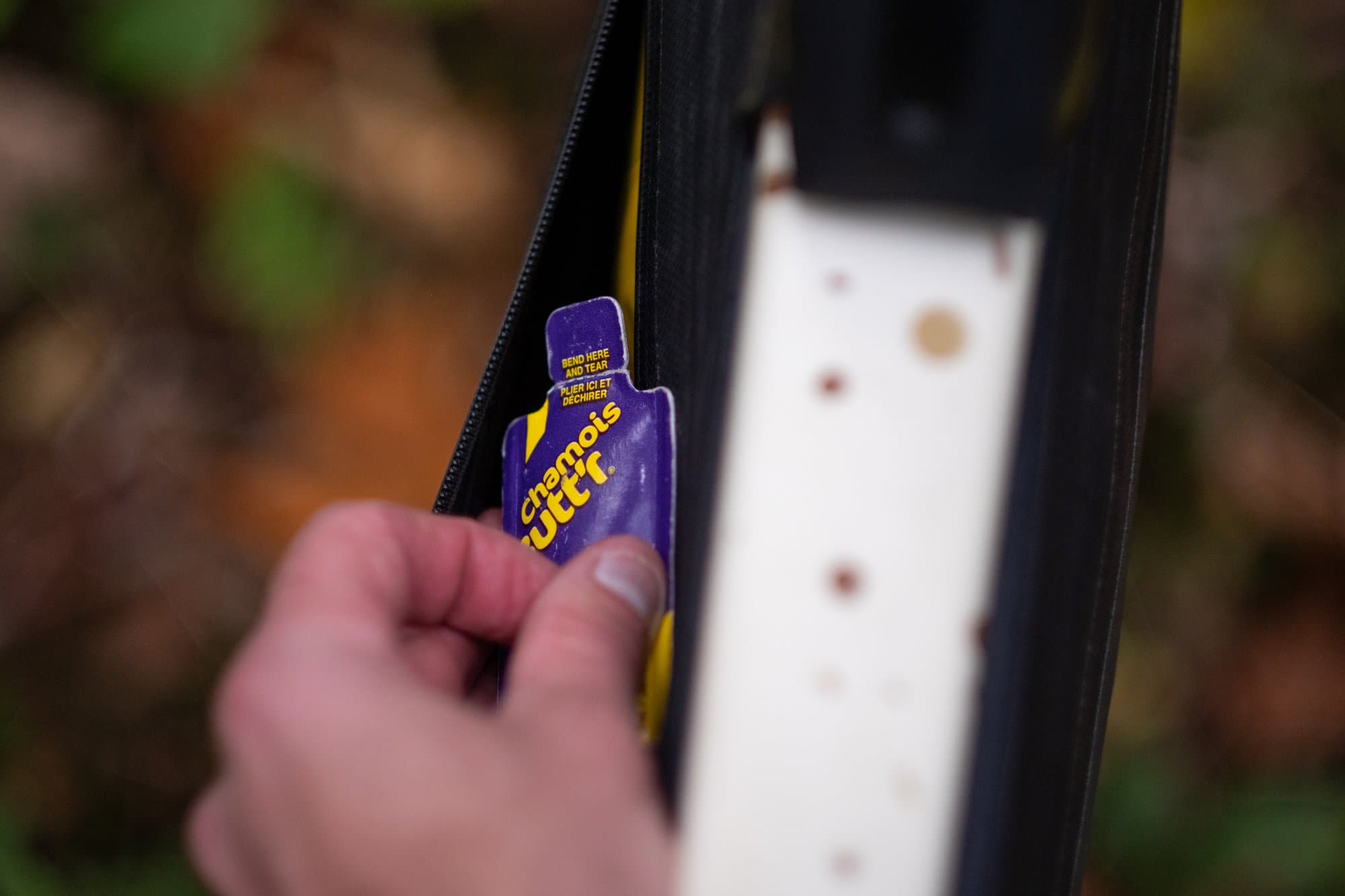
The frame bag is outstanding. The slimmer map pocket is the perfect place to stash small items. It's where my single-use packets of Chamois Butt'r live on long rides. I usually have tire plugs and a multitool in there, too, along with charging cables and an auxiliary battery. The larger component is a gear dump. My tire pump, spare gloves, rain wear, and arm warmers all fit nicely. There's usually a water filter and solid meal, too, if I plan to be out for more than a few hours.
The best part is that I rarely empty the main compartment. Certain items get pulled to get washed, food waste goes into the garbage, and layers change with the season. But I don't empty it between rides because everything stays dry inside. Even when I pressure wash my bike.
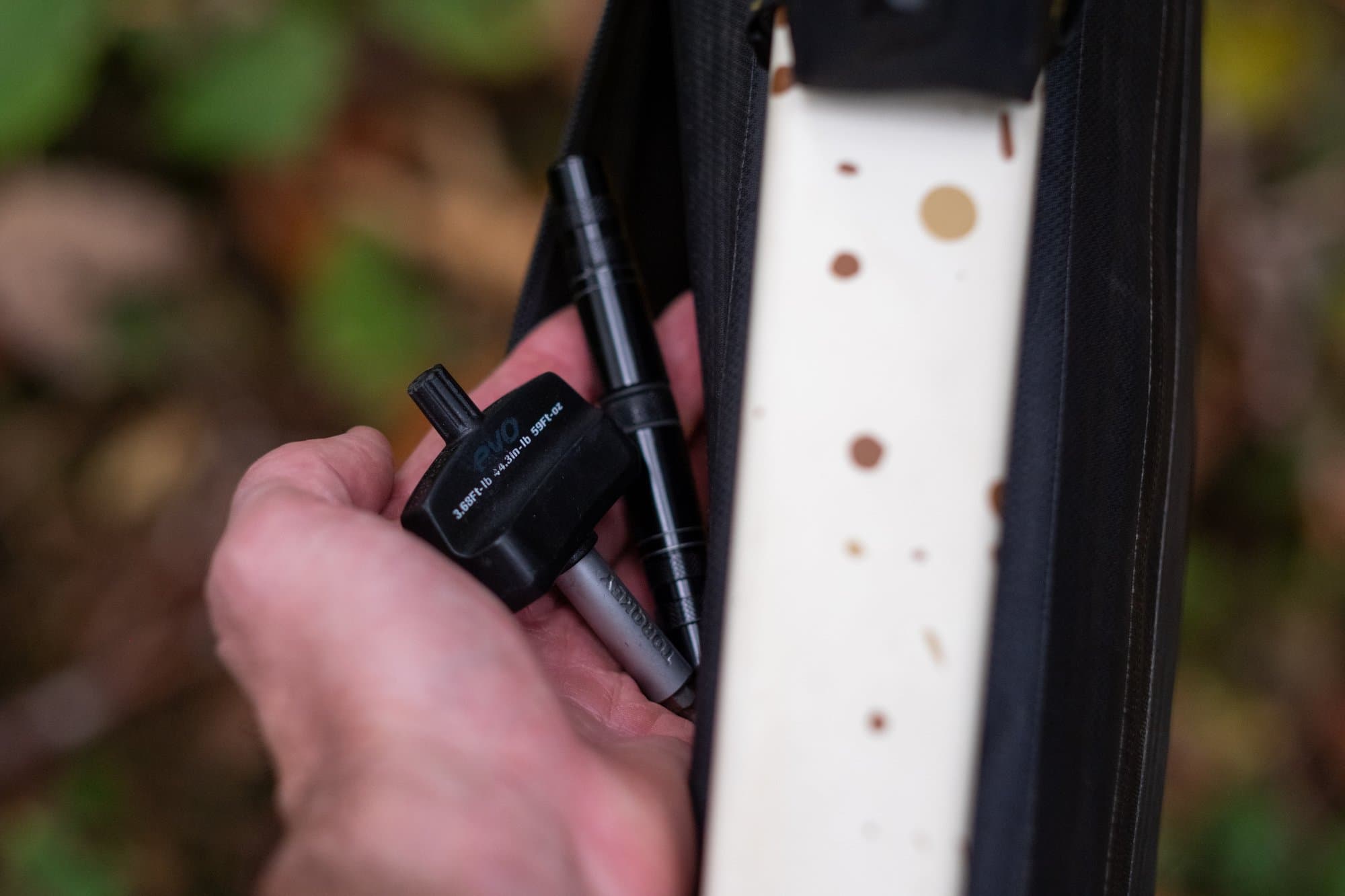
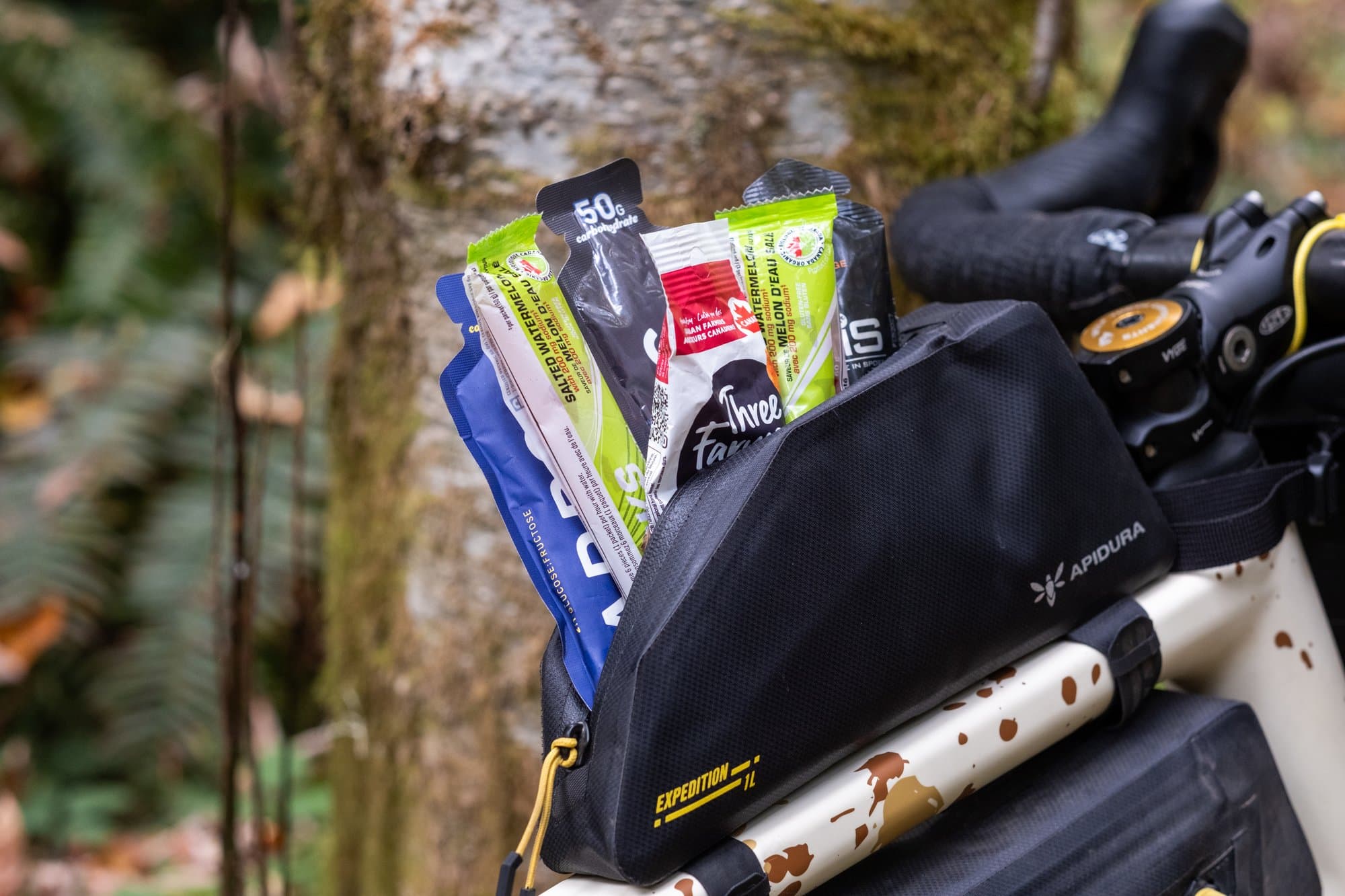
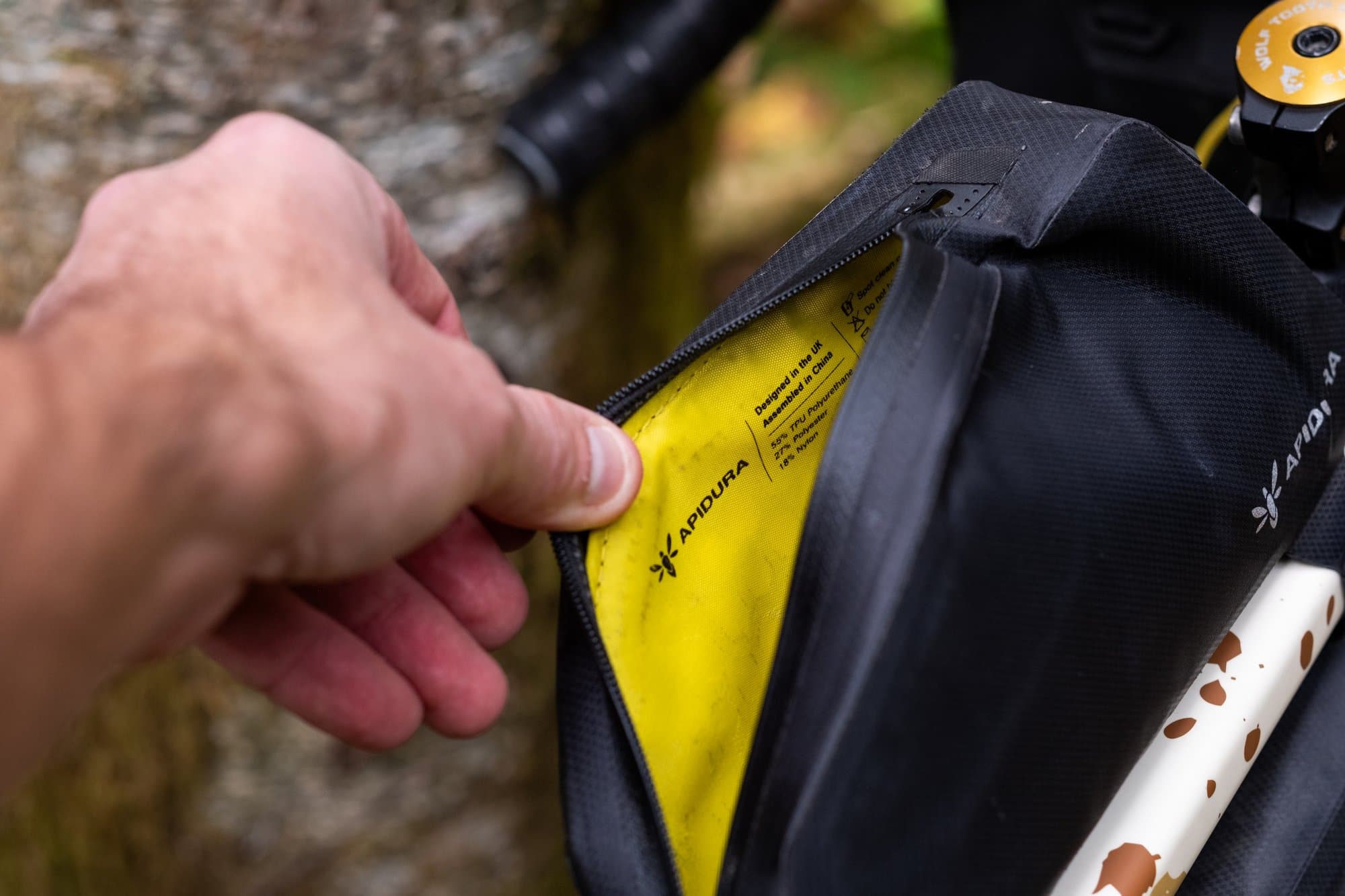
The top tube bag has a zipper closure. After a few years convinced that flip-top lids are best, it's been the biggest change. It works great and keeps things securely inside. It's definitely dirt proof and waterproof. But it's harder to access and makes it a bit more challenging to absolutely jam full of gels and gummies because the zipper must close cleanly. It's a small complaint, as overall I can still easily access it one-handed while riding, which is my main requirement for my stashed snacks.
Getting Rackless
Bikepacking is funny. A decade ago, we moved from rear racks towards smaller saddle packs that attached directly to our saddles. In many ways, that style bag showed you were bikepacking, rather than bike touring. Over the past few years, many of us have drifted back towards racks.
I'm guilty of it. I used the AeroPack Cargo on every bikepacking trip for the past few seasons. Switching back to the 16L Expedition Saddle Pack ($306 CAD) was a revelation.
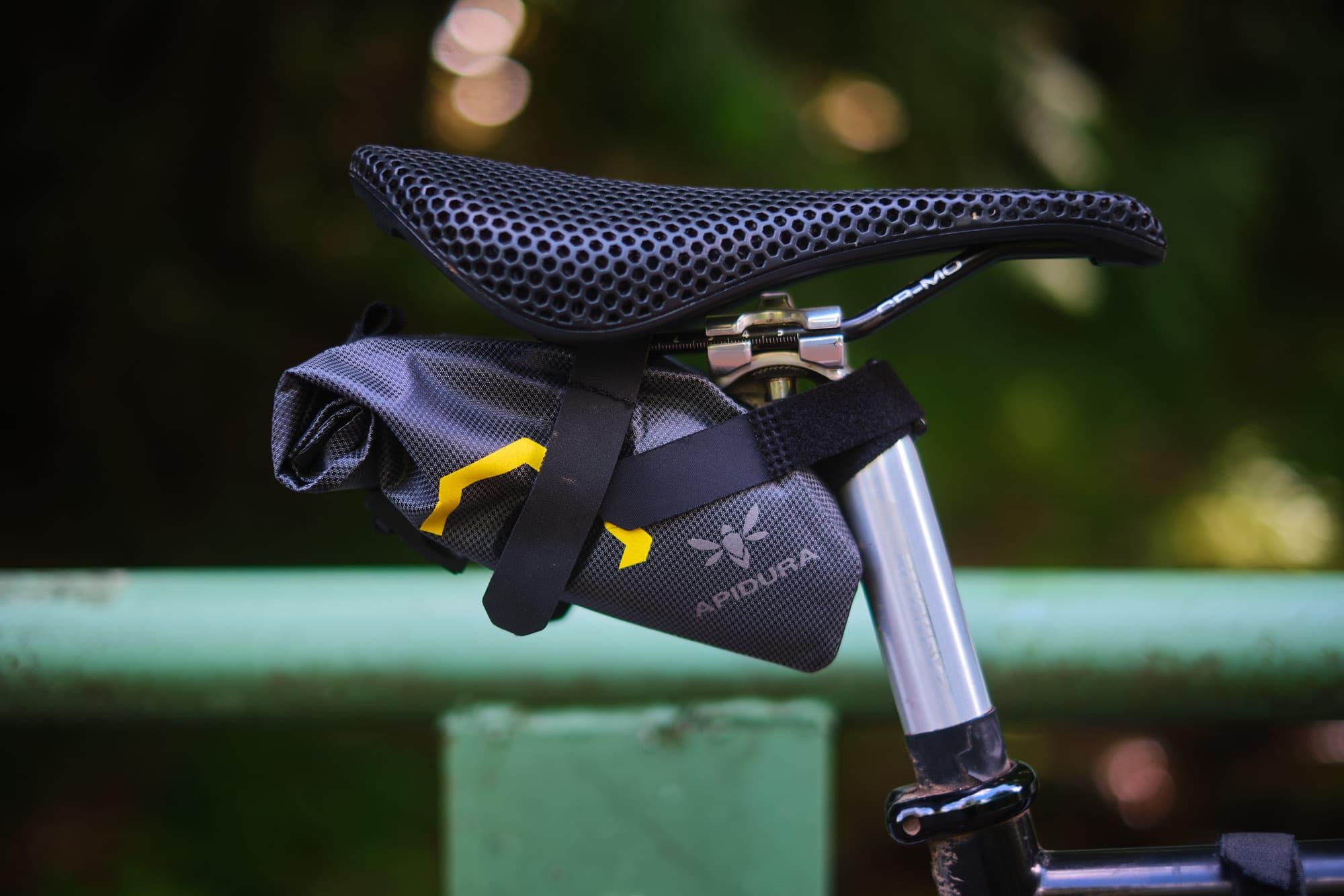
The bag is large enough to carry the essentials, without adding any unnecessary weight. It attaches in seconds, with two straps around the seatpost and two straps through the saddle rails. Where the straps wrap around the seatpost, there is a firm runner Apidura calls its Stability Channel that fits snugly against the post to add a bit more purchase. Once it's tight, it does not sway.
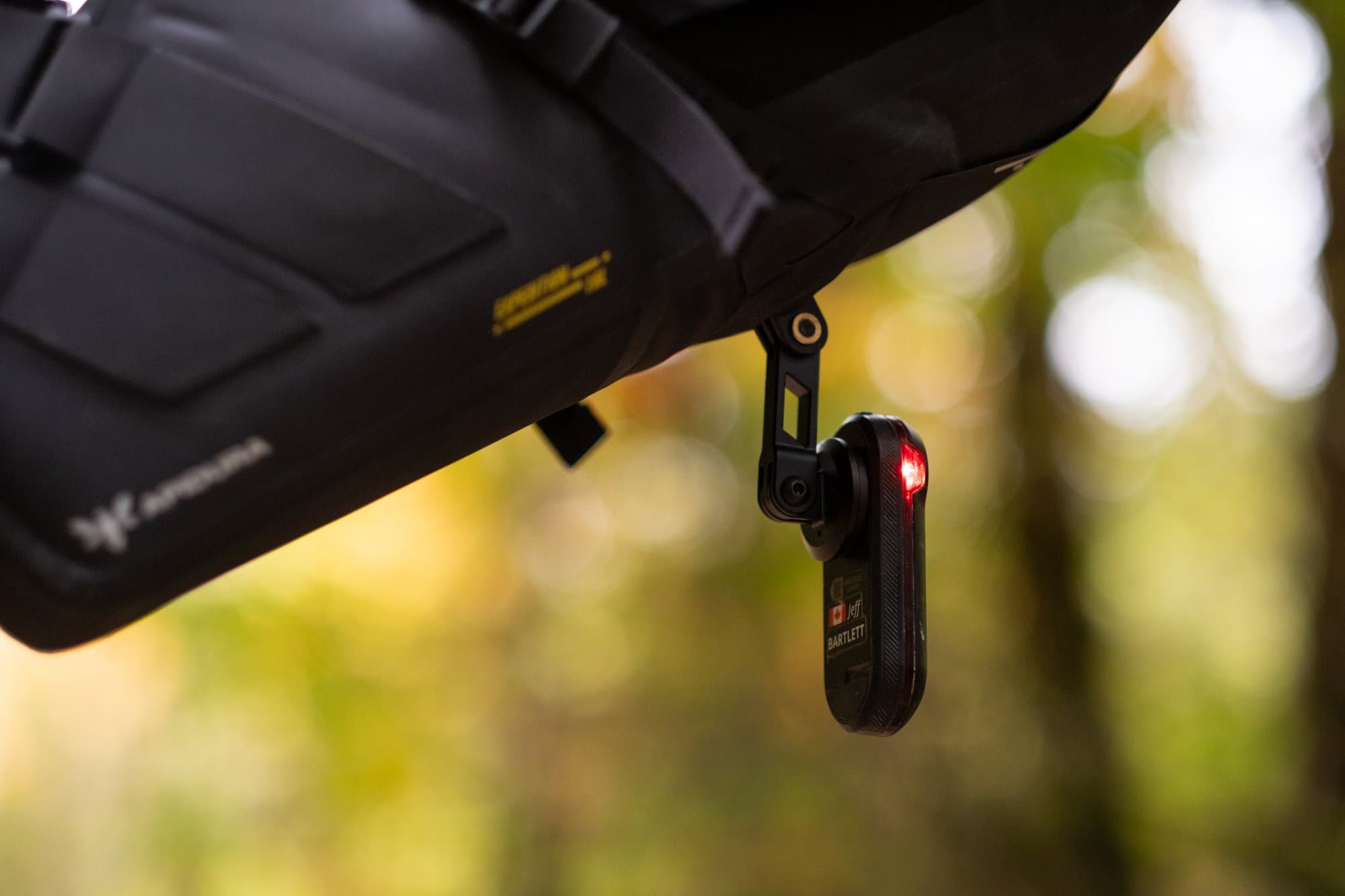
The bag has more clutch features. It comes with a 3-prong, GoPro-like mount on the bottom of the bag. With the optional GPS mount ($54 CAD), it's the perfect place to mount the Garmin Varia I never leave home without. The added reflective details are a nice touch. The two external mesh stash pockets are designed to hold bottles, but I found them equally helpful to stash rain gear that I needed to grab quickly. The main compartment is built to be fully waterproof, with RF-welded seams.
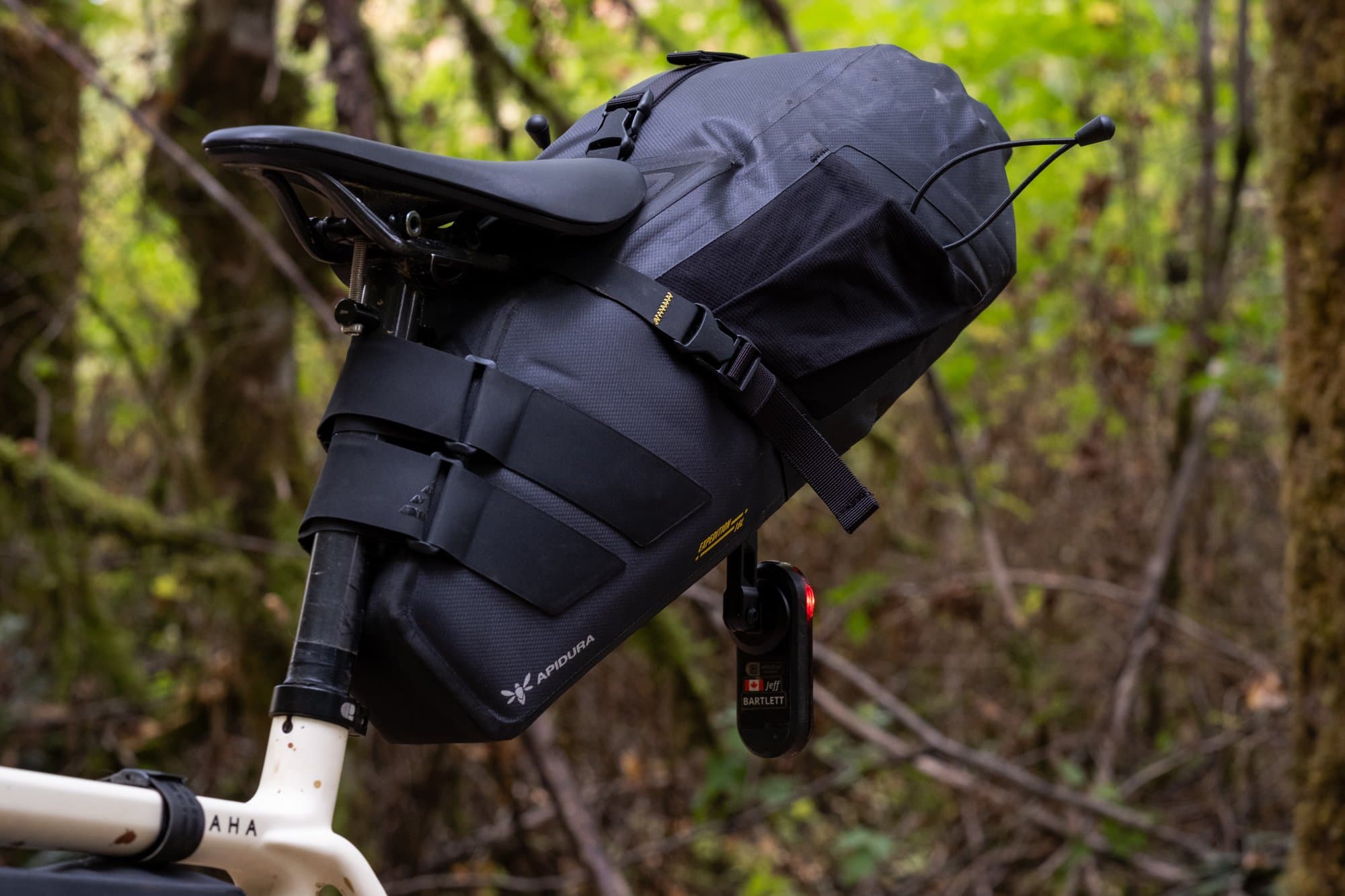
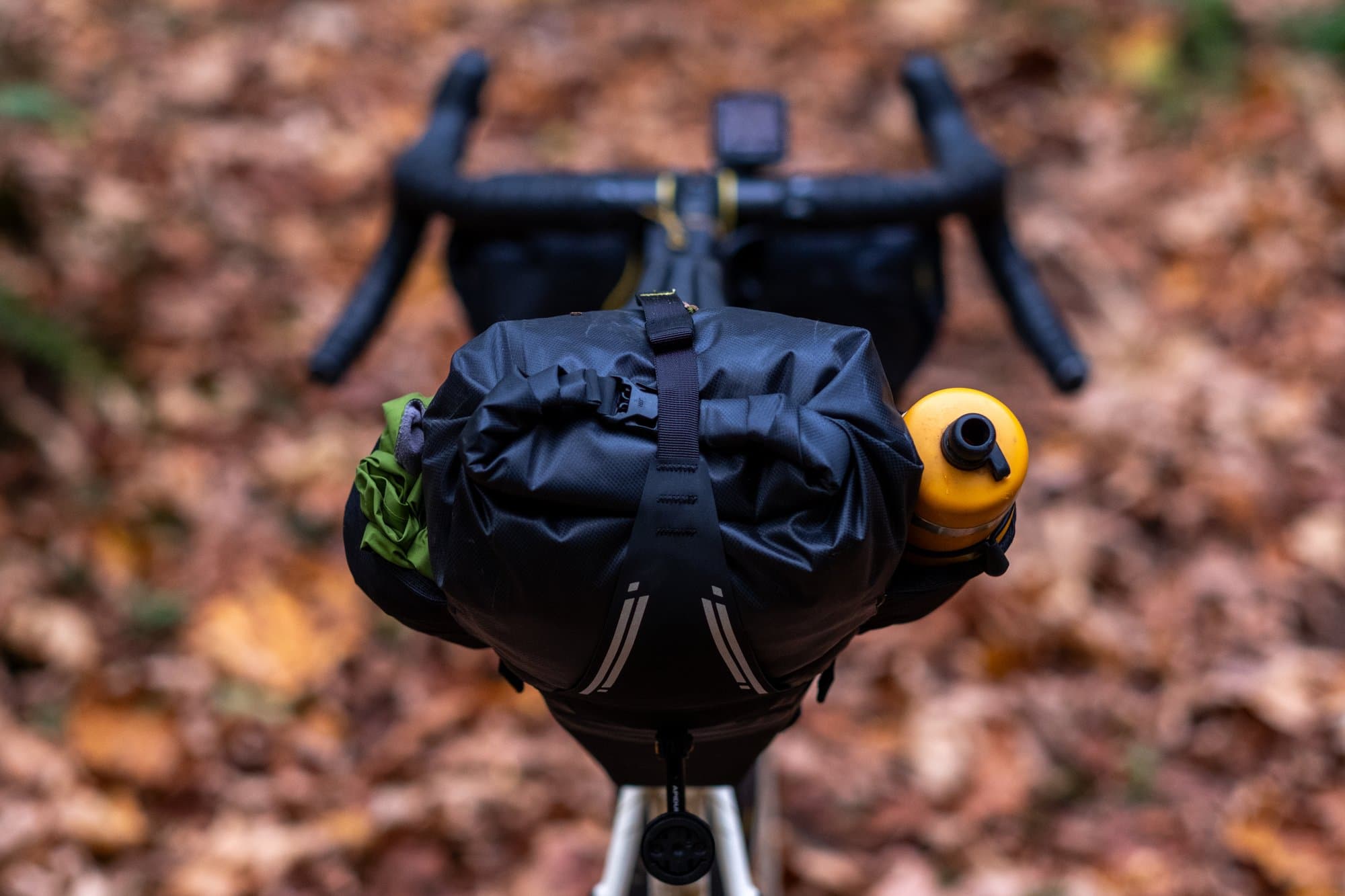
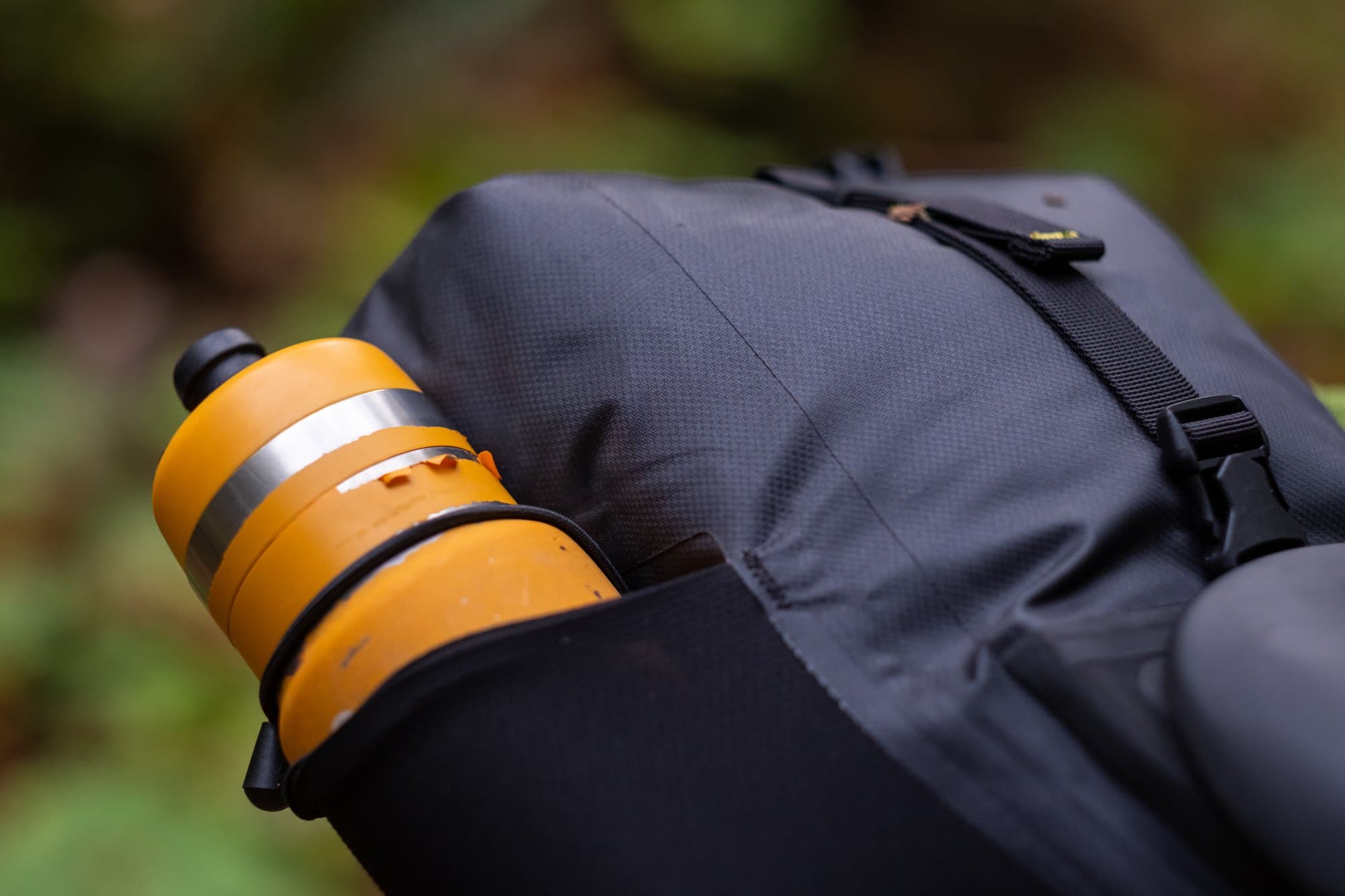
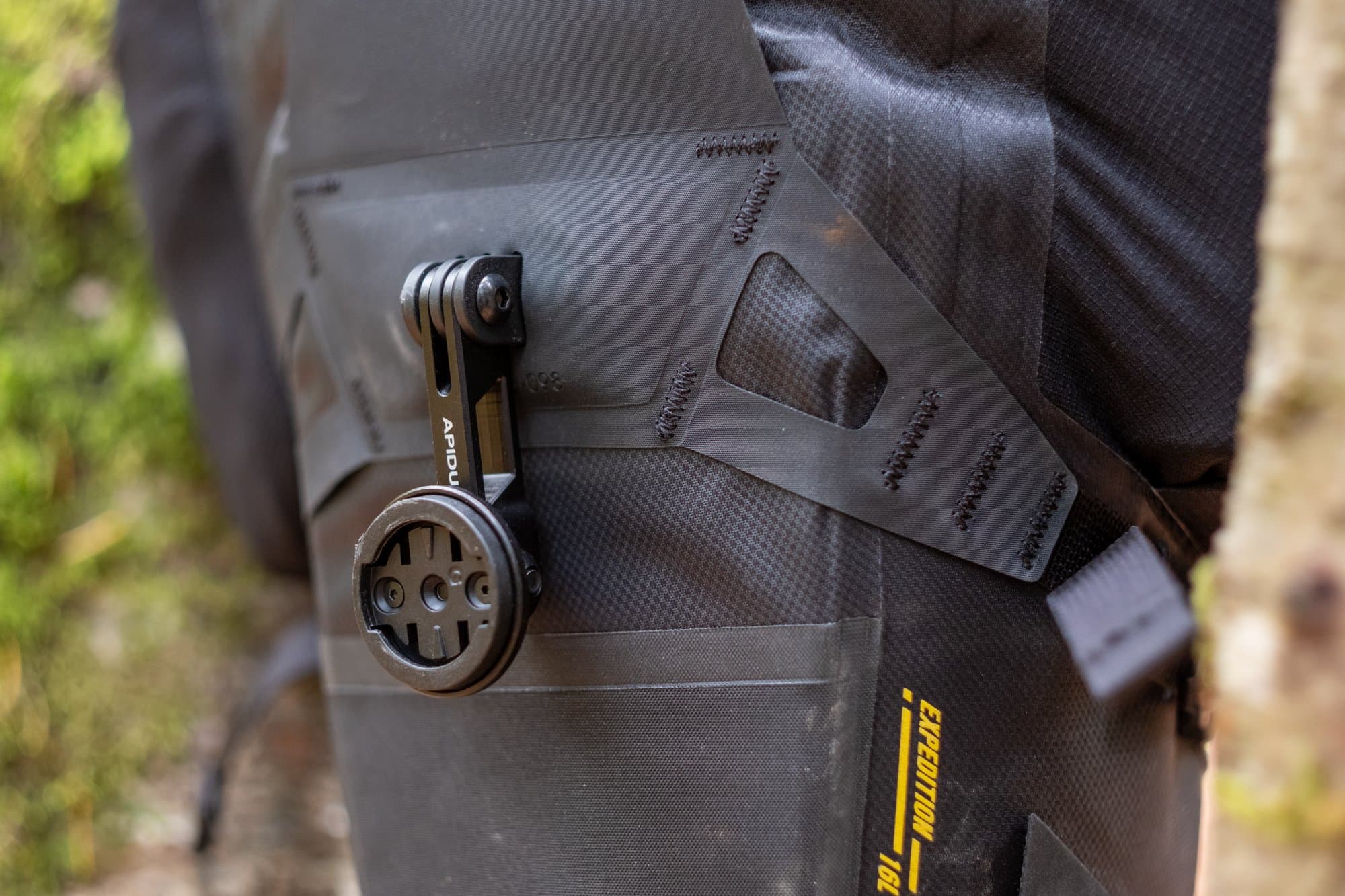
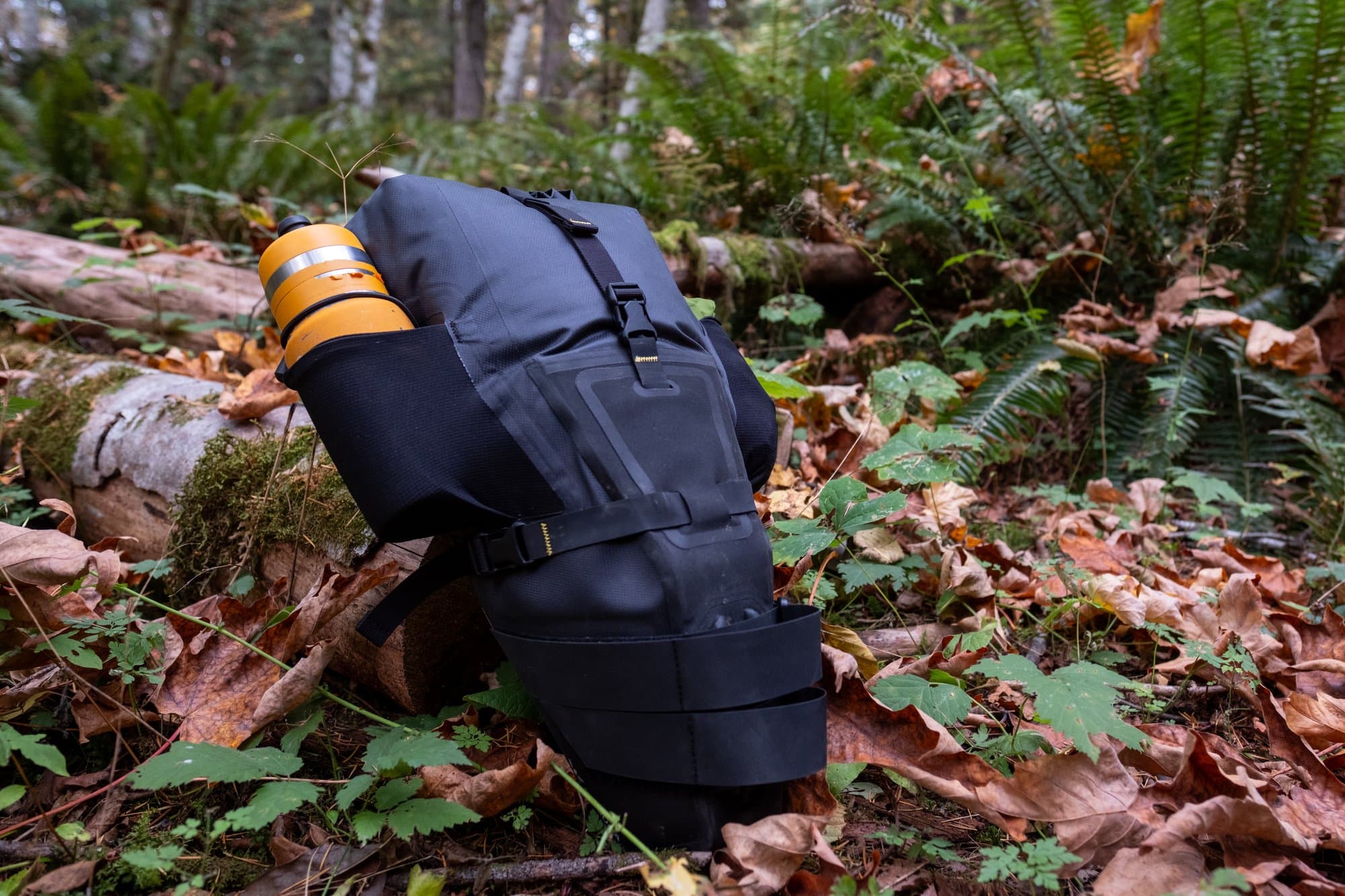
The downside is obvious. This bag only works with rigid seatposts. Its design isn't easily compatible with the Apidura Backcountry Dropper Post Adapter. Even if it were, on my mountain bike, with a 175mm dropper, I'd be left with less than 60mm of seatpost drop. While droppers are the standard on our backyard trails, many people still tackle long-haul trips like Tour Divide or Silk Road Mountain Race on rigid posts.
After my trip to Patagonia, I dropped into the BGDB Slack channel and mentioned a high-speed wobble I’d felt on a few descents. I wasn’t alone. Everyone seemed to have a story. It turns out this is a common issue when running full racks on lightweight gravel bikes, regardless of the brand. I’d been lucky to avoid it until that trip.
With this bag, it hasn’t happened, even fully loaded. Because it's only attached to the seatpost, it shadows the natural movement of the bicycle. The result is a safe, wobble-free ride.
Compared to the Carbon AeroPack Cargo, one of the lightest racks out there, the Apidura Saddle Pack is half the weight and only 2L smaller.
A Mixed Bag
The best part of the Expedition Handlebar Pack ($312 CAD) is the mount. It reminded me of the Jack Rack: a simple loop over and around the stem, with a single strap around the steer tube to add tension. This strap could be around the head tube, but it works best if you get it on the moving steer tube so the bag holds tension as the bars turn. Apidura calls it BarSpace, and it goes on surprisingly quick. No bolts, no torque wrench, yet it holds the bag just as securely as the burly bracket systems do. Once it’s on, it doesn’t move.
It also cleans up my handlebar space and leaves more room for my hands. The bag sits about 3cm off the handlebars. Each side of the mount has a 3-prong attachment, so my Garmin Edge 540 sat on the GPS mount with a matching mount for my light right beside it.
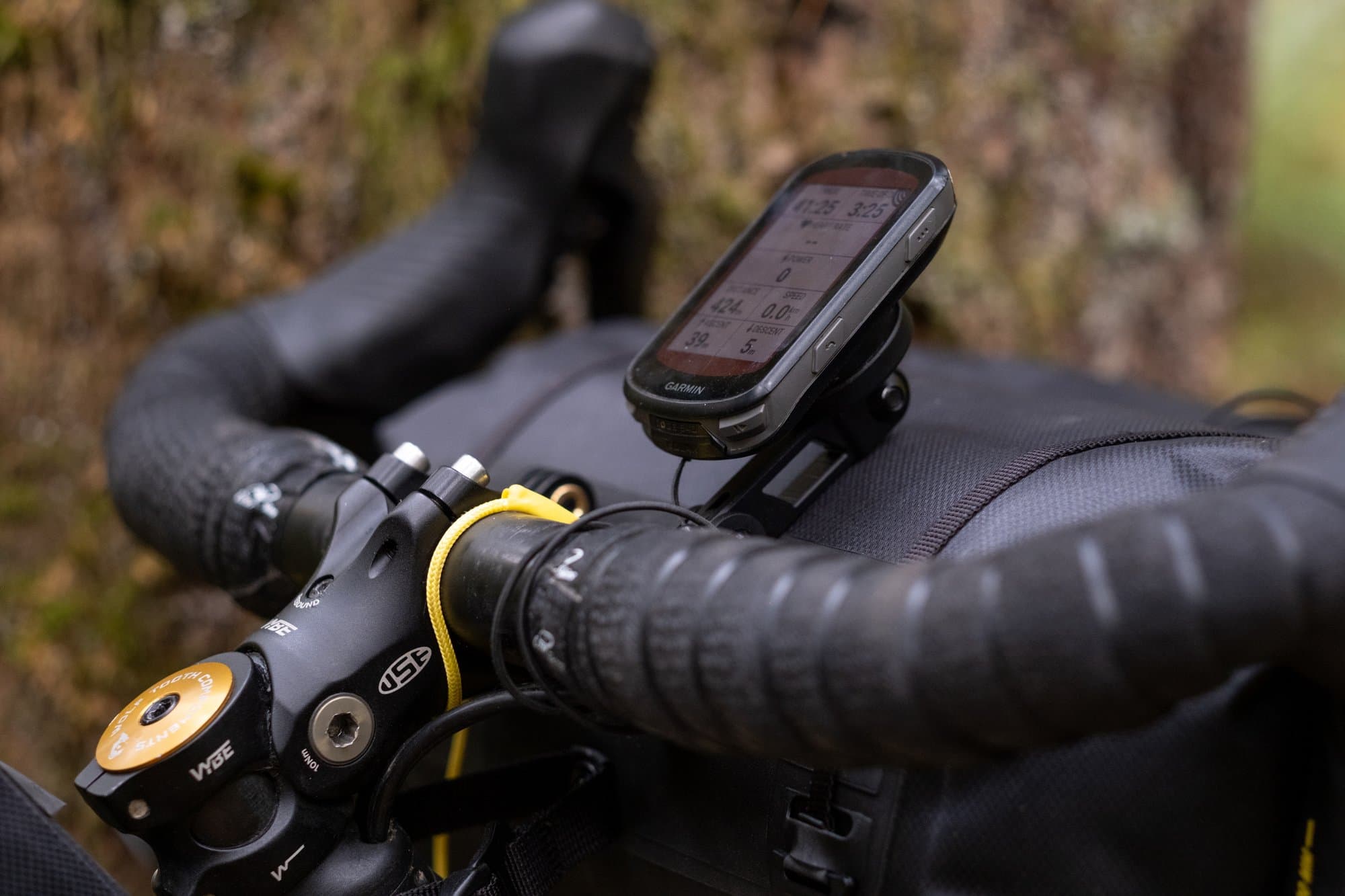
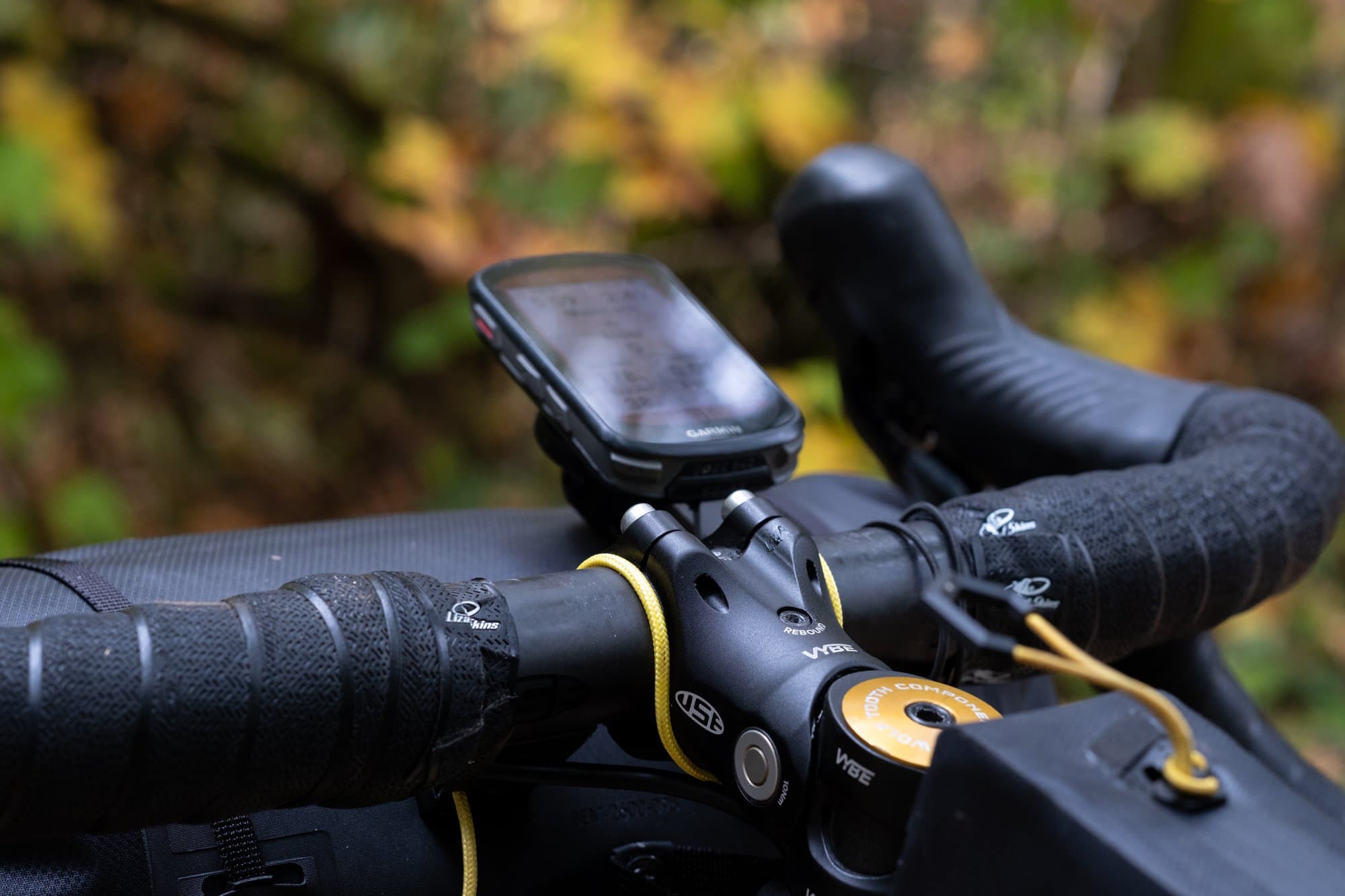
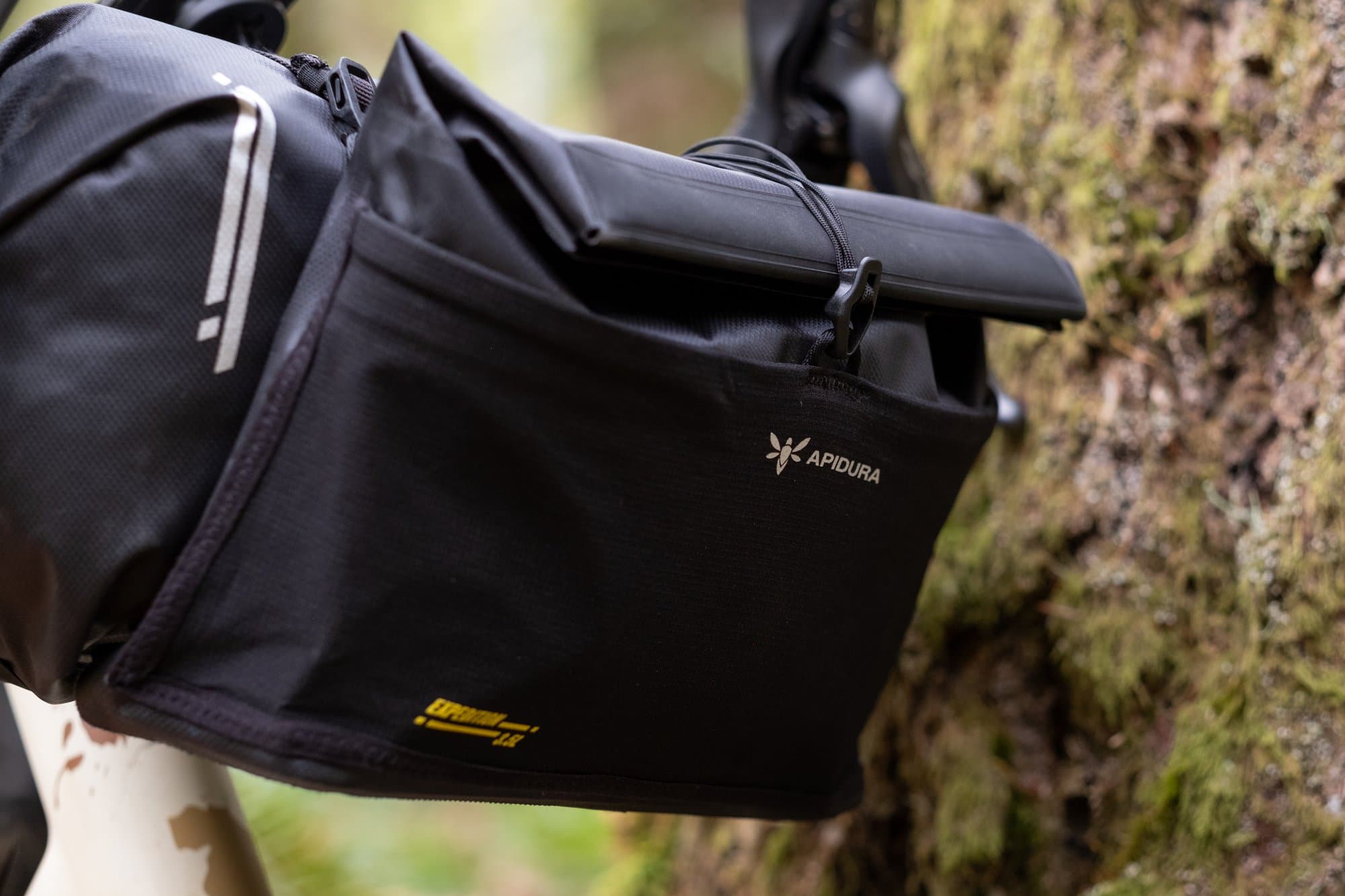
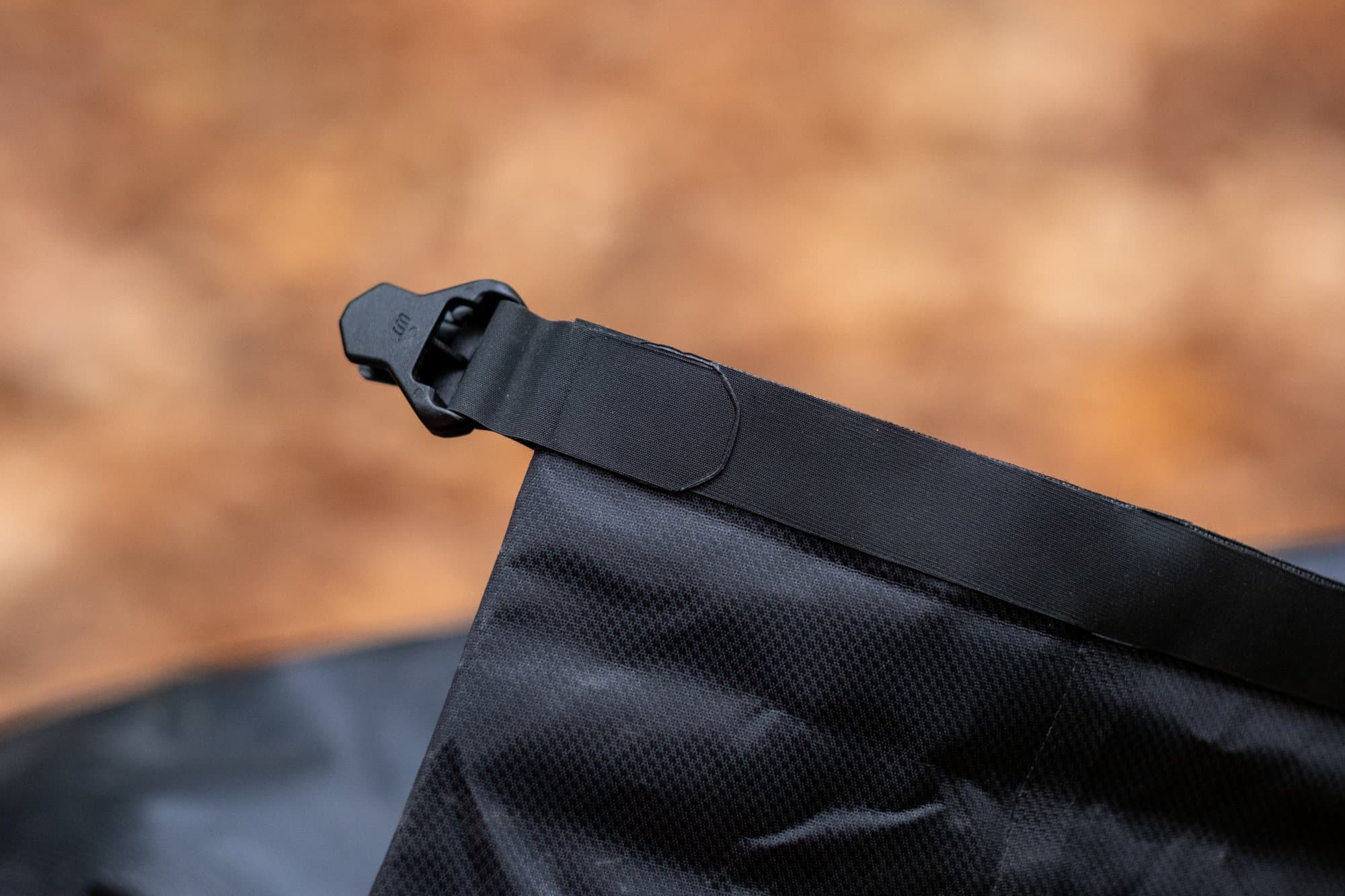
The downside is the string. It is incredibly light and really illustrates that most bags' attachment systems are overkill. But the Stability Cord locks into the mount, and once it’s pulled tight, it’s really hard to get back out. That wouldn’t matter much if I could pack the bag on the bike. But I run a narrow 420mm bar, and the 14L bag crowded my levers. Packing it in place was a struggle, so I took it off every time, and the mounting system made that slow and a hassle.
In fairness, Apidura recommends the 9L for bars 42cm and narrower. The 14L may simply be the wrong size for my drops. I still find it unusual, as I run an XL frame. I have a ton of room for volume between my tire and handlebars, just not between my hoods. With my Porcelain Rocket Horton harness, I run a fatter dry bag. I hoped I could replicate that idea with the 14L version, but still found myself wishing it was a larger diameter bag.
On my mountain bike, it was a different story. With flat bars, I could pack it on the bike, and it swallowed my entire sleep kit: tent, sleeping bag, pad, inflatable pillow, and sleep clothes. It seemed like the perfect setup.
The bag rolls closed like most dry bags; however, instead of two clips that snap together, the two ends use a magnet to fasten together and a single hook holds it firm against the bottom of the bag. It's a sleek system but not as quick and easy to close as I would like.
The Expedition Front Accessory Pack ($107 CAD) is the unqualified win. At 3.5L, it has a large stash pocket, an internal zip pocket, and two mesh pockets. It holds everything I want close. It also comes with a small strap so it’s easy to carry off the bike. On an international trip, that’s where my passport, camera, and wallet live, so I like that I can take it with me.
While I’d love to see a quick-connect version, or even a harness-style bag, the Expedition Handlebar Pack is a great bag. For now, I’ll use it more often on my mountain bike. Maybe once I set up my new gravel bike, with 460mm bars, it’ll be a better fit. More on that soon.
Final Bell
If you ride a rigid seatpost and care about every gram, the Apidura Expedition kit is easy to recommend. The frame and top tube packs have lived on my bike for 1,000+ kilometres without moving. The Saddle Pack carries enough for an overnighter at a fraction of the weight of a rack, and it hasn’t given me a hint of wobble.
It isn’t for everyone. The Saddle Pack needs exposed seatpost, so dropper users will need another option. Riders hauling heavy loads or needing the option of panniers occasionally may still want the capacity of a rack.
The handlebar pack is the one round Apidura doesn’t win outright. The mount is brilliant, and on my mountain bike the bag is close to perfect. On my narrow drop bars, it was a hassle. If you ride drops, size down to the 9L or look at a harness-style bag.
For me, the frame pack, top tube pack, and Saddle Pack are staying on my gravel bike, and the handlebar pack has found a likely home on my mountain bike.
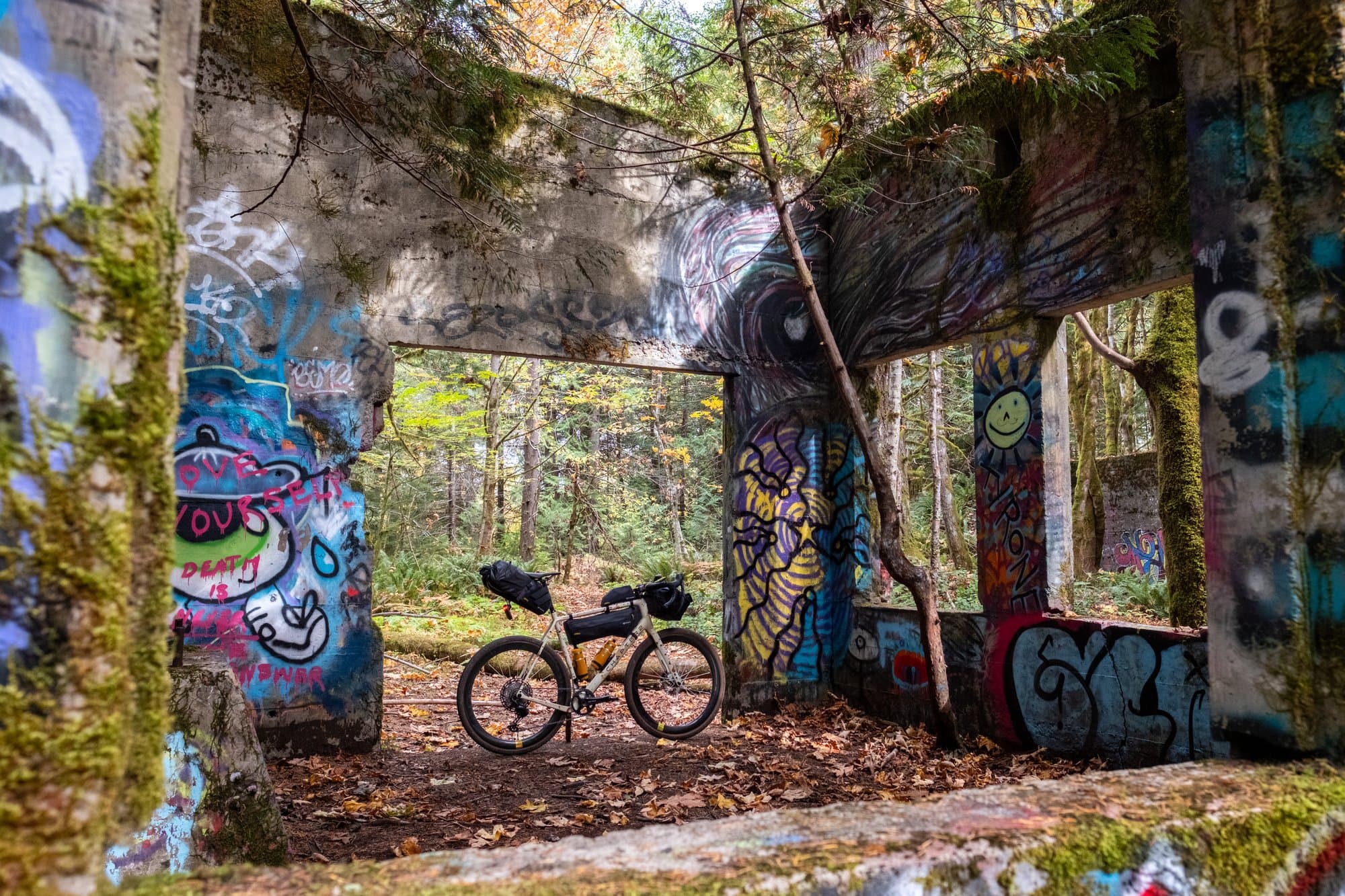
The bags are still packed from that October ride. My sleep kit up front, with my 1-person tent and camp clothes in the Saddle Pack, and enough gels in the top tube for a marathon XC race. I might not have extended my photo mission into a late-season overnighter, but I didn’t unpack either.
If this fall weather holds, I might have to sneak out for one last trip before the snow that chased me out of Kananaskis finds its way to the Island.
Pros
- Frame Pack: hasn't moved in 1,000+ km, stays dry through a pressure wash, slim map pocket for small items
- Top Tube Pack: waterproof zipper, easy one-handed access, straps double as the frame pack's front straps
- Saddle Pack: half the weight of a carbon rack, no sway or speed wobble, attaches in seconds
- Handlebar Pack: tool-free BarSpace mount holds rock solid, 3-prong mounts for GPS and light, accessory pack carries off the bike
Cons
- Frame Pack: strap tails slip out of their keepers, largest size is 5.7L
- Top Tube Pack: tighter access than a flip-top lid, hard to overstuff
- Saddle Pack: doesn't work with dropper posts, 2L smaller than the CargoPack, GPS mount is an extra $54 CAD
- Handlebar Pack: Stability Cord is hard to release, 14L crowds narrow 420mm drops, magnetic closure isn't intuitive