Decathlon Half-Frame Linen Bag: The Right Amount of Bag


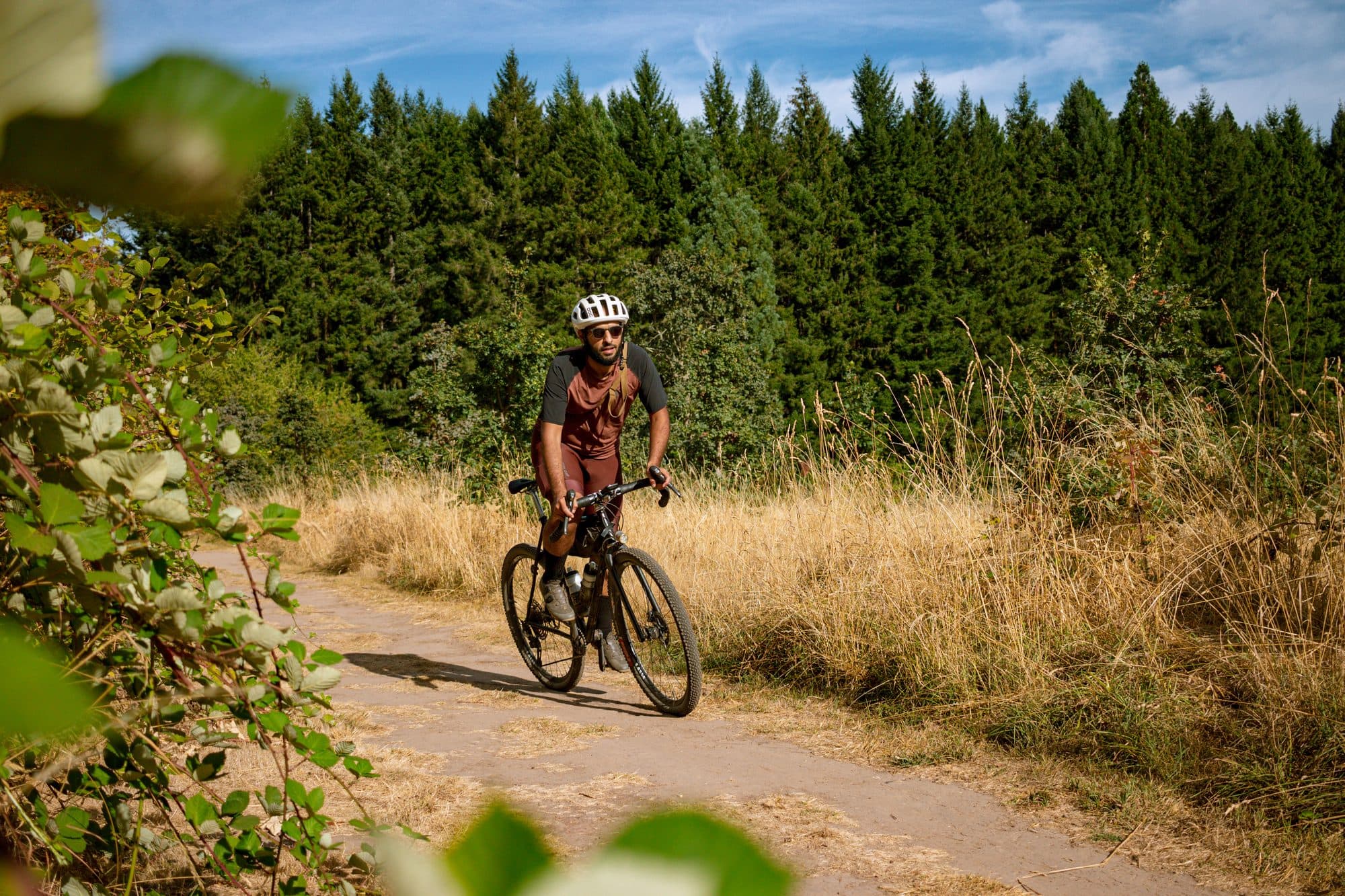
If you’ve read anything on this site, you’ve probably seen me in the same shirt. It’s a Patagonia hemp number I’ve worn on the bike for three years straight. Really. I don’t even think it’s made for cycling but that doesn’t matter. It never feels wet, it’s always breezy and cool, and when I put on a synthetic jersey instead I feel like I’m wrapped in a chocolate bar wrapper.
So I’ve had natural materials on the brain for a while now. There’s a real case for them in cycling, not just the granola version, the feel version. When I heard what Decathlon was up to with a linen bike bag, I was in before I’d seen a single spec.
Earlier this summer, Decathlon sent me one to try out, along with a second surprise I’ll talk about below.
A Bag That Isn’t Trying to Be Plastic
Most bikepacking bags are synthetic. Petroleum, basically, sewn or welded into shape. Decathlon spent three years chasing down a European flax supply chain to do it differently. Turns out about 75% of the world’s flax grows in a band between Normandy and Amsterdam, so the whole thing stays local: grown and processed in France, spun in Poland, woven back in France, sewn in Czechia. They cut the pattern to waste less fabric, and the payoff is a carbon footprint around 34% lower than a comparable synthetic bag. There’s a 20-minute documentary if you want to watch flax become a bag. It’s lovely.
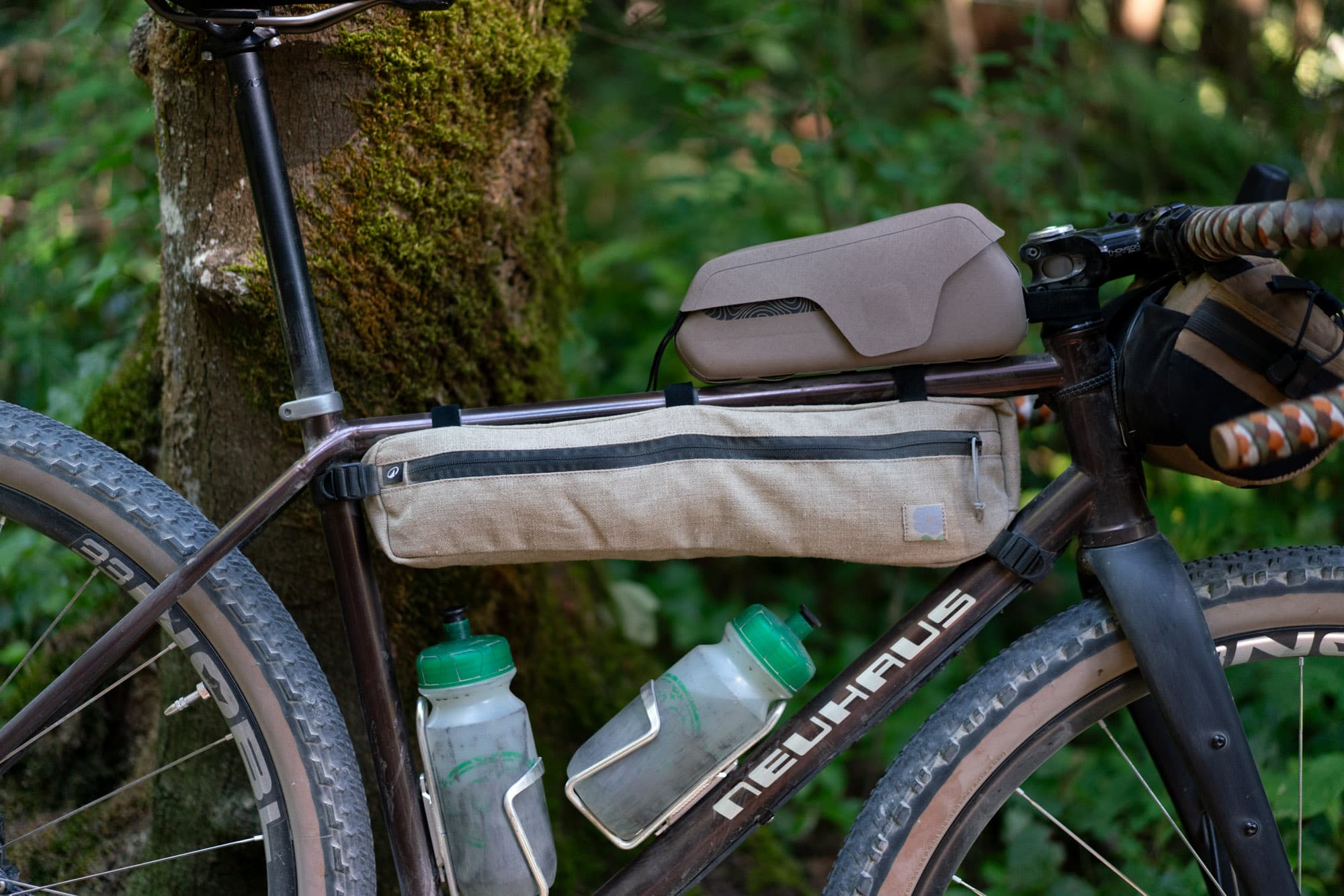
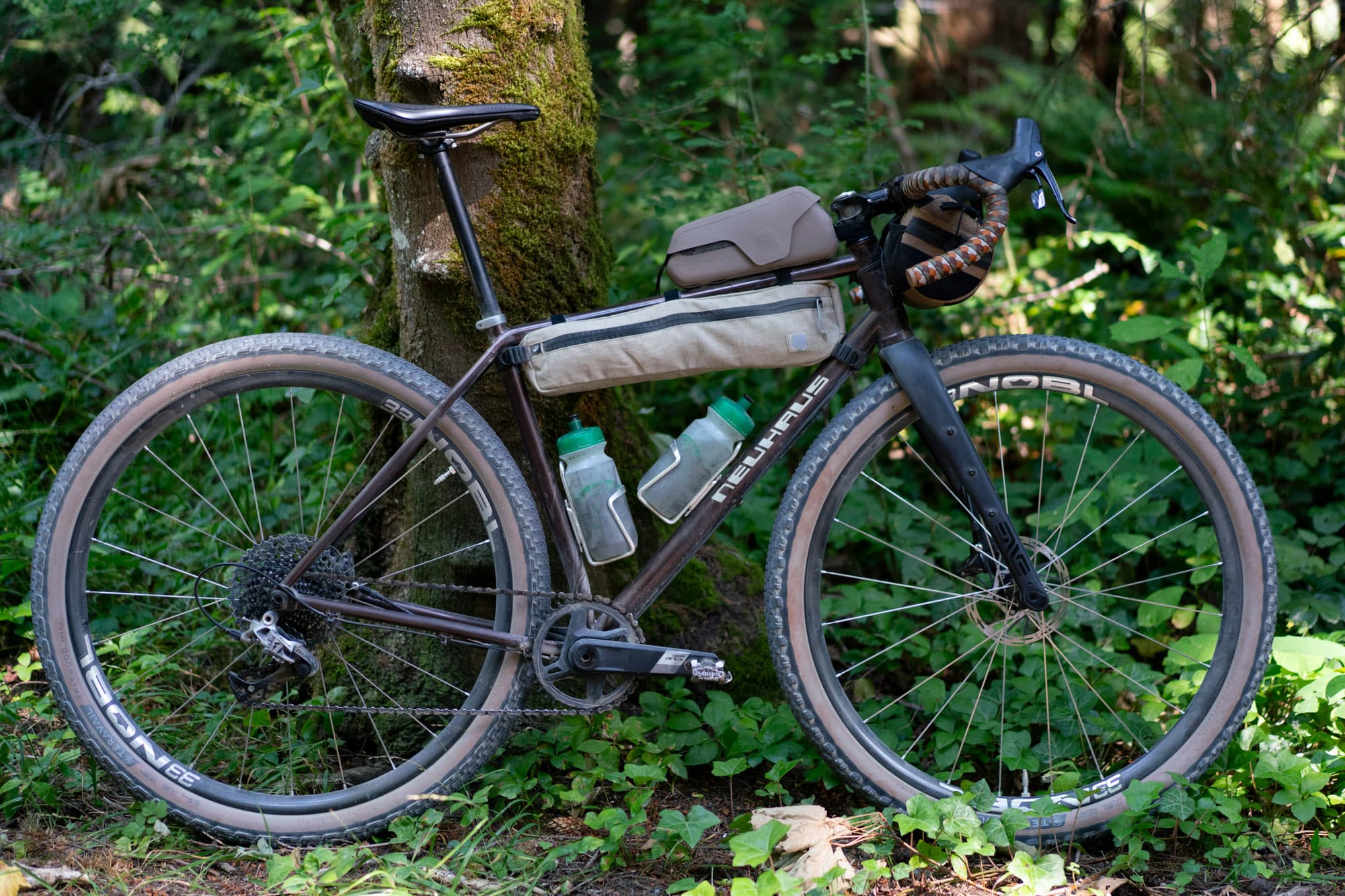
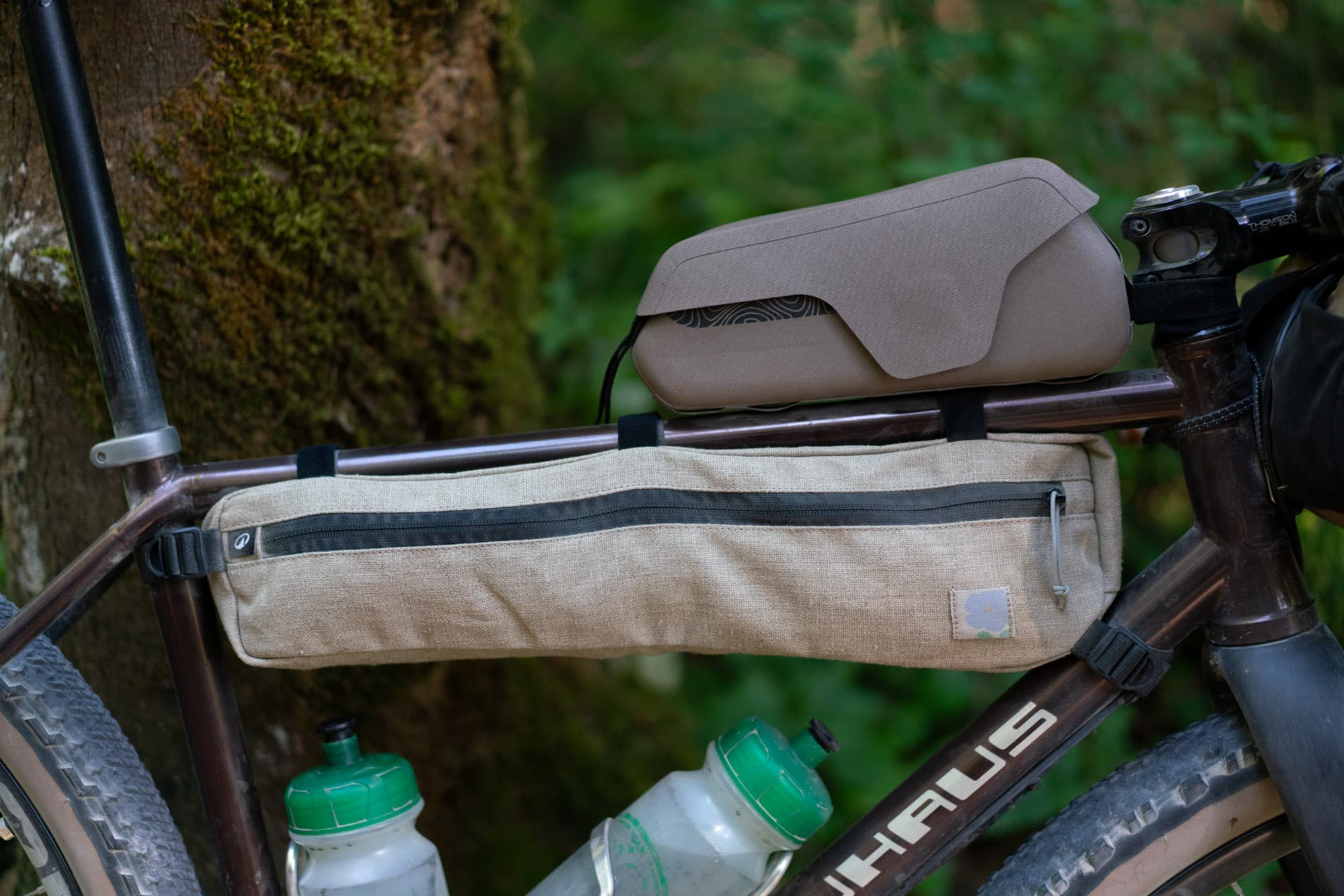
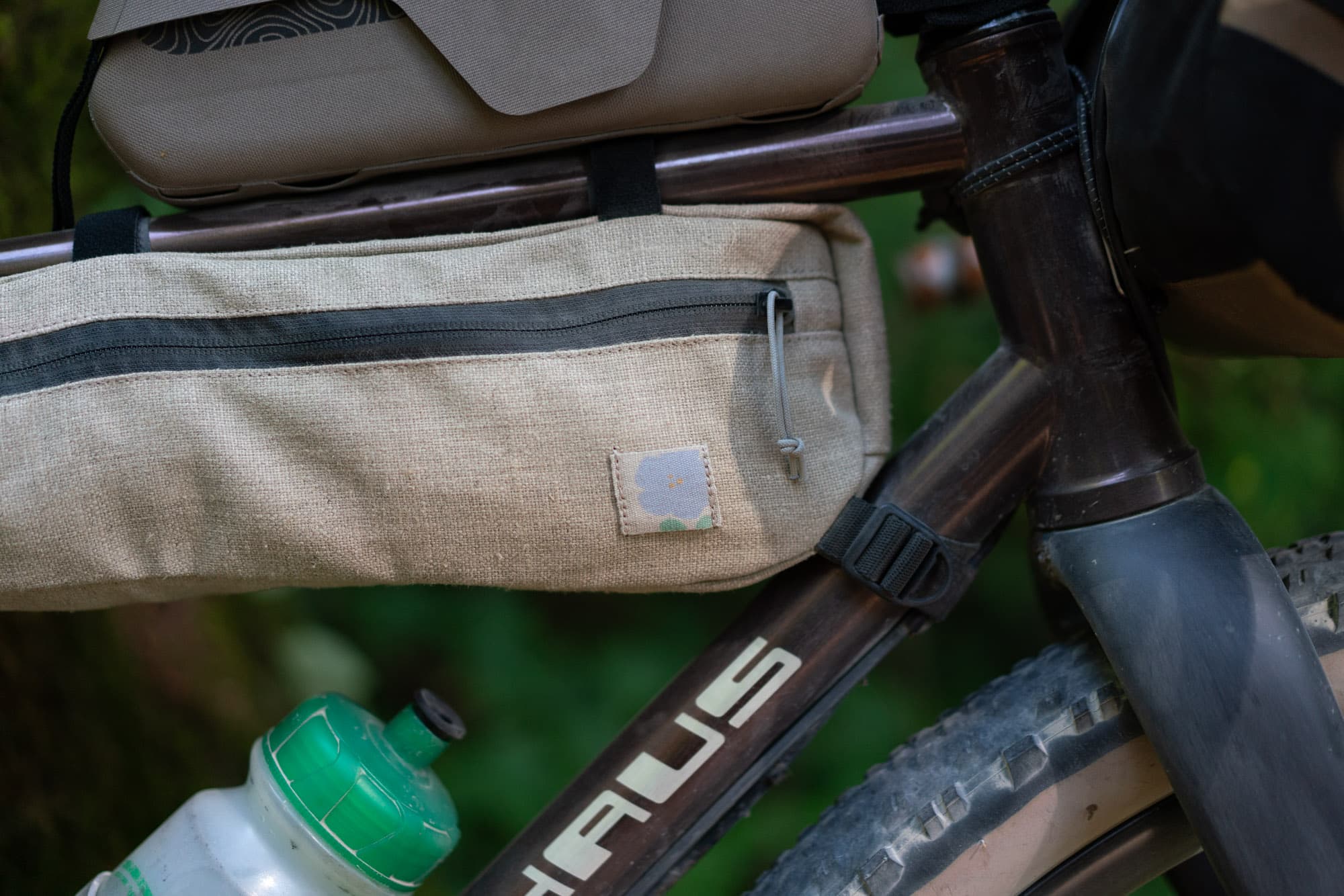
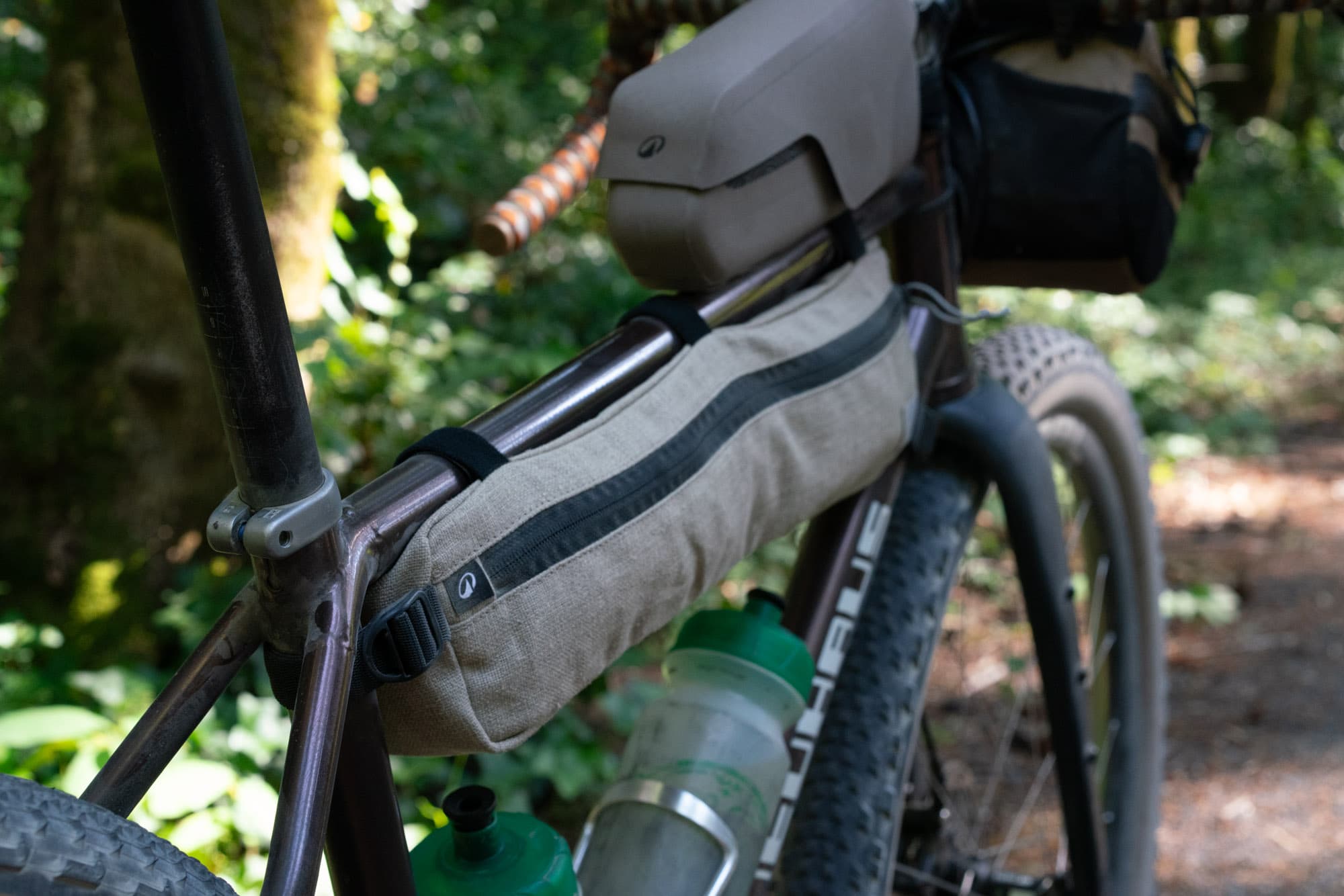
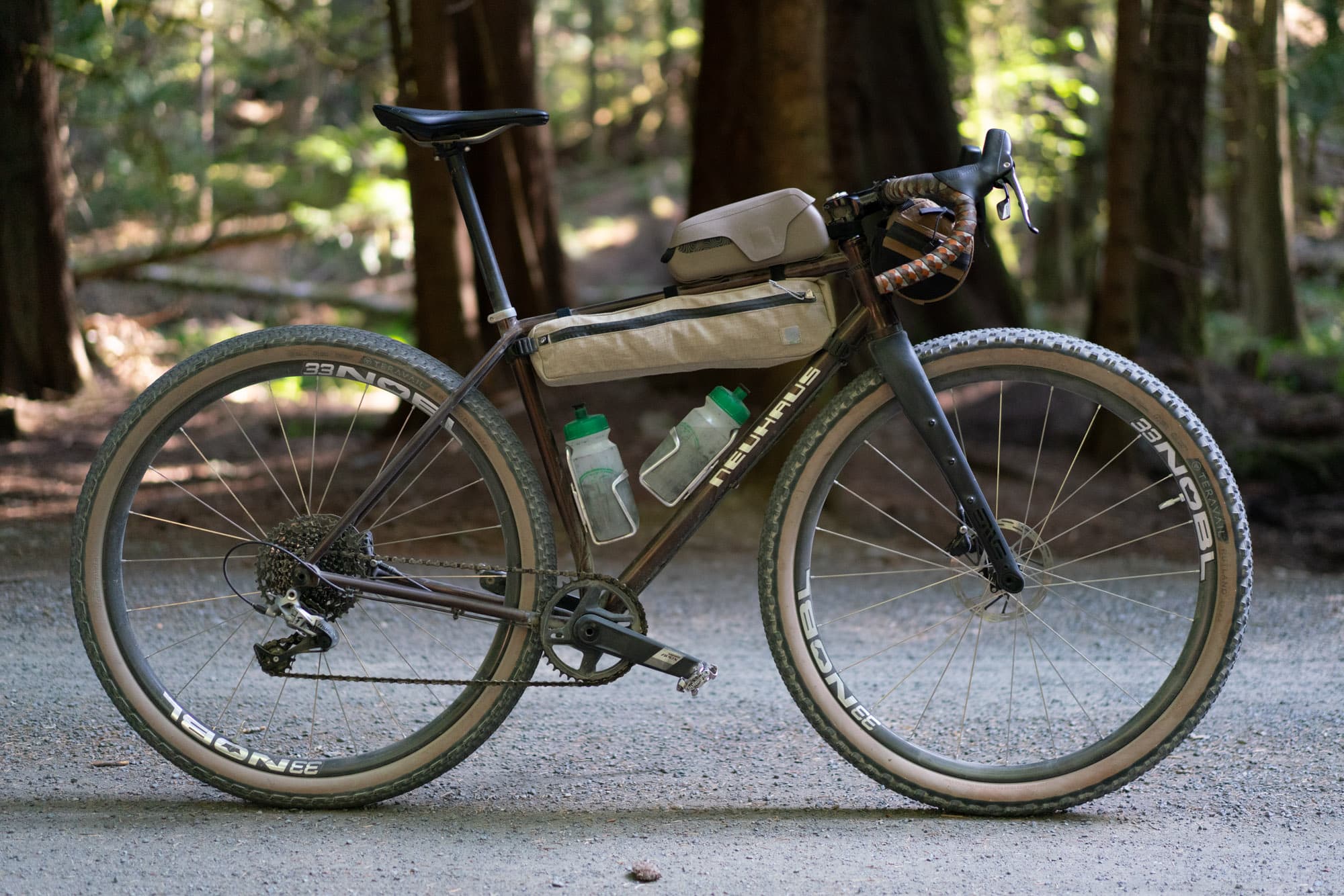
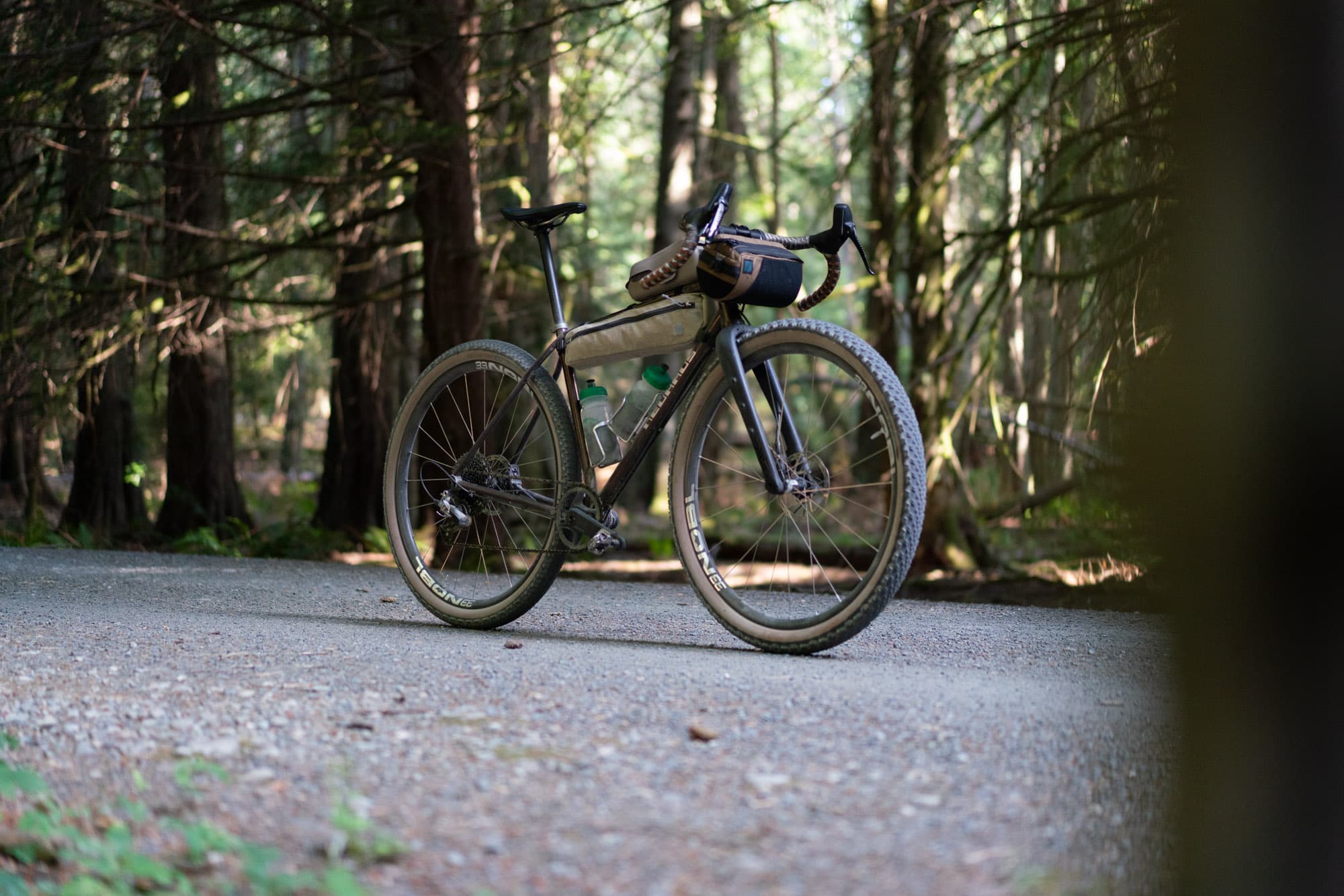
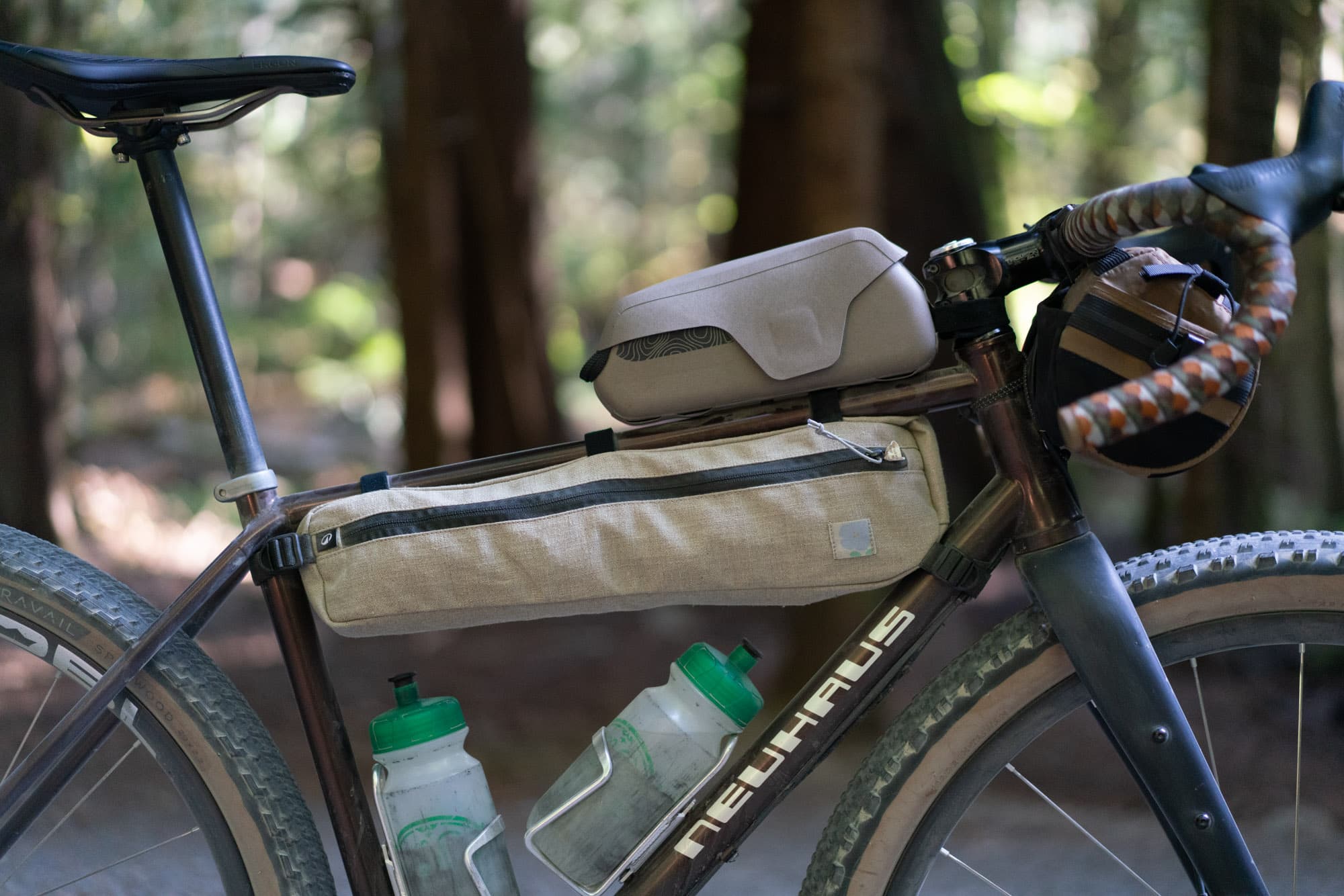
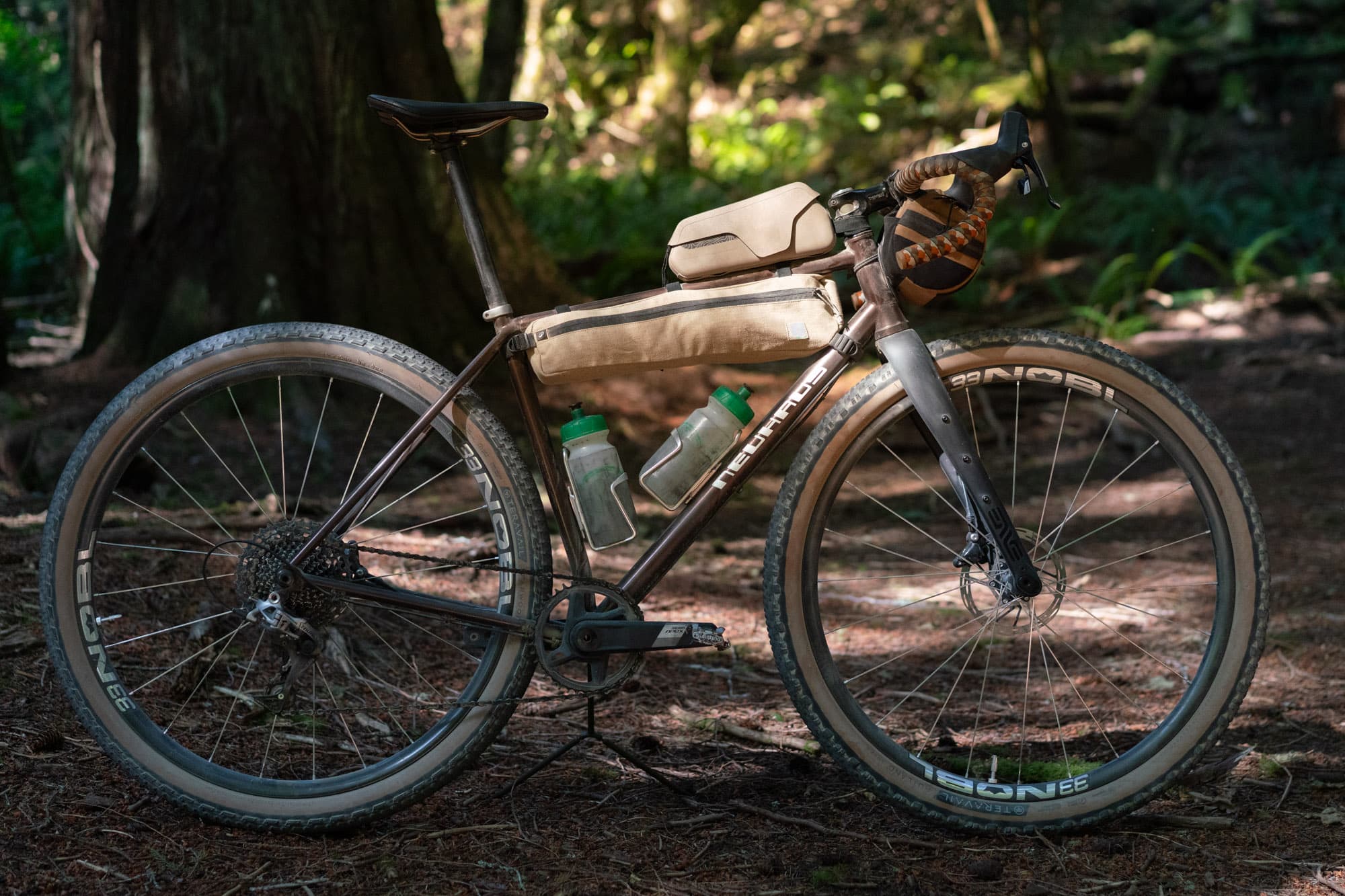
And it looks the part. The natural linen colour is just tan, the actual colour of the fibre, not a decision someone made in a room. I knew it’d look sharp against my Neuhaus BigLeaf, which is metallic root-beer coloured, and all my other bags are already tan. It fit my setup perfectly. Natural all the way down, right to the colour. At £49.99 (about CAD $95 / USD $67) for the 2.5L half-frame, it’s not asking much of you either.
What a Half-Frame Is Actually For
I’ll be honest: I’ve never really understood half-frame bags. On any serious bikepacking trip, a half-frame isn’t going to cut it, not next to a full custom framebag. But it turns out the job is my riding. Our shoulder seasons out here are all over the place, weather-wise, and I never quite know what to wear. A half-frame gives me that extra pocket of flexible room for the just-in-case layer. Plus, if you're just starting to build out a setup, this is an inexpensive way to find out whether you even need more storage before you commit to a custom framebag.
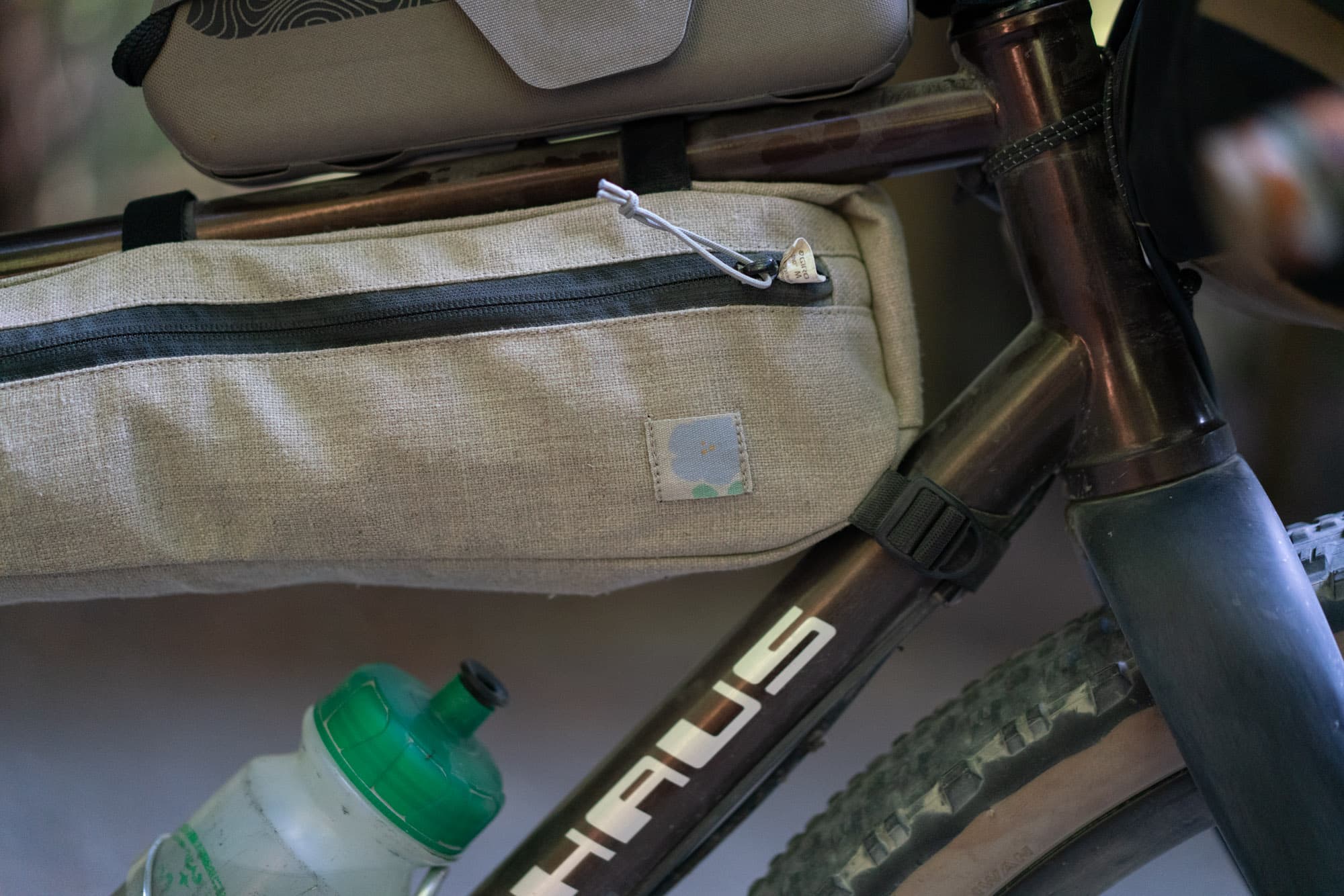
Install was straightforward. Velcro straps for the top tube, canvas cinch straps around the seat tube and down tube. The Velcro ran a little long, so I trimmed it. If I could change one thing, I’d swap the top-tube Velcro for rubber straps, but I’m nitpicking. Ten minutes and it was on.
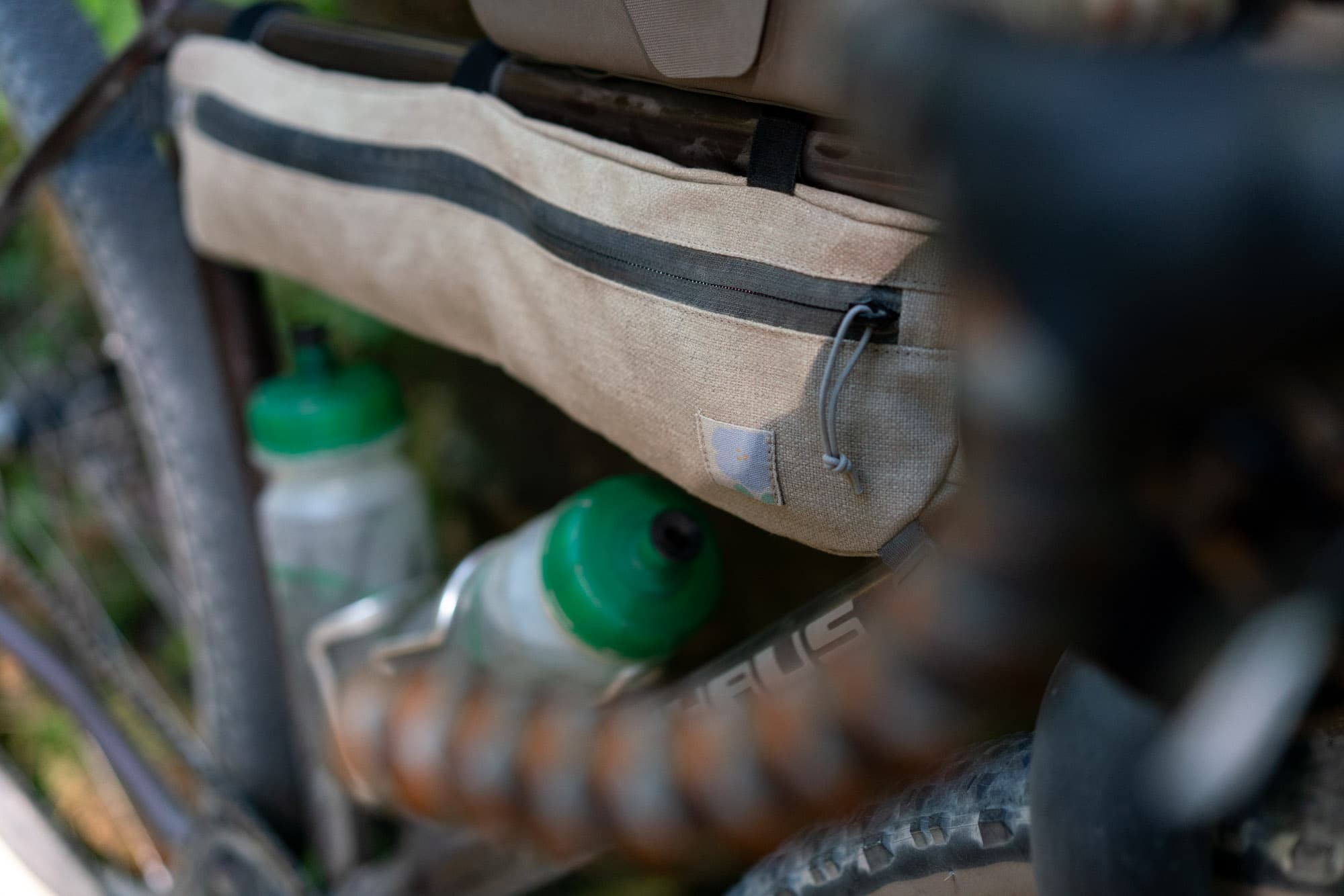
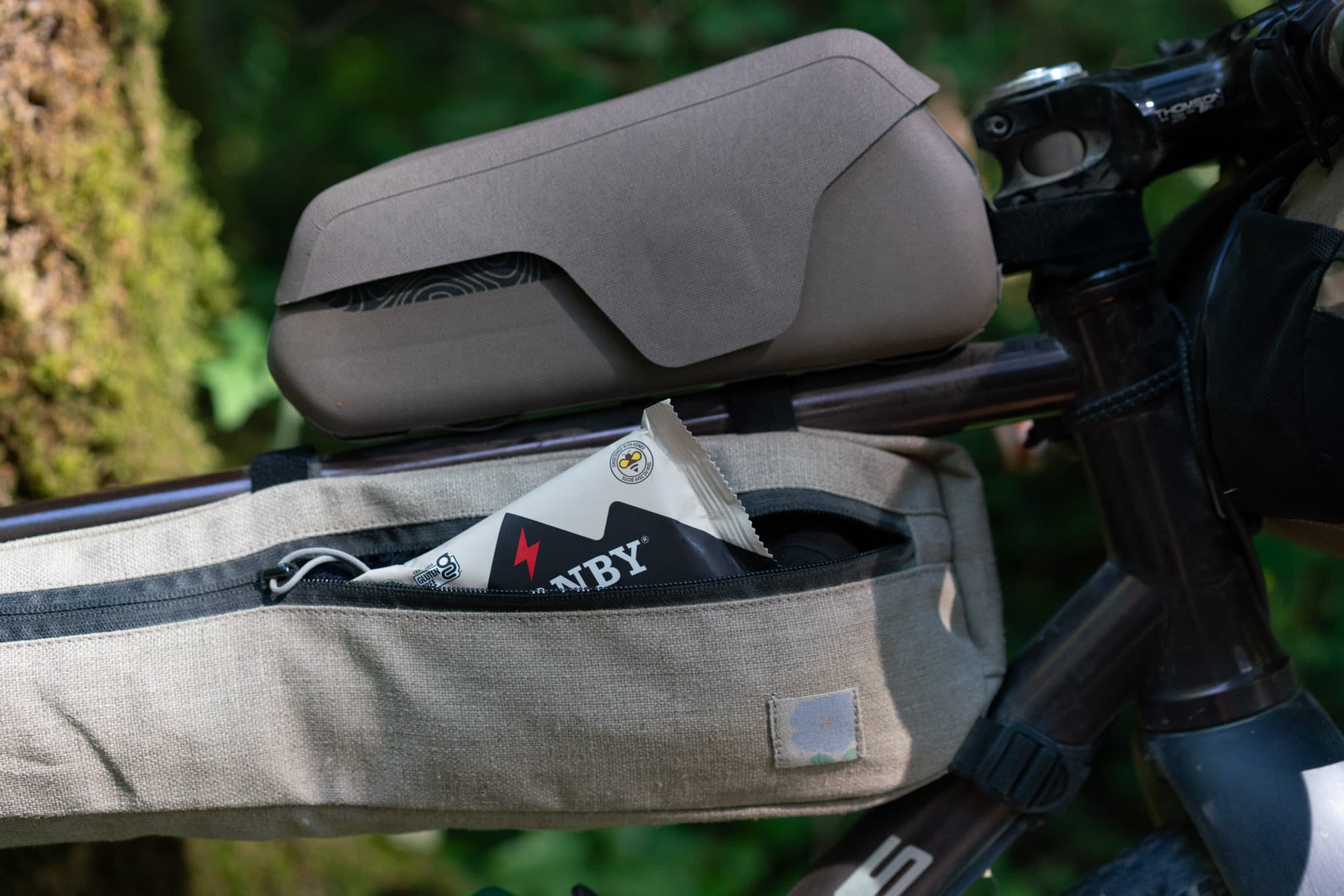
One big compartment on the drive side, no inner pockets, and I actually love that. This funny coastal summer has been hot one minute, cold the next, so I’ve been carrying a backup layer, my gloves, and a water filter, and the whole kit drops right in. No fuss, no organizing. Just enough. The non-drive side has a shallower compartment where I keep my Stinner Frameworks Photo Stick and some wires, fits great. Then there’s a third open pocket up front that I genuinely couldn’t figure out. I wouldn't trust anything valuable to it, but it’s quick-access. (Turns out Decathlon calls it the rubbish pocket. Fair enough.)
The Dust, and the Winter
Here’s what the documentary won’t tell you. My meditative ride is a local rail-grade out and back, three or four times a week. Crushed gravel, the stuff the city lays down. And that gravel throws up this super-fine dust that gets locked into the weave. I’ve had to take a brush to the bag a few times, bang it out. Natural fibre doesn’t repel a thing, which is exactly the flip side of everything I love about it. The same texture that breathes is the texture that holds grit. It’s not a dealbreaker, more notable than annoying.
The bigger question is winter. I ride year-round out here, and I have serious doubts this bag survives a real Pacific Northwest winter. The brand says it straight up: not waterproof. Water-repellent PU coating, but a stitched textile at heart. Come the mud and the rain, this isn’t the tool.
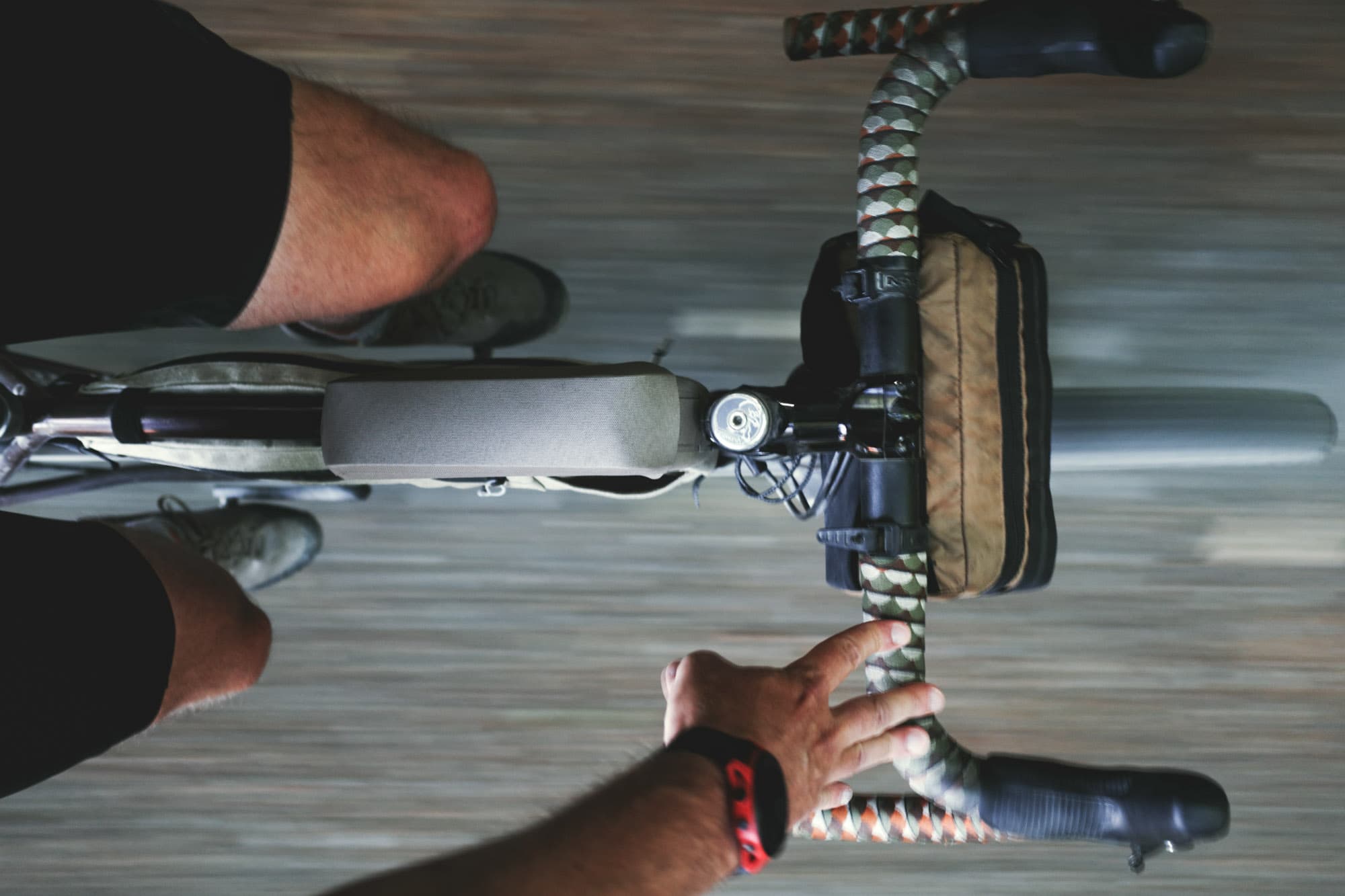
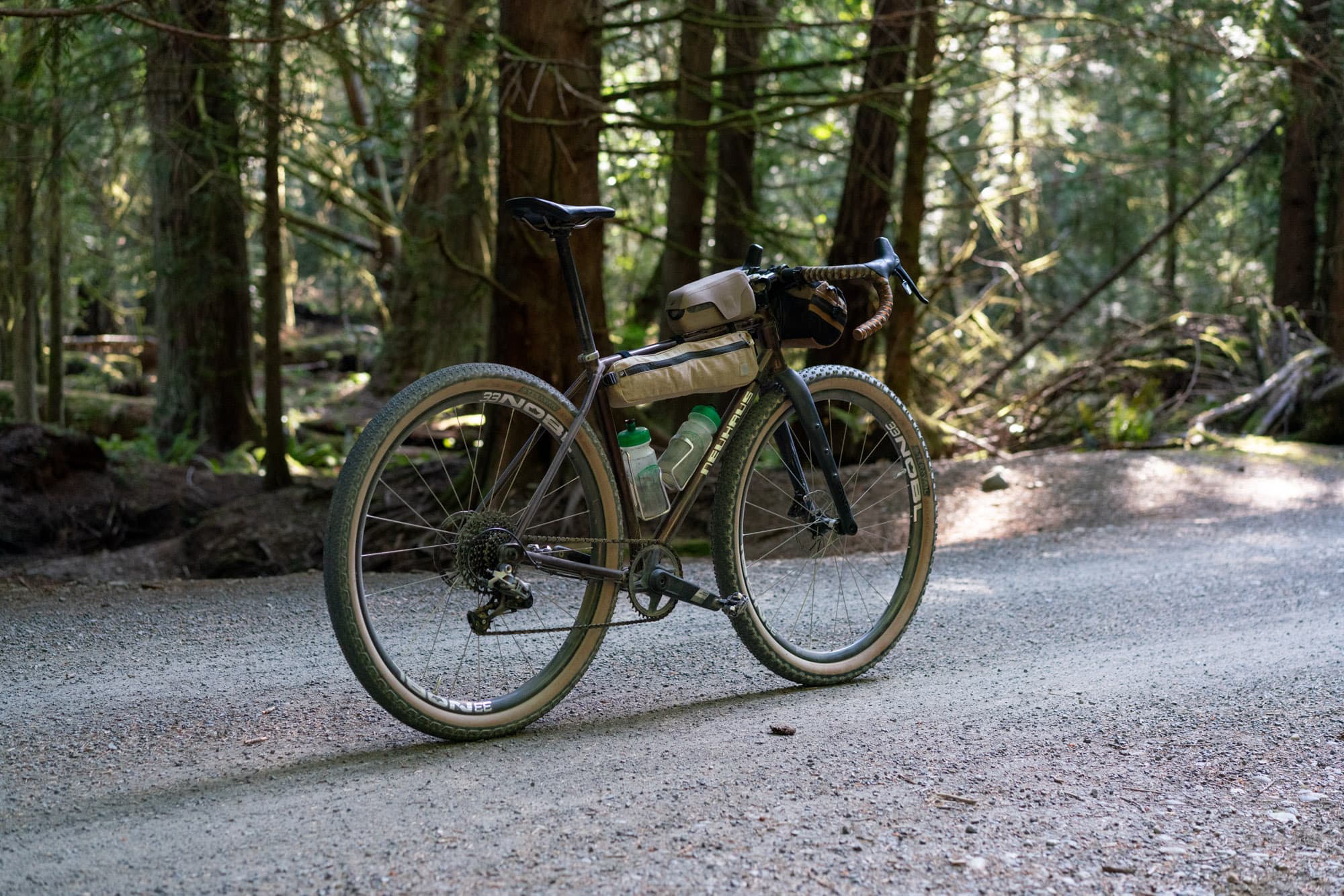
And you know what? That’s fine. Because the big thing about this bag, for me, is that it just looks cool. It looks cool in the city, it looks cool out in the middle of nowhere, and I’m allowed to want that. When it gets wet this fall I’ll go back to my waterproof setup. Until then it’s my summer gravel-grinding bag, and, funny enough, it converted me. I’m a half-frame guy now. It gives me exactly the storage I need and nothing I don’t. It’s not the most rugged thing out there. But sometimes you gotta sacrifice ruggedness for style.
The Bag I Didn’t Ask For
Decathlon also sent me the Rockrider ADVT 900 top tube bag (1L, £34.99, about CAD $66 / USD $47) because our editor Jeff knew my Apidura Expedition had finally died after years of loyal service.
I’ve been a zip-up top tube bag guy forever. This one uses a FIDLOCK magnetic flip-top, and I was suspicious. I shouldn’t have been. It’s so good. After years carrying a mirrorless camera over my shoulder with the Wit Slingers Camera strap, I now keep my Ricoh GR in this top tube bag. I can flip it open one-handed to grab a shot without stopping. There’s a handy cable port too. It’s noticeably wider than the Apidura, so coming off years of a slimmer bag took some adjusting, but I got used to it.
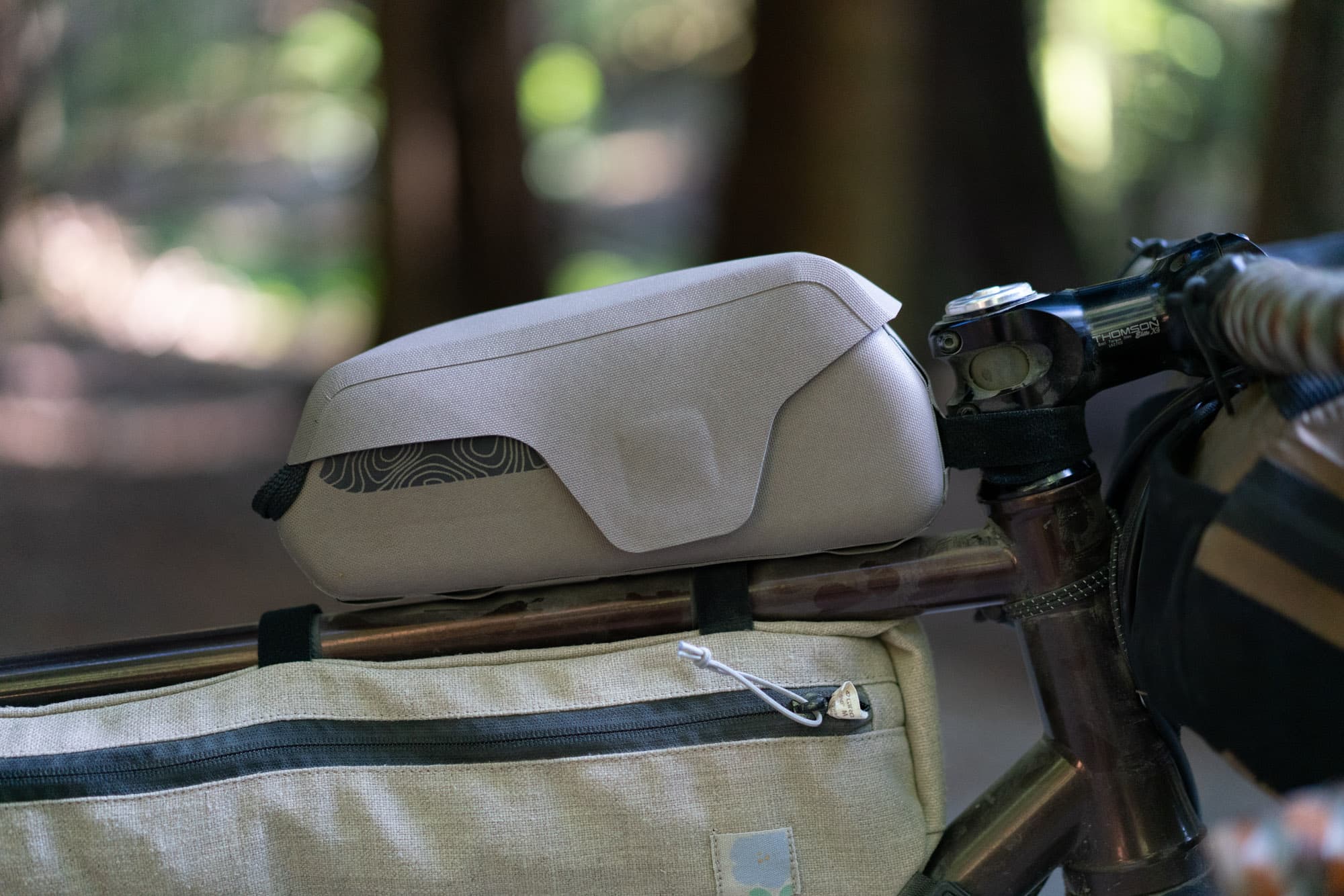
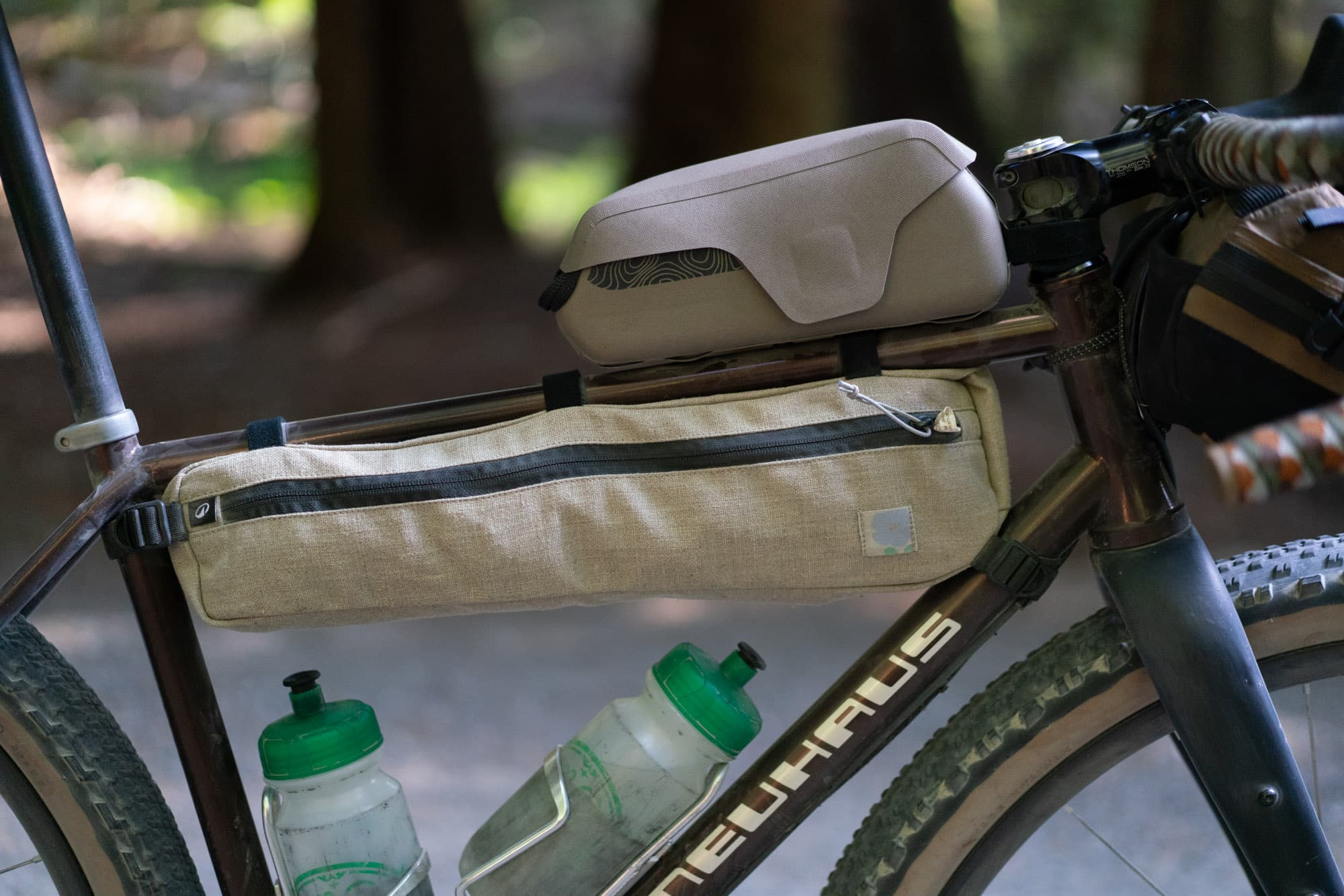
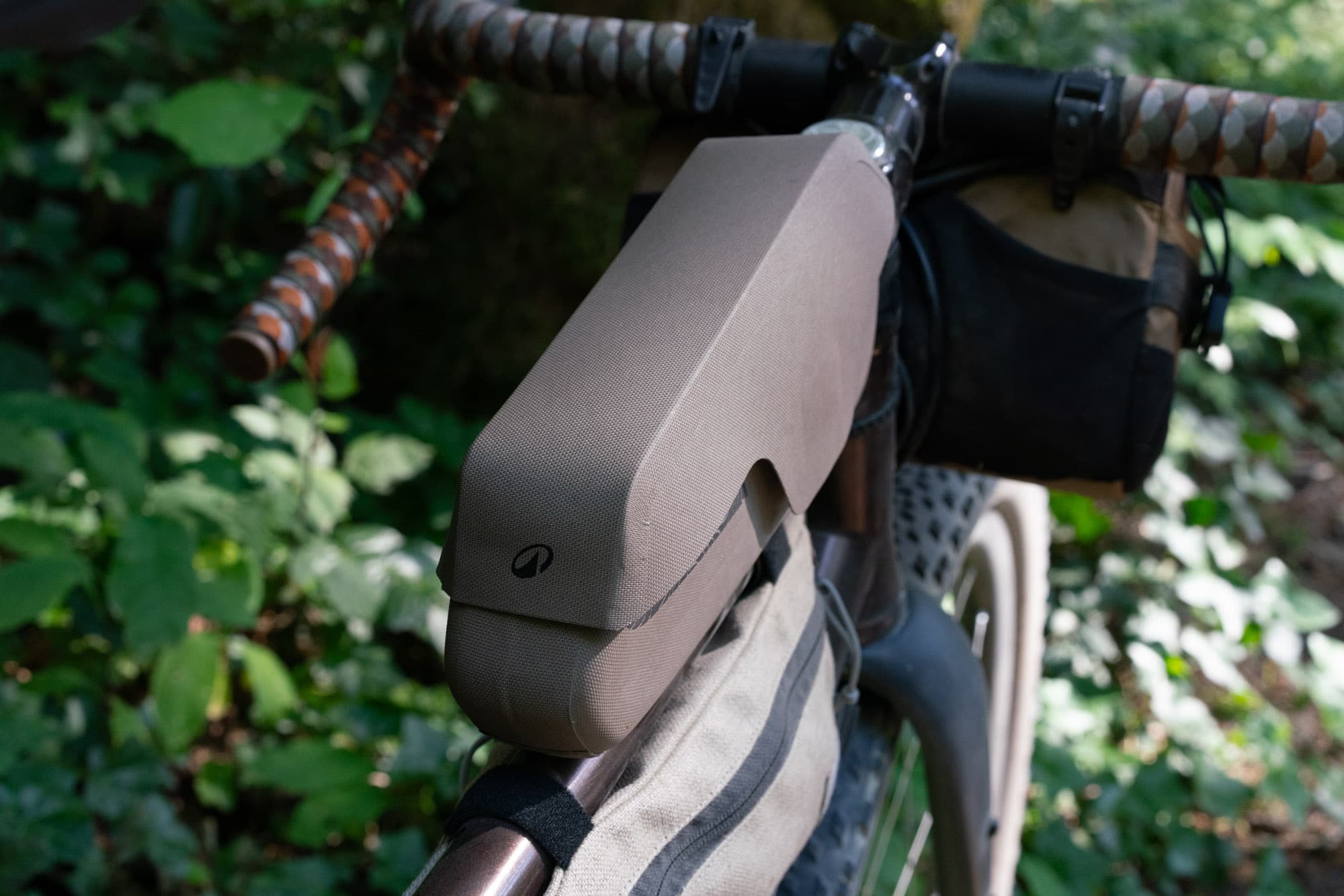
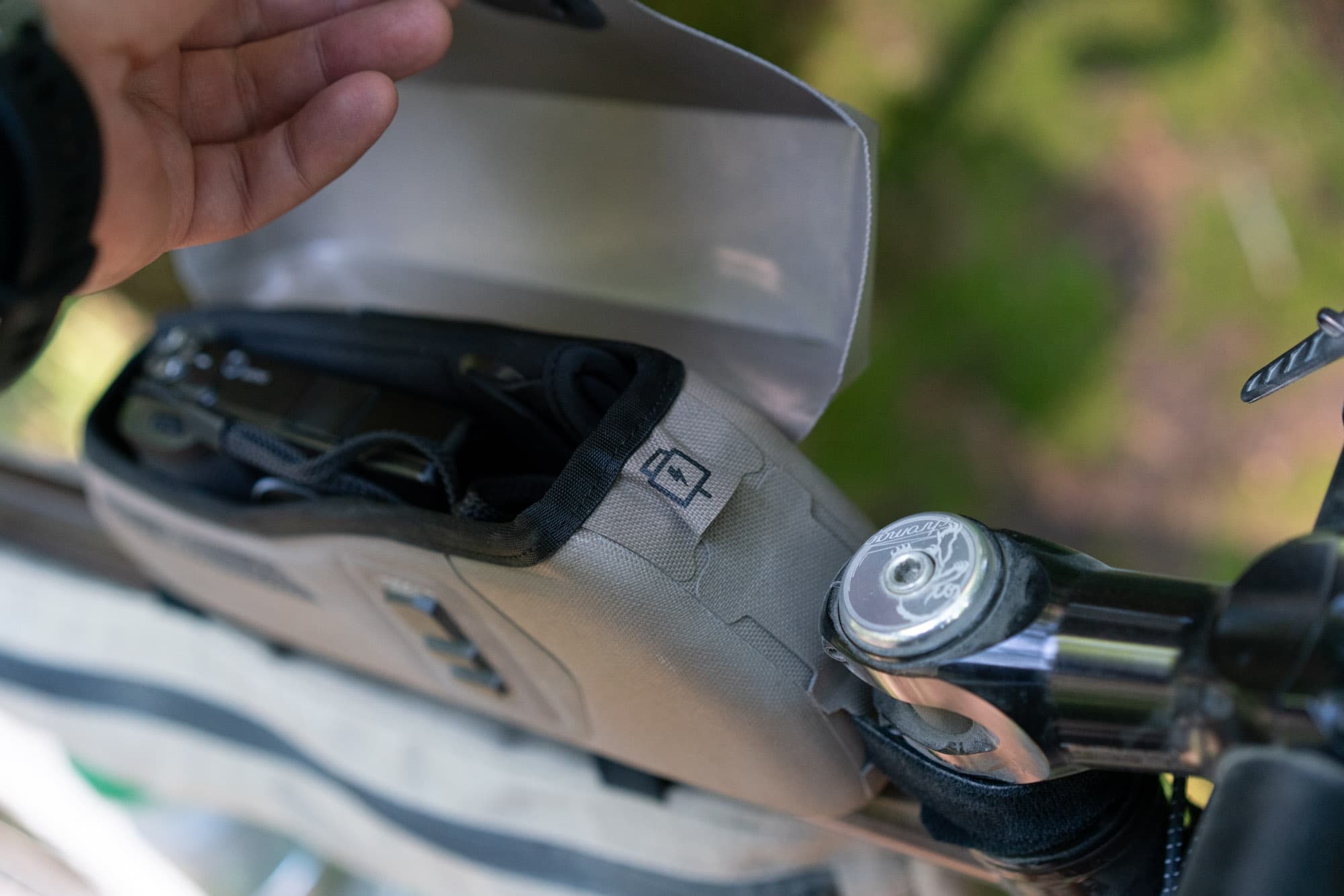
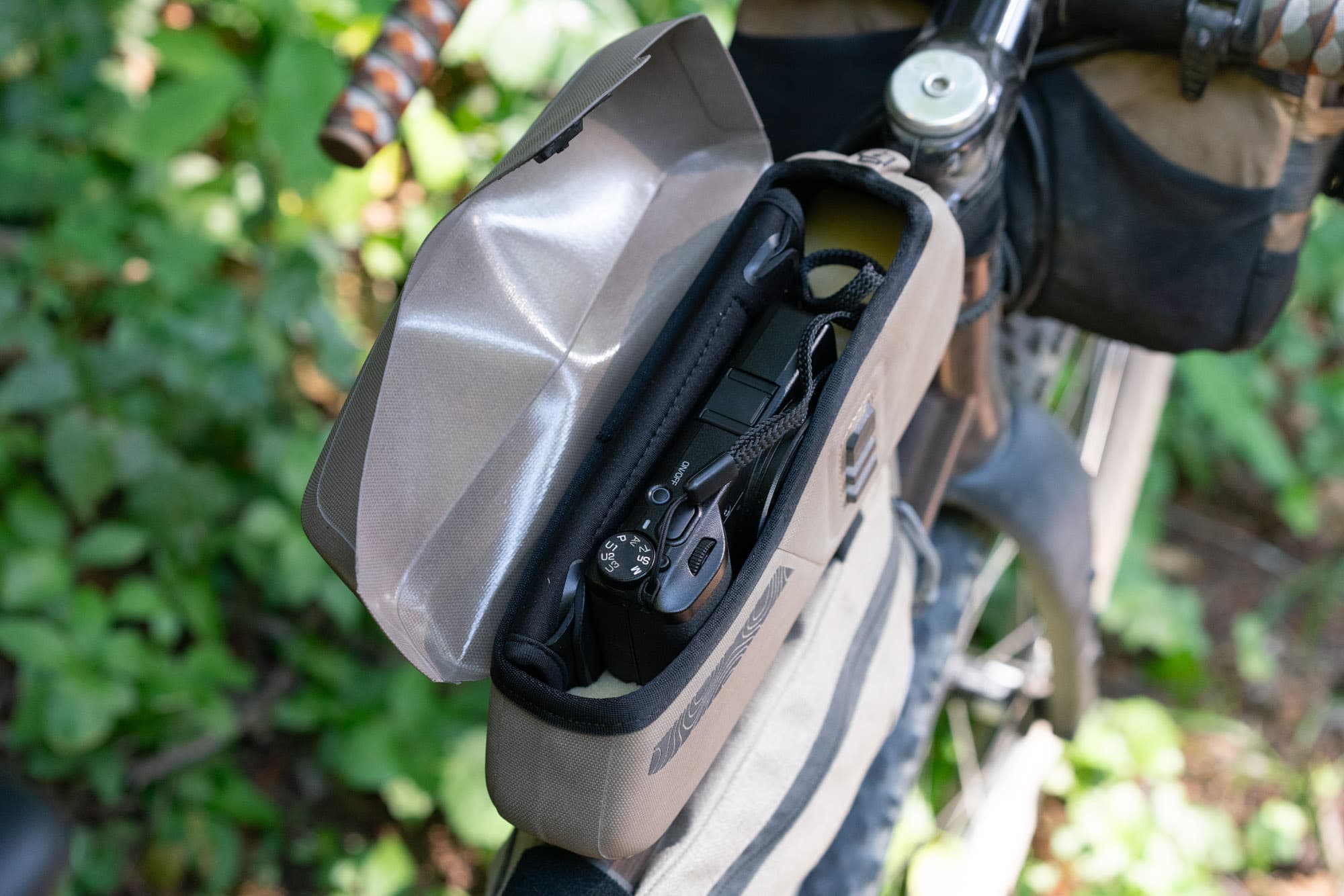
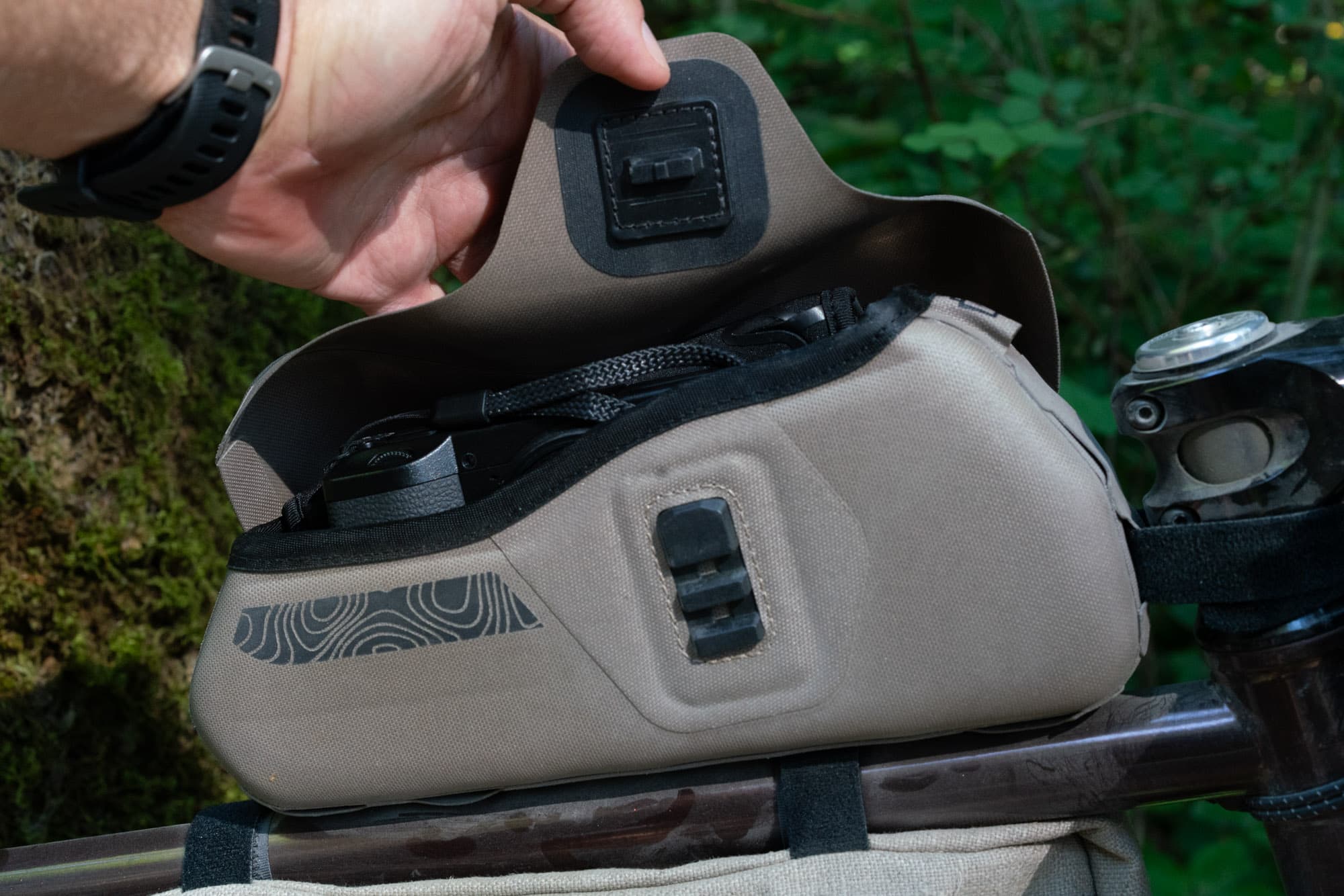
Three gripes, though. One: it’s a little boring. Gray and this bad-nineties-desktop-computer beige. A neon splash on the side graphic would’ve woken it up. (Yes, I know, I just praised the linen’s beige. But that’s natural beige versus a colour someone chose. Different thing.) Two: it didn’t come with any frame bolts, which is strange. I sourced shorter ones and they worked loose on a trip. Not ideal. Three: they call it waterproof, and I don’t buy it. Living somewhere as wet as Vancouver Island, I take that word seriously, and I can see water wicking up into the compartment. Unconfirmed. I’ll find out this winter.
Anyway, the linen bag’s on the BigLeaf right now, tan on root-beer, catching dust on my rail-grade loop and looking great doing it. Not the most rugged thing I own. But it turned out to be just the right amount of bag.
Pros
- Natural linen looks fantastic on the bike, city or backcountry
- Simple, roomy single compartment, perfect for grab-and-go essentials
- Genuinely lower-impact materials story, and a fair £49.99 (about CAD $95 / USD $67)
- Easy install
Cons
- Not waterproof. A fair-weather, shoulder-season bag, full stop
- Natural fibre grabs fine trail dust; needs the occasional brush-out
- Hand-wash only, no tumble, no iron. A little fussy to keep clean
- A half-frame won't replace a full framebag on a real trip