Tailfin Journey Pannier Rack: The One to Abuse


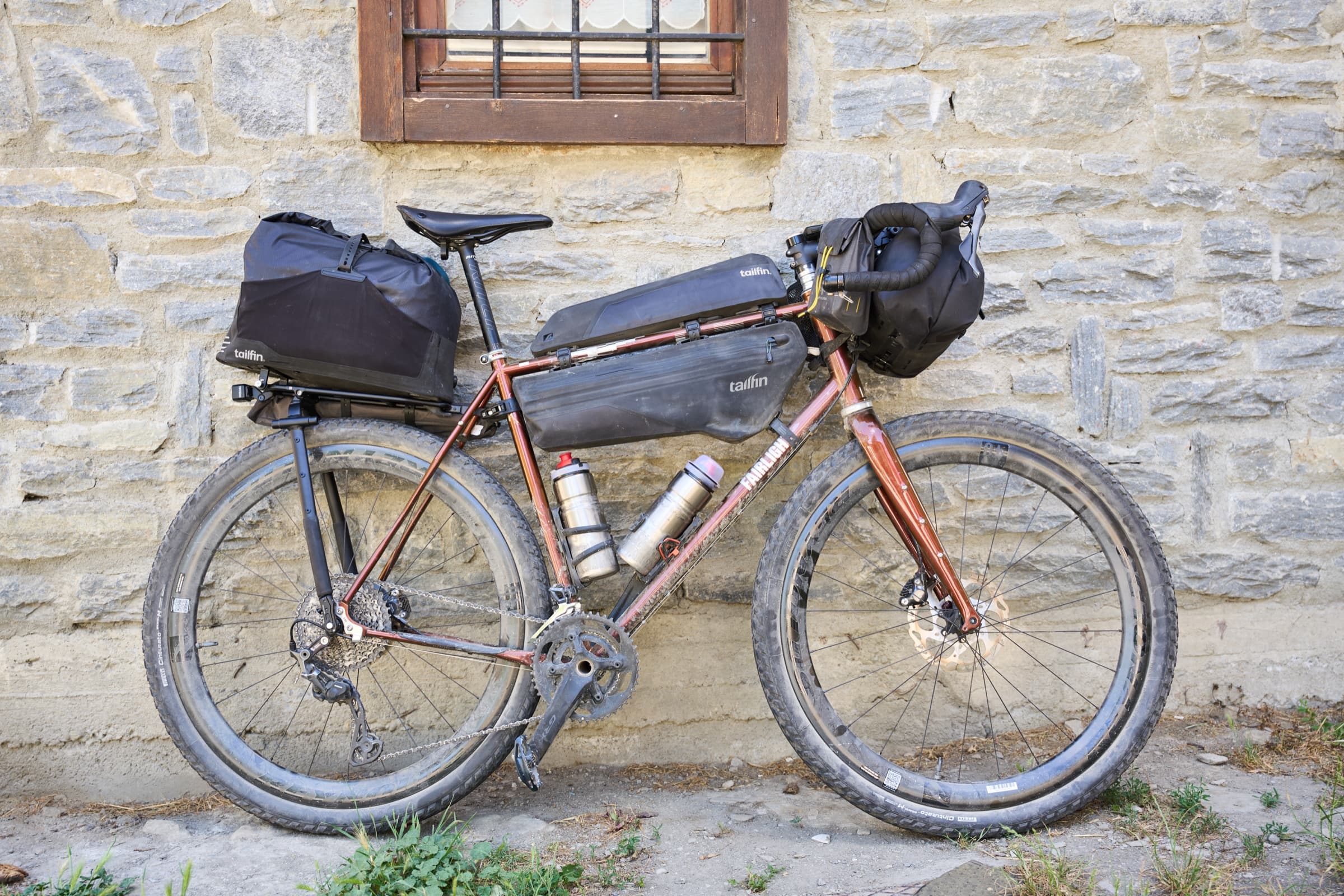
I have only one bike, a gravel bike. It does everything: recreational rides, commutes, bikepacking trips. It's a bikepacking-focused build, but here's my confession: I can't stand the clutter. When I'm not actually heading out on an overnighter, I want the racks, the cages, and all the bikepacking stuff off. Sure, it means a bit more faffing about when a trip comes around, but I like the stripped-down honesty of the bike in its everyday clothes.
For years, that preference put me in an awkward spot with racks. Bolt-on racks are secure but permanent. Or they're at least permanent enough that removing them feels like a small mechanical ceremony. Quick-release systems existed, but they usually came with compromises like proprietary everything and carbon price tags.
When Tailfin announced the Journey Pannier Rack, I was intrigued. Aluminum instead of carbon. Universal mounting: frame bosses, quick-release axles, thru-axles, even compatibility with full-suspension bikes. Compatible not just with Tailfin's own ecosystem but with third-party panniers, cargo cages, and whatever dry bag situation you've got going on. A rack that, in full Tailfin style, comes off in under a minute and folds flat for storage.
On paper, I'm exactly the end-user this product was designed for. I also have friends who operate the opposite way: their bike wears the same setup year-round, racks welded on by habit if not by hardware. Both approaches are valid, different strokes for different folks. But for those of us running the naked approach, the Journey Pannier Rack promised something we'd been waiting for. Time to find out if it delivered.

From Carbon to Common Sense
What's left to say? At BGDB, our Gear Page has plenty of Tailfin product reviews, including the Aeropack Cargo. As our regular readers already know, Tailfin launched in 2016 via a successful Kickstarter campaign. They then built their reputation on lightweight carbon racks that fit just about any bike. The engineering was always impressive; the carbon price tags, although deserved, less universally beloved. Beautiful, clever, expensive, but insanely good.
The Journey Pannier Rack feels like a deliberate answer to that criticism. Aluminum construction brings the price down to $185 USD for the frame-mount, Non-Pannier Arch version, and $240 USD for the Pannier Arch version (Universal Thru-Axle Kit, single thru-axle or QR mount adds more dollars on top). Even Ortlieb had to license Tailfin's quick-release rack tech for their latest model. That says something about the quality of the R&D happening in Bristol when the big boys come borrowing.
On in a Few Minutes
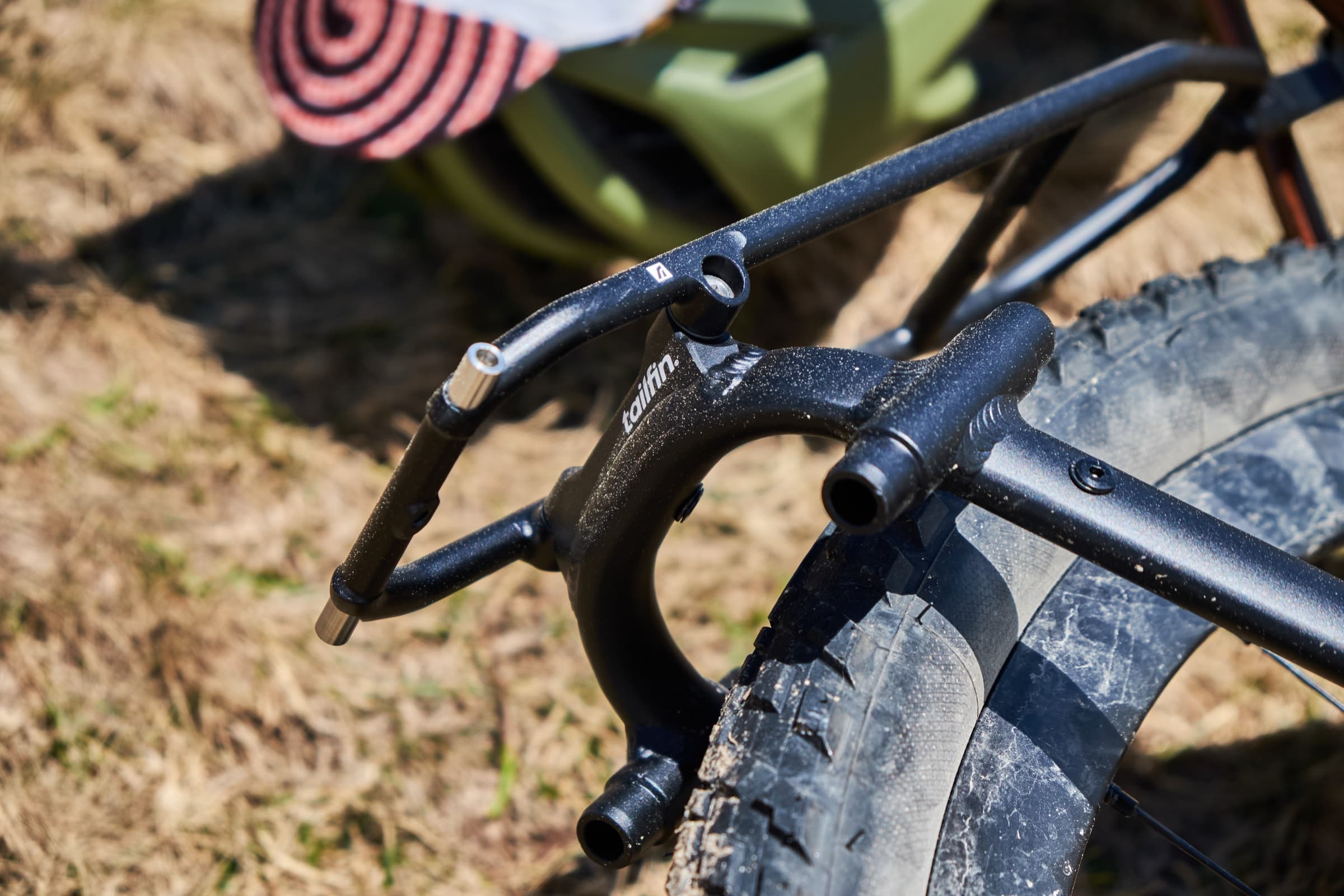
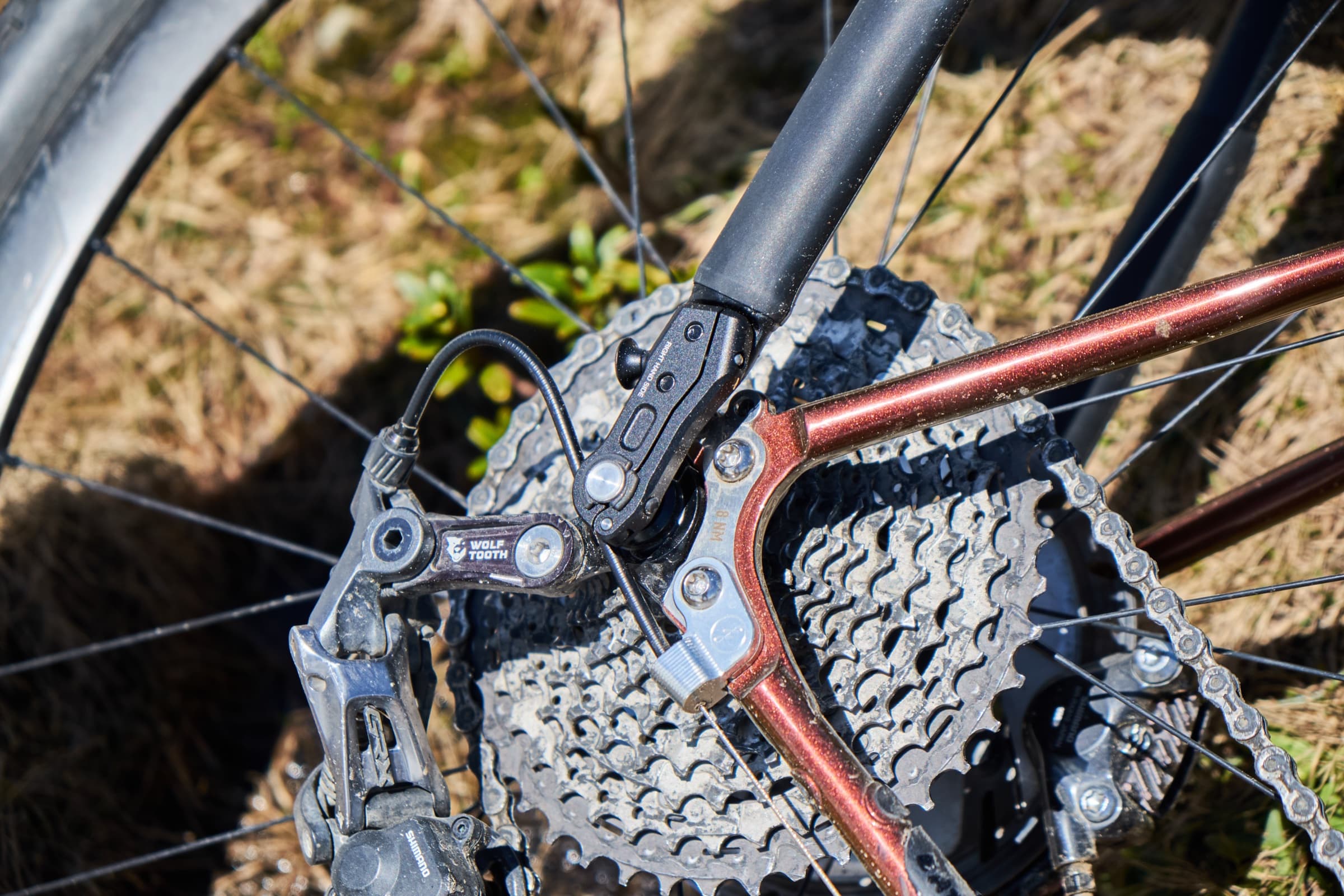
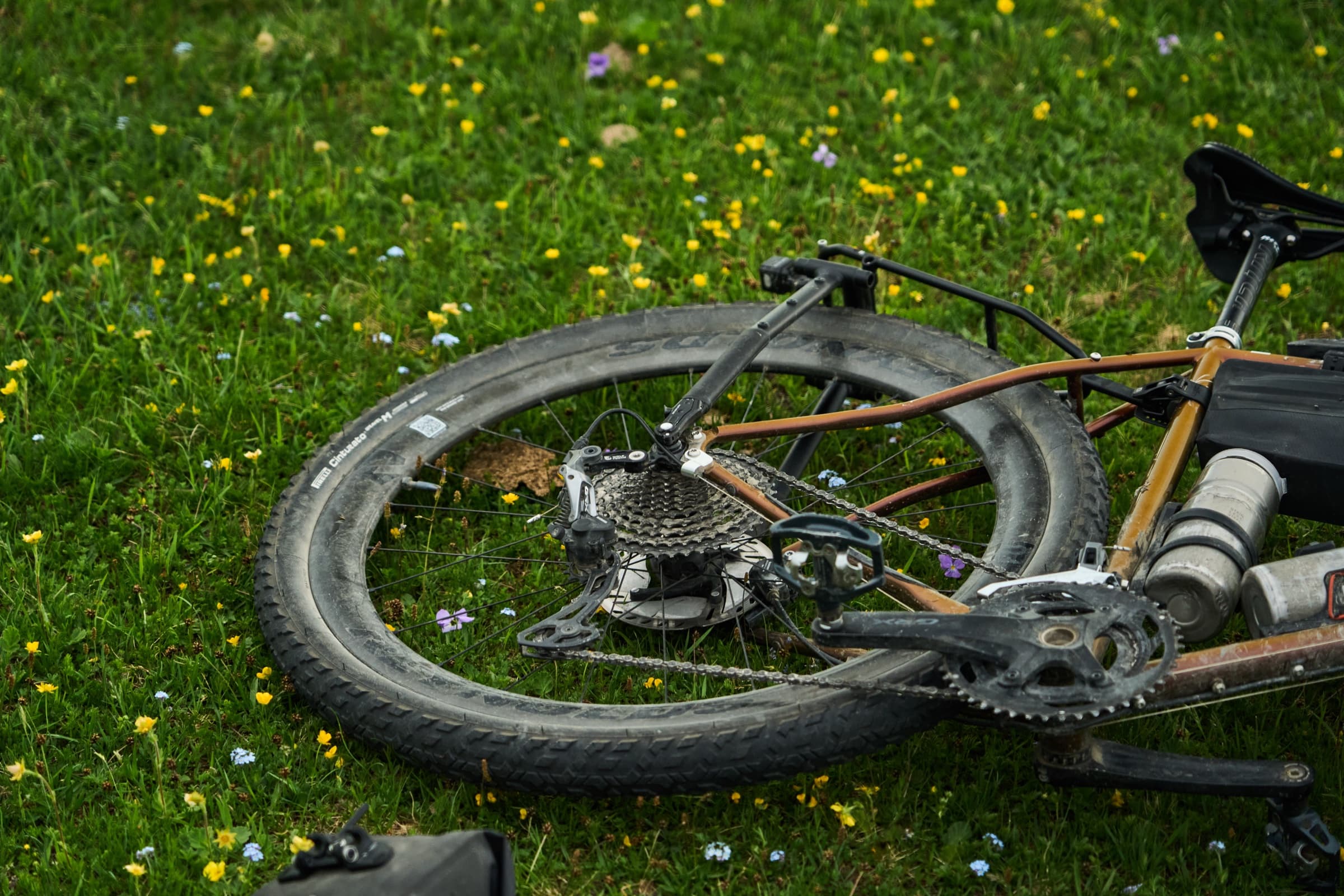
Tailfin offers three ways to mount the Journey Pannier Rack: directly to frame rack mounts, via a QR axle kit (hat tip to the rim-brake diehard), or (where the genius of the system really lives) through the thru-axle with Tailfin fast-release dropouts, offering a true-to-form quick release of the whole rack.
The process is simple. Remove your existing thru-axle, lay it out, and match its thread pitch and length to buy the correct thru-axle, or just go with the Universal one. It takes a few minutes. Add spacers if needed, reinstall, check the ends are symmetrical, done. Be mindful of component orientation as you assemble the rack, though: with this last iteration the dropouts on the rack only quick-release the right way around (left with left, right with right).
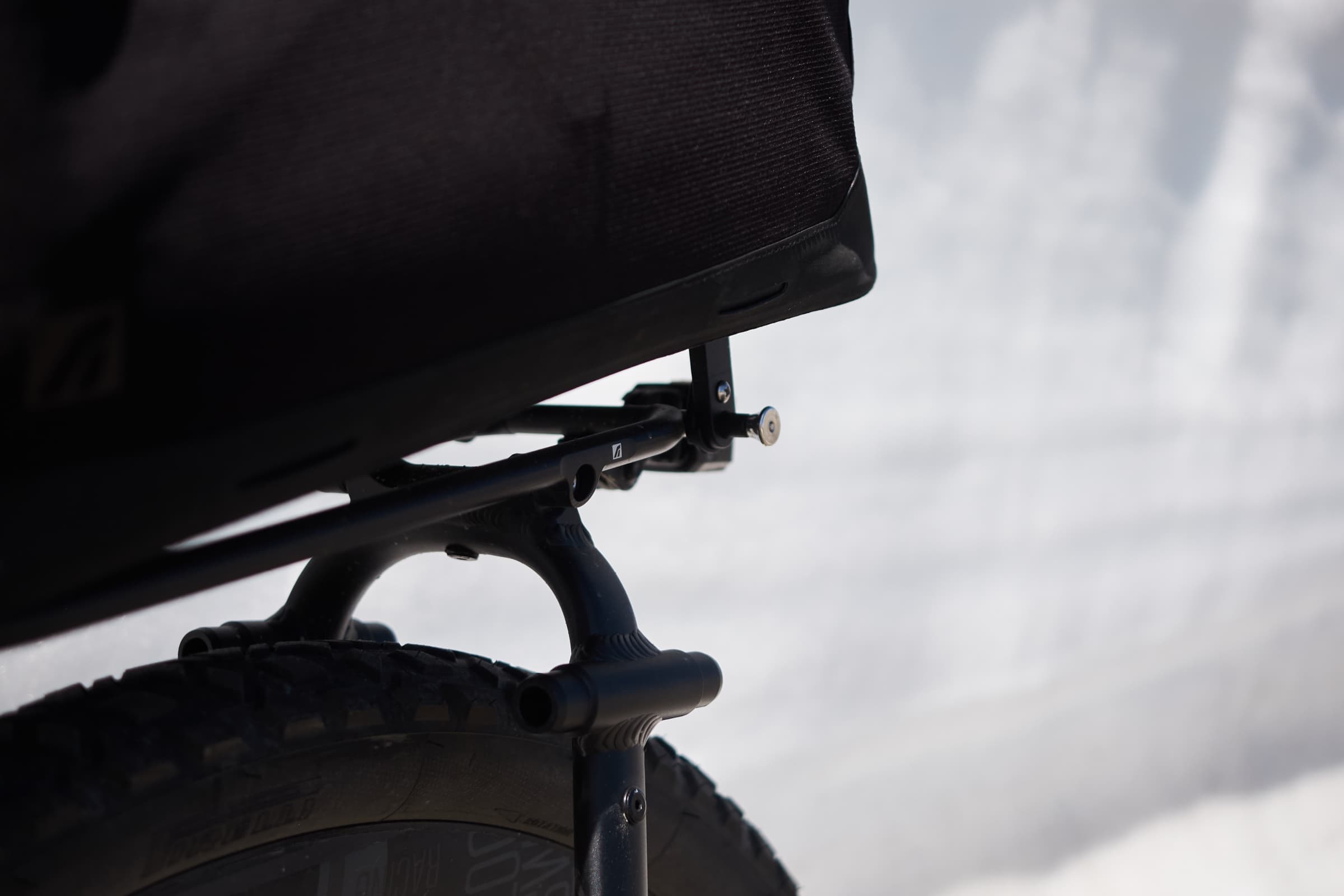
Up top, the redesigned seatpost clamp features rubber padding to eliminate abrasion marks and closes with a satisfying click to let you know it's secure. Two front connector brackets (one straight, one angled like a hockey stick) let you dial in the rack's geometry.
Now, "universal thru-axle" is a wild and creative concept. But you know what's better than a universal thru-axle? A custom-built one. The Tailfin axle for my Fairlight was the right diameter and pitch but a touch long: the sanctioned solution was spacers. Hold my beer. Instead, we chopped the axle down to the exact length and lathe-machined a Tailfin-lookalike end from scratch. A totally unnecessary little side project that turned out beautifully and now my thru-axle has a story to tell. The "we," for the record, is me and my girlfriend's father. So yes: this is definitely a story to tell.
Mix, Match, Mount
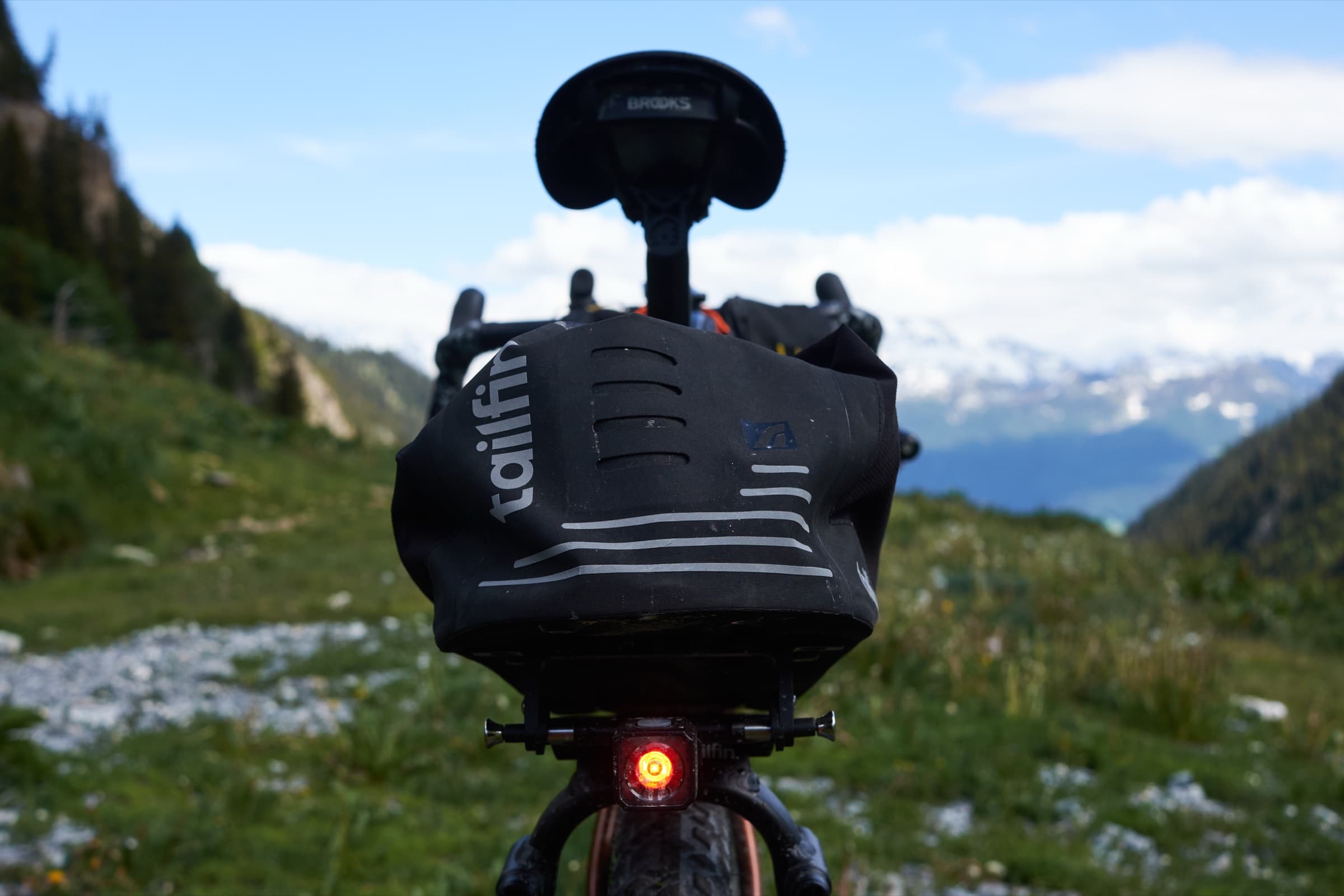
The Journey Pannier Rack comes in two options. The Pannier Arch version (740g) takes Tailfin's X-Clamp panniers and carries a maximum load of 32kg: 12kg on the top deck, 10kg per pannier side. The Non-Pannier Arch version (580g) trades the pannier rails for mounts running four bosses per side, with a 22kg max load: 10kg on top, 6kg per side. I eventually landed on the pannier version.
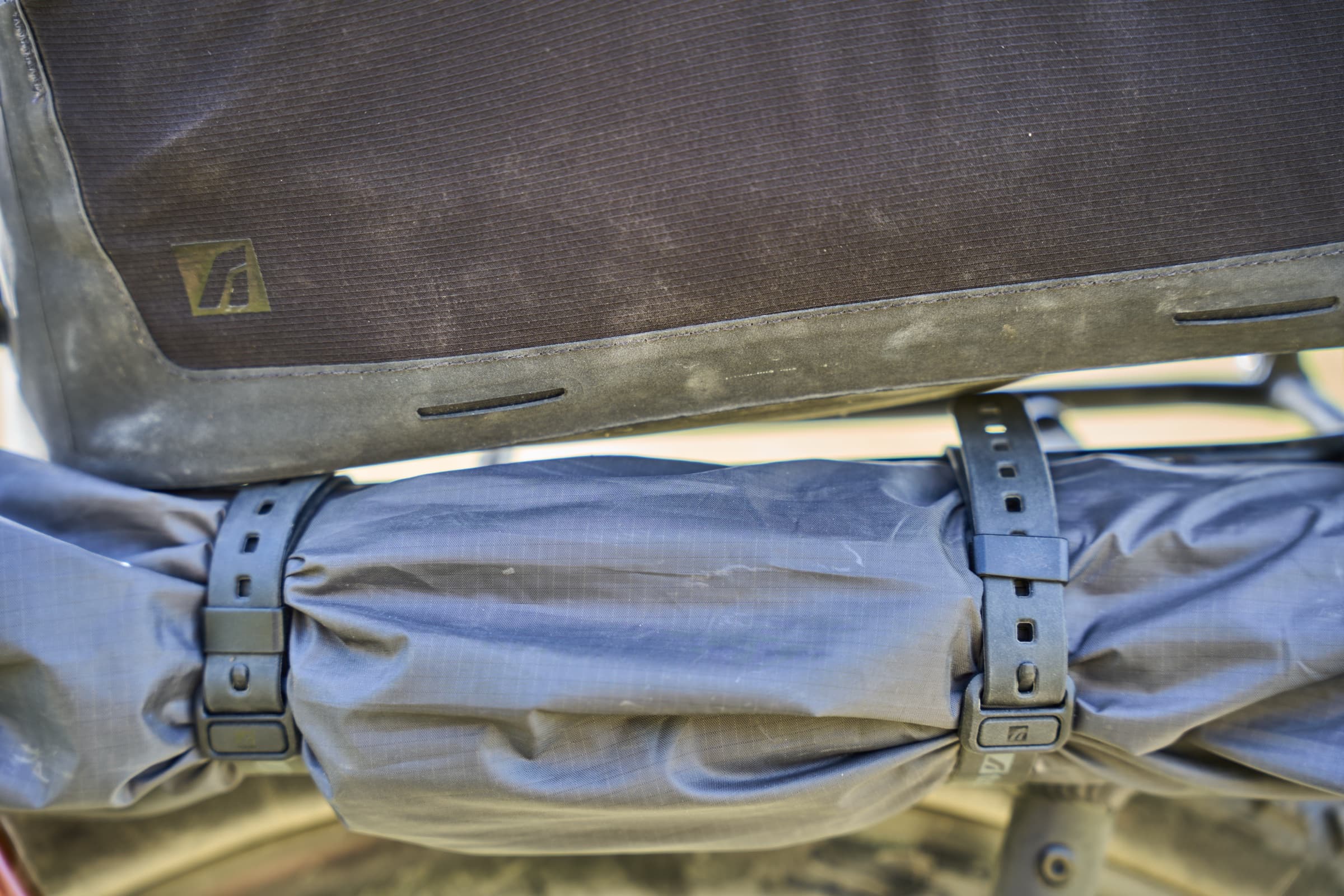
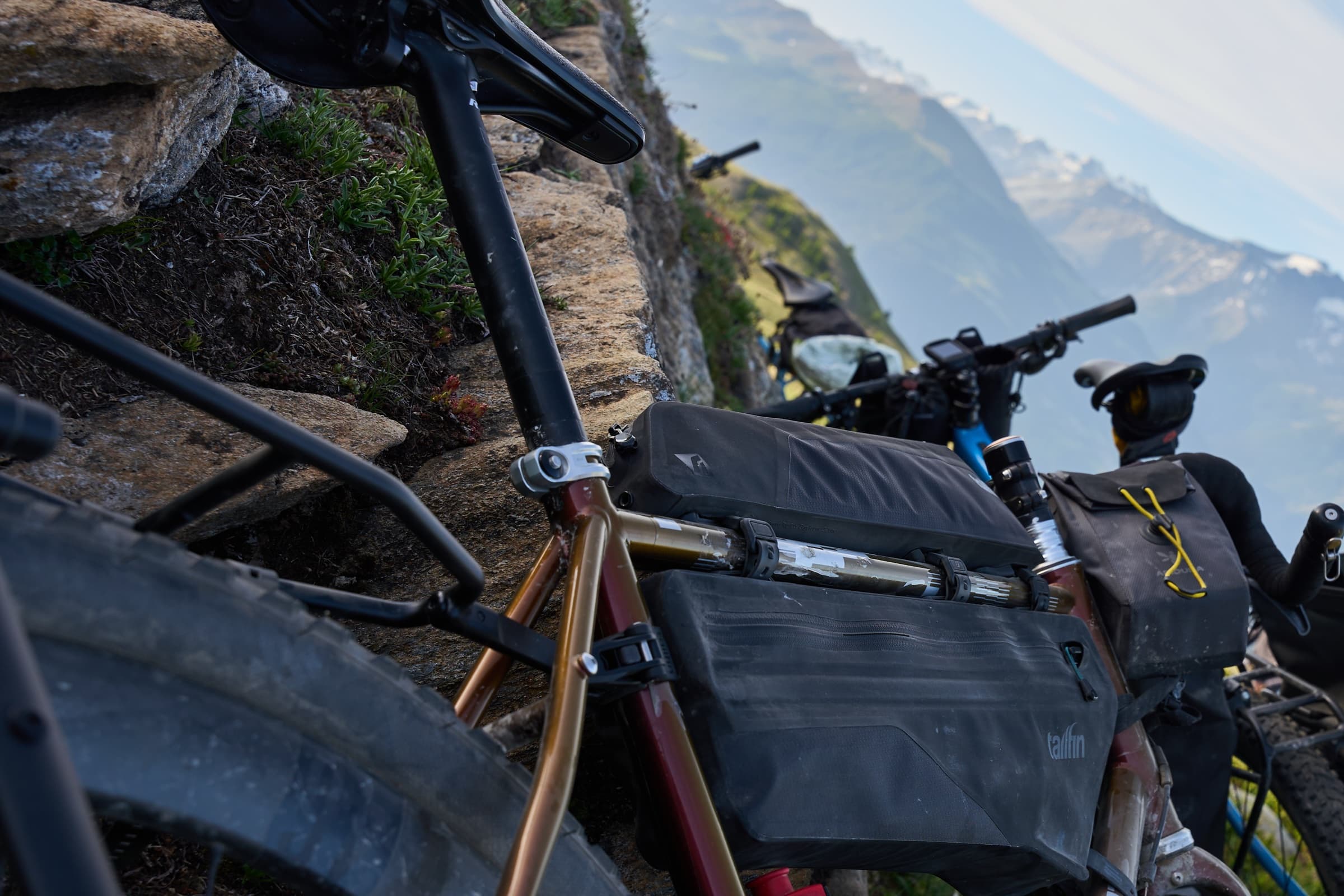
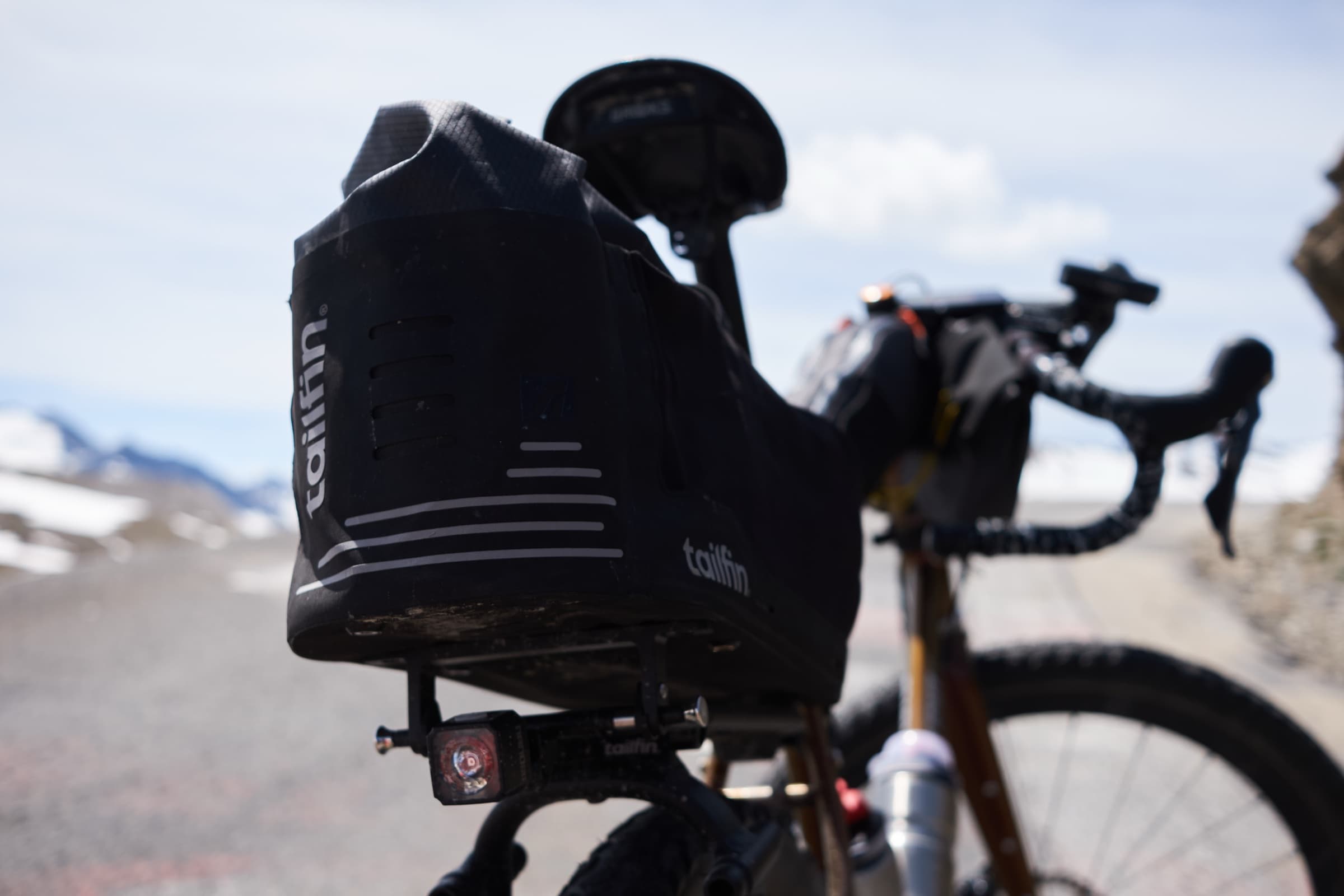
The rack looks solid in hand, and the platform-style top deck is a great upgrade for the dry-bag folks. The tubing on the top deck is 10mm in diameter, which means it plays nicely with Voile 10mm rack straps and top-opening bags from other brands. You can run Tailfin's own cargo cages, your favorite third-party cages, or traditional panniers from Ortlieb, Vaude, Old Man Mountain, and you-name-it, it all fits. The configurations are genuinely dozens deep.
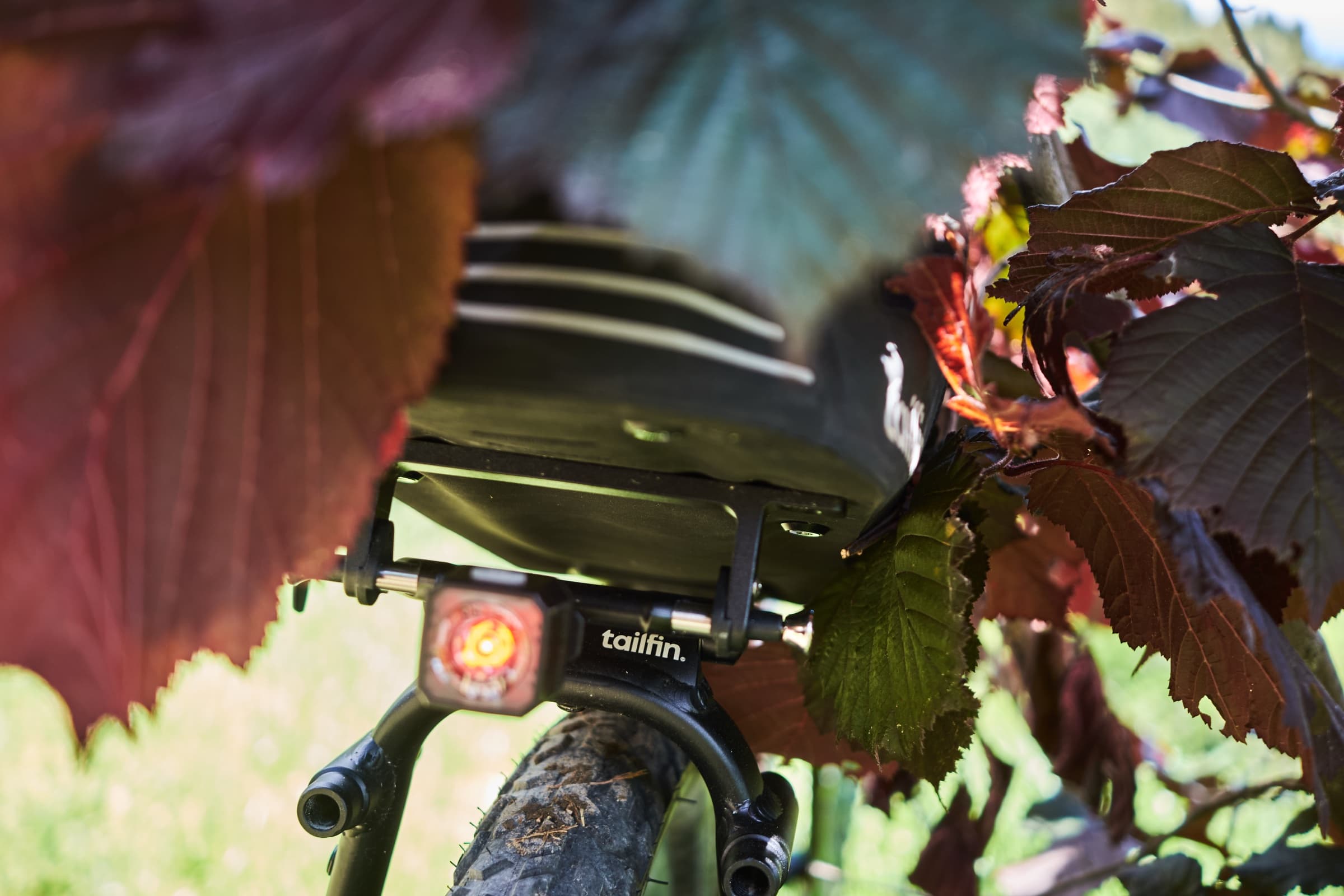
One design decision I particularly appreciate: the lower stance. I could never work out why the arches on previous Tailfin racks sat so high. Lowering the rack puts the weight lower, which potentially means a better riding experience, it also, genuinely and simply, looks better. There's also finally a light mount that doesn't depend on a rack-top bag being attached, which feels overdue but very welcome.

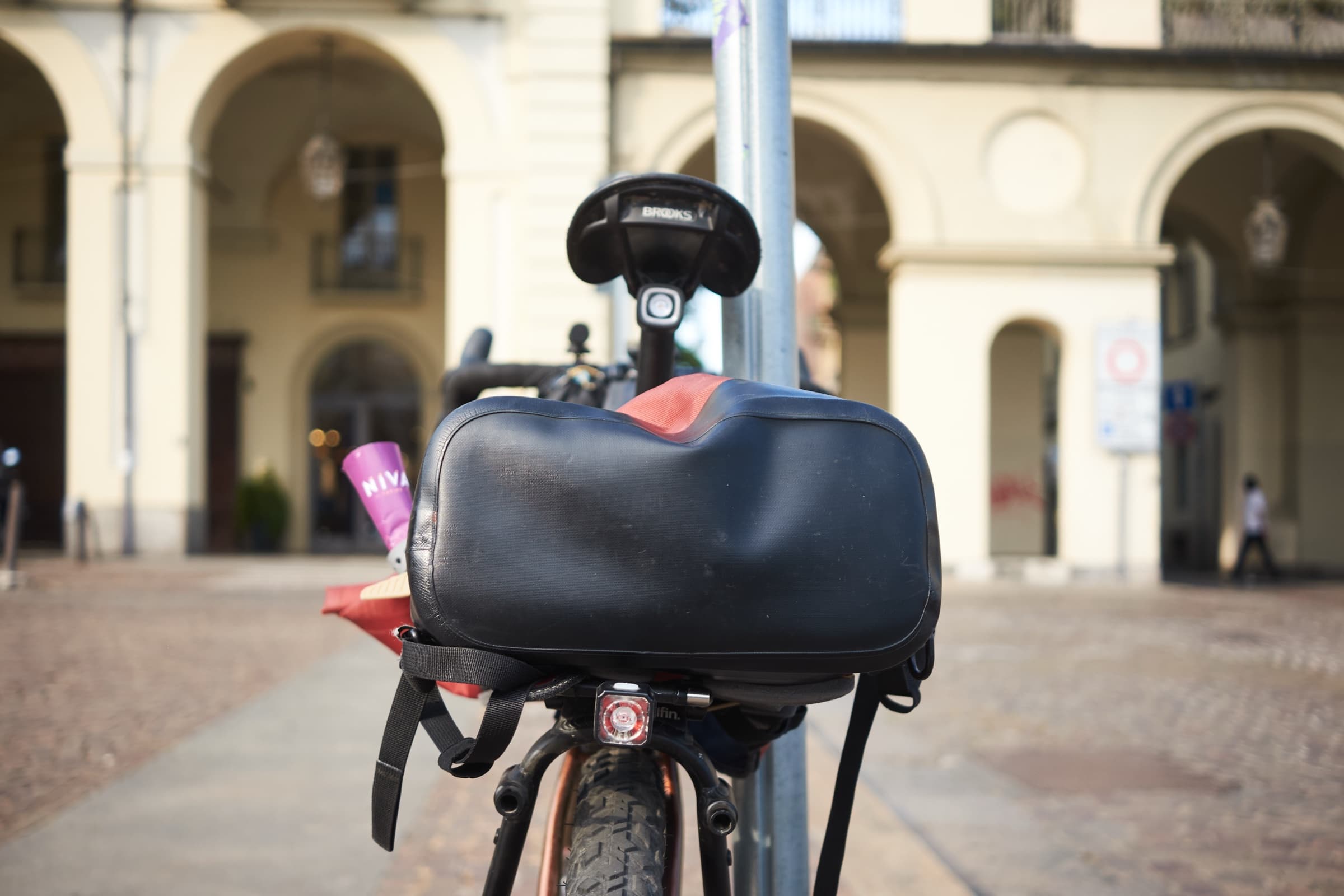

Is it heavier than the carbon offering? Yes, especially the pannier version. I'm not a weight weenie, but that's a noticeable jump from the carbon version. The Non-Pannier version at 580g, on the other hand, is competitive with anything else on the market.
For security against theft, there's a tiny screw you can add at the seatpost strap. It's a "slow down" rather than a "stop," but then, nothing really is a stopper. For popping into a shop while leaving the bike locked outside, it's enough.
And when the trip is over? Unlatch the clamps and the whole rack folds flat, ready to disappear into a bin or a bike box.
Less Reverence, More Abuse
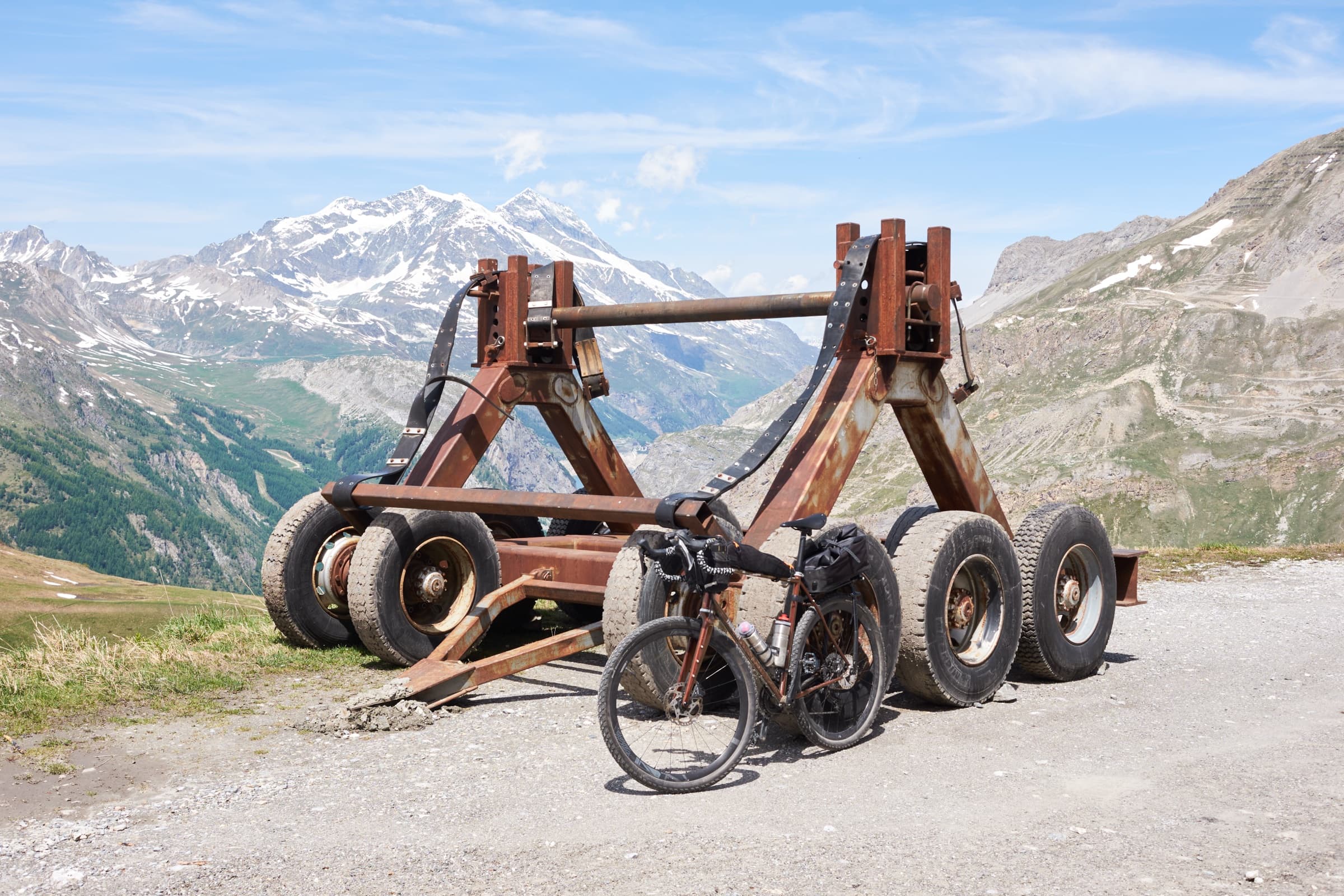
As I said in my SpeedPack review, Tailfin made me completely rethink what racks mean for bikepacking. The Journey Pannier Rack finished the job: it gave me the confidence not just to use a rack, but to abuse it.
Here's the thing about carbon: it's far more robust than my mind is willing to accept. Part of our team (ahem, Barry) still believes that "carbon composite" is just a fancy name for plastic. Kidding aside, when I was in Scotland, throwing my cool, F1-looking carbon rack on top of a rusty boat made me genuinely anxious. That would not have been the case with the Journey Pannier Rack. Aluminum invites a different relationship: less reverence, more trust.
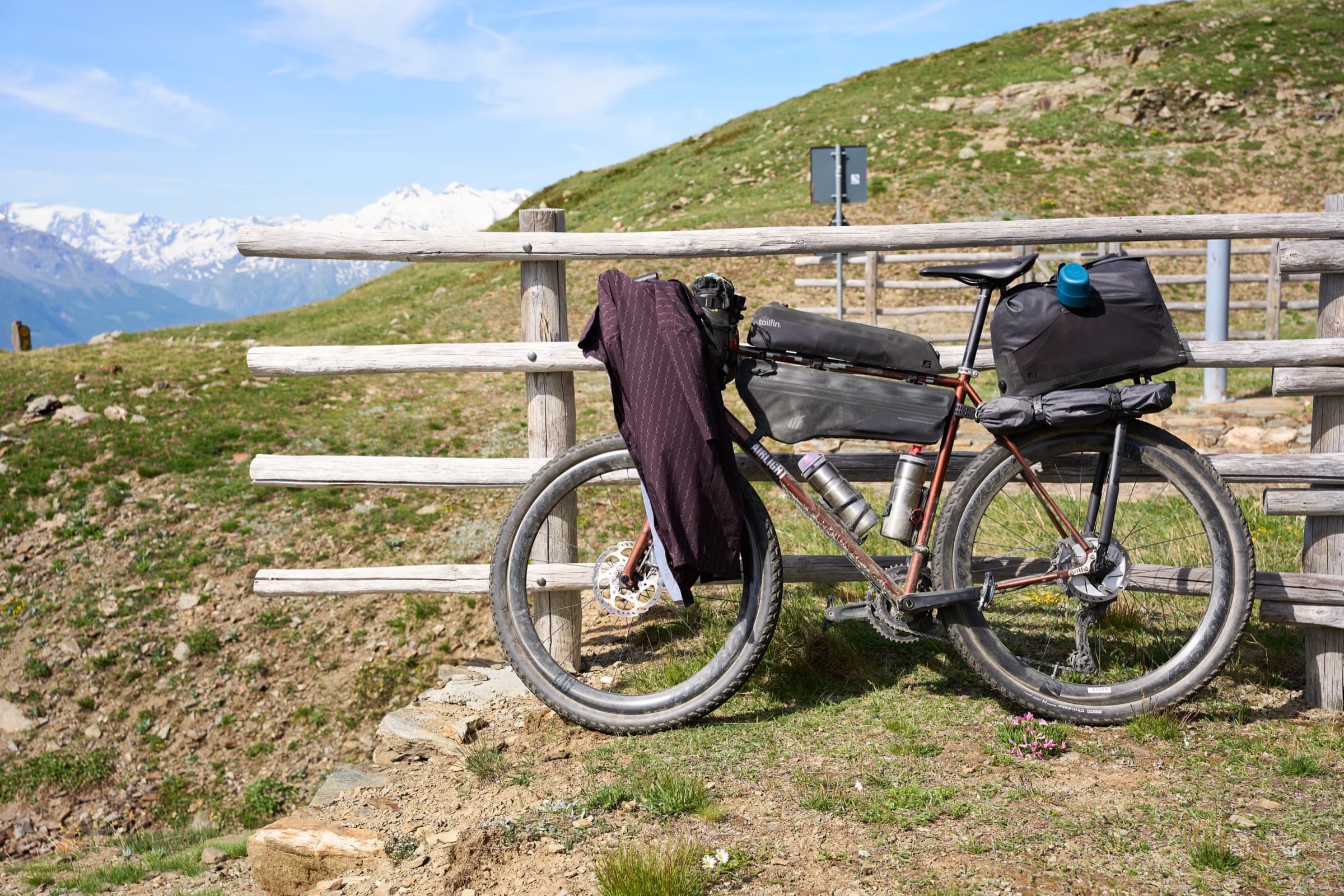
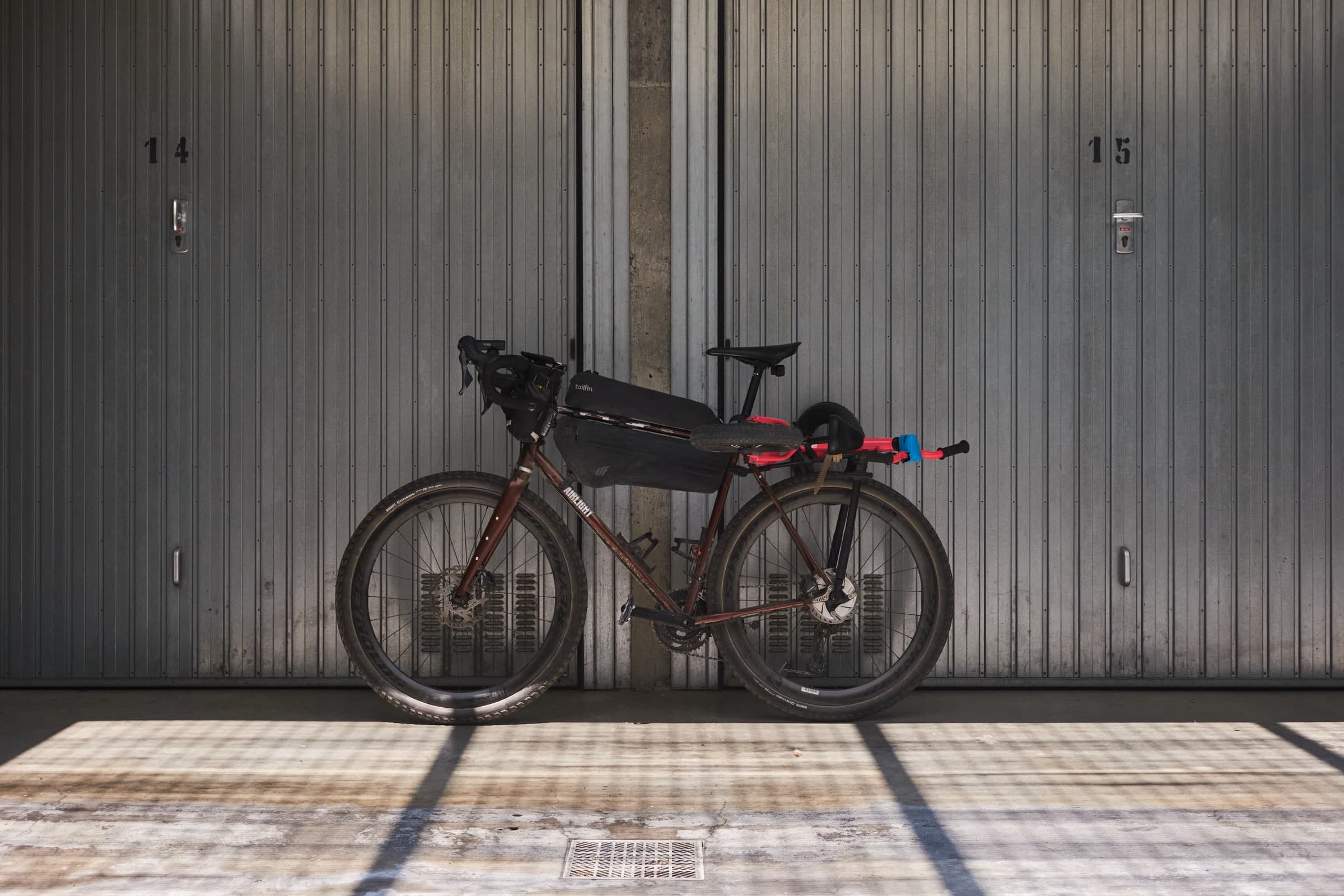
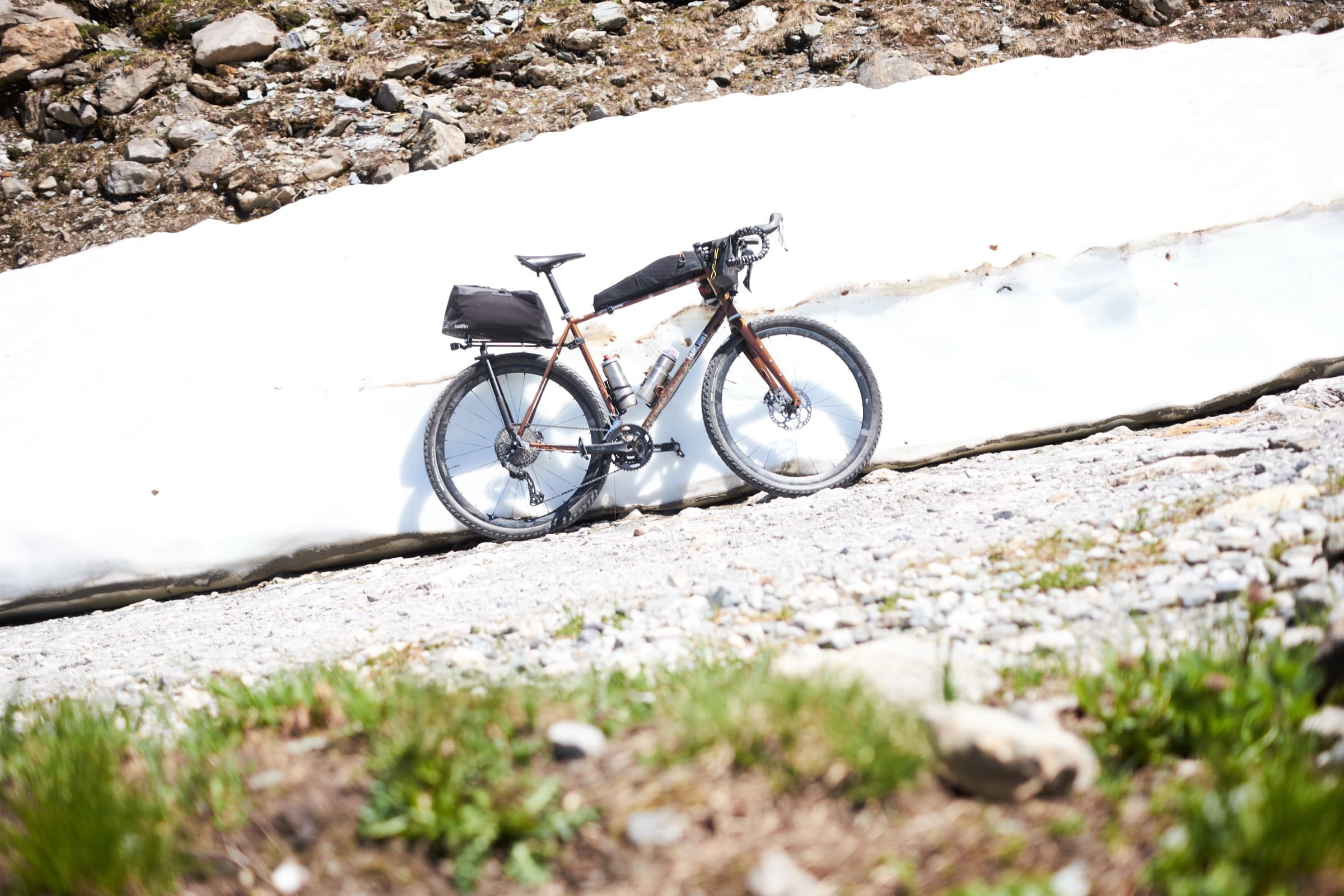
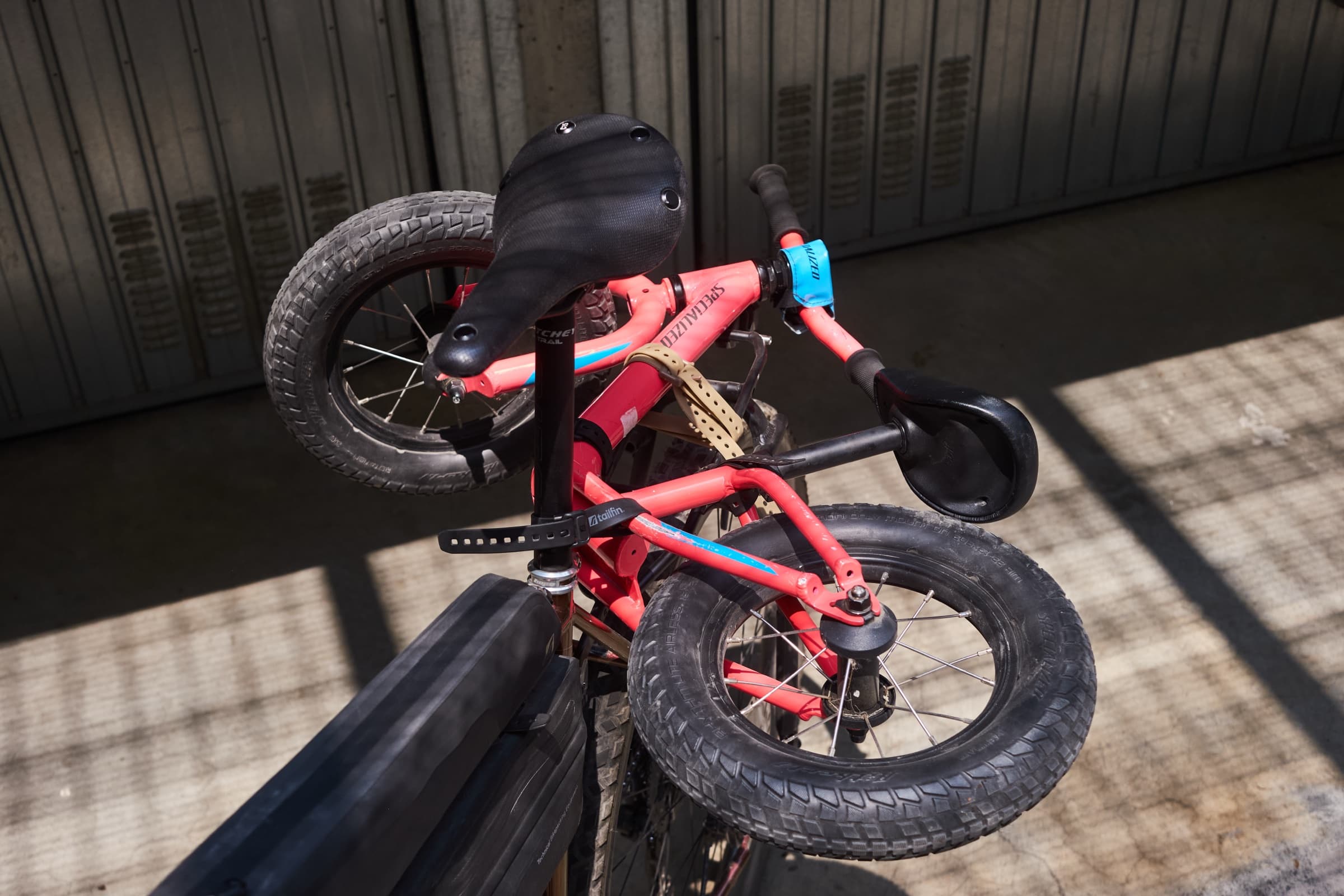
That trust started on day one, when I strapped a pouch of food to the deck for an improvised picnic before a night shift. I was already in love. The rack then followed me through the transition from spring to summer, hauling my CargoPack with the last pieces of winter kit for climbs above 2,000 meters. It carried tent poles strapped along the sides. On the commute, it transported a balance bike for my best friend's little girl. On one snowy hike-a-bike section, where the fear of slipping was rather more than theoretical, it served as a grip point solid enough to trust with my balance.

It gave me the confidence not just to use a rack, but to abuse it.
Dialing in a setup takes years of practice and is incredibly subjective. There's no singular perfect way. Overload the front and you can't jam and jib; overload the rear and it's hard to get aloft while wobbling around. My current ideal: a lighter, rear-only CargoPack with two small panniers up front to counteract the weight. That's exactly what I ran on my last adventure with Tristan Bogaard, but that's a different story entirely.
What impressed me most was the load ceiling. Getting weight off my back and onto the bike was huge. Even at roughly four times my usual overnighter load, but still well within Tailfin's specs, the handling stayed composed. Climbing was easy. But descending is where the Journey Pannier Rack really came alive: all my normal lines, at normal speeds, booters and jumps included, straight into the chunky stuff without hesitation. The rack was bomber. No rattle, no loosening, nothing. But that's no surprise with Tailfin.

The Fine Print
Not everything is perfect, though.
XL frames, we have a problem. Connected to the seatpost, the rack doesn't sit quite where I'd like on my frame. Of the three possible bracket configurations, I'm using the straight bracket in the orientation that pushes the front down the most. My guess is Tailfin will eventually release a longer bracket to address this; smaller frames reportedly have the opposite problem and would benefit from more length options too (Ortlieb's Quick Racks, for comparison, ship with long aluminum tubes you simply trim to length). For now, I'll keep latching the rack to the frame instead of the upper seatpost, which kinda works but requires twisting the rack to sneak it through the rear blades before locking it in. I didn't fully appreciate how fast Tailfin's quick release was, until it wasn't.
The fender. To be blunt: the optional bolt-on fender works, but saddle spray still finds you directly. It might knock down some rooster tail for whoever's behind you, but an Ass Saver does the same job for a fraction of the price, and you can put it on and off way faster. Also, because the new rack sits lower, fitting a proper full mudguard alongside it looks unlikely, something the taller previous racks allowed. (But I still prefer the lower position.)
Small parts, proprietary parts. There are many little screws and proprietary components on this rack. That's the price of a universal, quickly removable system. I haven't had a single issue, so this remains speculative, but it's the kind of thing you notice while assembling it.
The axle stub. With axle-mounted racks, the speed advantage depends on whether you're willing to ride around with the extra bit of axle sticking out on either side when the rack is off. On an urban bike, I'd happily leave it. On the "clean bike" days that made me want this rack in the first place, it's a small aesthetic tax (which I fixed with some DIY, as already explained at the beginning).



One Bike, Two Lives. It Works.
I came into this review as the exact target customer: one bike, two lives, and a strong allergy to permanent clutter. The Journey Pannier Rack answered that brief almost completely. It takes all of a minute to install or remove. It adapts to frame mounts, QR axles, thru-axles, and full-suspension bikes. It carries everything from camping loads to balance bikes, and at $185 USD plus axle, when comparable aluminum racks hover around $120 USD, the extra buys you a rack that pivots, quick-releases, and attaches to bikes with no rack mounts at all. With one rack and a second axle, I could even swap it onto another bike like a full-suspension rig and justify some more rugged bikepacking without buying a second rack.
It weighs a tad more than the carbon offering, but it's still light enough that you don't feel it on climbs, robust enough for genuine utilitarian abuse. The classic Tailfin ecosystem is still all there; the beauty is that you no longer have to give up anything to join it. Tailfin has finally embraced versatility, and I'm all in.
The Journey Pannier Rack is a rack made to travel, evolving and improving as you do, exactly as Tailfin has over these years. For me, it's the definitive rack. Until the next iteration, at least.

Pros
- True quick release: on or off the bike in under a minute, no tools, no ceremony.
- Genuine universality: frame mounts, QR, thru-axle, full-suspension, plus third-party panniers and cargo cages.
- Bomber stability: no rattle, no loosening, even on jumps and chunky descents.
- Lower stance: weight sits lower than previous Tailfin racks, with better handling and better looks to show for it.
- Folds flat: remove the fender and it tucks into a bin or bike box.
Cons
- Geometry on XL (and XS) frames: current brackets can't get the rack horizontal on large frames.
- The fender blocks little spray and is still too much trouble to put on and off.
- Weight creep: at 740g with pannier mounts, it's noticeably heavier than the carbon version.
- Proprietary small parts: many little screws and Tailfin-specific components, the hidden price of universality.