Fuck Aerodynamics: Pamera Apparel Rides Against Conformity


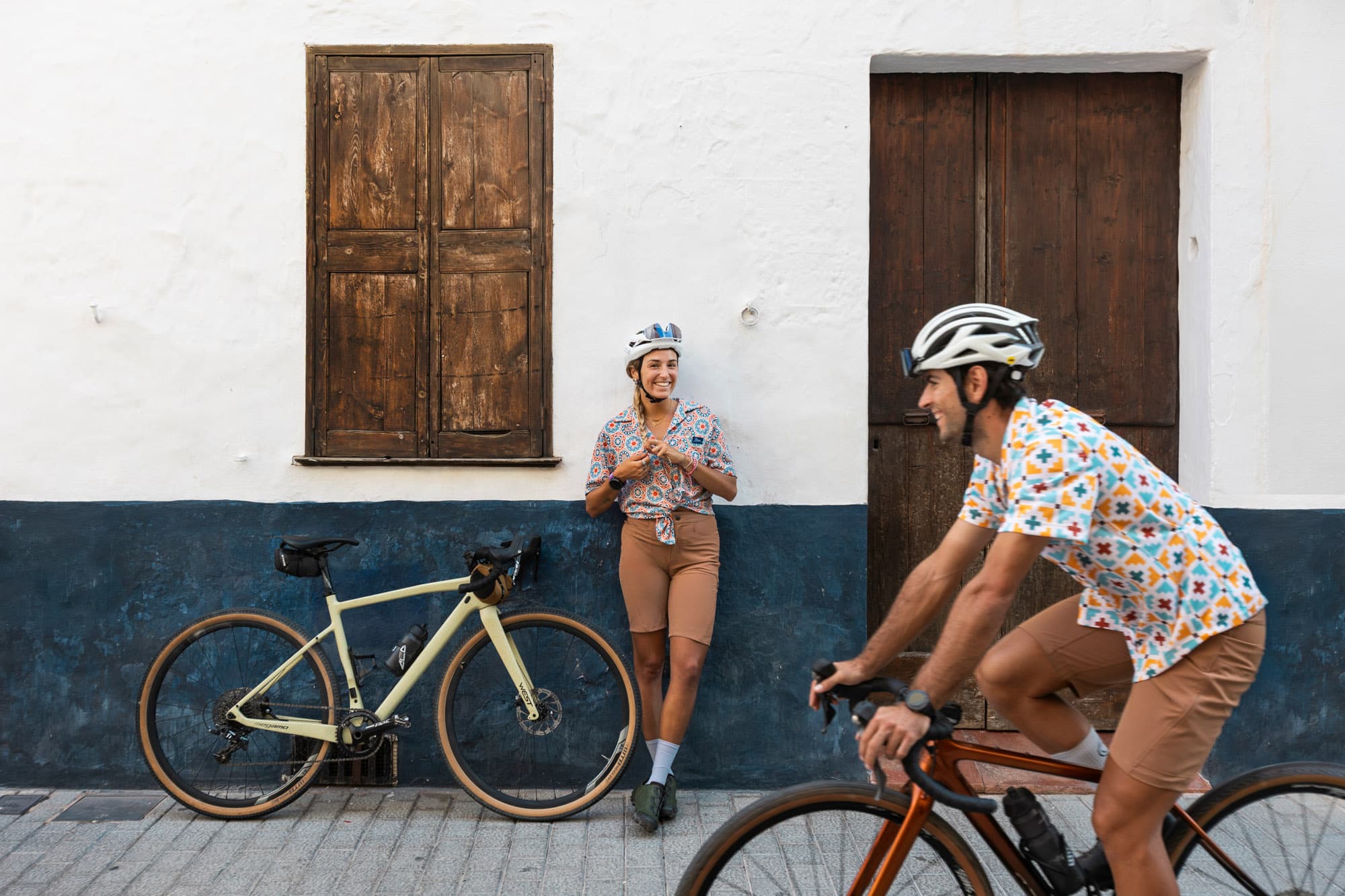
When I was in Girona for my ill-fated 2025 Traka Adventure race, I walked into the Guava Bikes shop to check out the Barcelona-based brand. Beyond their beautiful gravel bikes, they had a rack of bright-coloured loose-fitting bike shirts. Despite the design, they still had three pockets across the back, the same way a traditional cycling jersey would.
I immediately wanted one, but they didn't have my size. I made a mental note to find the brand online, but somewhere between the startline and the height of the Pyrenees, it slipped from memory.
With my birthday approaching, last November, my wife reached out to Guava to ask. She rediscovered Pamera, but the shipping timeline meant it wasn't possible in time. Although I still don't have a Pamera jersey, I have formed an affinity for the brand. What's not to love about a brand brash enough to say fuck aerodynamics in their brand ethos, also known as #F*CKAERODYNAMICS.
Because cycling often leans traditional, I reached out to founders Pia and Marc to learn more about the brand and their commitment to standing out in a European market.
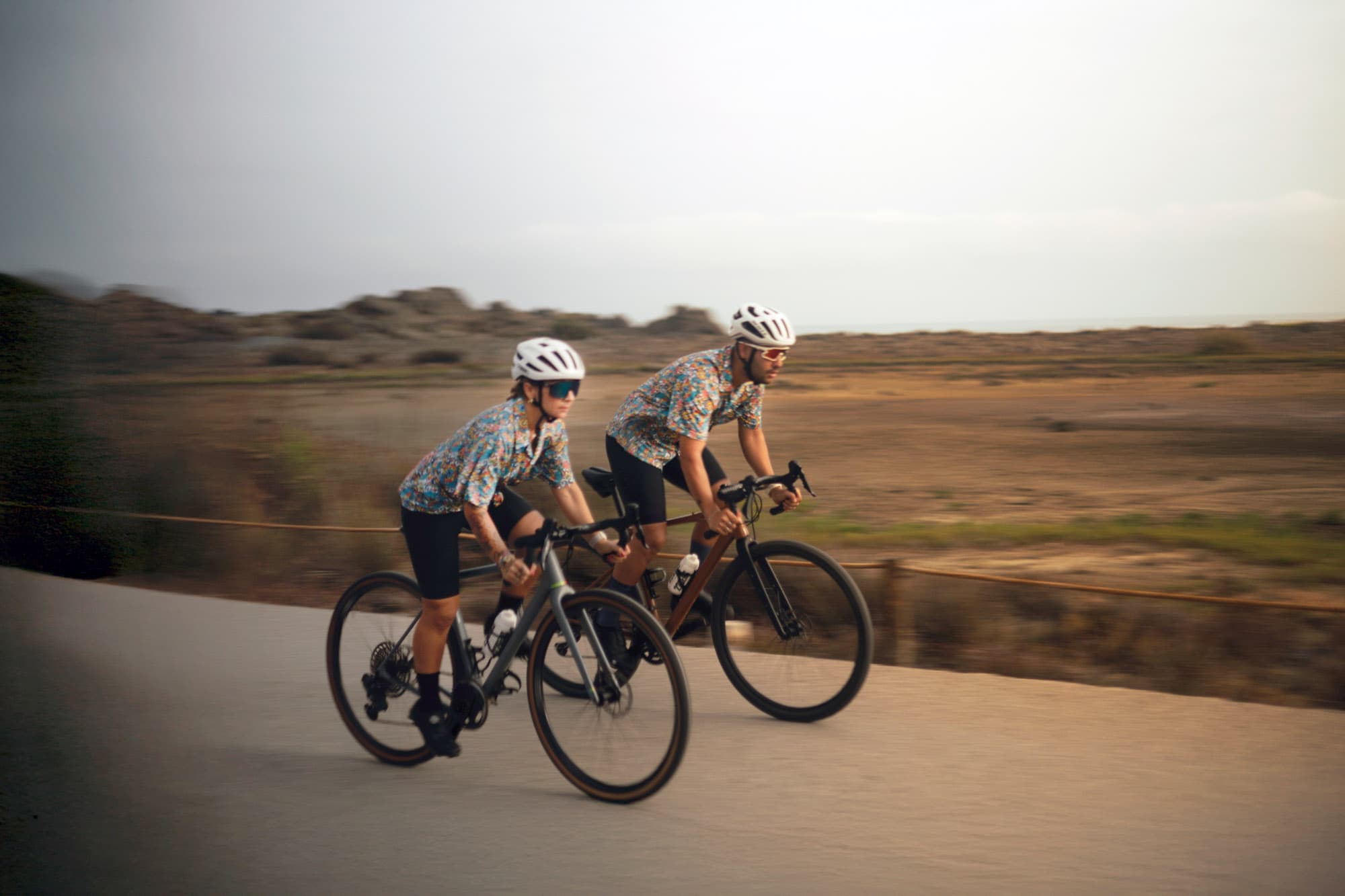
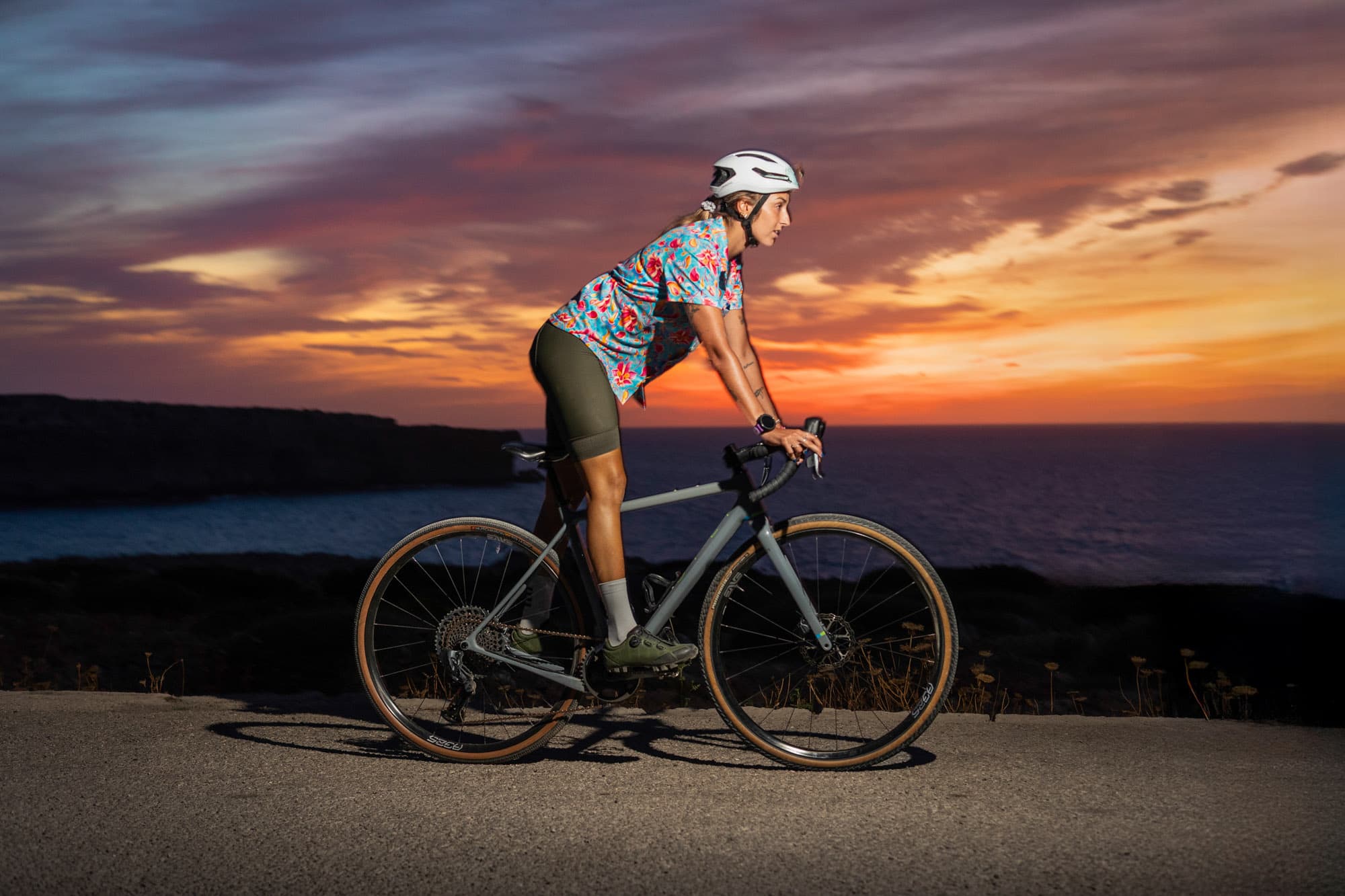
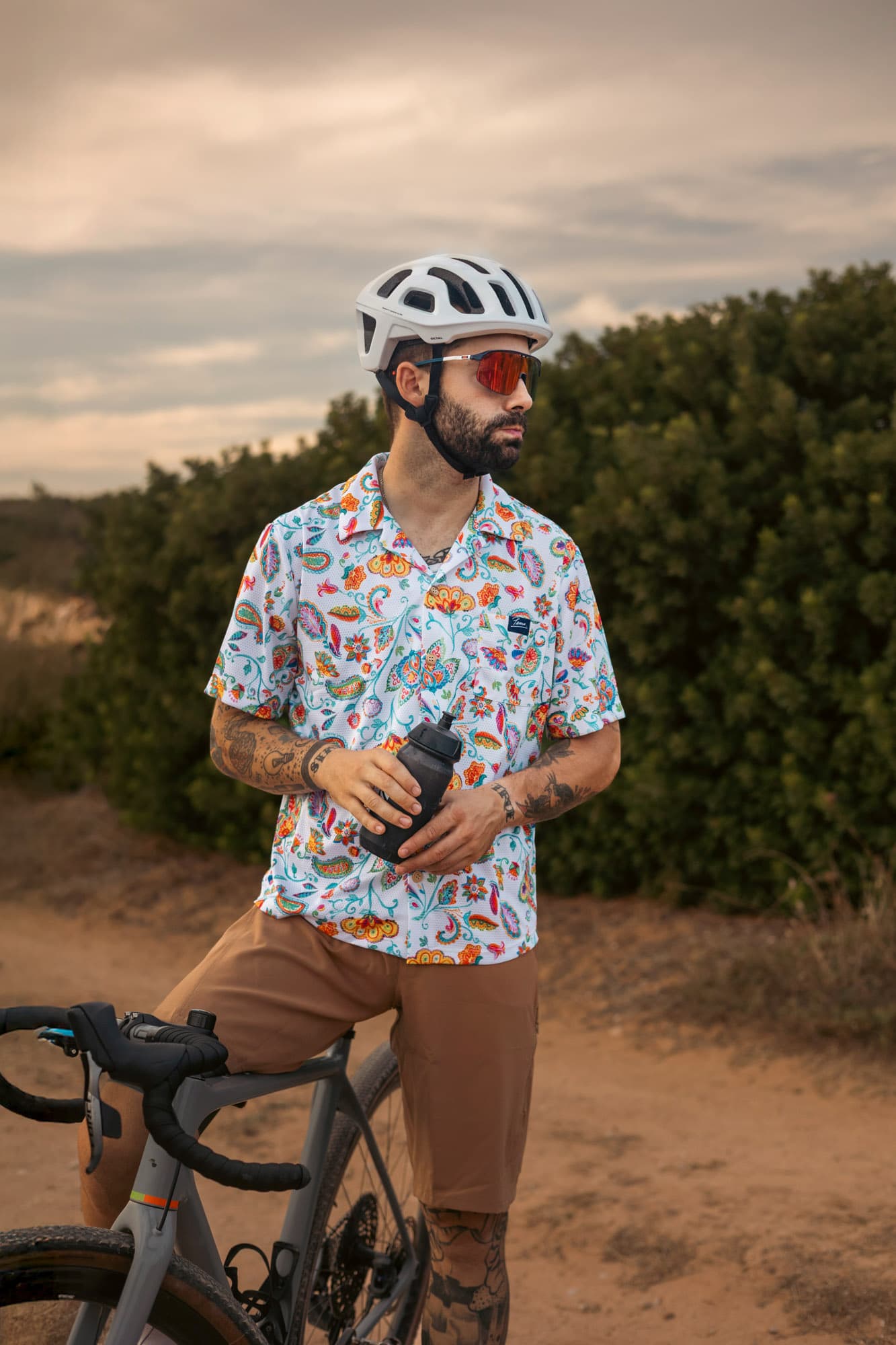
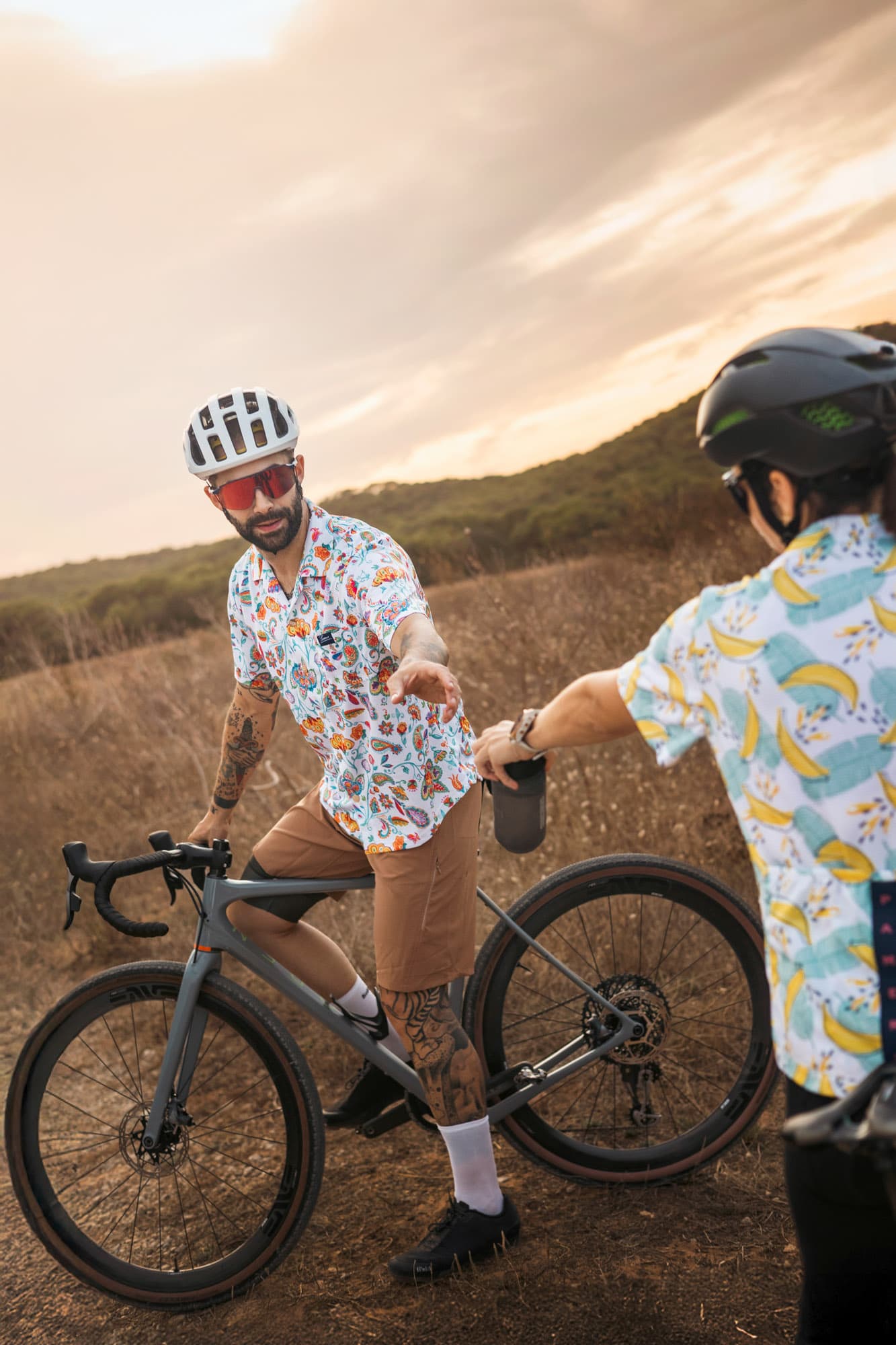
Pamera launched in Barcelona in May 2023. What made you say now is the time, and how long did it take from idea to launch?
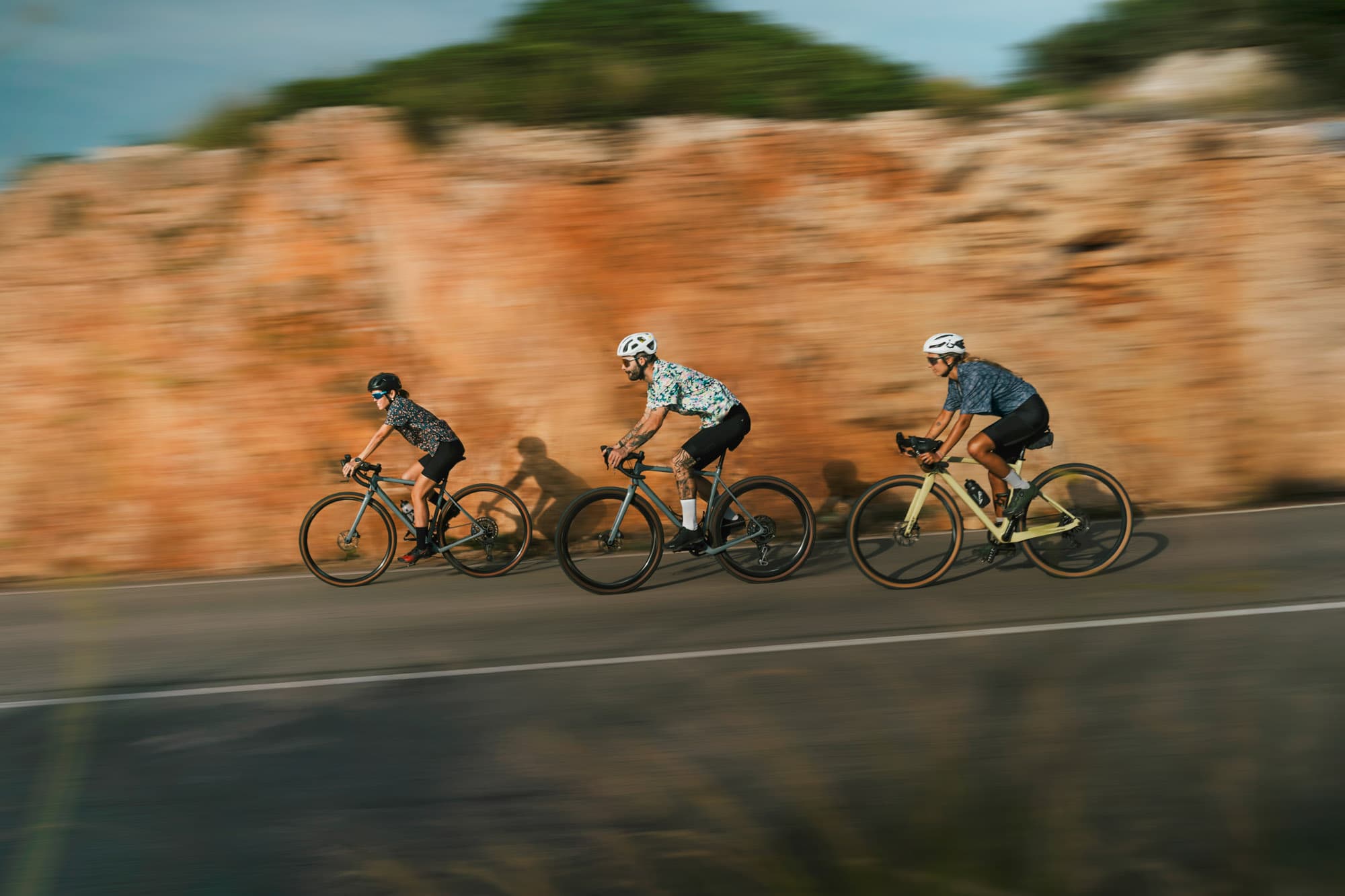
Pamera started from a very simple feeling: we loved cycling, especially gravel and adventure riding, but we didn't feel fully represented by the clothing around us. Everything was becoming faster, tighter, more aero, more serious. That is great for racing, but it did not reflect the way we wanted to ride.
We wanted something technical enough to ride properly in, but relaxed enough to stop for coffee, travel, walk around a town, or sit by the sea without looking like we were about to start a WorldTour stage.
The idea had been in our heads for a while, but from the first real concept to launch it took several months of testing, prototypes, pattern adjustments, fabrics, pockets, buttons, and a lot of trial and error. We launched in Barcelona in May 2023 with a very clear mission: to bring more colour, personality and freedom into cycling clothing.
#f*ckaerodynamics sounds bold, especially in a sport that's quickly professionalizing. Where did that sentiment come from?
It is definitely a vibe, but it also comes from a real frustration.
We are not against aerodynamics. We understand performance, we respect racing, and we love good technical products. But we felt cycling was becoming too obsessed with marginal gains, watts, shaved legs, matching kits and "looking fast" all the time.
For us, riding is not only about speed. It is about freedom, travel, friends, long days outside, discovering places, getting lost, stopping for food, and enjoying the experience. So #f*ckaerodynamics is not an attack on performance. It is a statement against conformity.
It means: ride hard if you want, ride slow if you want, but dress and ride in a way that feels like you.
Are you aware of the Dutch brand Live Slow Ride Fast? They're almost the antithesis of Pamera, but oddly allude to the same outcome. What do you think of that overlapping yet contrasting vibe in the modern cycling scene in Europe?
Yes, and we think it is interesting because it shows that modern cycling culture is becoming much broader.
There is space for brands that still come from performance and aerodynamics but bring a more relaxed lifestyle attitude around it. And then there is Pamera, which starts almost from the opposite point: colour, freedom, travel, expression, anti-uniformity, but still with technical function.
We do not see it as a contradiction. We see it as a sign that cycling is evolving. Not everyone wants to look like a racer anymore. Some riders still care deeply about speed, others care more about adventure, culture and identity. The modern cycling scene in Europe is becoming less rigid, and that is good for everyone.
Pamera's place in that world is clear: we are for riders who do not want to disappear into the peloton.
Is there a story behind the name?
Yes, there is a real story behind the name.
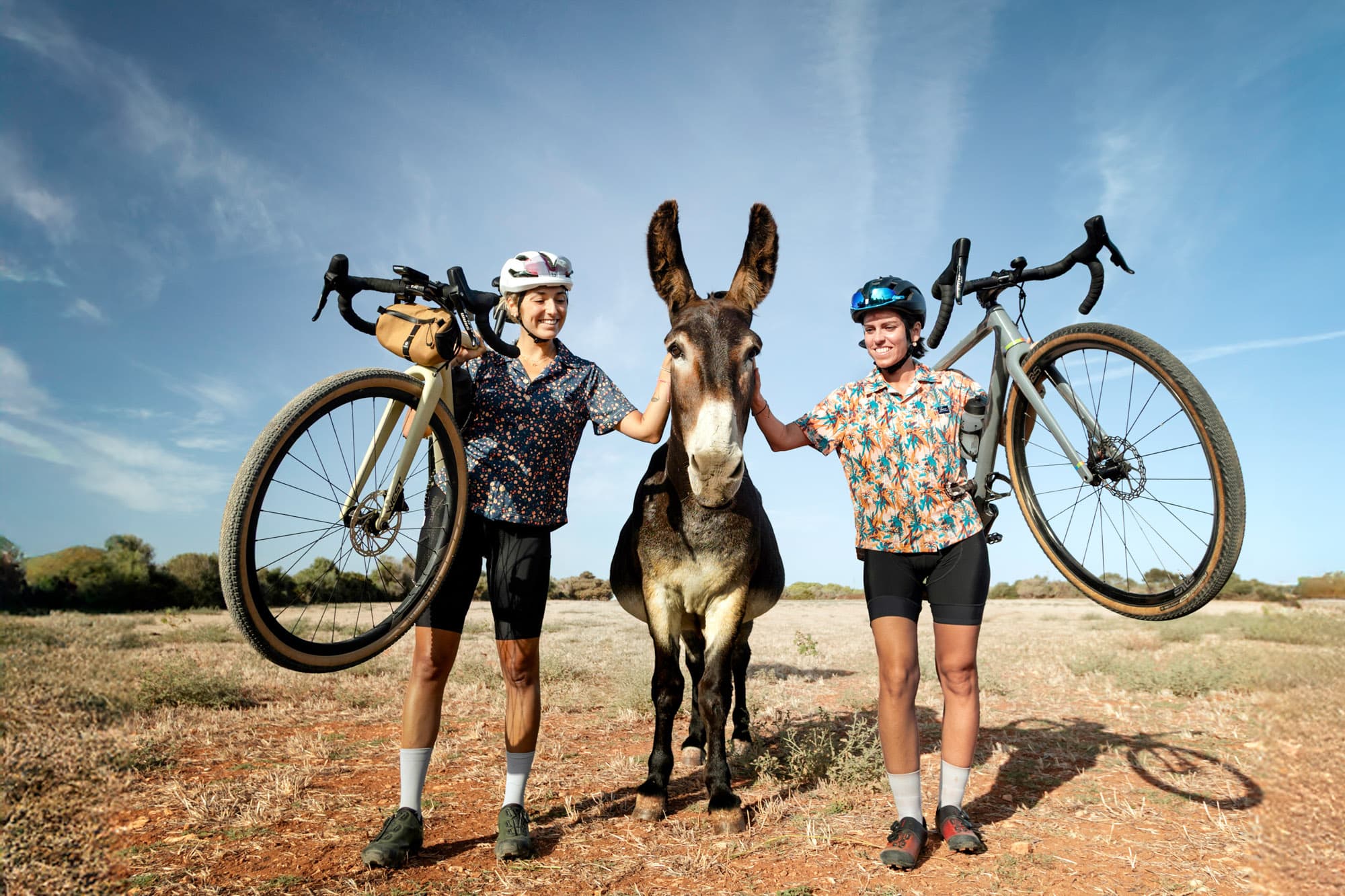
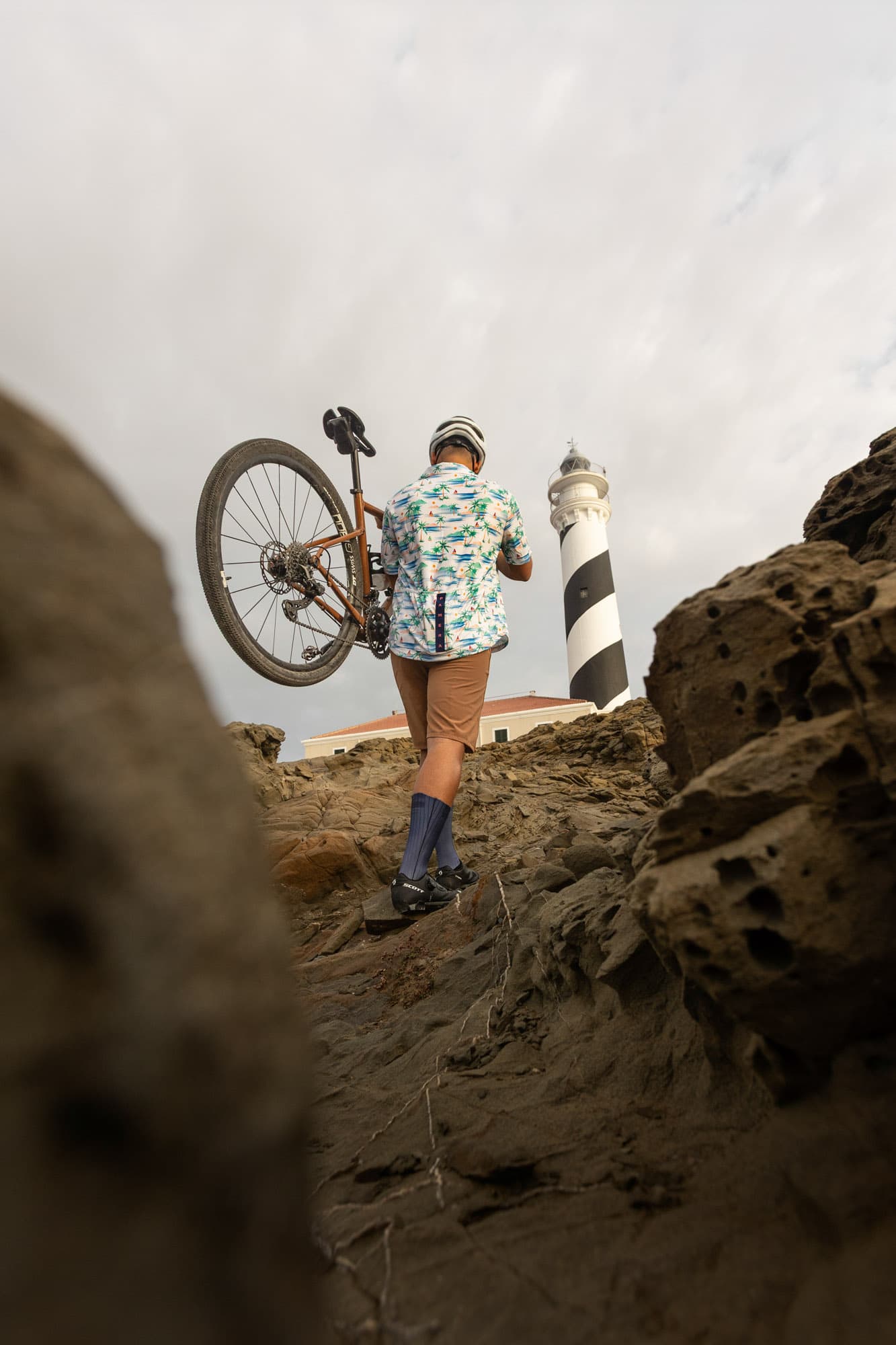
Pamera comes from a mix between Panama and palmera, the Spanish word for palm tree. The idea was born from a photo of a friend riding a bike in Panama, with palm trees in the background, wearing a regular Hawaiian-style shirt. That image made something click.
It captured exactly the feeling we wanted to bring into cycling: freedom, travel, colour, warm weather, palm trees, relaxed style, and the idea that cycling clothing could look completely different from the traditional lycra uniform.
So Pamera is about that moment of inspiration with a cyclist, a Hawaiian shirt, Panama, palm trees, and the feeling that there was room to create a new aesthetic in cycling.
You're three years into this. What has surprised you most about building a clothing brand?
The biggest surprise has been how emotional clothing can be. We thought we were creating cycling shirts, but very quickly we realised people were connecting with the idea behind them.
Customers write to us saying they finally found something that feels like them, or that they wear the shirt on the bike and then for dinner, on holiday, or even at work. That has shaped how we think about the brand.
Another big learning is that product is everything. A good idea is not enough. Fit, fabric, stitching, pockets, buttons, sizing, logistics, customer service. Every detail matters. As a small brand, you cannot hide behind volume. Every customer experience counts.
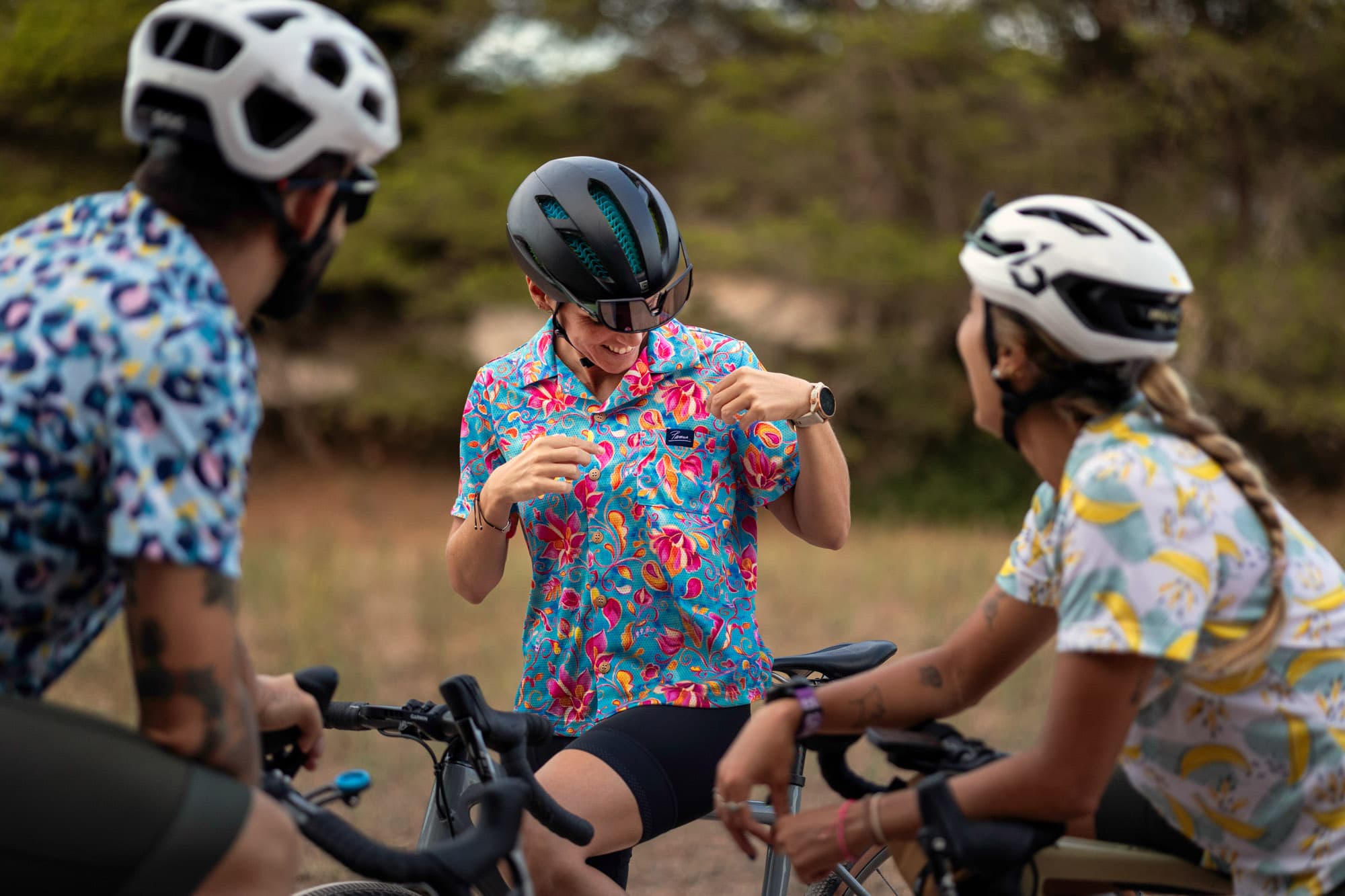
The Hawaiian shirt signals not taking yourself too seriously. Why was that the right aesthetic for Pamera, rather than something more Spanish-inspired?
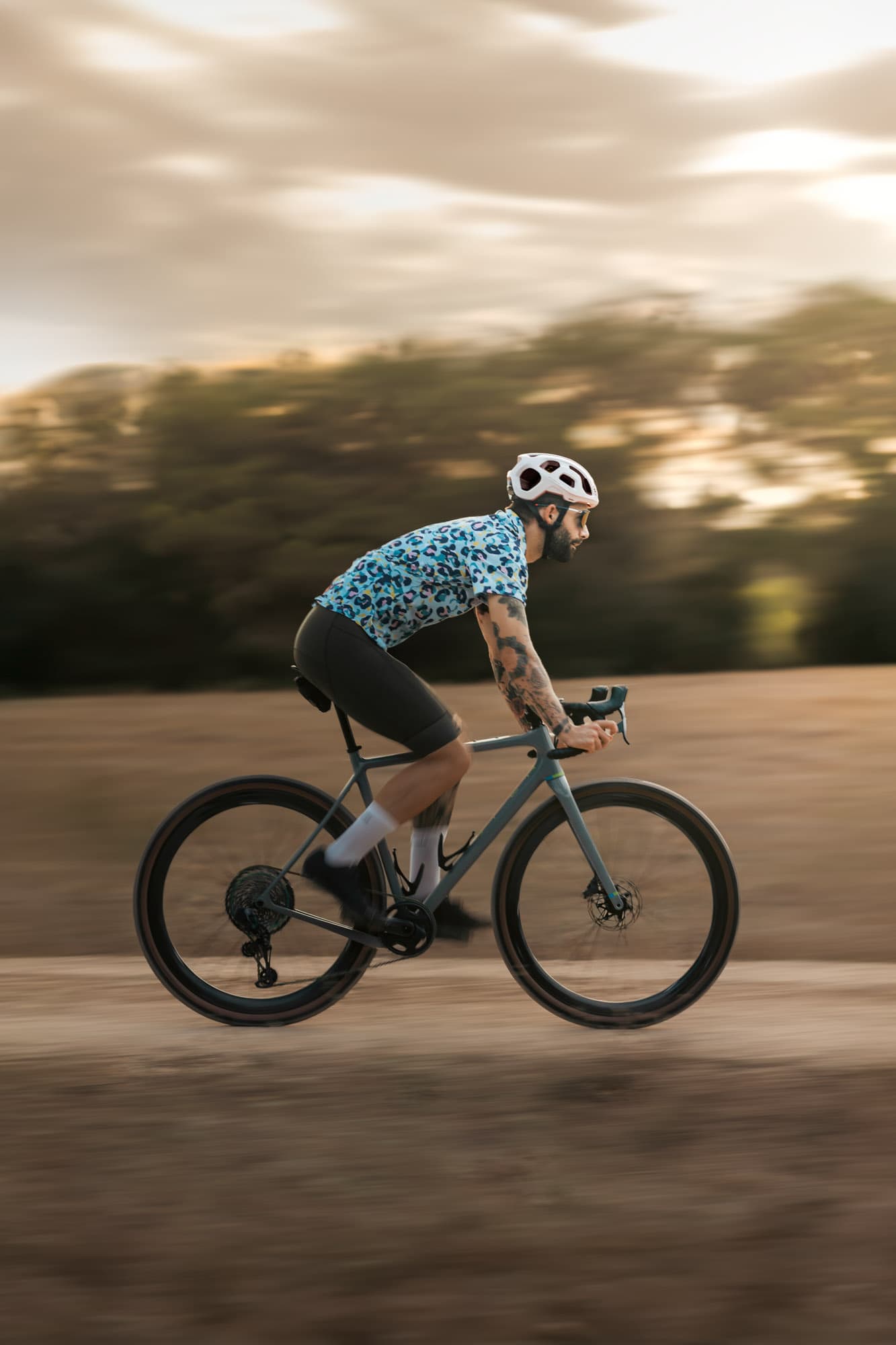
The Hawaiian shirt was the perfect symbol because it immediately breaks the rules. It says: this person is here to enjoy the ride.
Barcelona is actually a big part of that. The city has sun, sea, design, colour, terraces, movement, and a very Mediterranean way of living. We are not Hawaiian, of course, but the Hawaiian shirt gave us the right language to express that relaxed, colourful attitude.
We are open to more local inspiration too. Spain, Catalonia, Barcelona, Mediterranean culture, all of that is part of our DNA. But we never wanted to make "souvenir" designs. We want the prints to feel global, timeless and wearable, not like a costume.
Walk us through how a new design gets made. Is it sketches, fabric swatches, riding inspiration?
It usually starts with a mood rather than a sketch. A place, a colour palette, a type of ride, a feeling from summer, travel, nature or the city.
Then we work on prints and test how they behave on the actual shirt pattern. That part is very important. A print can look great on a screen but not work once it is placed on the body, across the pockets, sleeves, collar and buttons.
After that, we test samples, check the fabric, the weight, the fit, the breathability, the pocket position, and how it feels while riding. We always ask ourselves the same question: would we really wear this for a long gravel ride and then keep it on afterwards? If the answer is yes, it can become a Pamera product.
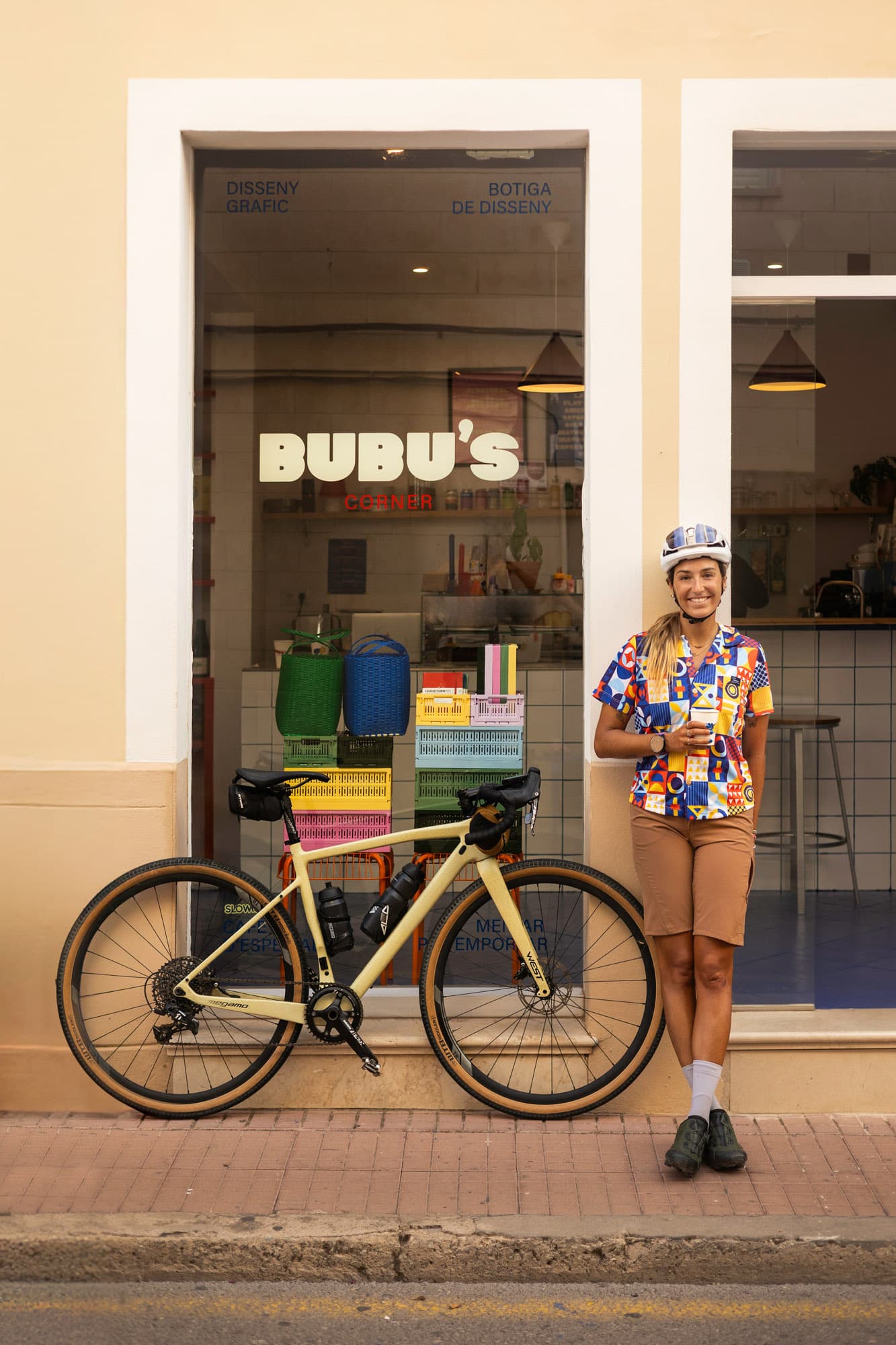
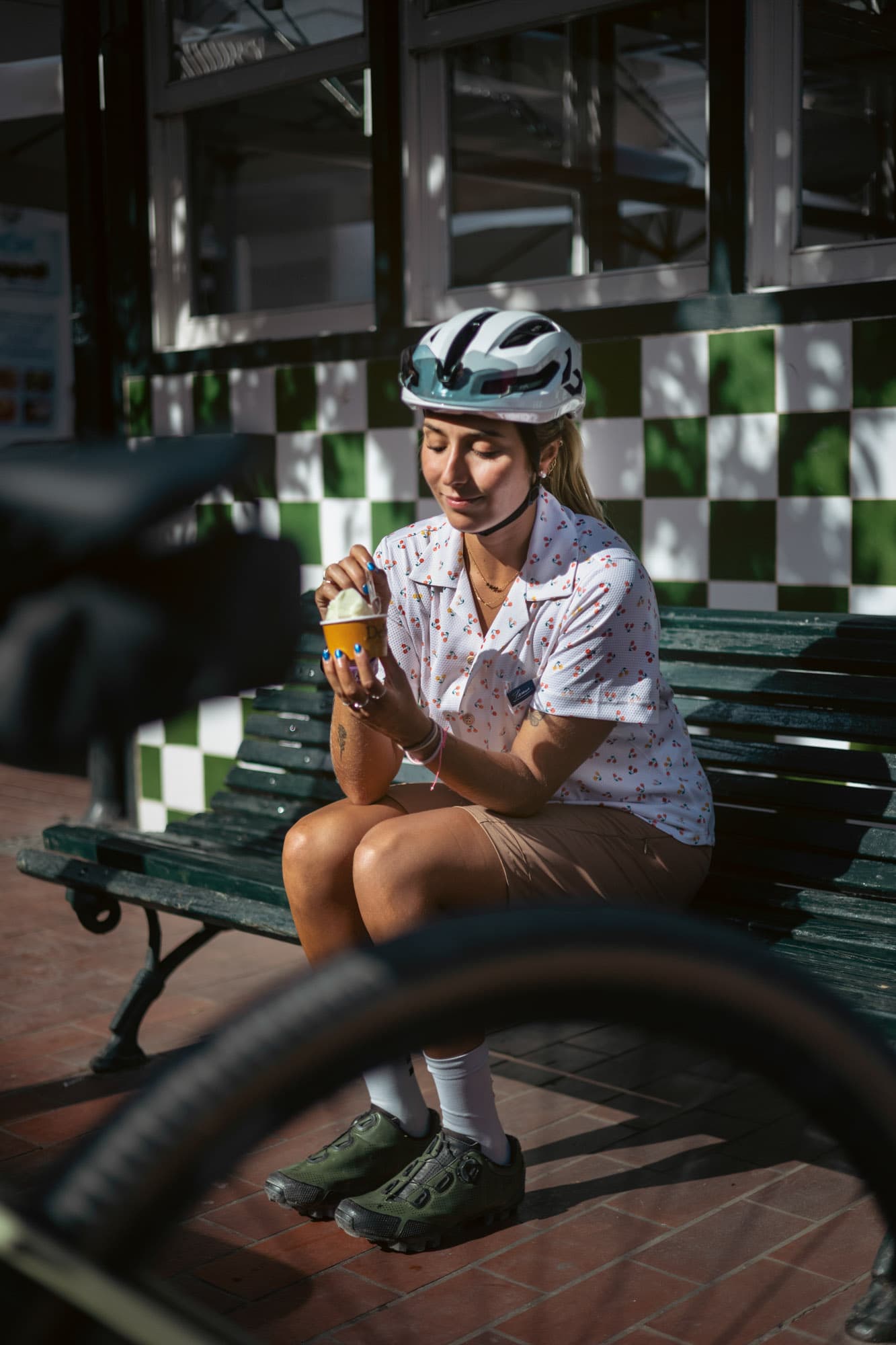
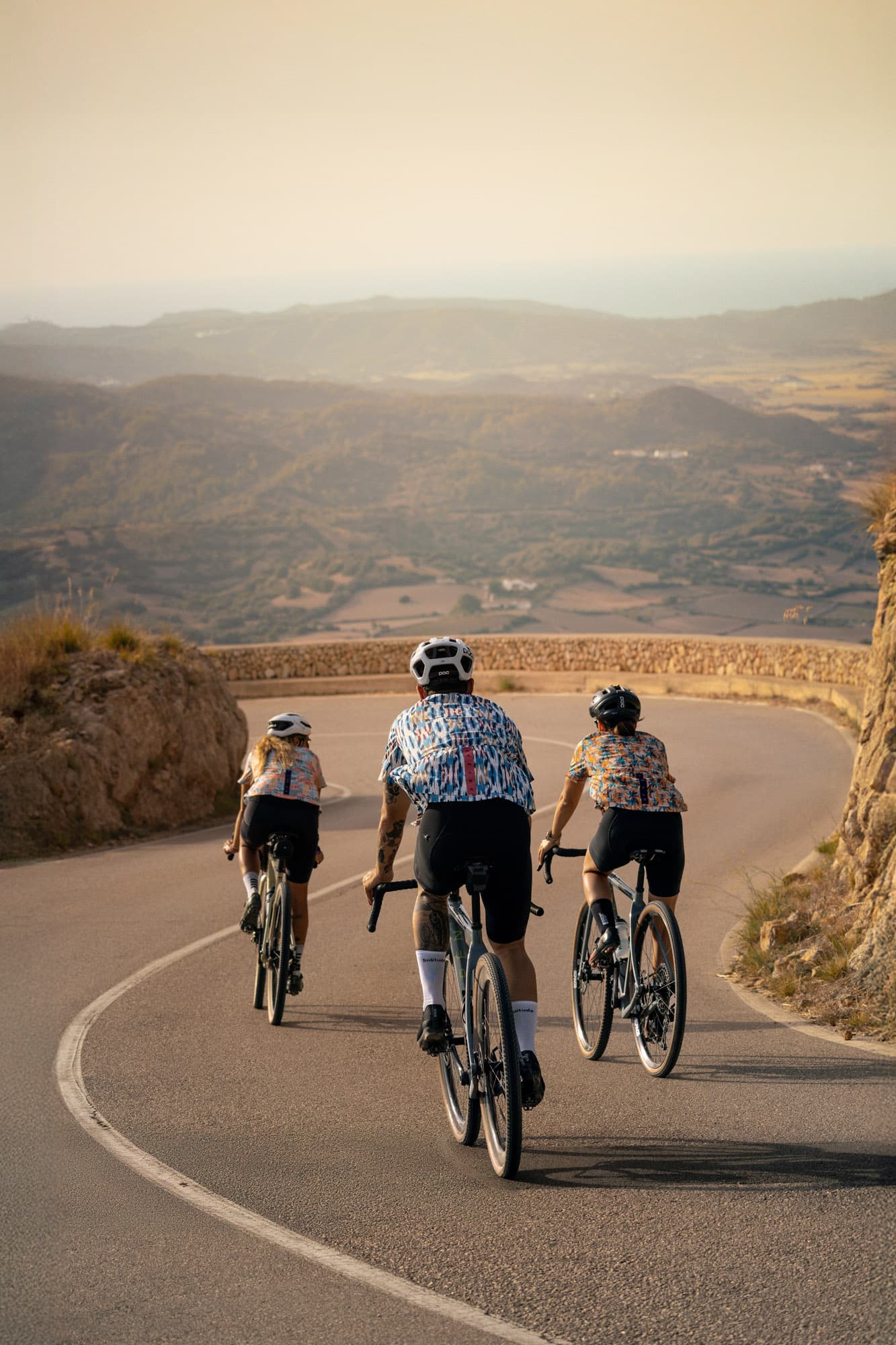
Your products are performance apparel but fit and designed for a laid-back athlete. Is there a fine line between technical and style, or do they mesh naturally?
For us they have to mesh naturally. The product cannot only look good; it needs to work on the bike.
The fabric has to be light, breathable and comfortable. The shirt needs rear pockets for cycling. The fit has to allow movement but still look good off the bike. The buttons, collar and general construction need to feel casual, but the garment still needs to perform.
We like the idea of "hidden performance". You do not need to look like you are wearing technical gear, but the functionality has to be there when you ride.
Your product line is growing, from the initial Hawaiian shirts into socks, shorts, jerseys, and now running. Is the goal a complete range, or staying focused on specific pieces where your design language has the most impact?
We want to grow, but not by becoming a generic sportswear brand.
The goal is not to make everything. The goal is to make the pieces where Pamera has something different to say. Cycling shirts are still the heart of the brand, but socks, shorts, jackets, running shirts and lifestyle pieces allow us to build a wider universe around the same idea: technical comfort, colour and freedom.
Running is a natural next step because many cyclists also run, travel, hike or move between sports. But the design logic is different. For example, our cycling shirts have rear pockets; our running and lifestyle shirts do not. Each product needs to make sense for its use.
So much performance bike apparel is made in Italy or Asia. What made you decide it could be done locally in Barcelona, and how does that impact pricing, quality control, and timing?
Producing locally in Barcelona was important for us from the beginning. It gives us proximity, flexibility and control. We can visit the workshop, review samples, adjust details quickly and work closely with the people making the garments.
Of course, it has an impact on cost. Producing locally is more expensive than producing large volumes in Asia. That affects pricing and margins, especially for a young brand. But it also allows us to produce in smaller batches, avoid huge stock risk, control quality more closely and react faster.
For us, local production is not just a romantic idea. It is an operational decision. It gives us agility.
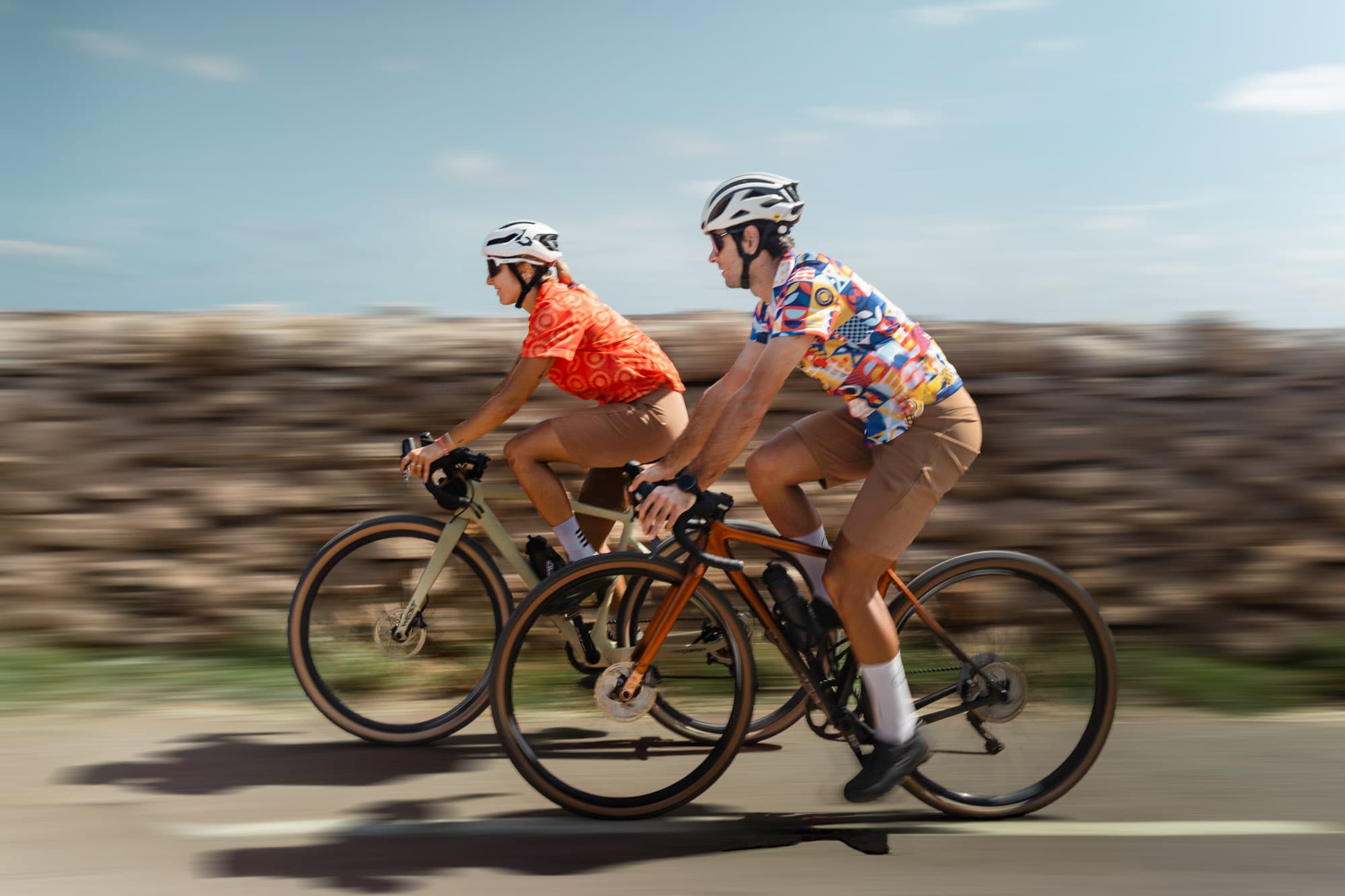
Sustainability is important to the brand, from OEKO-TEX® certified fabrics to no plastic in packaging. What are the real benefits and costs of those initiatives?
The benefit is that we can build the brand in a way that feels aligned with our values from day one.
Using certified fabrics and avoiding plastic in packaging are not huge marketing slogans for us; they are basic decisions that define how we want to operate. They usually cost more, and they can make sourcing more complex, but we prefer to make those choices early rather than try to fix them later.
We are not perfect, and we do not want to pretend that any fashion or e-commerce brand has zero impact. But we want to make better decisions wherever we can: better materials, responsible suppliers, smaller production runs, less waste, and packaging that does not feel excessive.
Back in 2024, you collaborated with a group of women for Neom Titan Desert. How do you approach those opportunities and weigh the value of your support vs what you get in return?
Yes, collaborations are an important part of how we grow, but we try to keep them authentic.
We are a small brand, so we cannot support every project, but we love working with people who really understand the spirit of Pamera. For us, the best collaborations are not just about exposure. They are about community, storytelling and shared values.
When we support athletes, creators or riding groups, we ask ourselves: does this person or project represent the brand in a genuine way? Will the content feel real? Is there a human story behind it? If the answer is yes, it is usually worth exploring.
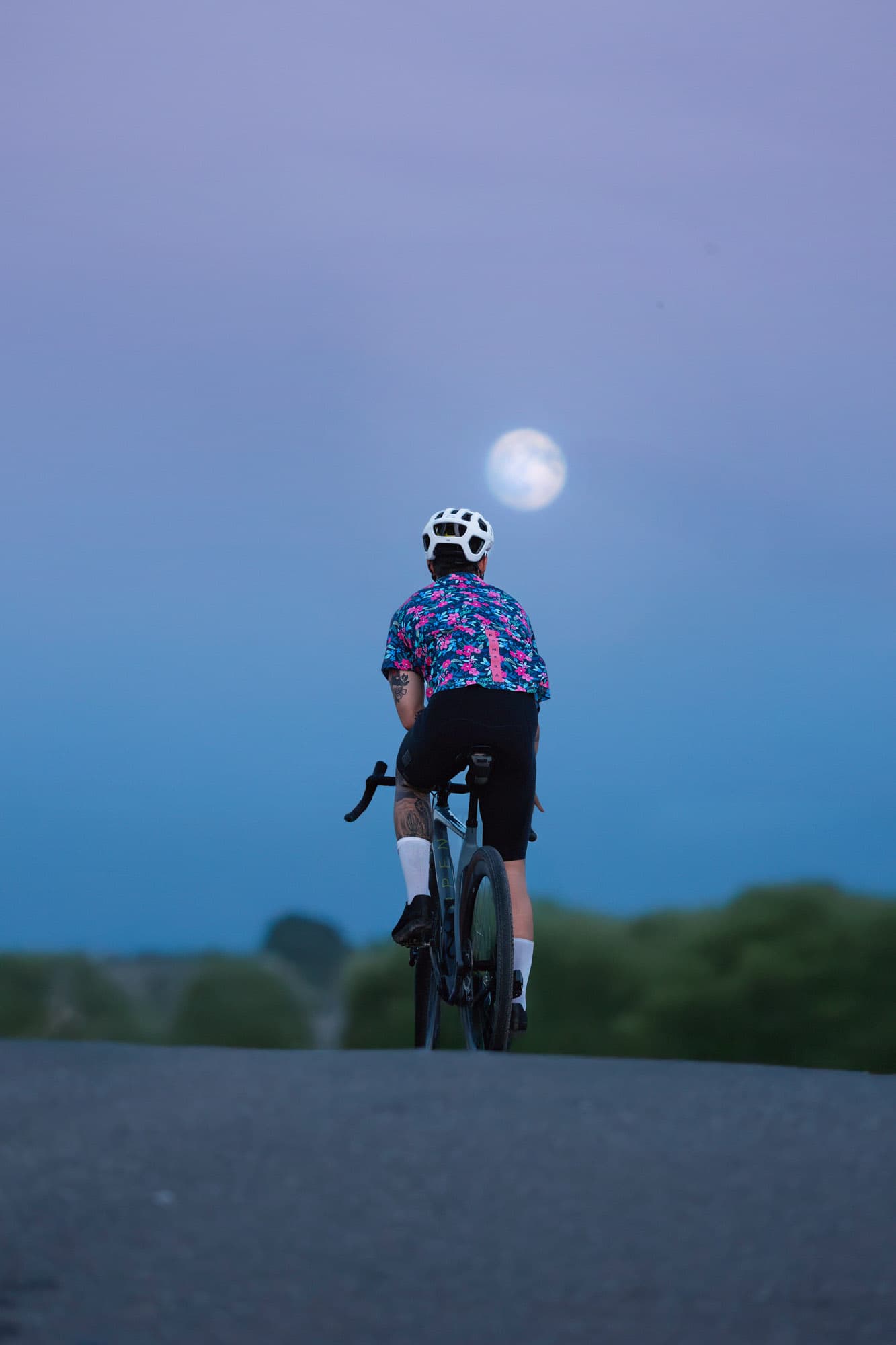
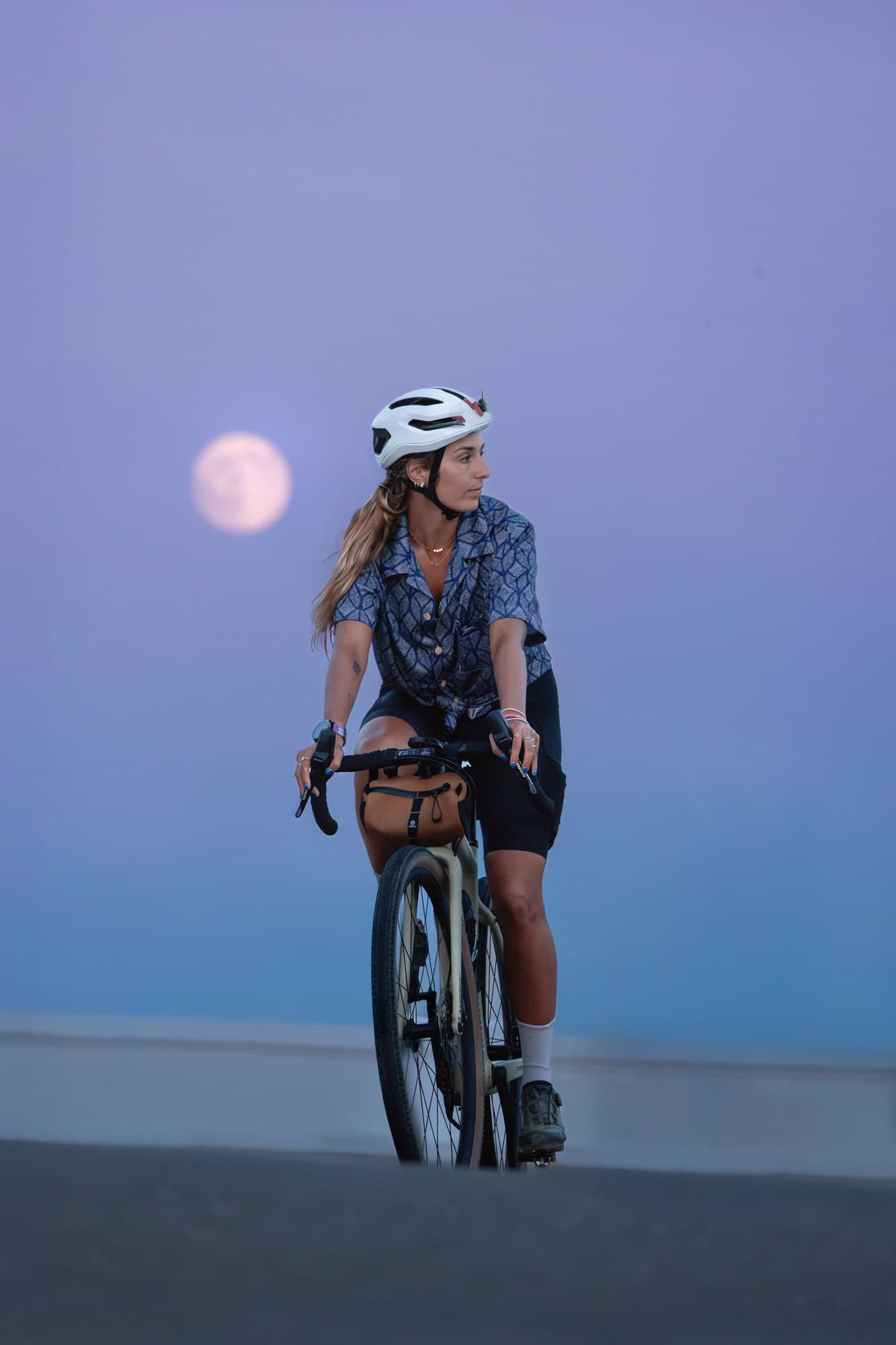
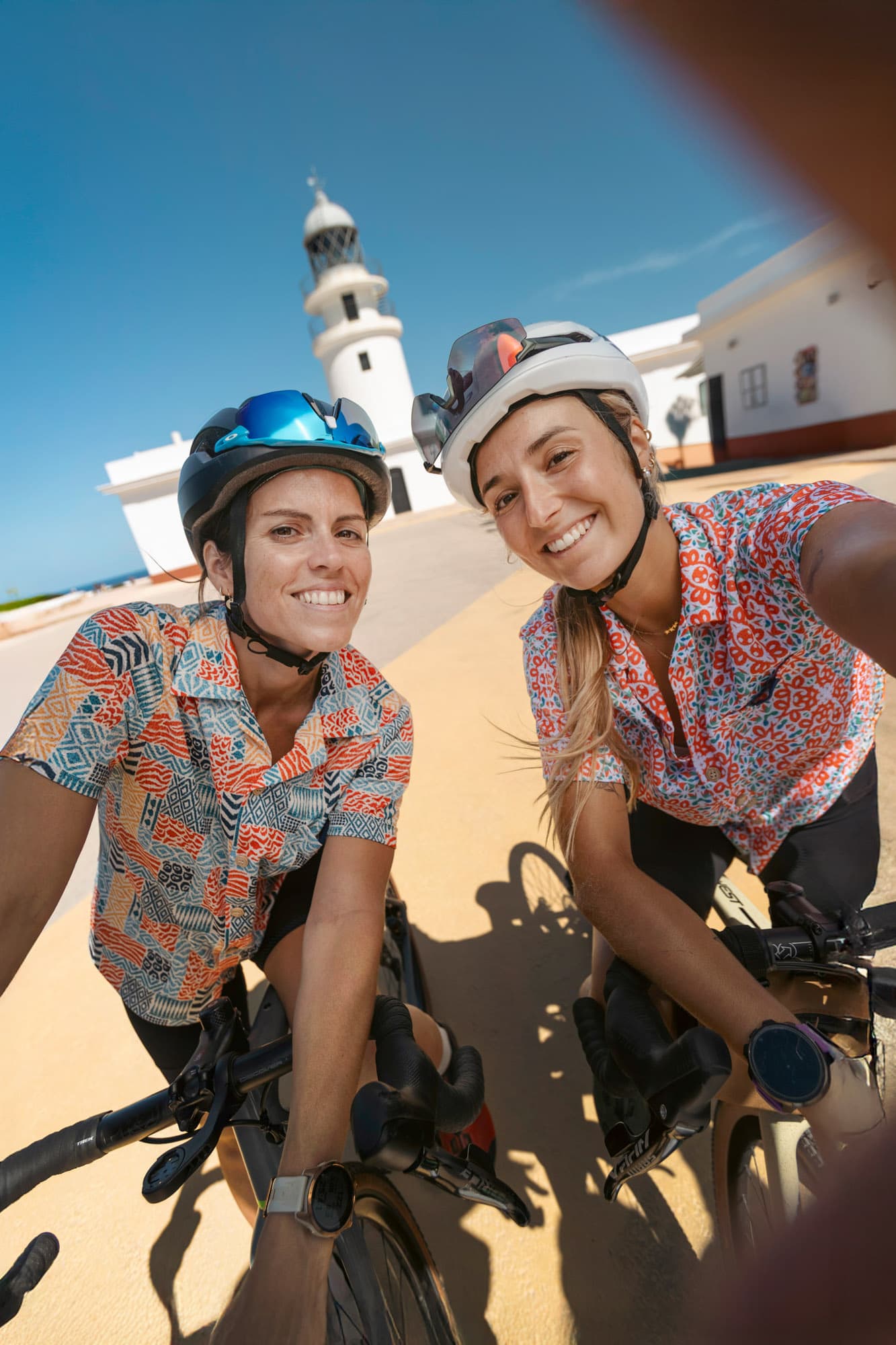
Along with #f*ckaerodynamics, you also have #changingrules. What rules are you trying to change, and is it purely about aesthetics or something bigger about who cycling is for?
It started with aesthetics, but it is bigger than that.
The rule we want to change is the idea that to be a "real cyclist" you need to look a certain way, ride a certain way, or belong to a certain tribe. Cycling can be competitive, but it can also be social, creative, slow, fast, stylish, messy, adventurous and personal.
#changingrules means opening the door a little wider. You can wear colour. You can ride gravel in a shirt. You can stop for a swim. You can care about performance without dressing like everyone else. You can be serious about cycling without taking yourself too seriously.
The gravel and bikepacking world tends to attract riders who are already a little counter-cultural. Is that your core customer, or are you reaching further outside the traditional cycling world?
Gravel and bikepacking riders are definitely very close to our core customer. They understand the mix of performance, freedom and lifestyle immediately.
But we also see Pamera reaching beyond that. Some customers come from road cycling and are tired of the uniform. Some are commuters. Some are travellers. Some are people who want one shirt for riding, coffee, beach, dinner and holidays.
So yes, gravel is probably our natural home, but the mindset is more important than the discipline. Pamera is for people who ride with personality.
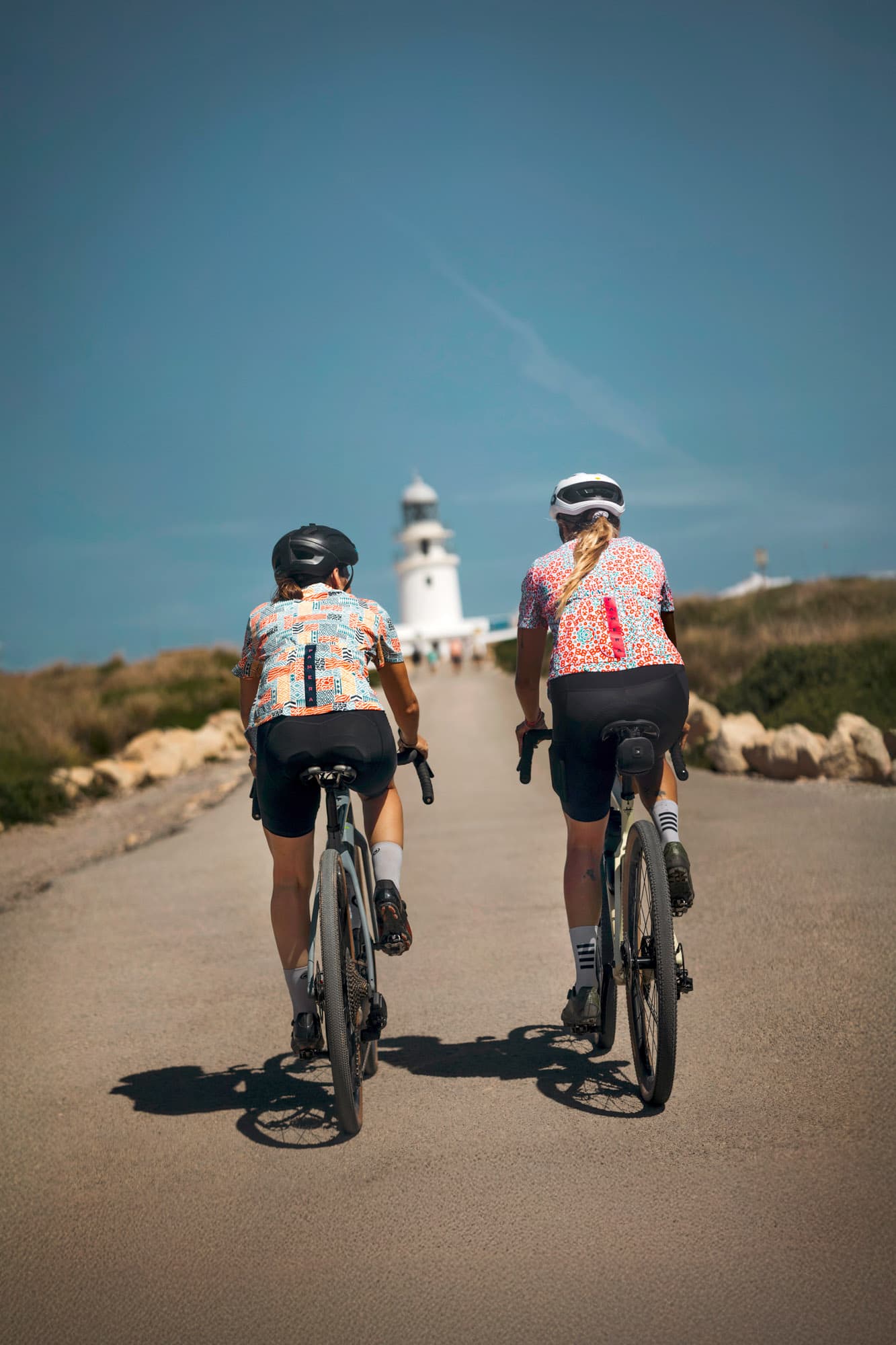
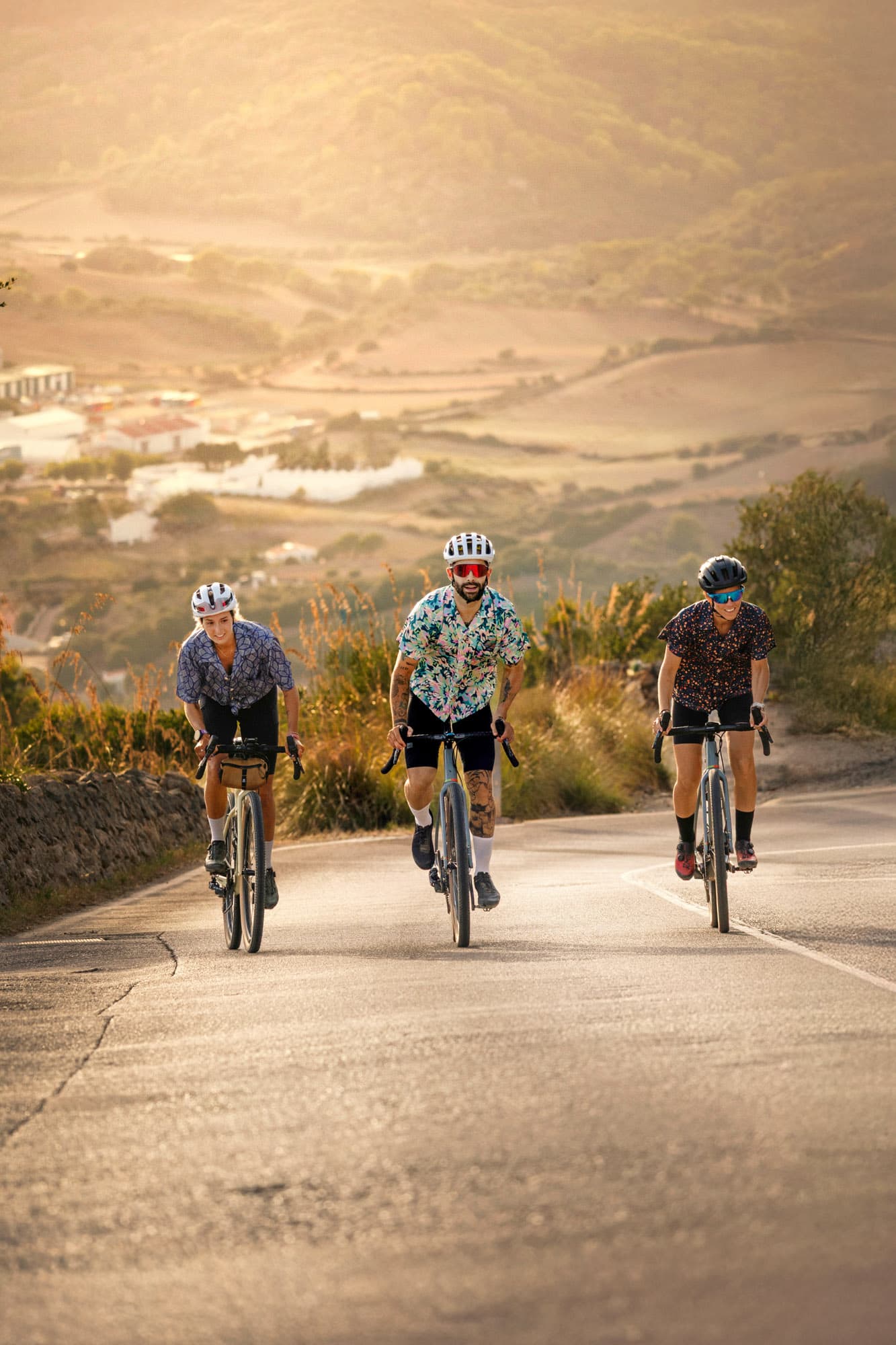
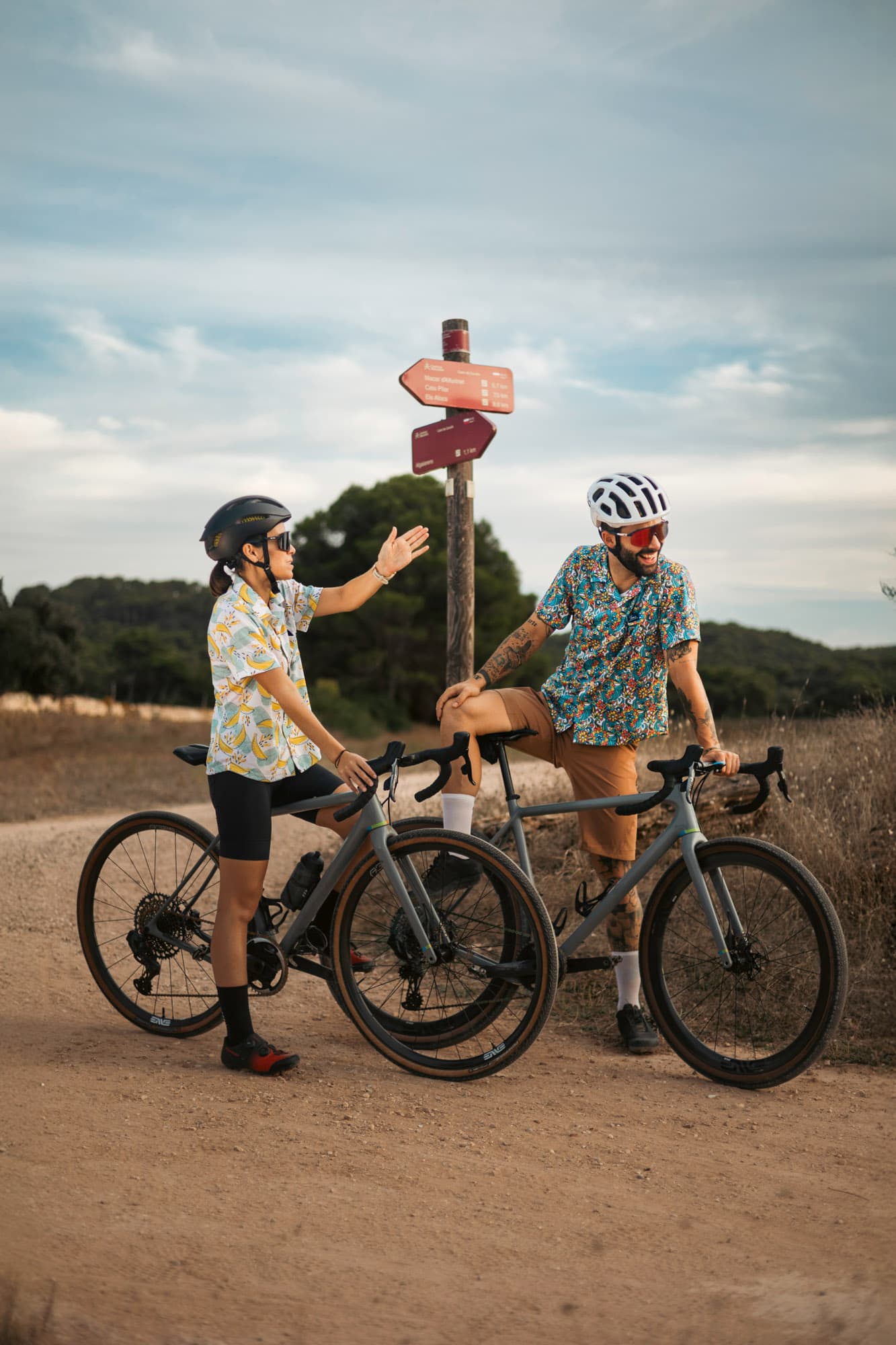
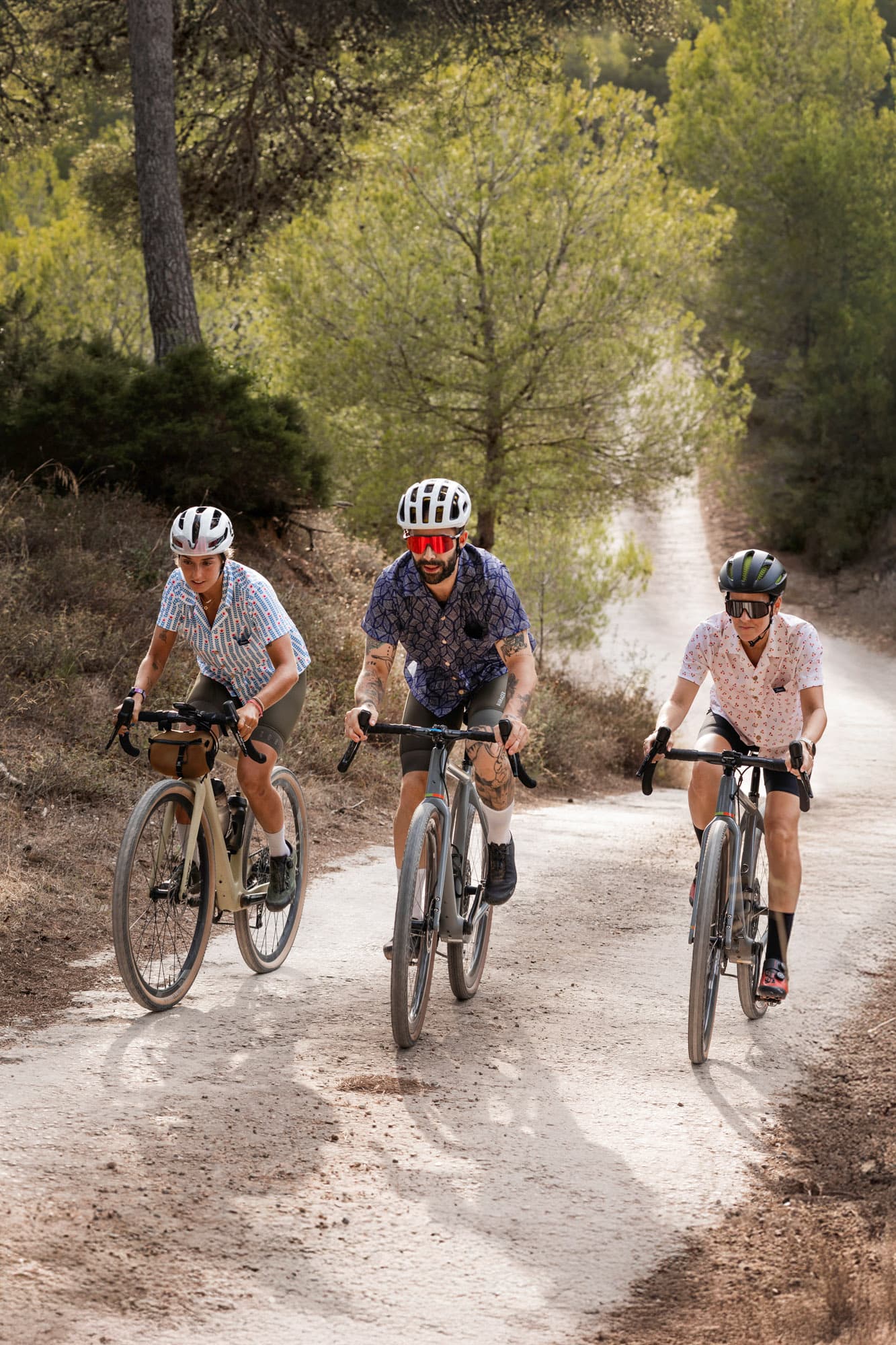
We finished with five quick ones. Pia and Marc didn't overthink a single answer.
Go-to coffee order on a ride?
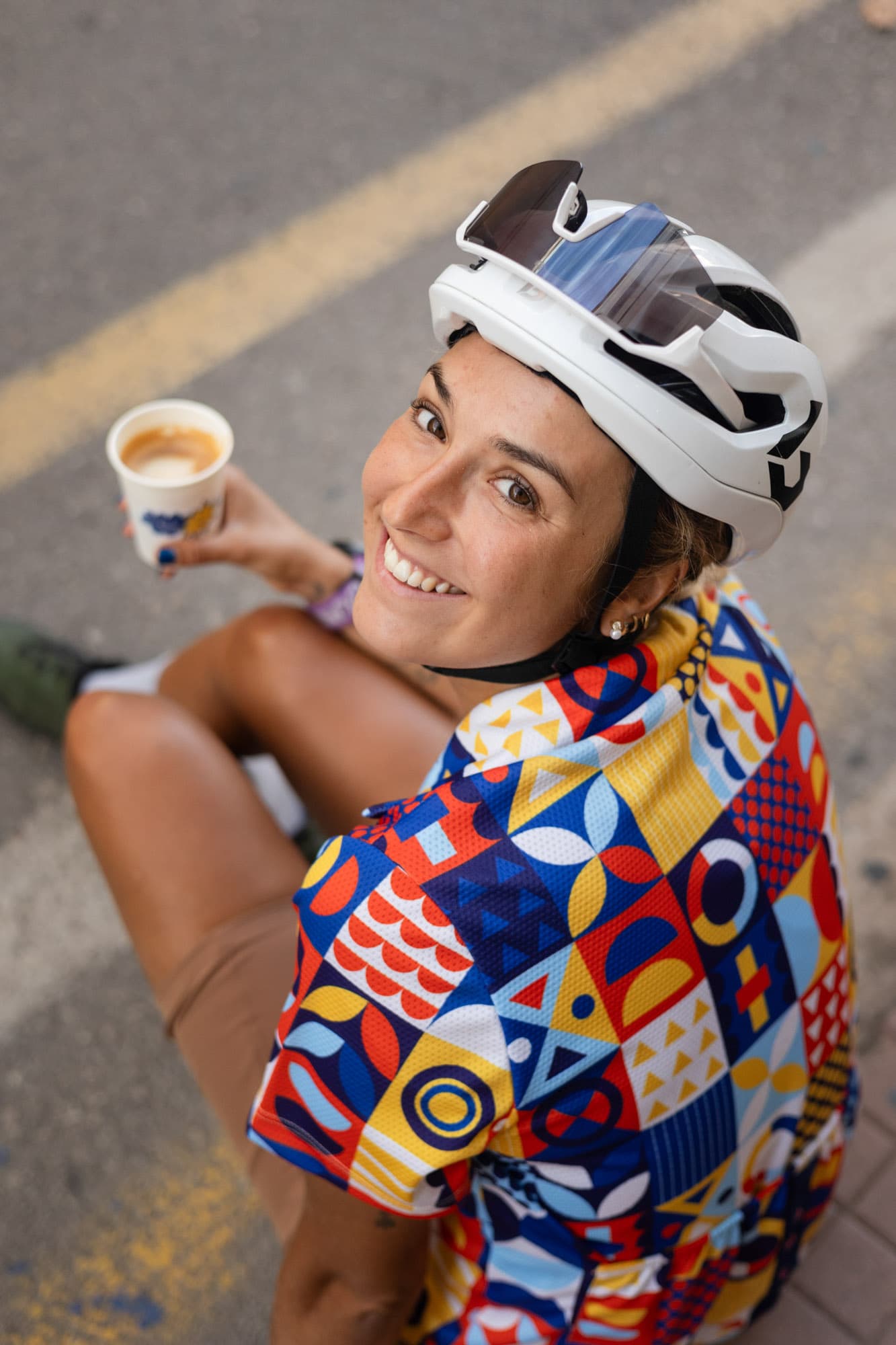
A cortado. Always simple, always good.
The three songs that would be on the official Pamera riding playlist?
Me Gustas Tú by Manu Chao, Messy by Lola Young, and Walking On A Dream by Empire of the Sun.
The one rider you'd most want to see wearing a Pamera?
Lachlan Morton. He represents adventure, freedom and doing things differently. That feels very Pamera.
Gravel, road, or trail, where does Pamera belong most?
Gravel. But not only gravel as a surface but gravel as an attitude.
Where would the ultimate Pamera ride take place?
Starting in Barcelona, riding along the coast, climbing into the hills, crossing gravel roads, stopping for coffee, then finishing near the sea with friends. Mediterranean light, good food, no rush. That is the dream Pamera ride.
To wrap up, we asked Marc and Pia what we missed in the questions. They dove right in.
Pamera is still a very young brand, but the reaction from customers has confirmed that there is space for a different voice in cycling. We are not trying to replace classic cycling apparel. We are creating an alternative for people who want technical clothing with more personality. The future of cycling does not need to be only black, tight and aerodynamic. It can also be colourful, relaxed, expressive and still completely functional.
We are very aware that our current customer is often a more mature rider, usually around 40 to 60 years old. That is a great audience for us: they understand quality, comfort, travel, gravel, bikepacking and the lifestyle side of cycling. But we are also working on new products and new categories that can bring Pamera closer to a younger audience. We want to keep our original DNA, but open the door to younger riders, runners and people who connect with the same idea of colour, freedom and non-conformity.
For us, the opportunity is not only to sell cycling shirts. It is to build a brand that can speak to different generations of people who move, travel, ride, run and want to dress with personality. That is what Pamera is about.
Unfinished Business
My entry for the 2027 Traka might need to happen. I have unfinished business with that course. There's also Unceded, a new bikepacking ultra in Pemberton that should happen this fall.
But if I'm honest, I realize I've always loved unnecessarily long rides more than actual startlines. It's probably time I stop dressing like I take it more seriously than my actual commitment. I just want to ride my bike, stop for coffee, and maybe I don't need to be doing that in a race jersey. Maybe a Pamera shirt works for the way I ride most of the time. I just need to get my size.