Meaghan Hackinen: Making Tour Divide History


In Part One, published the week before the gun, Meaghan Hackinen set a tiered goal: stay sober first, ride sub-16 days second, chase the women's record third. She made it sound almost clinical.
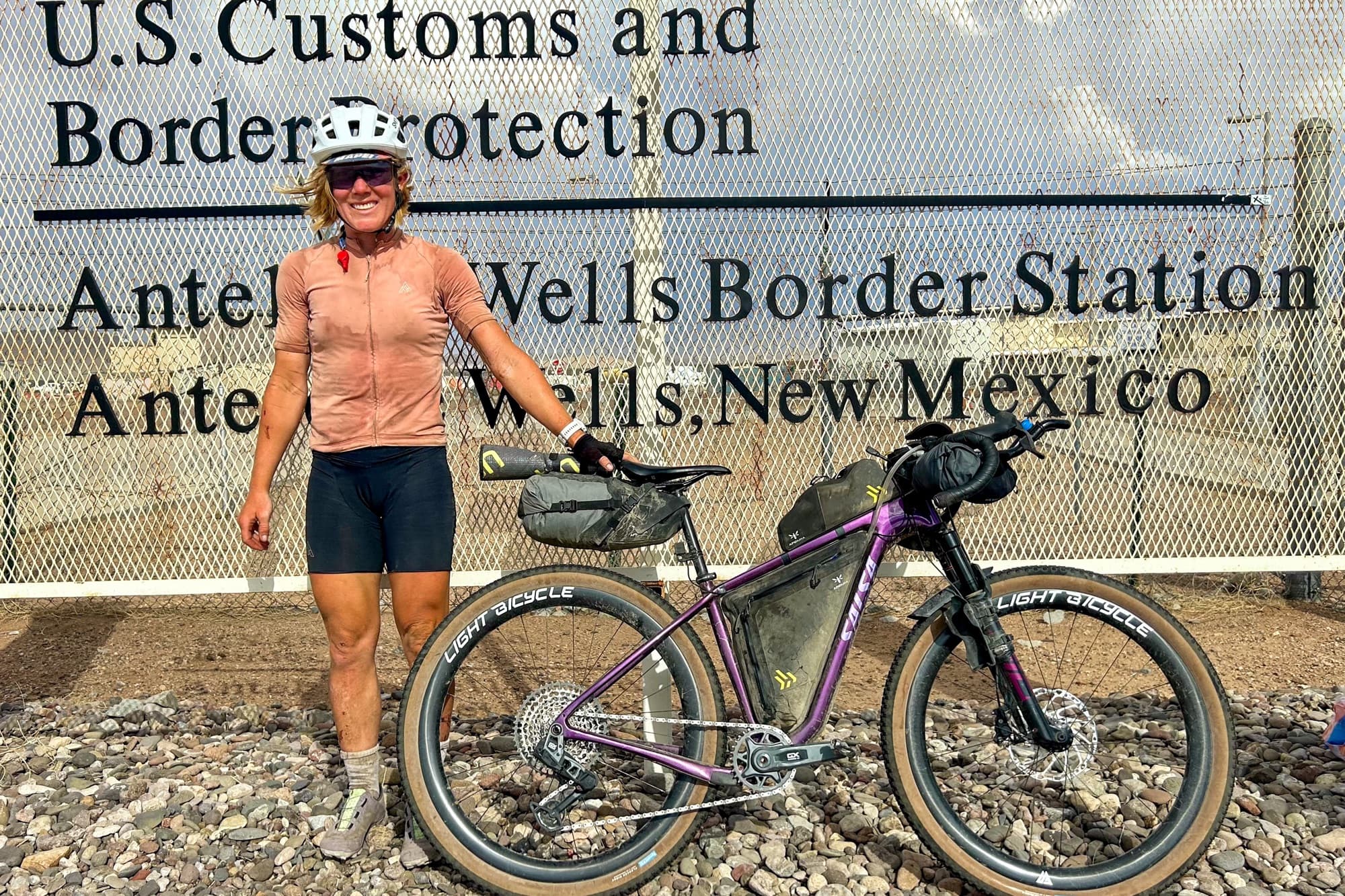
And she did it. She won. Again. And not by a little. She now holds the women's Tour Divide record, with a time of 14D:10H:2M.
With her second Tour Divide title, Meaghan joins Lael Wilcox (2015, 2023) and Alexandera Houchin (2018, 2019) as the only women to win it more than once. On the men's side, only Mike Hall (2013, 2016) and Matthew Lee (2008, 2009, 2010) share that distinction. The 2026 race was, by any measure, a record year. The men's overall, men's singlespeed, and women's overall marks all fell. Only Alexandera's women's singlespeed record stood untouched.
In part two of this series, Jeff asked Meaghan, who literally wrote our guide on becoming a bikepack racer, what it took and how it felt to achieve her goals.
Start us at the beginning. You'd done the Divide Collective meetup the day before. When you actually rolled out of Banff, what was going through your head?
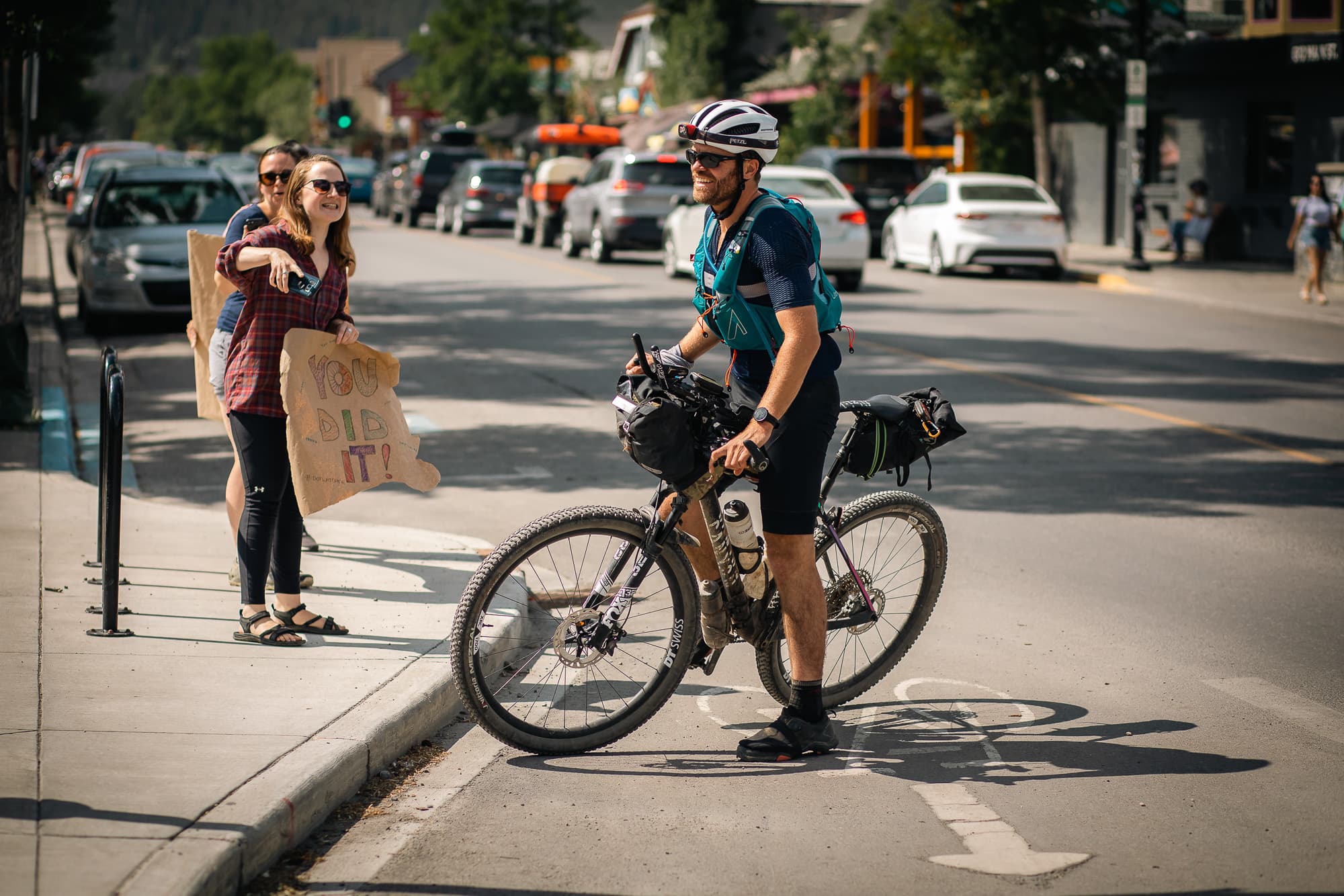
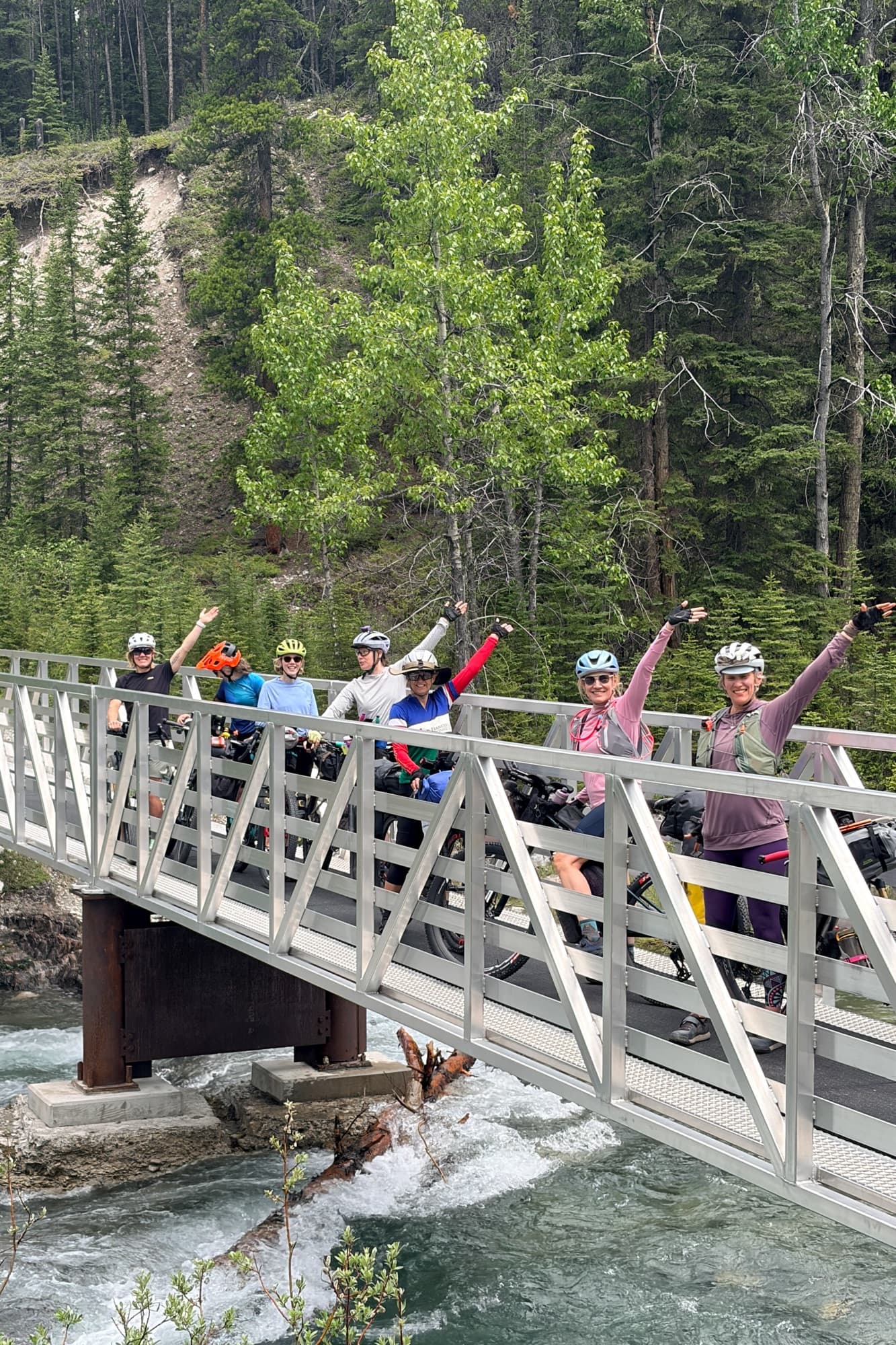
I was excited to start, but the send off felt different this year. Normally we meet at the YMCA, but this year we met at Central Park, in Banff, for a group photo at 6:30 AM, before parading down to Spray River Trail together. Breaking from the tradition of starting at the YMCA felt strange in a way I hadn't anticipated.
I was in the first wave, which meant I wanted to be careful. Going out too hard with the front group was a real risk and one of my main goals early on was just to pace myself. All I wanted to do was make it to Fernie in one piece.
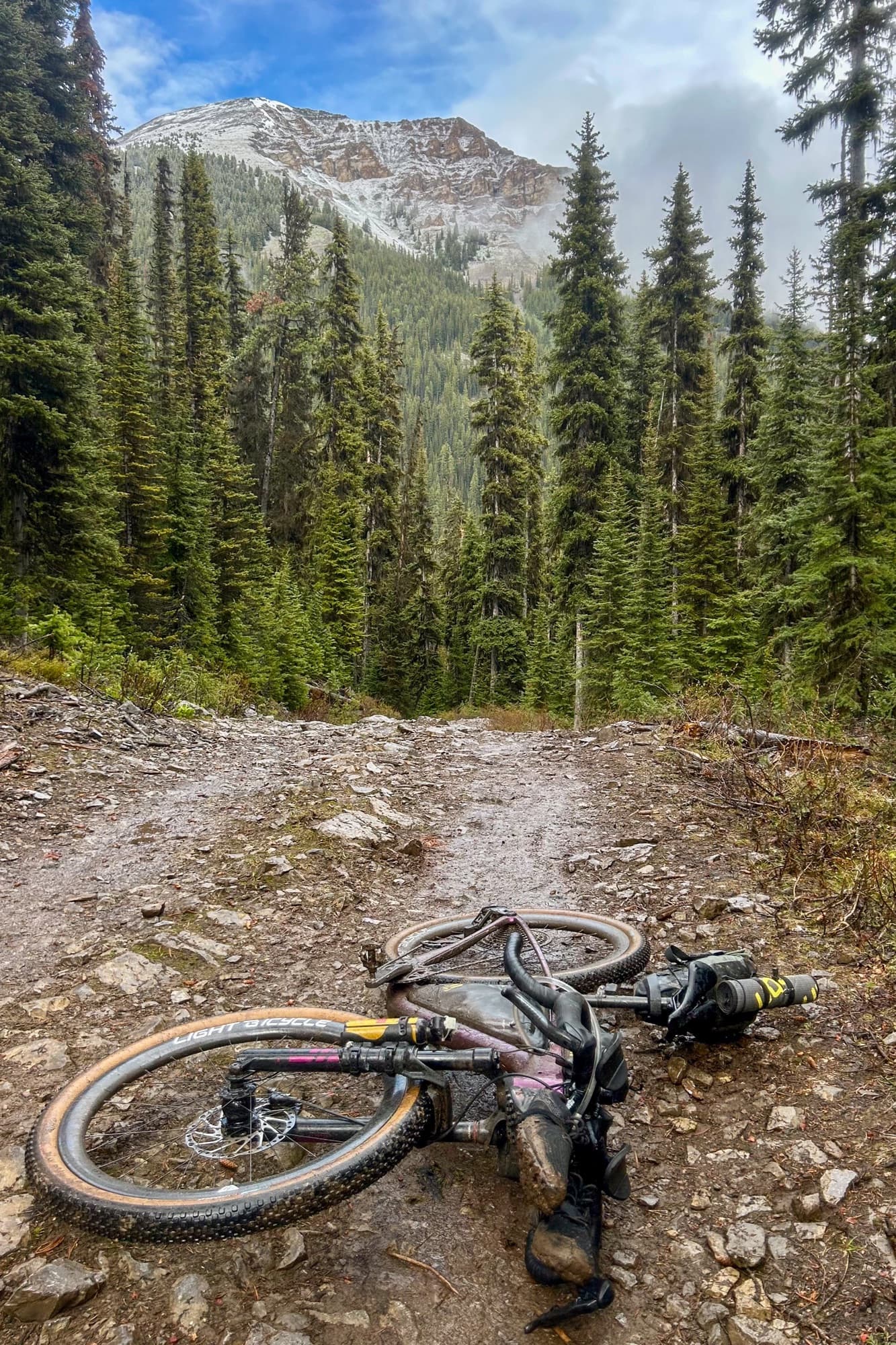
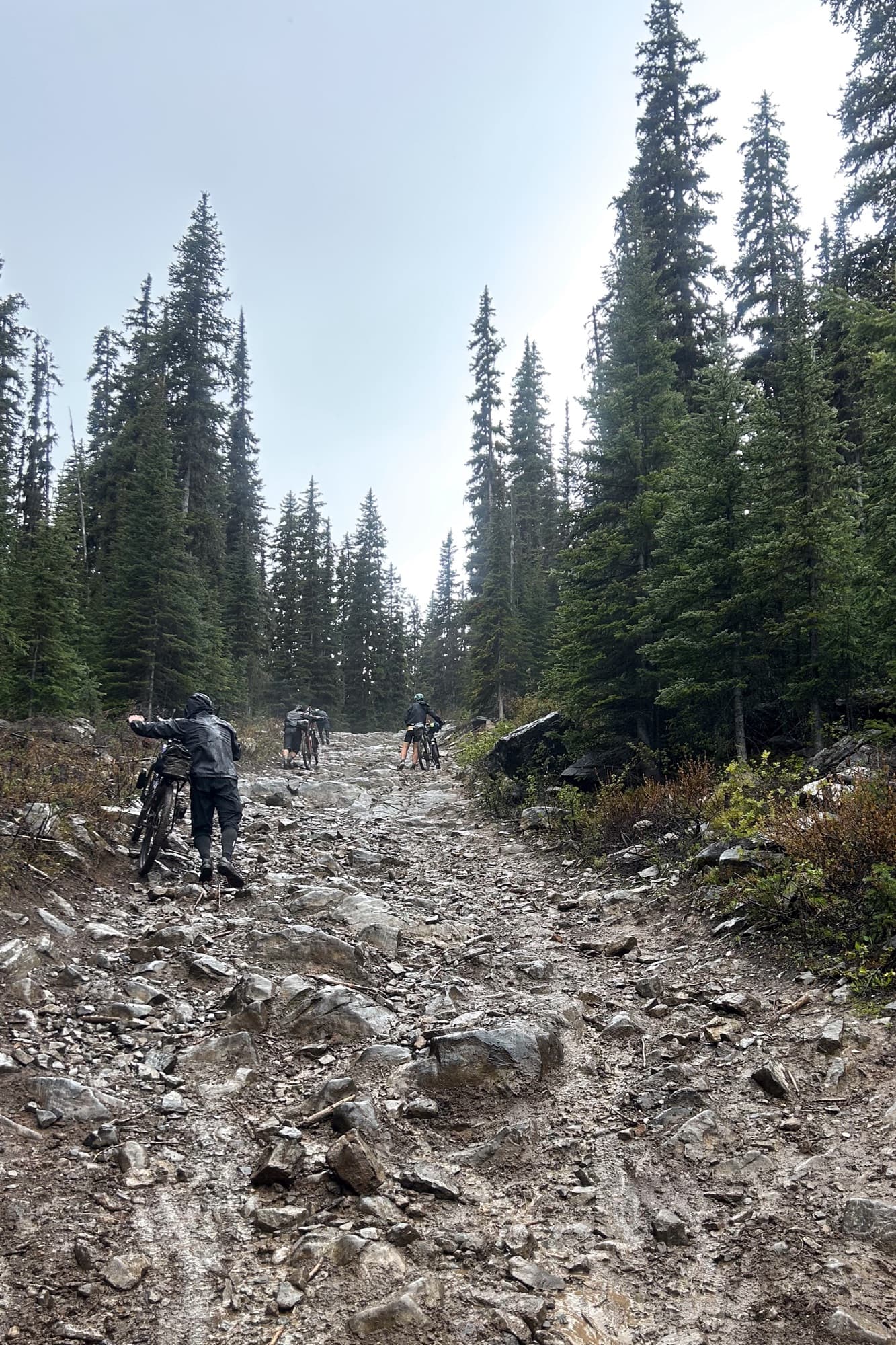
We had heard rumours that Koko Claims was going to be cold and snowy. When we hit that hike-a-bike, I was with a small group. It really felt like we were marching off into battle, both serious and ridiculous all of a sudden. I brought a pair of hiking shoes to change into and they proved to be a good move. Though there ended up being very little snow up top, which I was grateful for. Generally, conditions were both messier and stickier than 2024, but I made it into Fernie that night and got a good sleep.
Walk me through the race. Not just a recap, but the feelings during it. Where did things feel like they were going your way, and where did you have to fight for it? Were there a distinct highest and lowest moment?
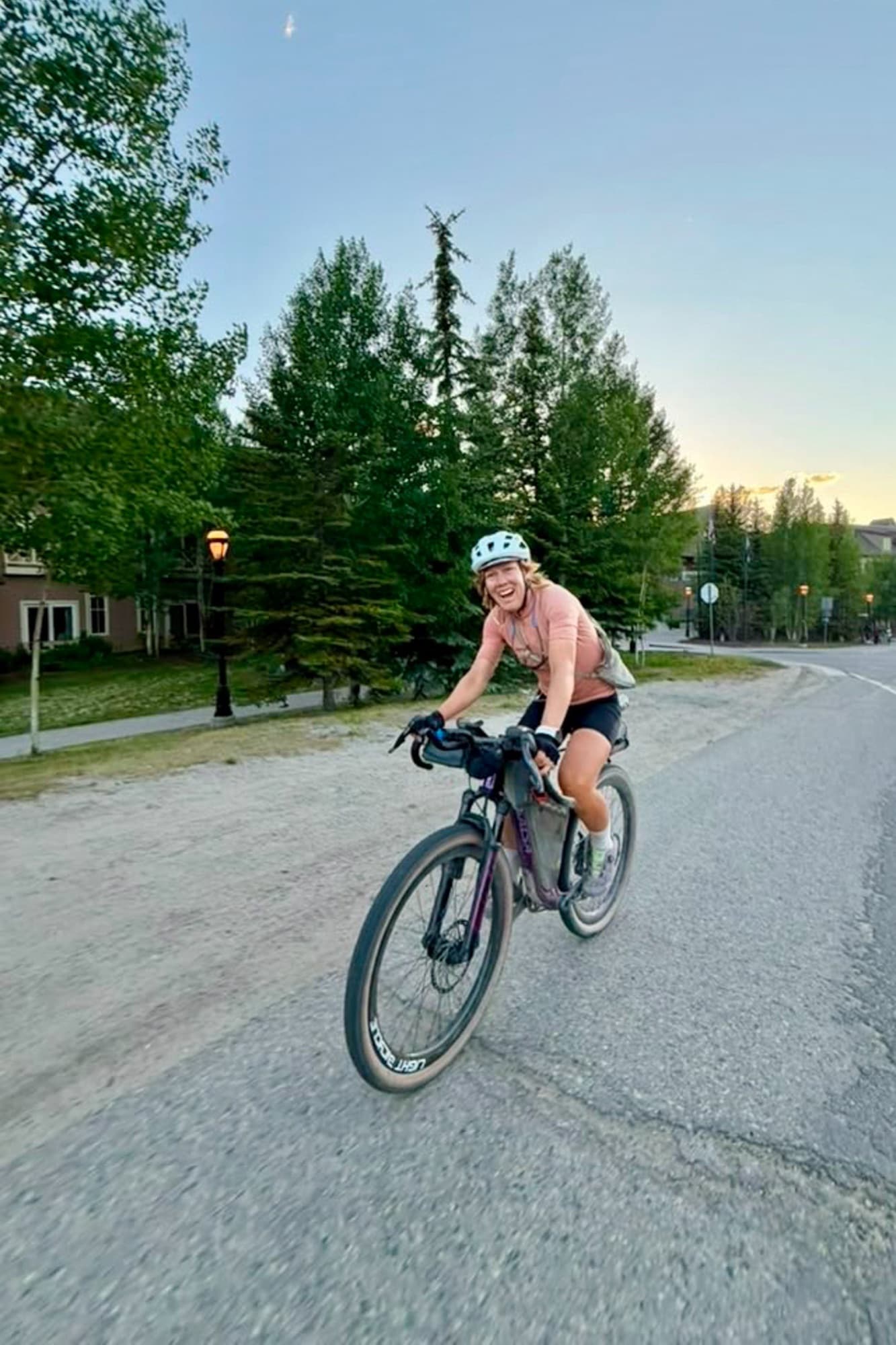
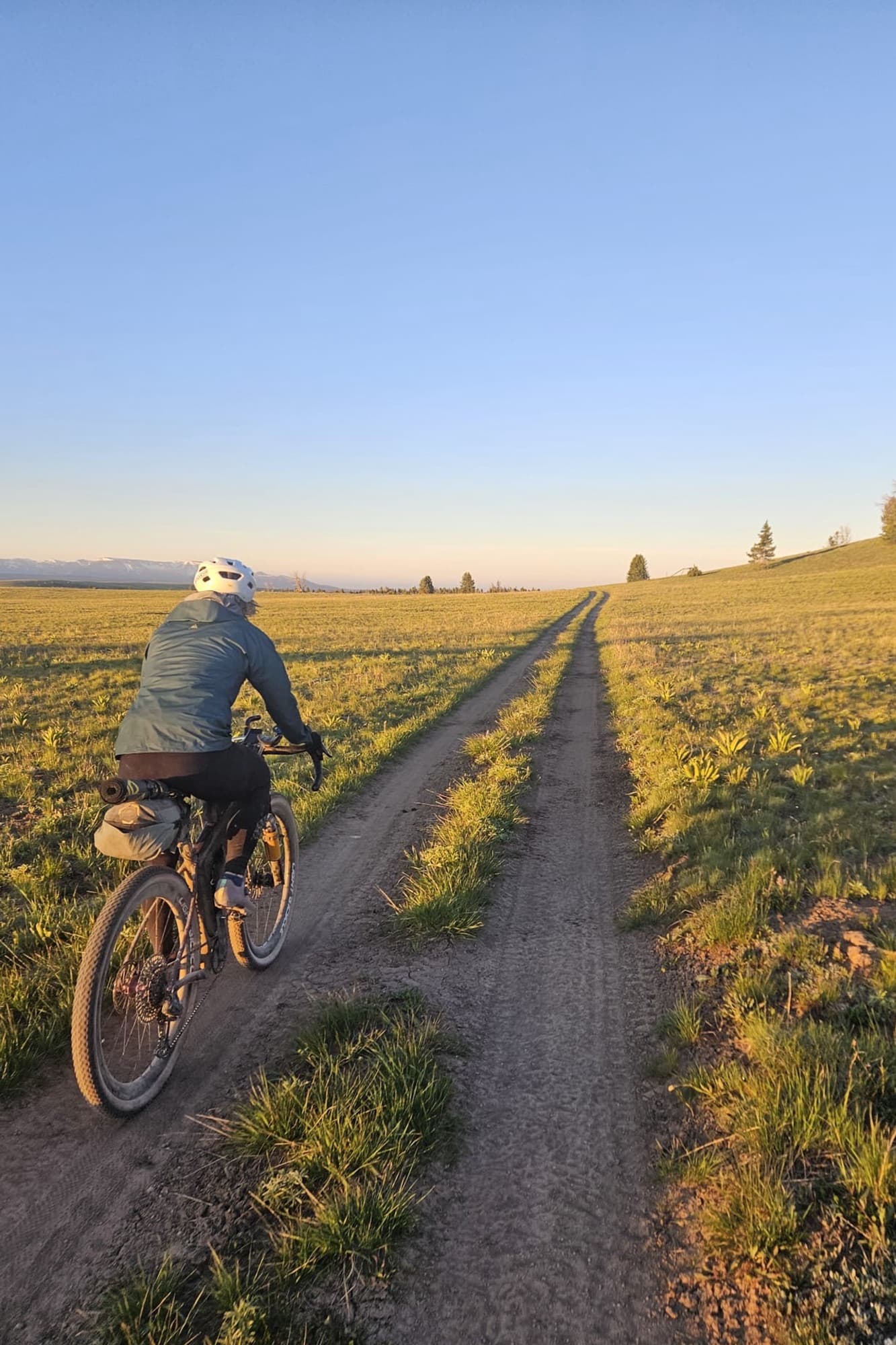
Those first few days through Montana and Wyoming went really well. I was able to make a significant jump on the record early, and hold onto it all the way to Antelope Wells.
Last time, Lava Mountain was a mess and it took way too long to get across the top. The cold weather hits my asthma hard. Without snow and mud to grind through every day, I was covering 60 to 80 kilometres more than I had in 2024 and feeling significantly less fatigued doing it. With good weather and fresh legs, I covered the ground easily.
When I got to Atlantic City (the last resupply stop before the Great Basin), I was a full 24 hours ahead of my 2024 pace. That's also where a rainstorm made me stop for 6 hrs in 2024. It felt really good going into the Basin at the exact same time, but 24 hours ahead.
Most of the genuine lows came in New Mexico, when the accumulated sleep deprivation and exhaustion finally wore me thin. The first Continental Divide Trail (CDT) section felt easier, but the section before Silver City was brutal. I was exhausted by the time I reached it at the end of the day, and the winds had really picked up. I had a rough time negotiating that stretch in the dark. I was beating myself up because I felt so slow and shaky, like my body had stopped cooperating.
I finally made it into Silver City and the only place open after midnight was a Denny's. I stopped to eat and it completely killed my momentum. Then there was a new route out of town that I found confusing, and at some point I was fake crying to myself in the middle of a creek, just like a kid does after scraping their knee. I knew I was being pathetic. I knew it, yet I couldn't stop.
From that point on I was running on fumes. It was only 220 kilometres to the finish and I couldn't hold my pace. I rode slower than I had in 2024 over that final stretch. I didn't sleep last night. I thought I could push through without it, and technically I did. But it wasn't pretty.
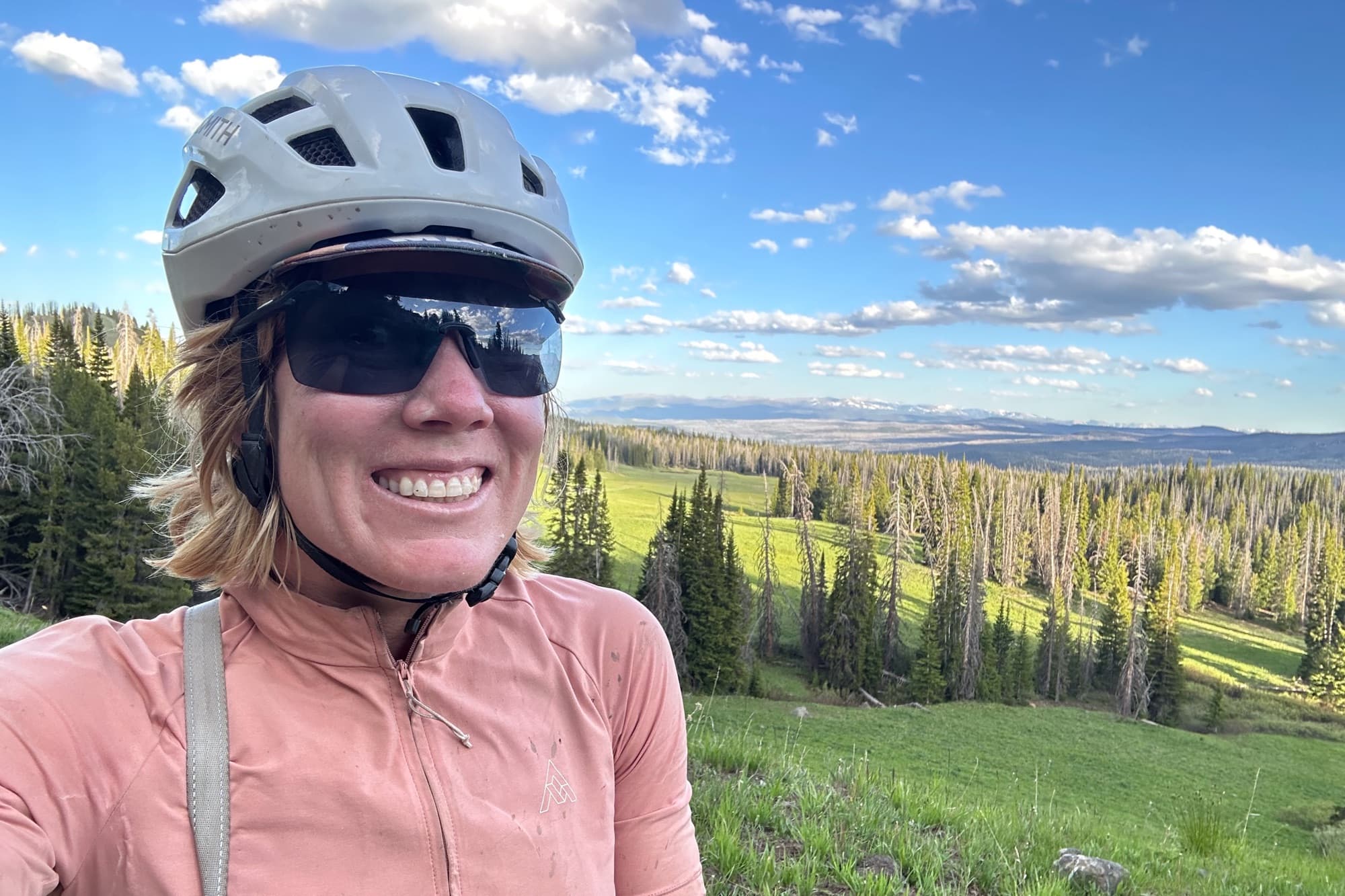
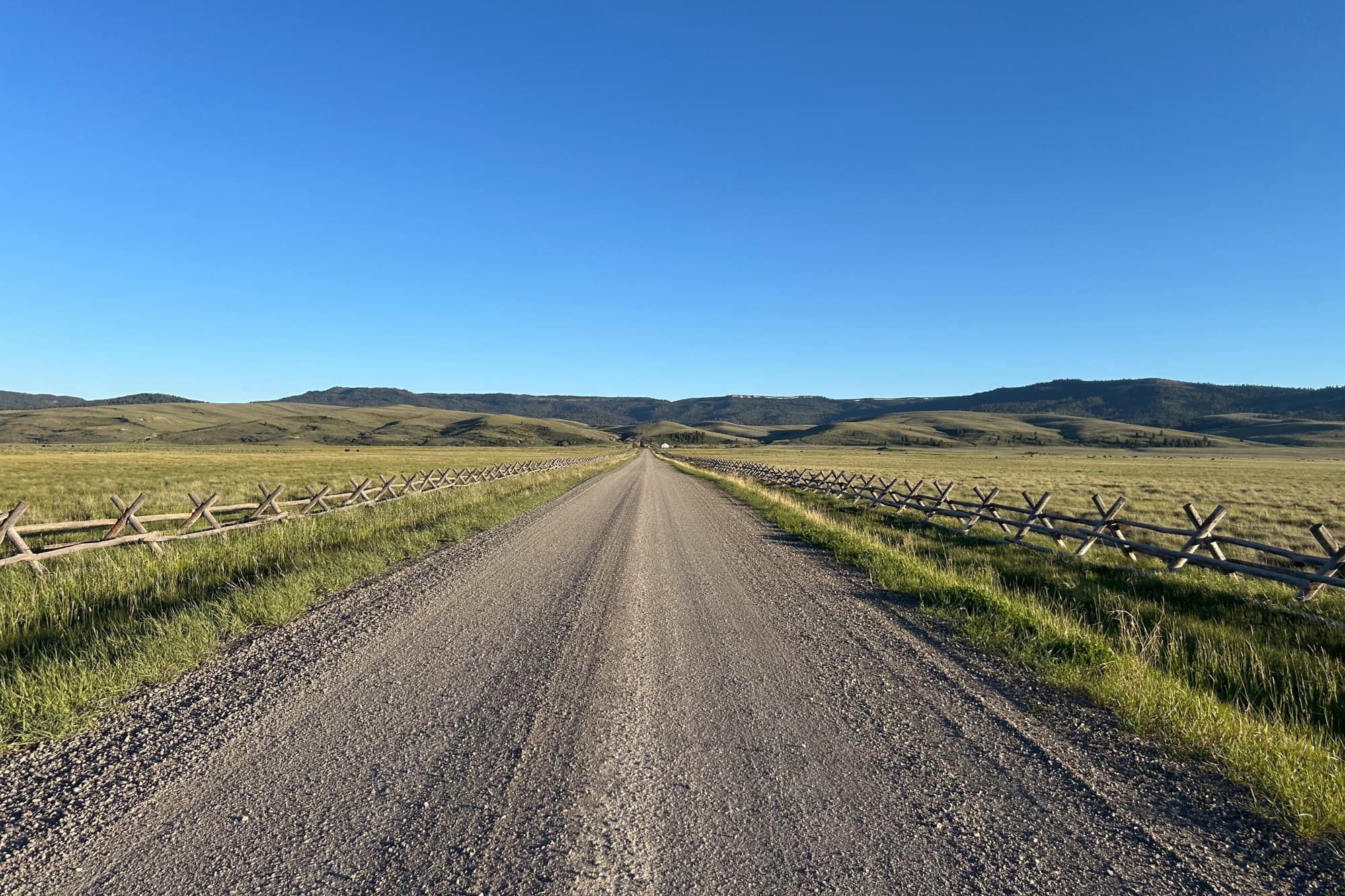
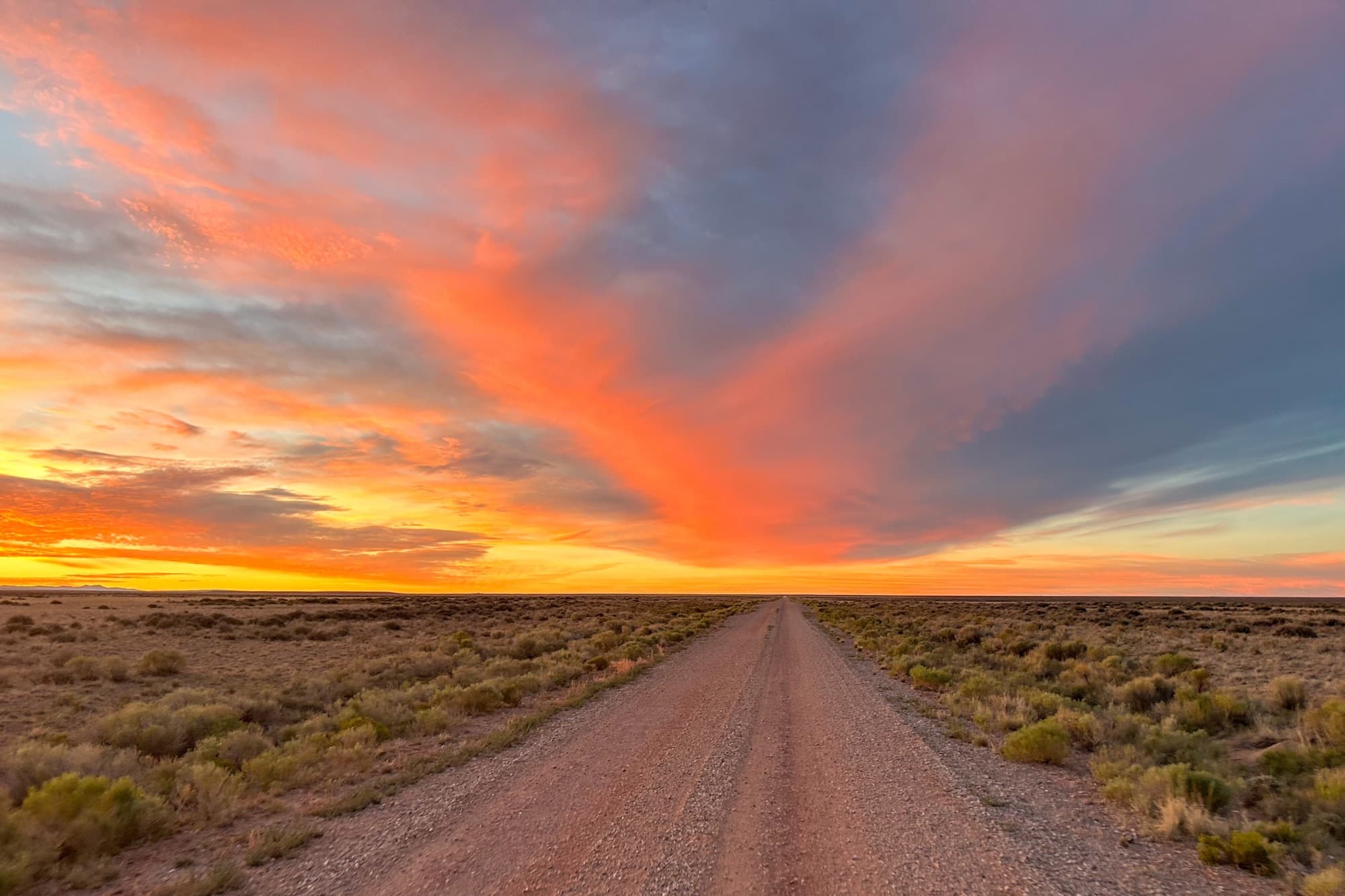
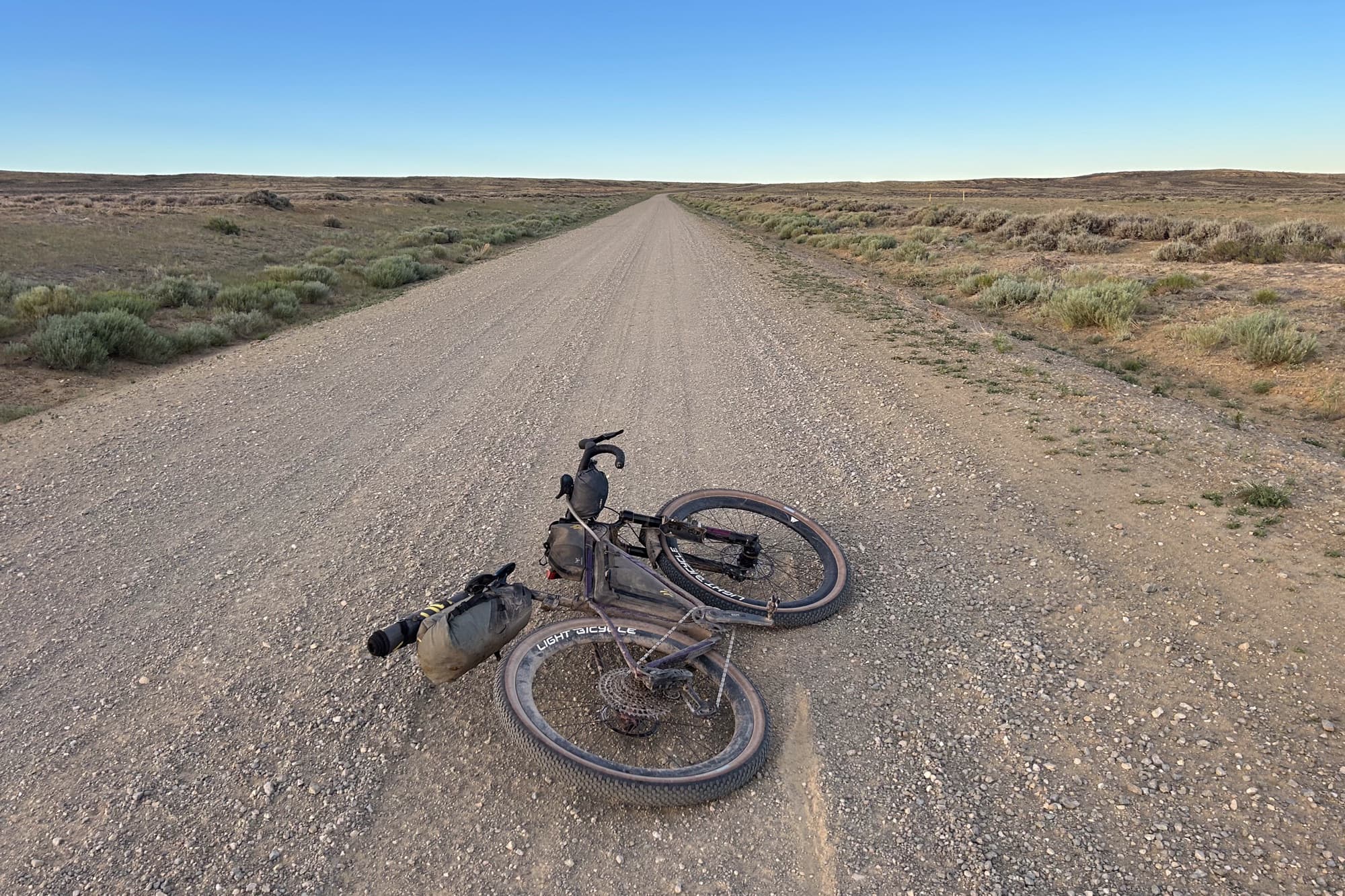
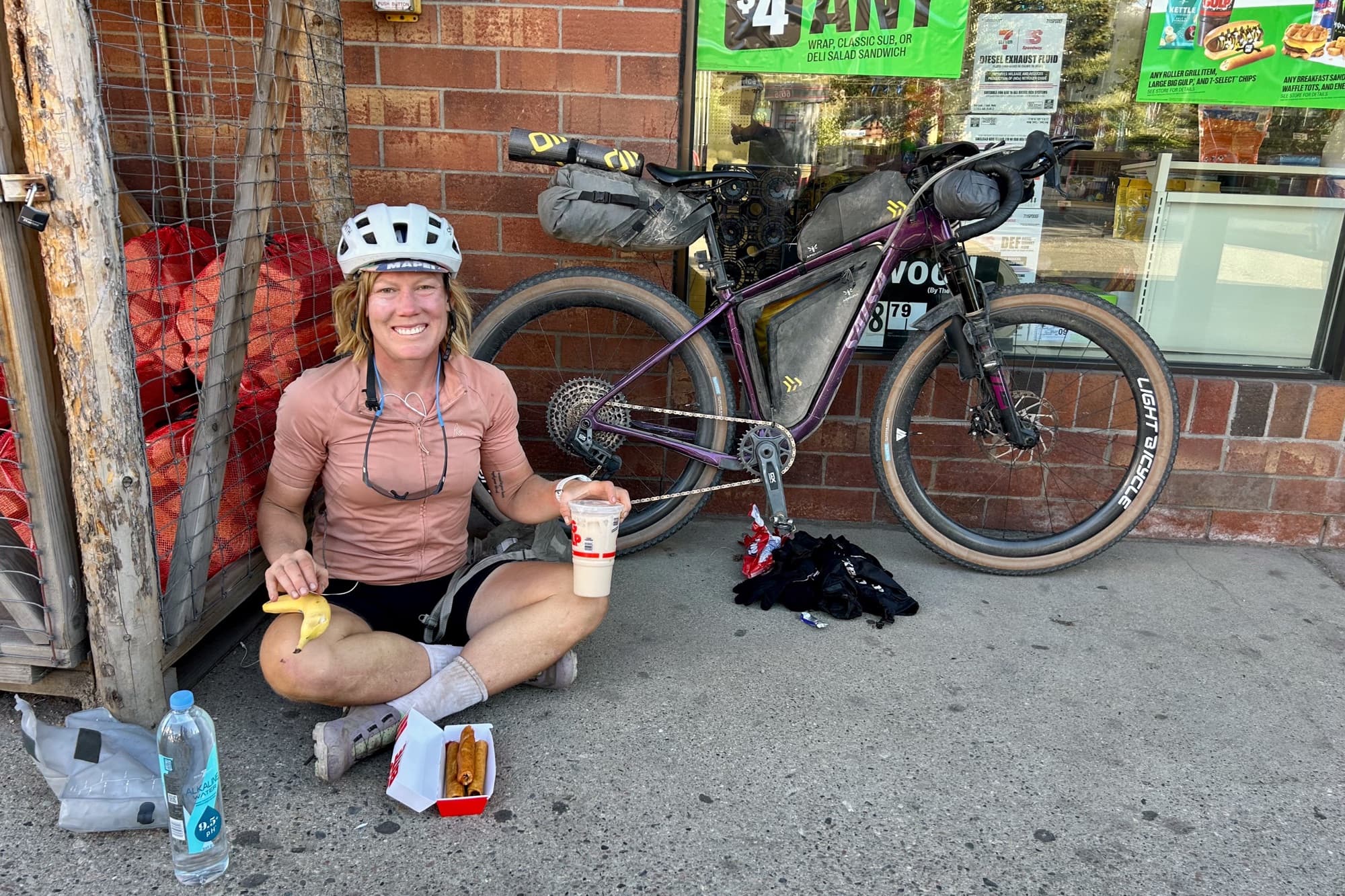
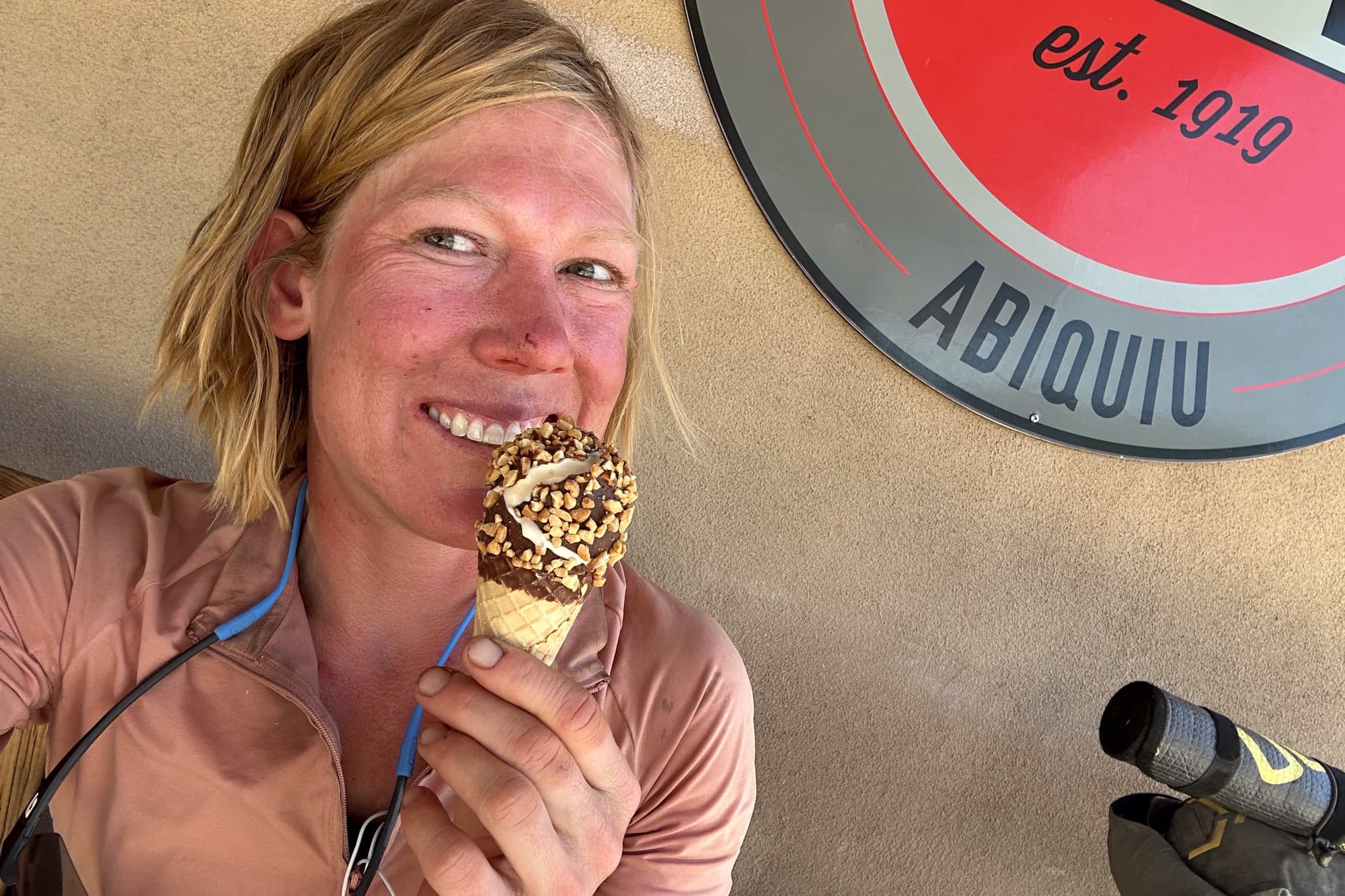
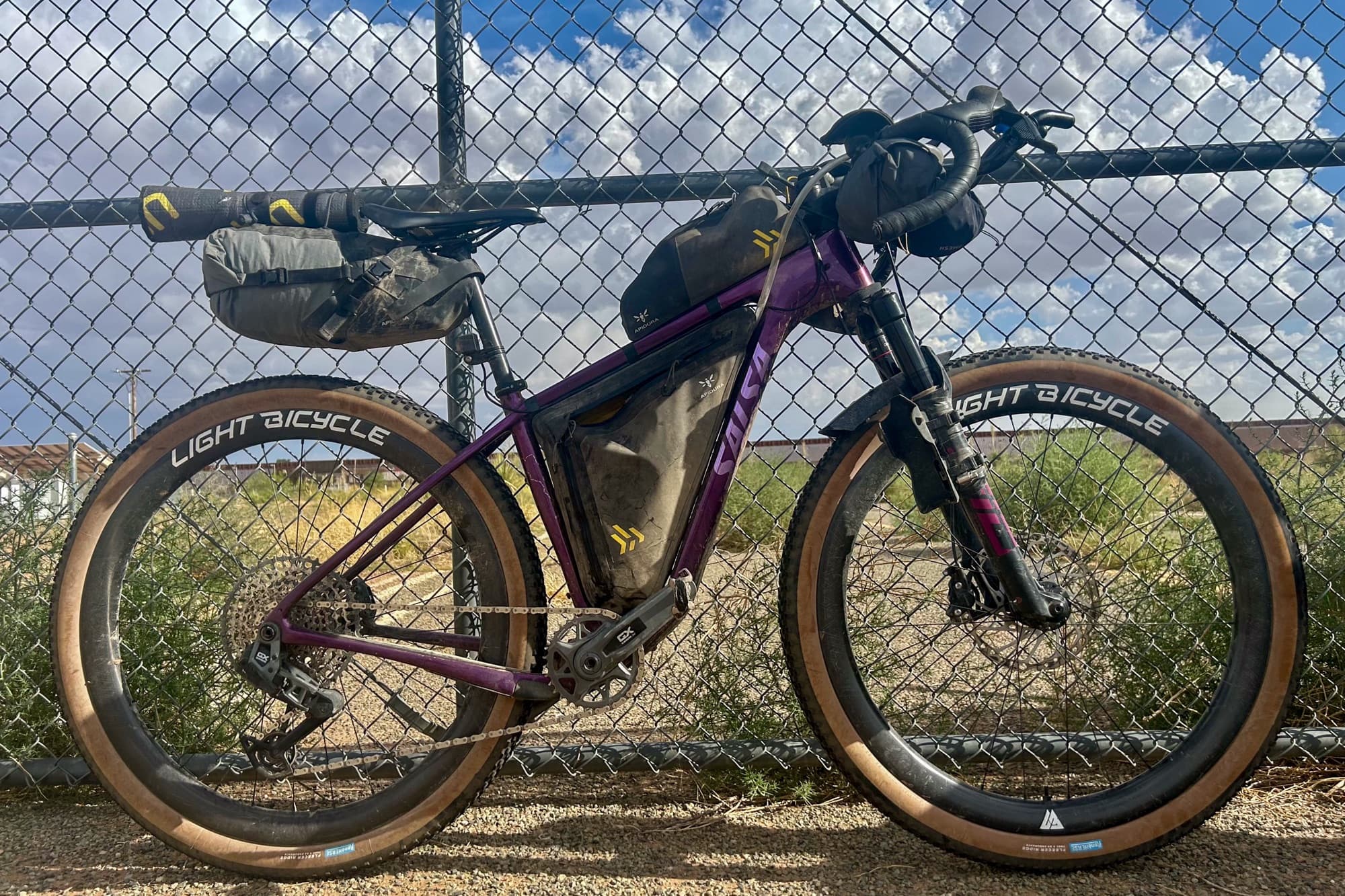
Now let's talk about the bike and the gear. You came in on your new suspension Cutthroat that you named Dolly. What worked, what didn't?
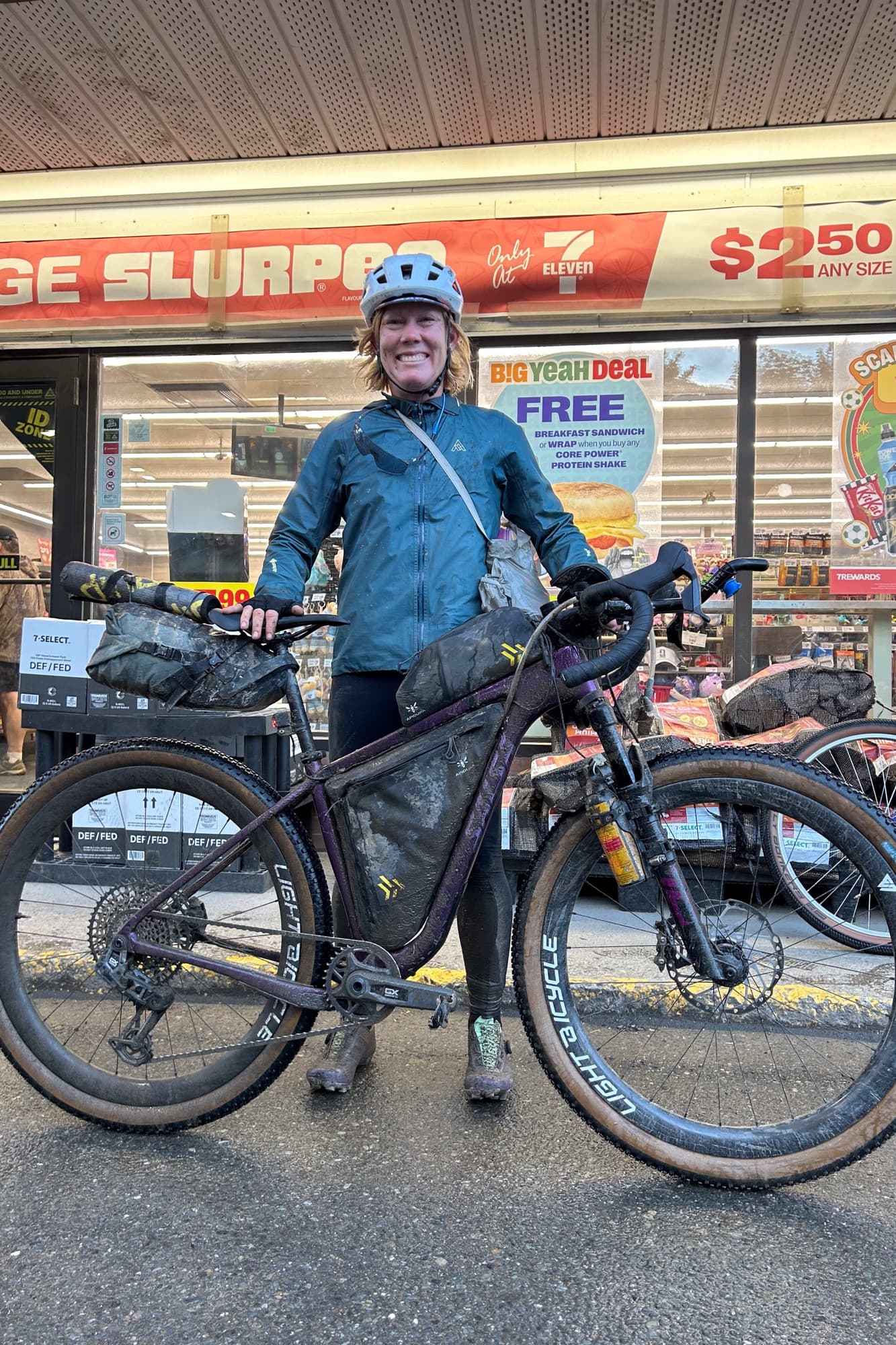
I liked having suspension. It was great on the descents, and made the washboard in New Mexico less punishing. I felt way more comfortable throughout and without a doubt I'm less beat up after this attempt than last time. I don't know if it was faster, but it definitely protected my body.
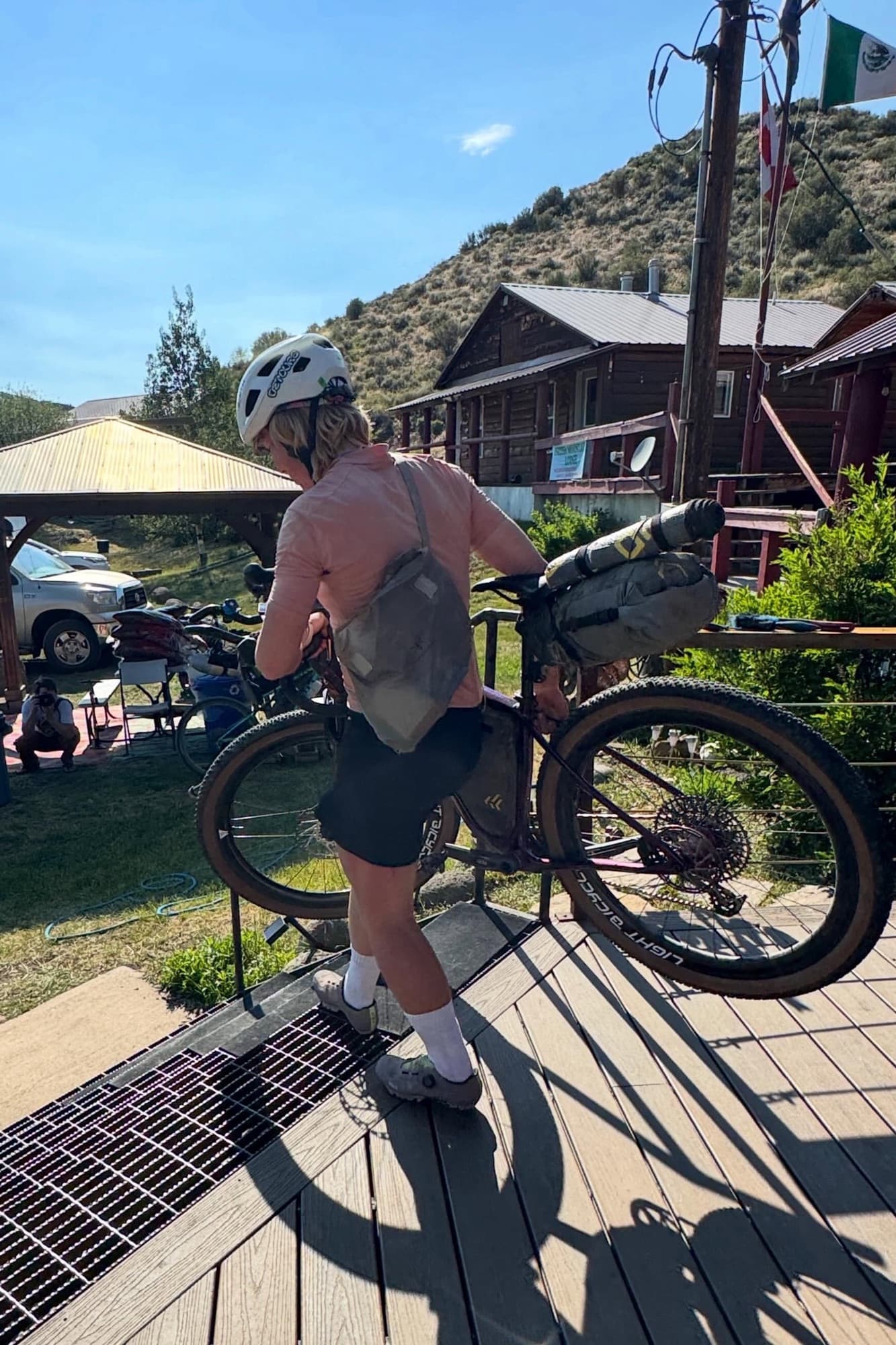
The best surprise was the musette bag from Apidura I had for resupply. I hadn't really tested it compared to using a small backpack, but it worked so well. I could reach into it so much easier than a backpack because of the angle. I had shoulder pain leading into the race and it was almost impossible to reach into my jersey pockets. The musette bag was perfect. (Want to make your own? Here's how to sew a musette bag. - Ed.)
I also used two prototype bolt-on Apidura packs. The frame bag took up the whole frame triangle and worked great. I used it for my water, layers, and gloves. It was easy to reach into and I set myself up in a way that I never opened the seat bag except when I was going to bed. I kept all my layers in the frame bag or on the handlebars, so I was able to reduce the time I spent faffing and had less excuses to stop.
Miraculously, over 4,400 kilometres, I didn't have a single mechanical. Other than oiling my chain daily, I didn't do any other maintenance. Everything went super smooth. The only thing I had to change was a dollar store CR2032 shifter battery (next time, I'll splurge on the name brand batteries). I tend to ride conservatively, but I'm also pretty clumsy.
I crashed three times. On day one, I fell in a river crossing on the High Rockies Trail. On the second day, I hit a mud puddle, fishtailed, and flew off the bike. The third time was near the end when I was riding into Pie Town. Closing in on midnight, I was in the aerobars trying to open a Payday bar. I veered into the soft shoulder and my bike went down. Luckily, I was still holding the Payday!
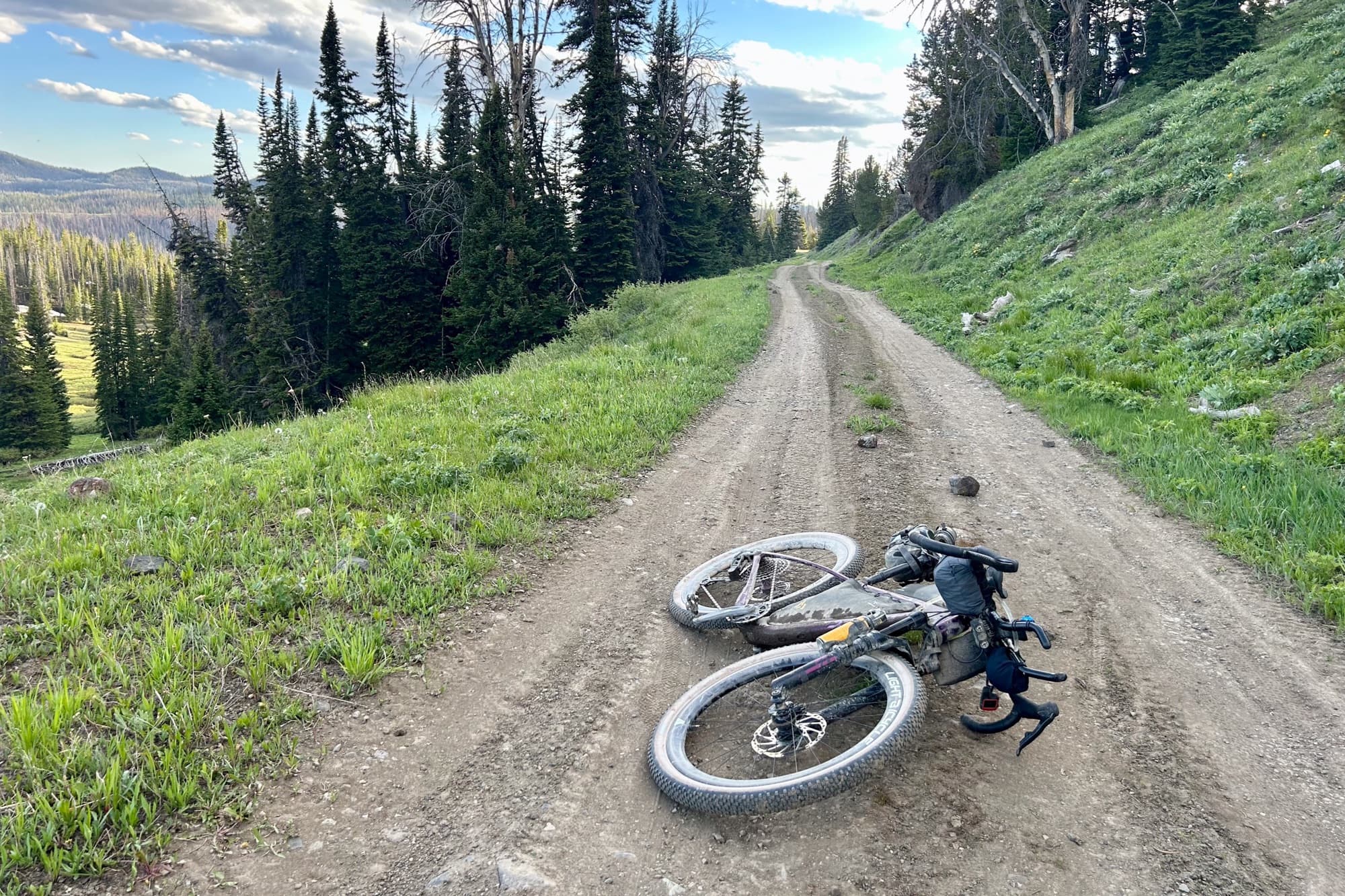
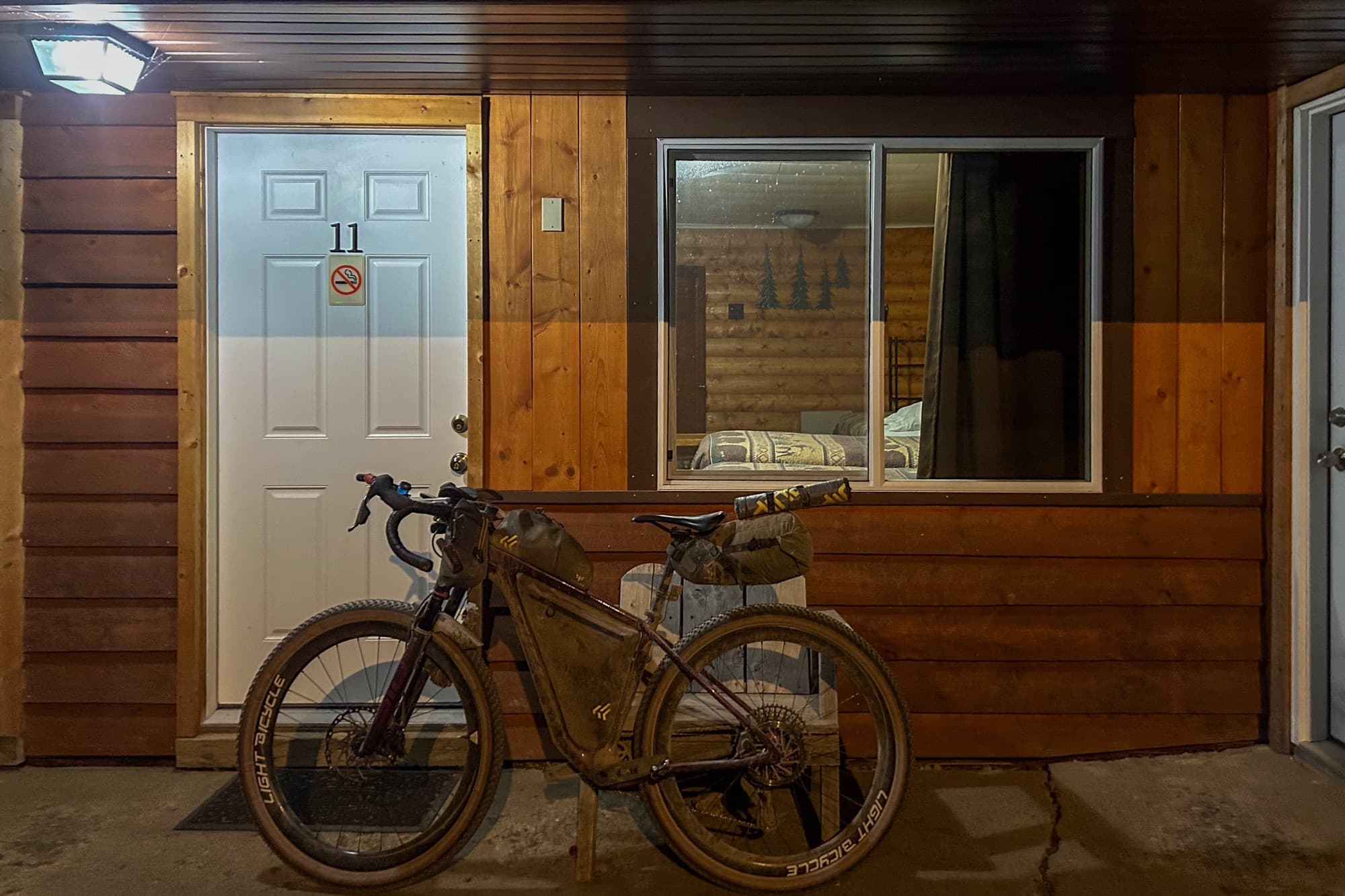
You came into this race as the Grand Depart record holder, but Austin's ITT time was significantly faster. That was the actual mark you needed to chase down, and you beat it by a margin. What did it take to close that gap?
It happened organically. Better weather in the early days helped, and rather than watching Austin's dot I focused on my own 2024 pace. I knew that I had to improve my time by 24 hours to get ahead of Austin's time, so that became the benchmark because I knew my 2024 ride so well. One thing I was deliberate about though was not starting early. I left Central Park with the other first wave riders at 6:50 AM and we arrived at the Spray River Trail, the official start, at 6:56 AM. Everyone took off but I waited until 7:00 AM. It felt weird to watch the rest of the field ride away, but I knew that I wasn't really competing with these guys anyways: Austin was the sole competitor in my mind, and I knew she wouldn't have been offered an early head start. As someone challenging her record, it felt important that I hold myself to the same standards that applied to her. So, I popped a pre-race gel and chatted with the dotwatchers until the clock rolled over to 7:00 AM, and then headed out alone. This might have been a blessing, because it enabled me to settle into my own pace right from the get-go.
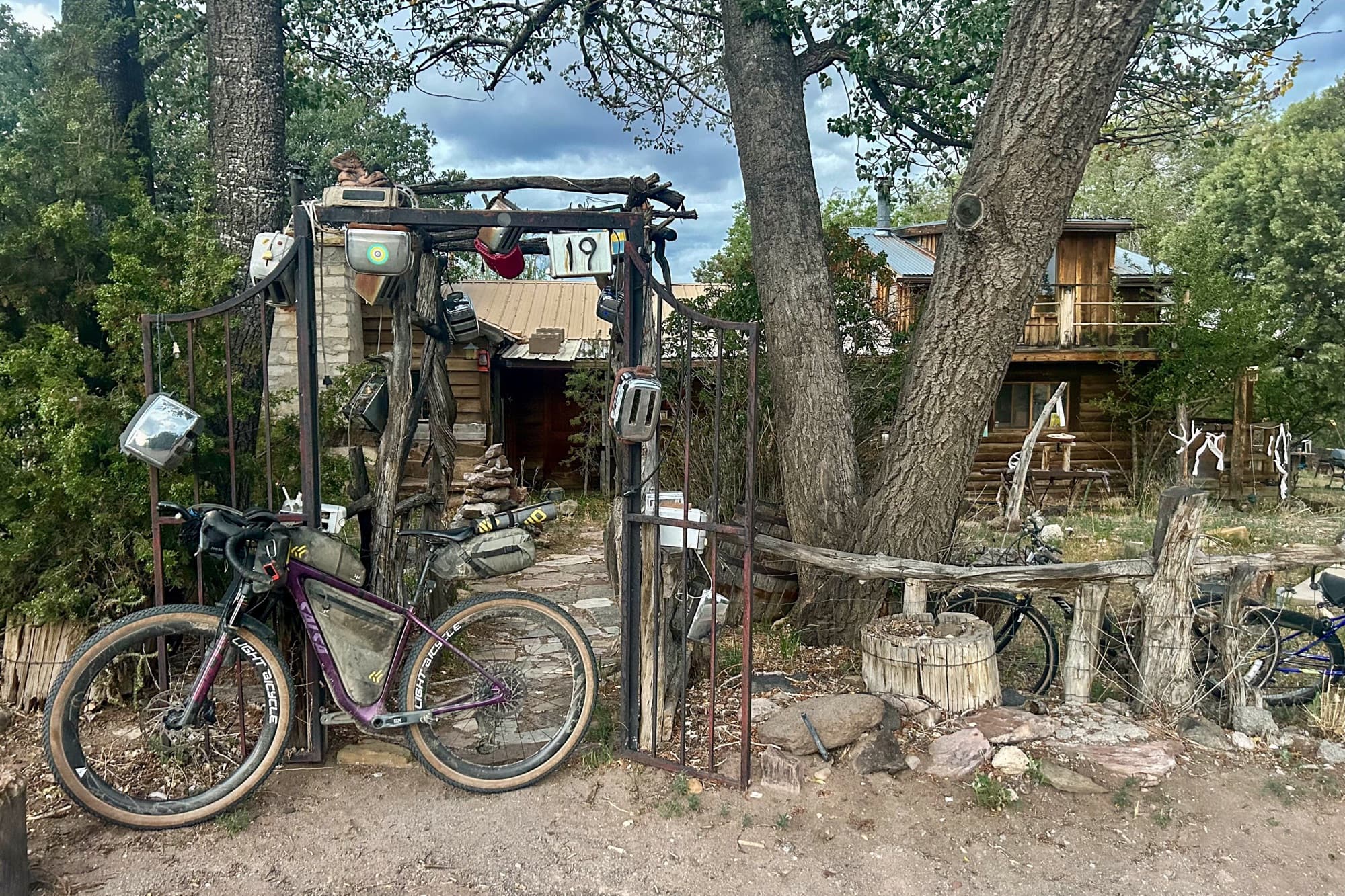
The Toaster House in Pie Town was where I planned to start my final push. It's a natural launch point for the finish and the timing worked out. I was there at the same time as Dries Van Der Kleij and Felix Laberge. We all arrived within an hour of each other and weren't strategizing exactly, but it was clear we each had the same plan: push to the end and sleep only as needed. Hearing it out loud confirmed what already made sense.
Knowing Austin didn't take her foot off the gas until the end helped with my decision to attack the finish. Attack is probably the wrong word. Fatigue had a choke hold on me by then, so I was losing focus and slowing down. Stopping to check the tracker more frequently and sending unsolicited and deranged voice messages to people. In those final kilometres the fatigue was real.
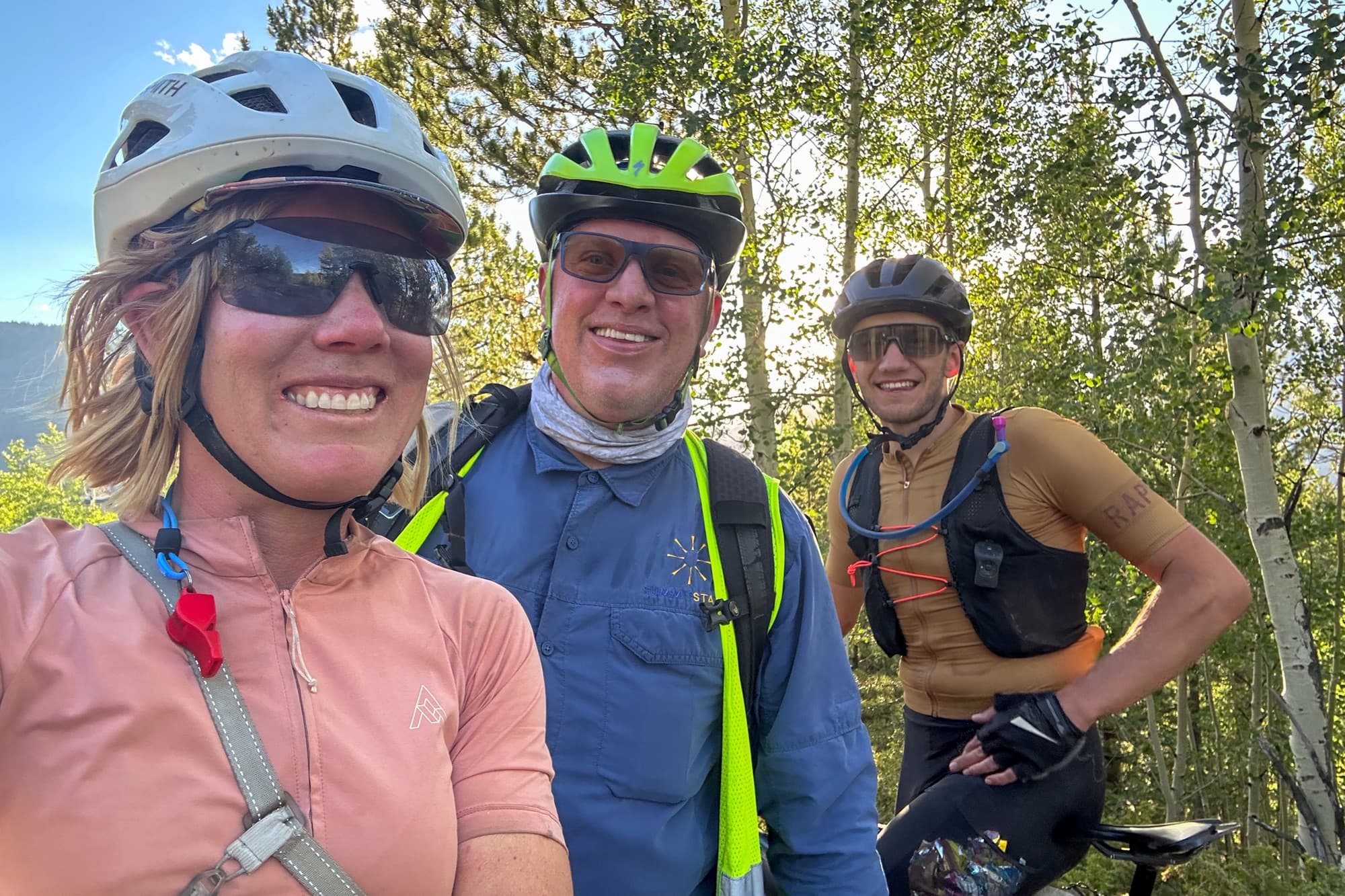
For much of the race you were riding at a pace that tracked closely with Mike Hall's then-record 2016 pace. He's one of the most celebrated Tour Divide riders, a two-time winner, and someone the ultra-cycling world lost in 2017 when he was hit by a car during a race. What did it mean to you to be riding against that dot for so many days?
There's something special about racing dots. I am often riding against people who aren't there. When I did the BC Epic 1000, I was chasing friends from past events. This year it was Mike Hall.
His dot shows up in my book as well, because I'd been racing his record Trans Am dot in my first ever ultra race. Well, not exactly racing: we share the same initials, so I kept confusing his record dot with my own, and then realizing that I was, in reality, way back in the field. Going back to this year's Tour Divide: I never thought a sub 14-day finish was realistic for me, but I had good weather, tailwinds, and suddenly his dot was right there. I knew I probably couldn't hold it all the way to Antelope Wells, but hanging onto it as long as I could felt good.
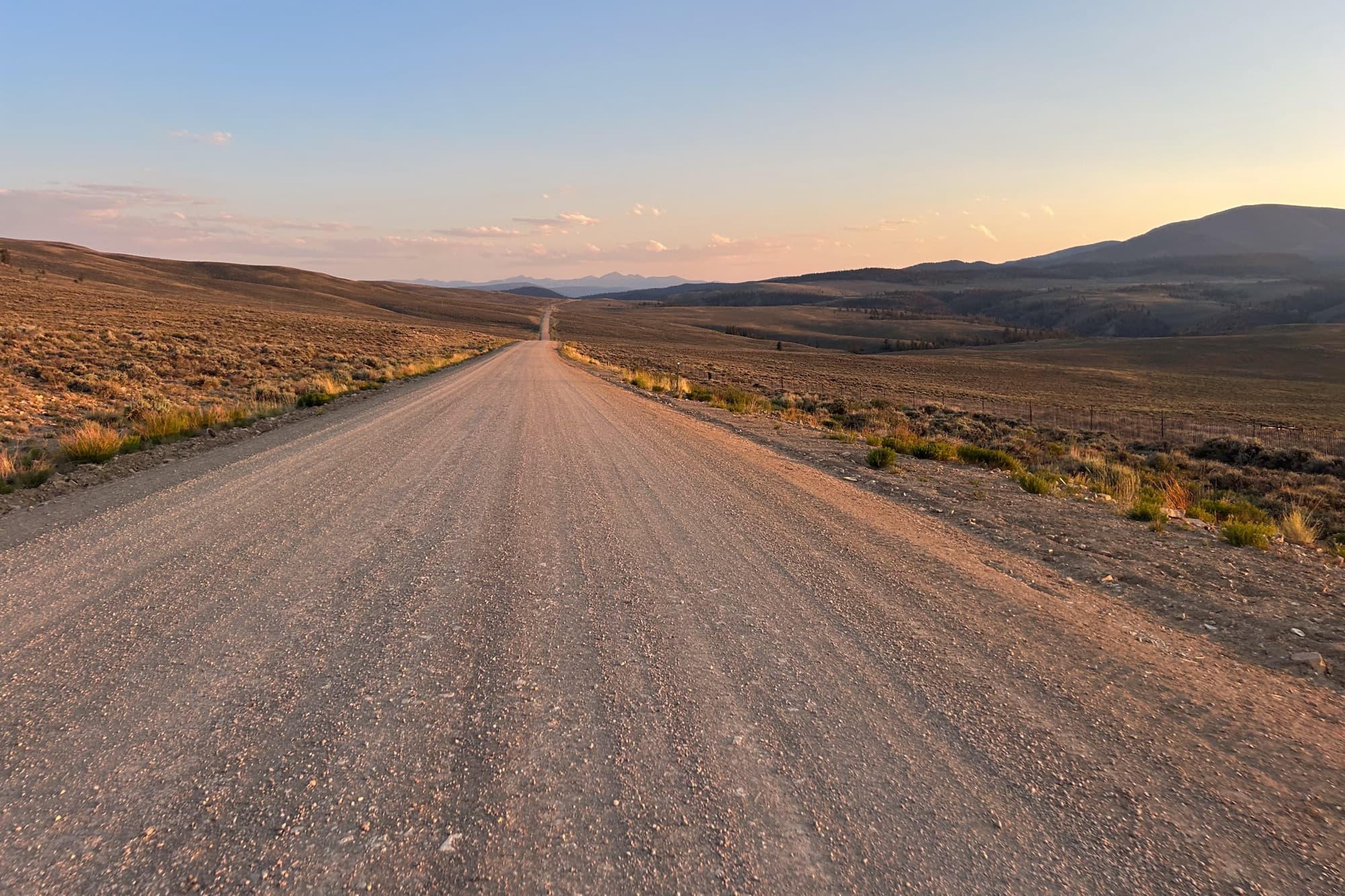
There must have been a moment, or maybe several, where you realized that you weren't just going to win but also set a new record? What did that feel like?
I didn't let myself believe I had the record until I finally hit the pavement after that last CDT section. As Josh Ibbitt is so fond of saying in his daily updates: "This is the Tour Divide: anything could happen". I could have had a mechanical or been trapped by bad weather in the Gila. I just kept chipping away at the time and I never let myself believe I was going to break the record until the finish line was nearly in sight.
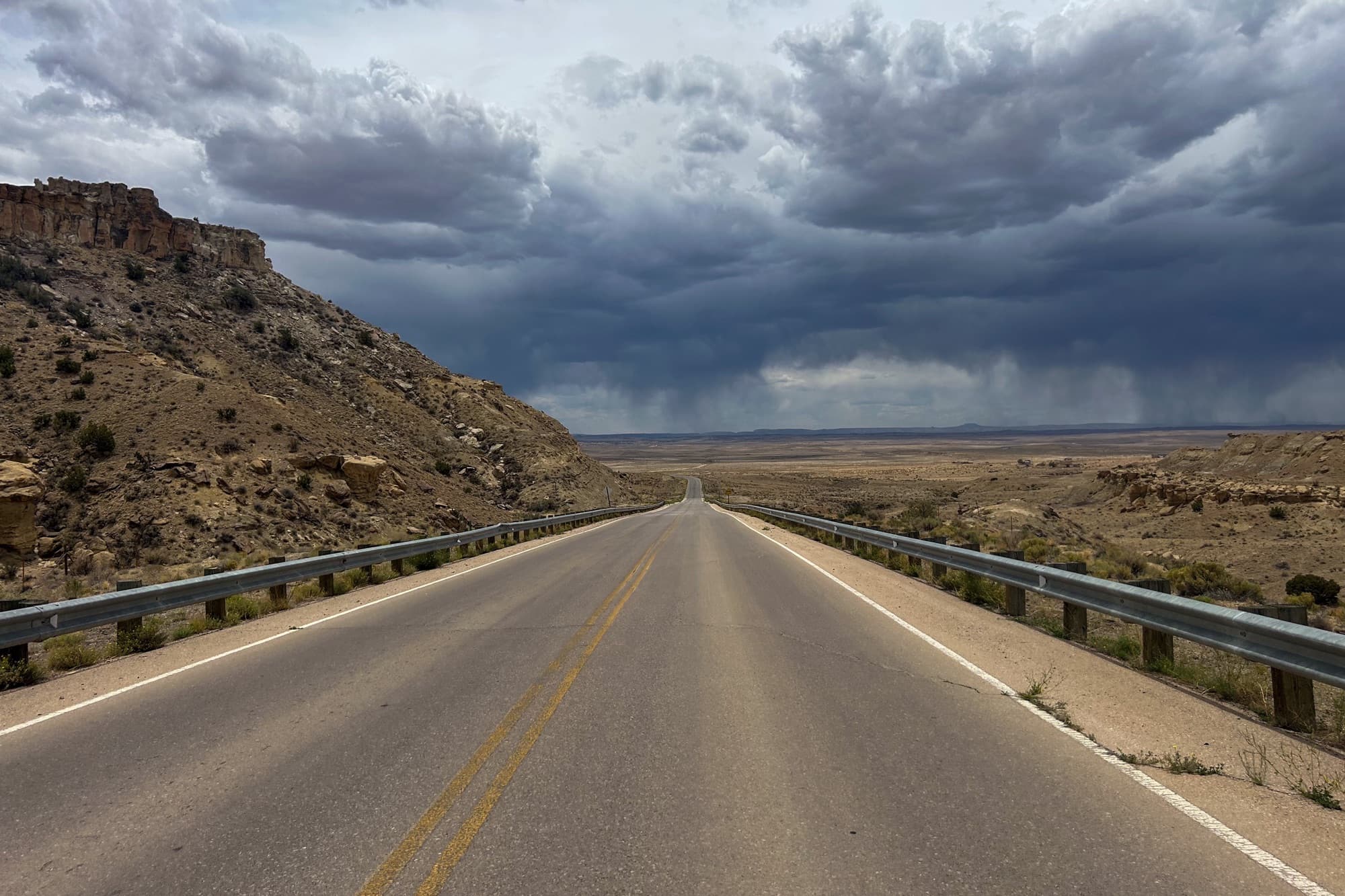
The last 50 kilometres were genuinely terrible. I was low on water, riding into a headwind, and my Coros was reading 45 degrees. I was averaging under 20 kilometres an hour on the road section. In the final two kilometres the wind picked up even more, churning up the dust and reducing visibility. You'd think finishing would leave me emotional, but I was just relieved to get off the bike. A couple of friendly strangers and Jill, a dotwatcher from Bisbee, Arizona who met me at the end of my 2024 race, greeted me with a change of clothes and a giant salad. I had to stand in front of my bike to get the finished photo because the wind would knock the bike over otherwise.
In Before the Gun, you said your first goal was just staying sober through the build-up. You did that, and then you won. I want to ask you this directly: what did sobriety actually give you out there on the route?
Quite a bit, I think. Racing was an escape from my reality for the past few years, which is why I always loved it. Being sober lets me practice good decision making in day-to-day life. Those analytical skills come with me more easily now when I race. I felt more in control out there, and less anxious.
In 2024, I drank two tall cans of strong beer the night before the start. This year I had a non-alcoholic IPA in the bathtub, shaved my legs, and went to bed calm. I rolled out of Banff in a completely different headspace.
You also described the fully-present race feeling as something you wanted to hold onto after you finished. You described how, sober or not, you'd eventually settle back into everyday life and old habits. You're on the other side now. What did the finish line feel like this year and what about the week after?
I feel a certain sadness or a sense of loss that the race is over and done. I almost wish I could have absorbed it more. But I don't think there was a way. I was riding 18 hours a day; I don't think there was much more I could have taken in. I just weirdly miss it. It felt like it happened too fast.
The time at the Bike Ranch in Hachita helped. Swapping stories and reminiscing with the other finishers, catching up with Jeffrey Sharp (the owner), and letting it settle. As hard as ultra-racing is, I'm still always a little sad to say goodbye. The bond you form with the random people you finish alongside is impossible to explain. We'll never be there again, and I have to come to terms with that every single time. It's a happy kind of sad though, if that makes any sense.
My mom had actually wanted to come to the finish line to support me, but my dad talked her out of it. He knew I needed my own time to process it, to share with the other finishers and value that experience before the rest of the world came back in.
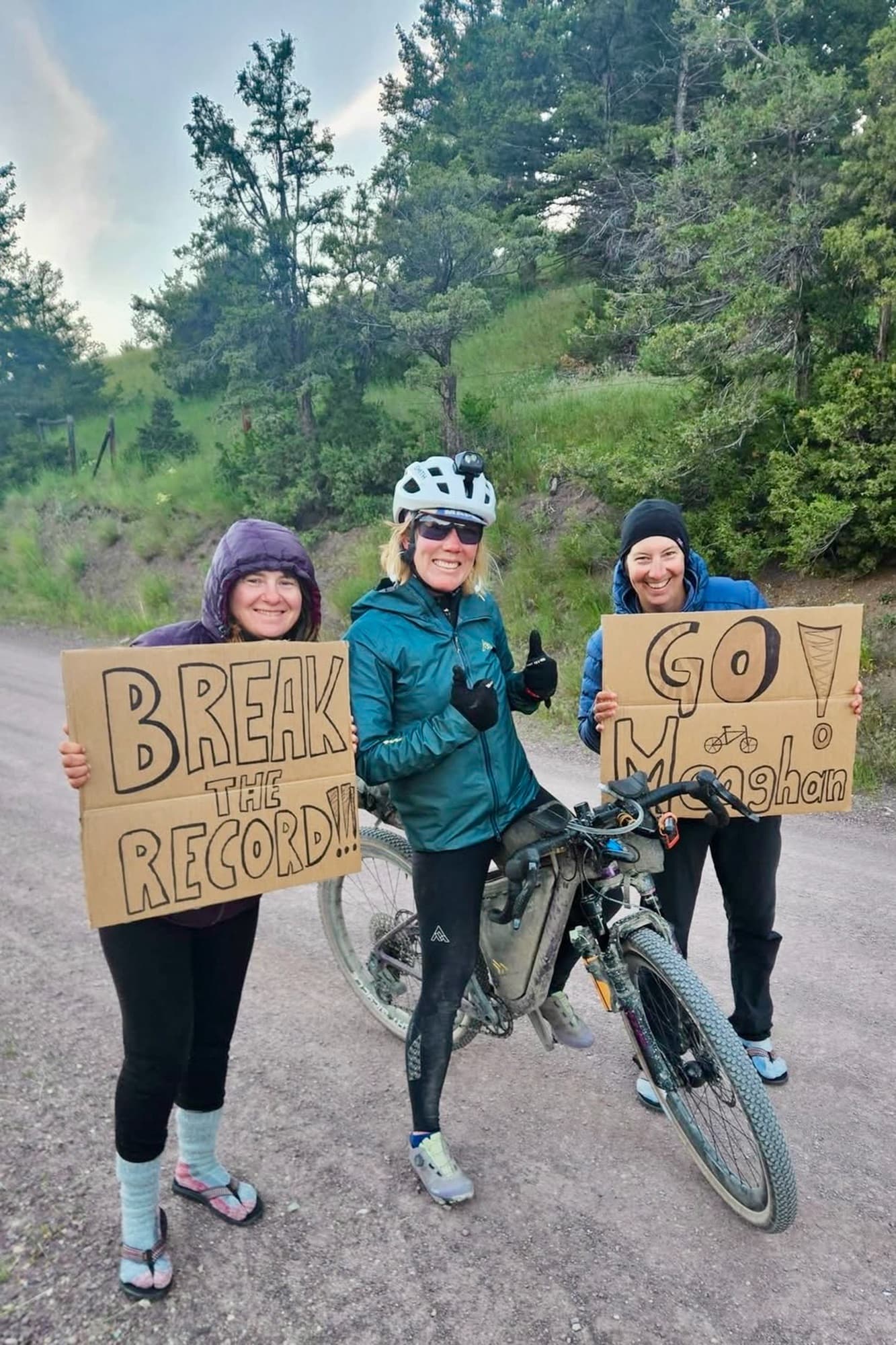
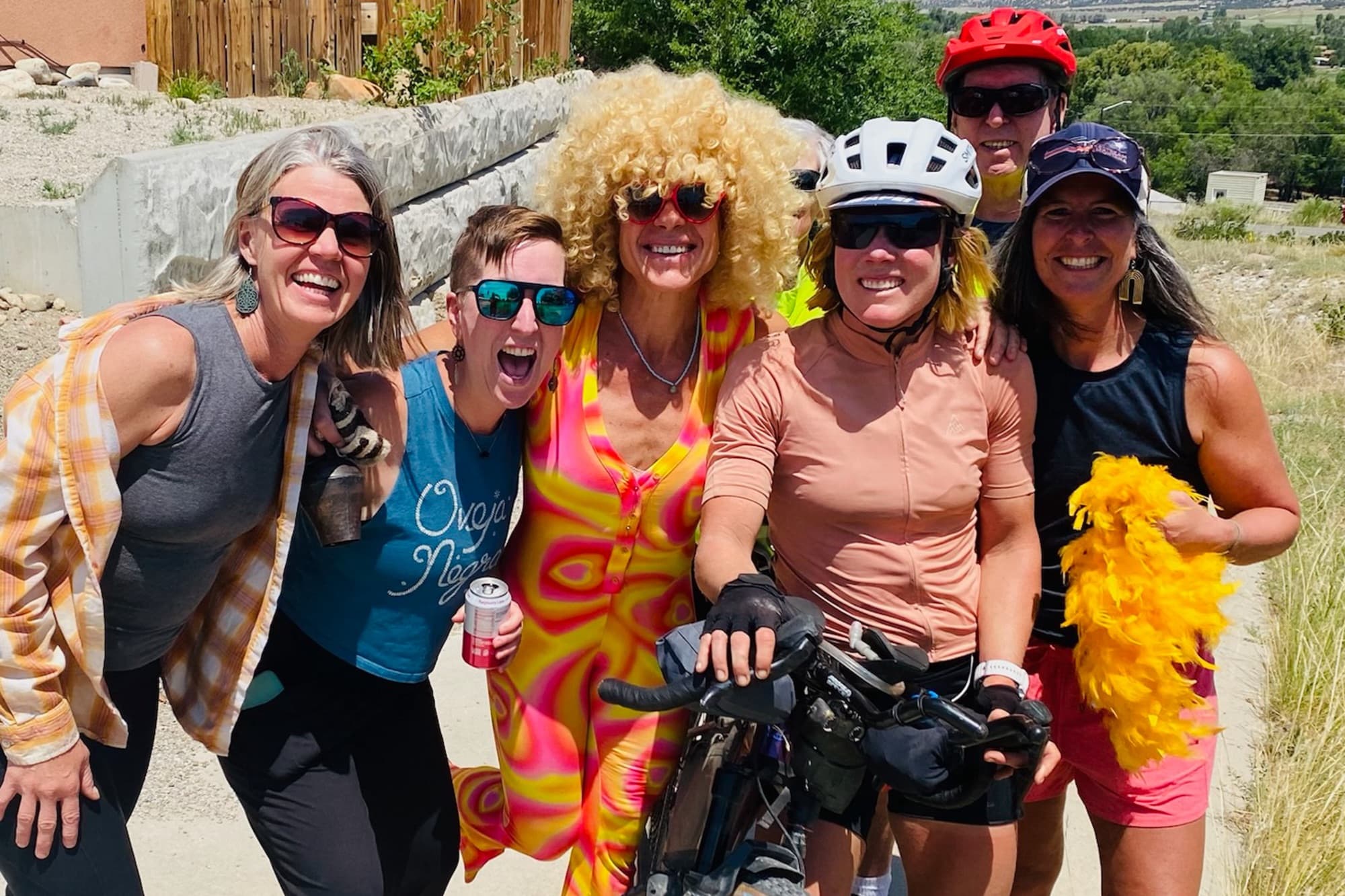
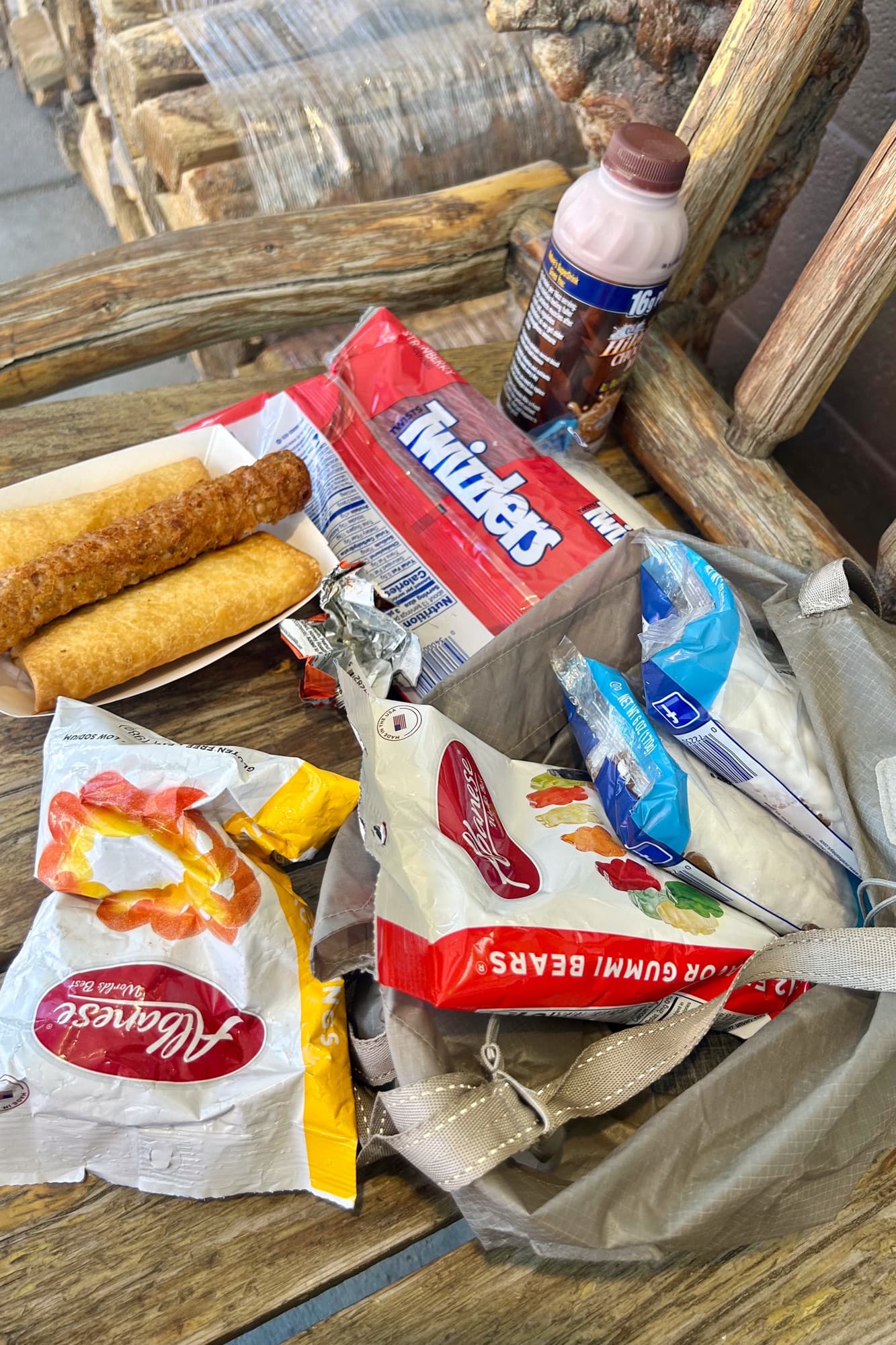
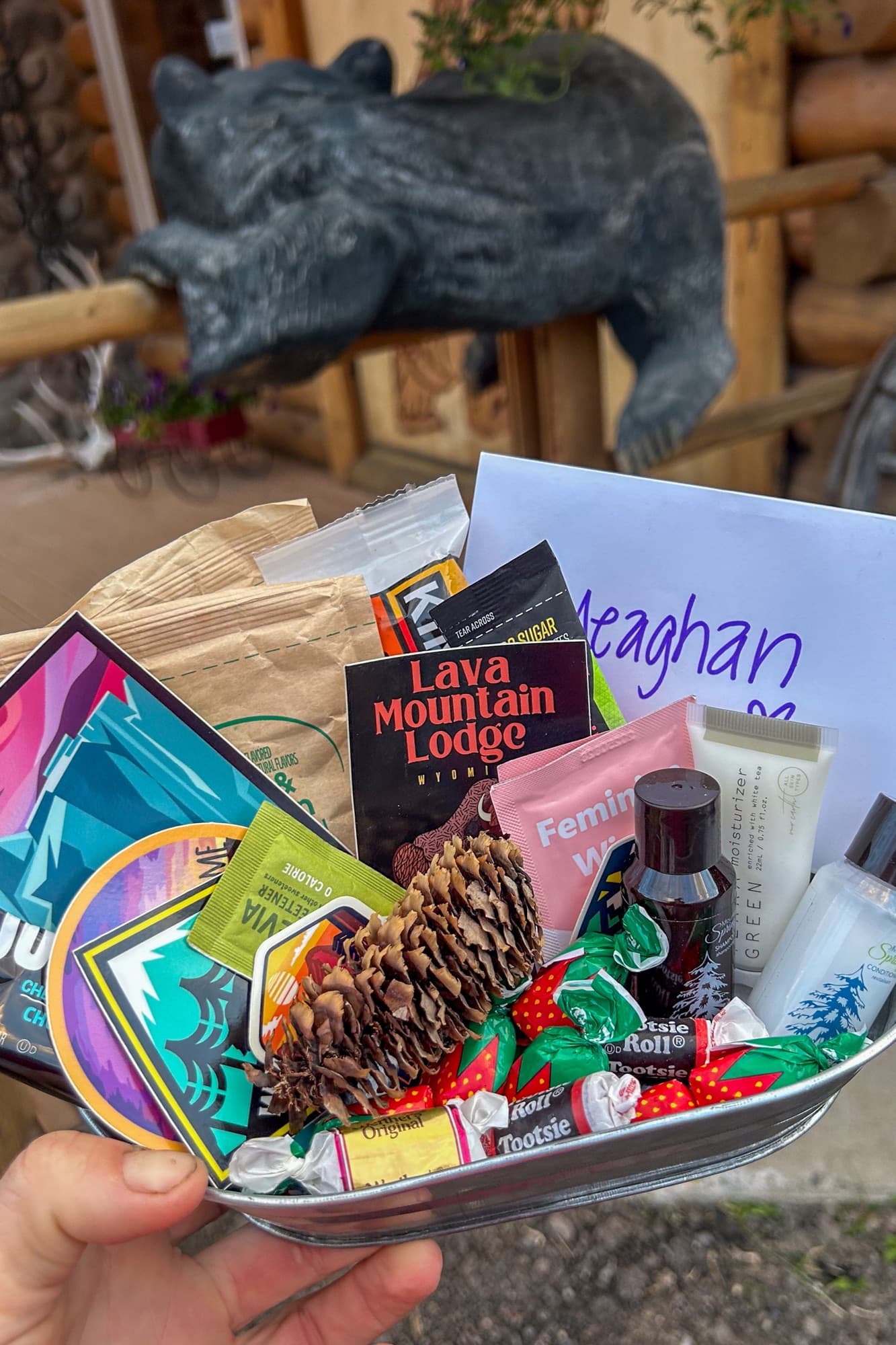
Two wins, a new record, and your name alongside Lael and Alexandera in the history of the event. What do you think about your place in the Tour Divide story now?
I listened to an interview with Andrew Onermaa, the director of Doom, who's been chasing the singlespeed record in 2025. I loved hearing him talk about how he wanted to be part of Tour Divide history. That stuck with me, because it's exactly how I feel. With two wins and the record, I feel like I've contributed something to the progression of the sport. I have my piece of Tour Divide history. I can stick my little MH dot on the map.
Winning isn't everything. I've said that before and I mean it. What I care most about is getting to be part of the story. When Mary Collier, the first woman to ever hold the Tour Divide record, reached out to give me kudos, that meant more than I can really explain.
I'm definitely going to keep racing. But I'm not thinking about that right now. I want to tour, I want to breathe, and I want to wait until I feel hungry for it again.
As always, thank you, Meaghan. We love sharing your story.
I spoke with Meaghan less than a week after she won the Tour Divide. She was exhausted, but she was already packing for her next adventure. She'll be on the Adventure Cycling Association's Golden Gravel Trail this summer.
In the fall, she plans to race the inaugural Taurus Mountain Race. Not only is it the latest addition to the Mountain Race Series she rode last year, but it promises to be an exciting women's field. Fellow competitor Cynthia Carson has already won this year's Atlas and Hellenic Mountain Races and could be vying for a clean sweep depending on how things shake out at the 2026 Silk Mountain Race. After a second place finish at the Atlas Mountain Race last year, Meaghan went on to win the women's race at both Hellenic and Silk Mountain Races.
If Cynthia and Meaghan go head-to-head, the dot Meaghan's chasing will be right there beside her.