Path Less Pedaled: Ride Slow, Paint Fast


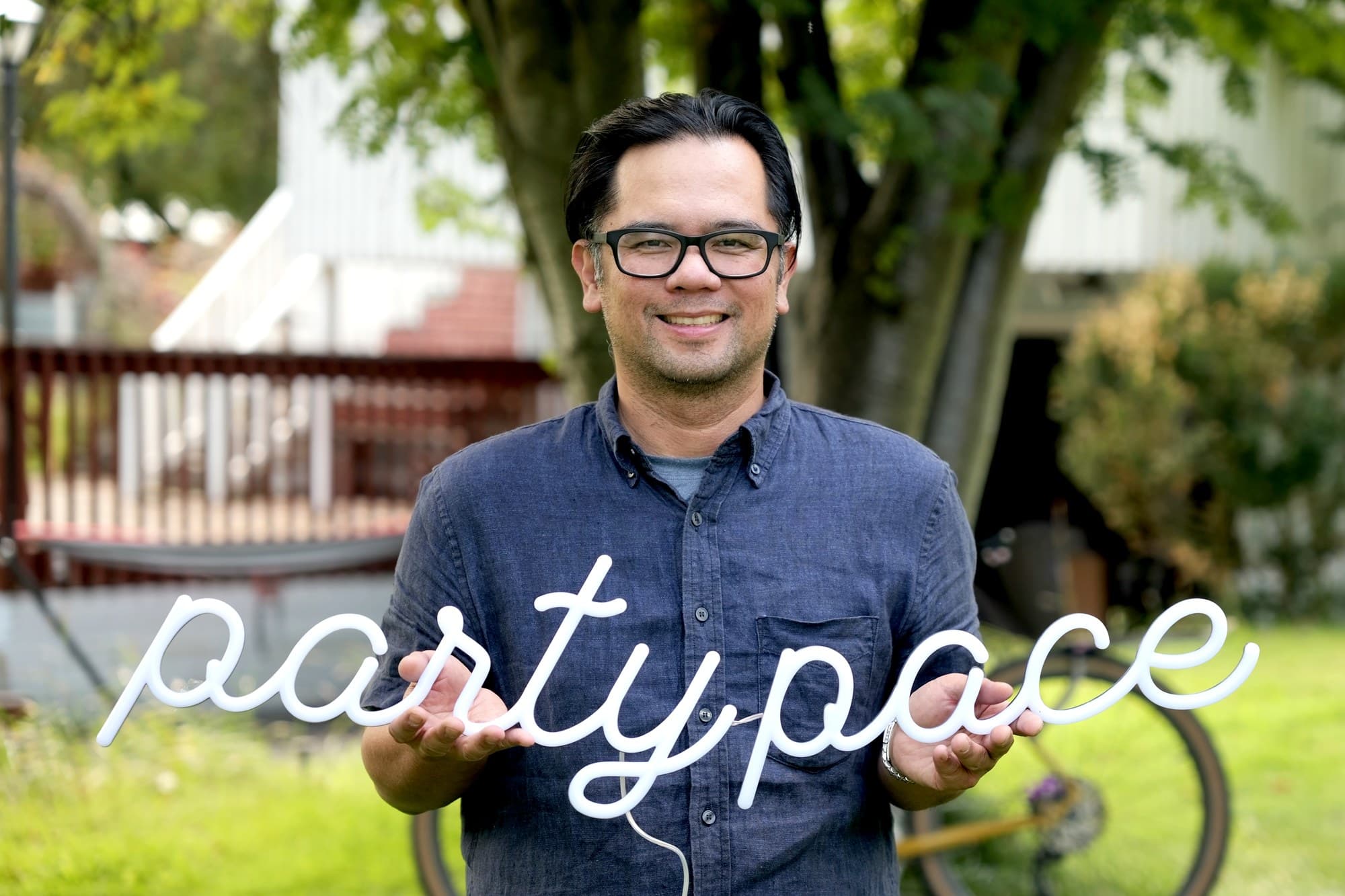
If you spend any time around bikes on the internet, you know Russ from Path Less Pedaled. And if you don't, well, you've been living in a hole. His videos are the kind of thing you save and come back to, deep and careful dives into bikes, bike culture, componentry, the little hacks and the big ideas. More than the content itself, we love the effort he puts into everything he creates.
A few years ago, something in his feed caught my eye. Russ started posting paintings from the road. Little watercolors from wherever he'd stopped riding that day. It was different from his usual stuff, and I remember thinking how interesting that was, and honestly wondering how people would react to it. I never reached out back then, but the idea stuck with me, and eventually I figured I'd just ask. That's how this interview came together.
What I keep circling back to is the idea underneath the painting; Russ was layering his hobbies onto the bike. So many of us look at the bike as the hobby. Full stop. But when you start to see the bike as a means to an end, as the way you get to your other hobbies, the whole machine opens up. Bikepacking is already this, right? It's camping and biking and adventure all stacked together. But what happens when you push it further, into hobbies that have nothing to do with cycling at all?
For me, that's photography and writing, which is why this site exists. I wanted a place where we could write about bikepacking gear and share stories about our adventures. When I was a kid, it was even easier. I used my bike to go fishing in Northern Ontario with my buddies.
And once I started looking, I saw it everywhere. Uncle Rinne rides to draw. Clotaire Mandel rode his way back to his brother. People are bolting surf racks onto their frames, building trailers to bring the dog along, rigging up whatever it takes.
Let's go.
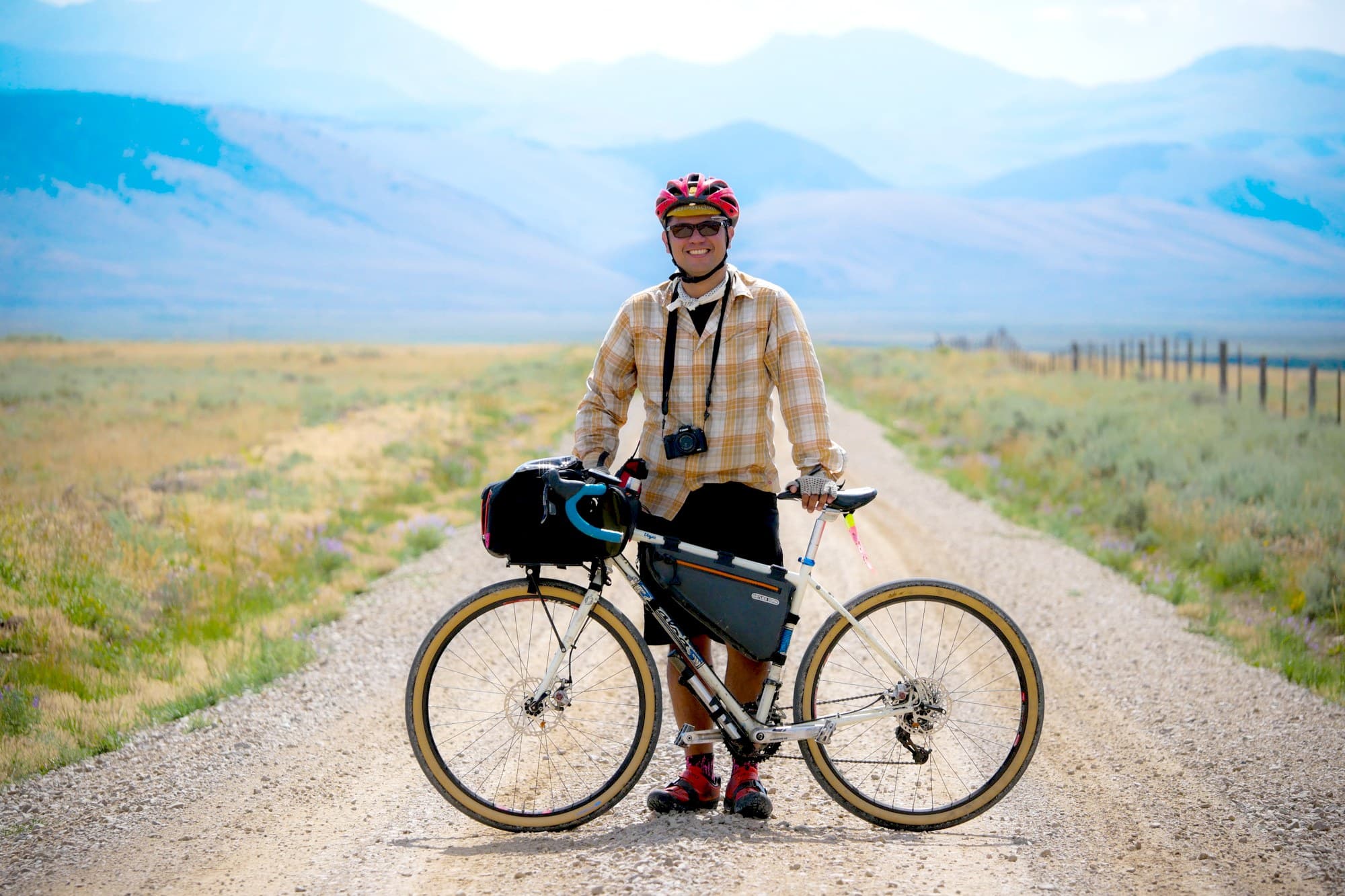
How do you describe party pace to someone who's never heard it? How did it come about?
Party Pace, for me, is riding for the sheer fun of it and not because it serves another purpose or a means to a goal. It means riding like we used to do in the pre-Strava era before everything had to be measured and optimized. To get nerdy/philosophical, it's the difference between an "atelic" and "telic" activity. Atelic activities are things you do because they are good/fun in themselves. Some examples are going for a walk with your partner, hanging out at a BBQ with friends, etc.. You do these because they are pleasurable ends to themselves not because they will get you some desired outcome later. Telic activities on the other hand are things you do to accomplish another goal or objective. You ride not because you enjoy the ride now but because it will make your next ride faster to accomplish a goal. You've turned the activity into an instrument to achieve something else and not a pleasure in itself.
We live in a world where everything is measured, optimized and maximized. The whole notion that "junk miles" exists just breaks my head. The whole idea that you would feel embarrassed about doing a ride because it didn't live up to certain expectations of what a "real ride" is, also breaks my head.
Coming up with the phrase Party Pace (we trademarked it btw so we don't get Specialized some day) was our way of reclaiming a sort of aimless riding just for fun and folly and introducing a word to the bicycling lexicon that wasn't dependent on the bike racing framework.
I know that there is a "slow cycling" movement but I wanted to go beyond that. By calling it "slow" it puts it relative to "fast" and you never escape the competitive cycling hegemony. I wanted a phrase that was celebratory, non-apologetic and about just enjoying the act of riding a bike free from the baggage of competitive cycling.
How did you end up becoming a voice for non-competitive cycling?
I think a lot of people only know me from YouTube but I've been writing and making content about the non-competitive side of cycling since the early 2000's. I contributed to a few websites like CommutebyBike and Bikecommuters.com (they were differently owned sites back then) as well as magazines like Momentum Magazine, Adventure Cycling Magazine and Bicycle Times. All these publications focused on the non-racing side of cycling. I also used to run another website called EpicuranCyclist which covered things like carradice bags, Rivendells, randonneuring and touring.
When I first got into cycling (early 2000s) no one was really making content about the stuff I was interested in. No cycling media at the time was going in-depth on the burgeoning indie bike bag scene or touring bikes. I think it was the first if not one of the first to review a Swift Industries bag. This was back when Martina was making them in her basement.
I basically wanted to make content that I wish existed at the time. I wanted someone to review a touring bike like the Surly LHT or a bike bag with the same careful consideration the more traditional websites would review the latest Colnago or ultralight wheelset. It was all driven from my personal interests and the desire to talk about these quirky non-competitive cycling products with the same rigor and seriousness that Cycling News or Bicycling would talk about the latest carbon race bike.
You seem like an accomplished painter. How did painting find its way into your riding?
I grew up with art as a kid. My dad is a fine art painter and also worked as a background artist for shows like Pinky and the Brain, Animaniacs and Inspector Gadget. It was in the genes to some extent and would only be a matter of time before it seeped into other hobbies.
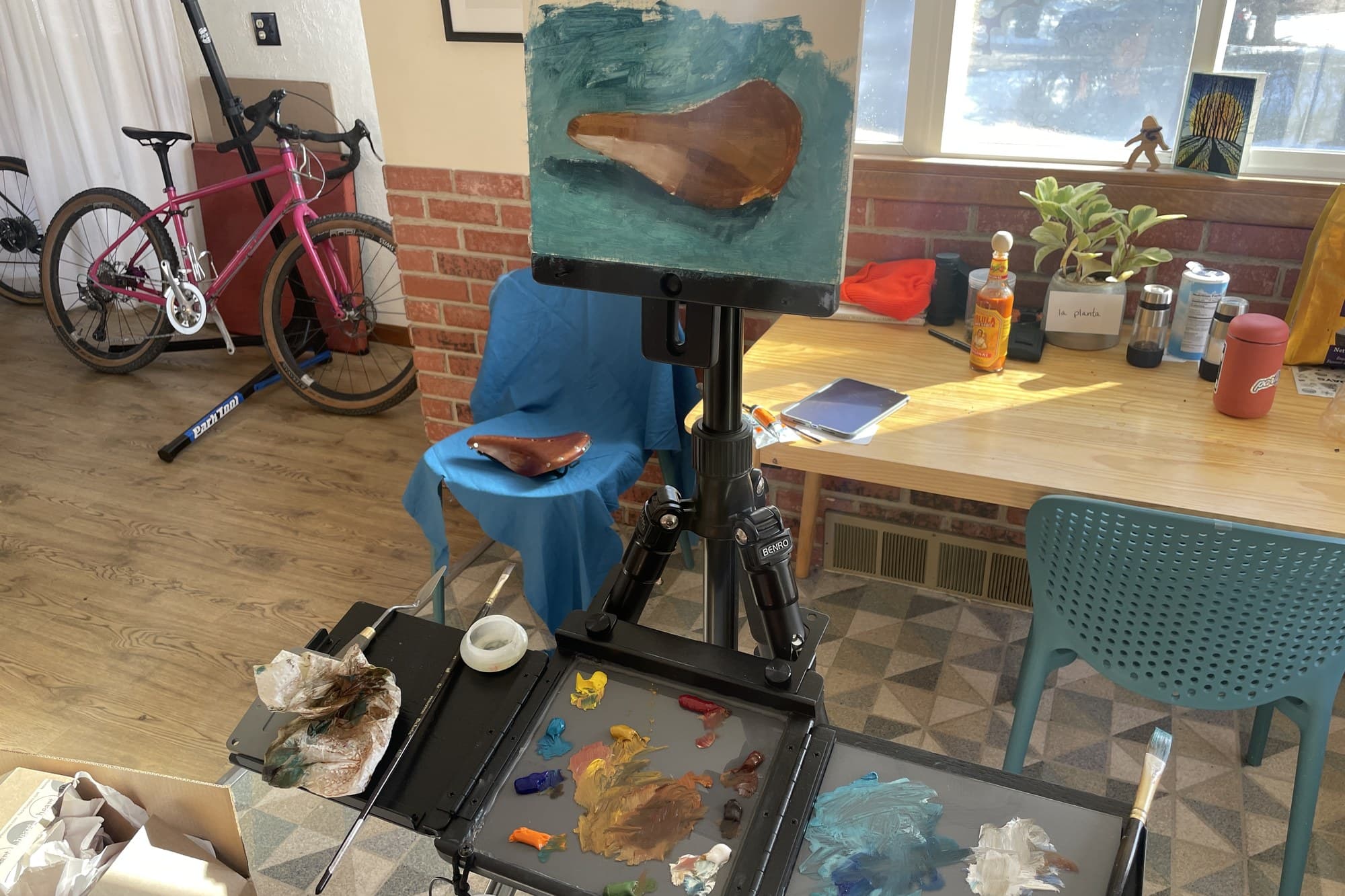
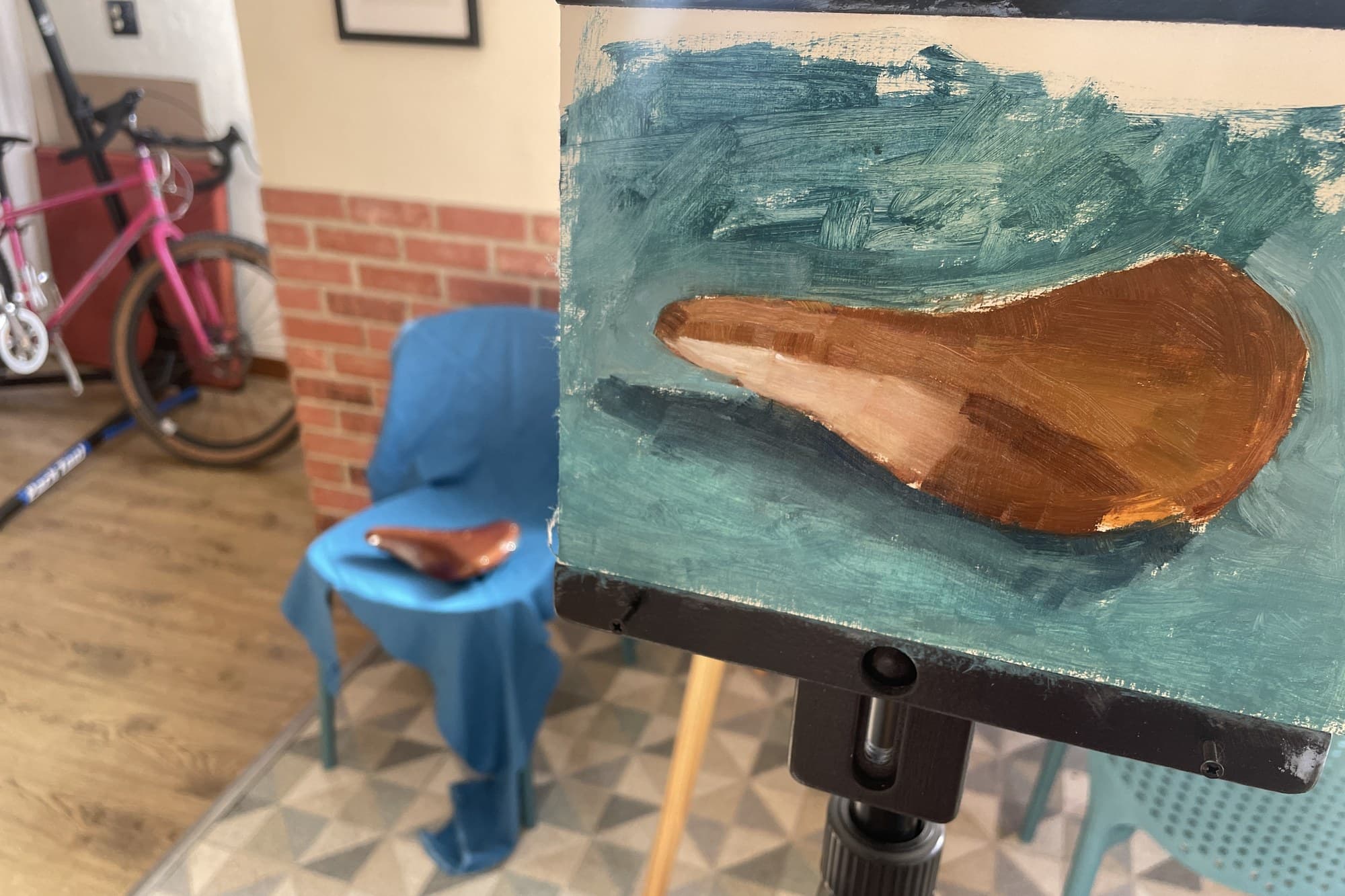
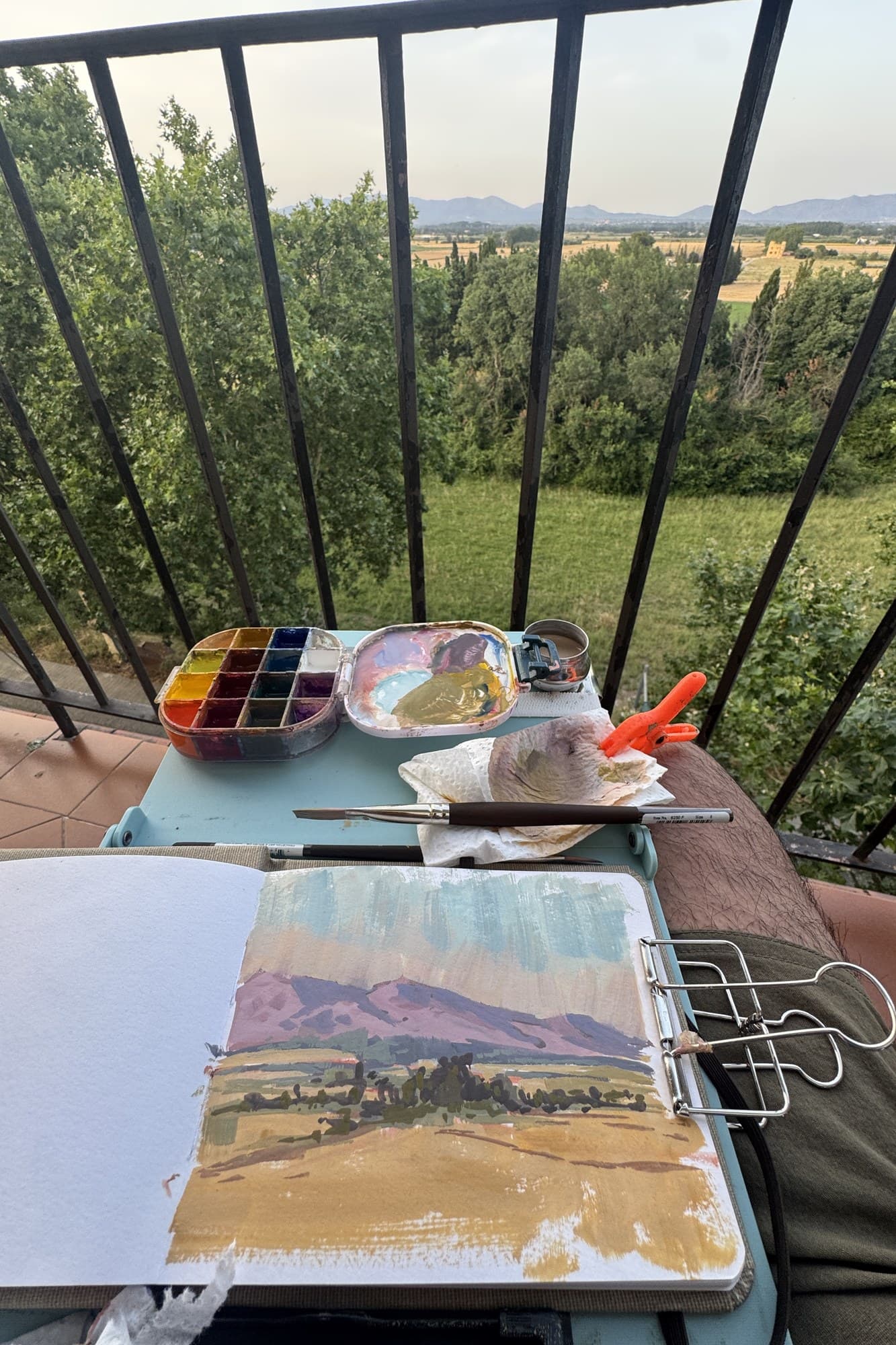
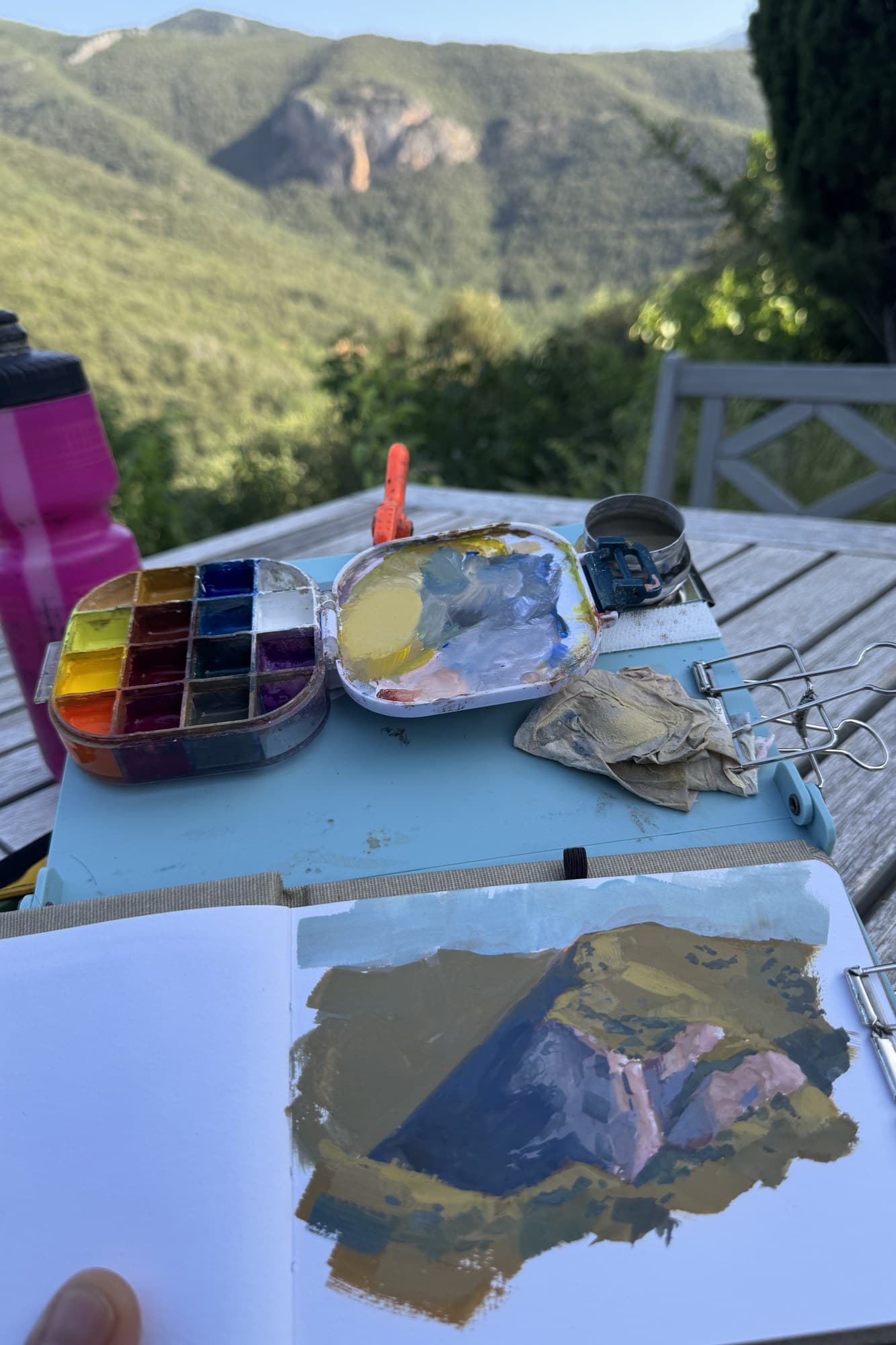
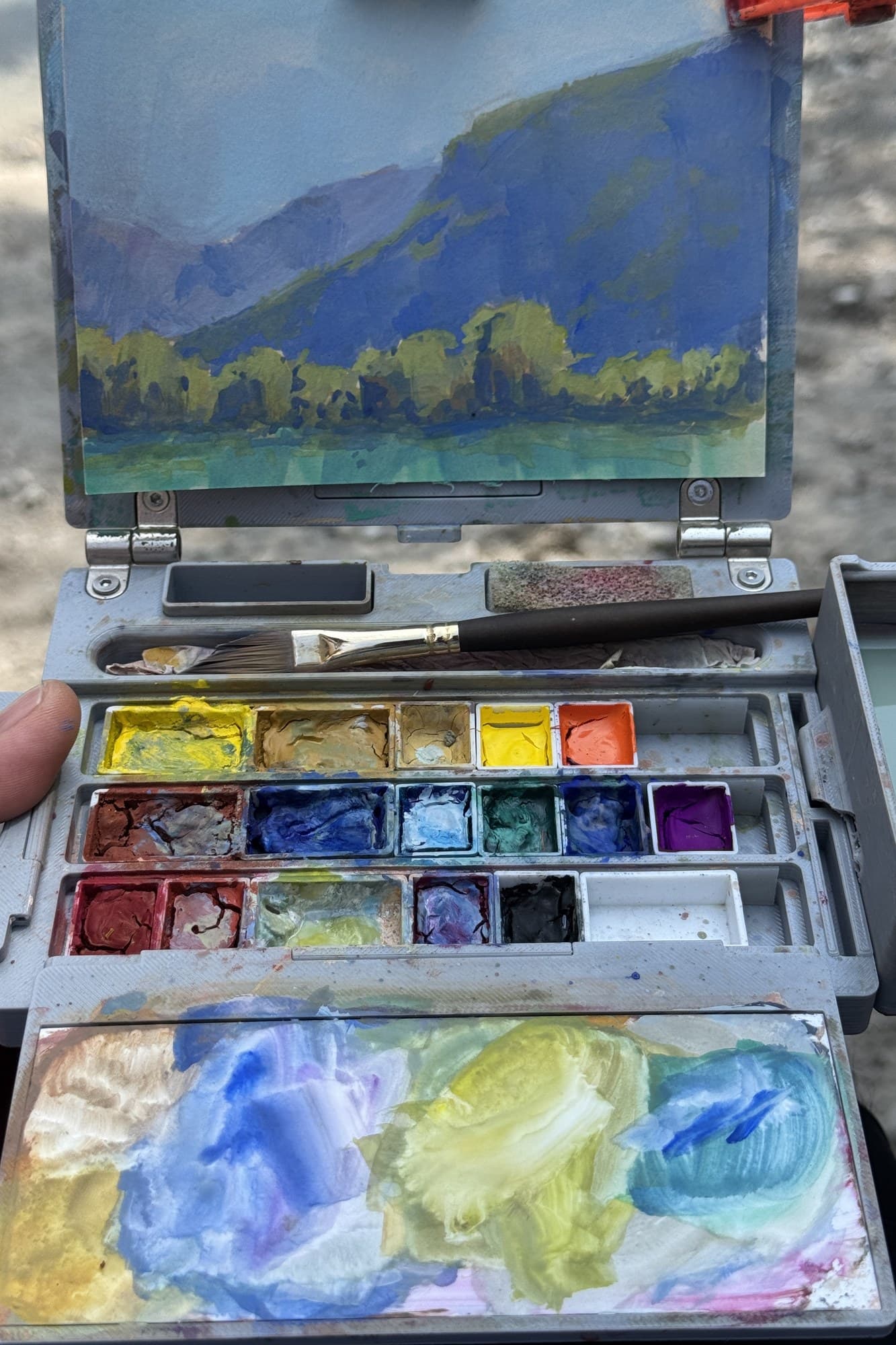
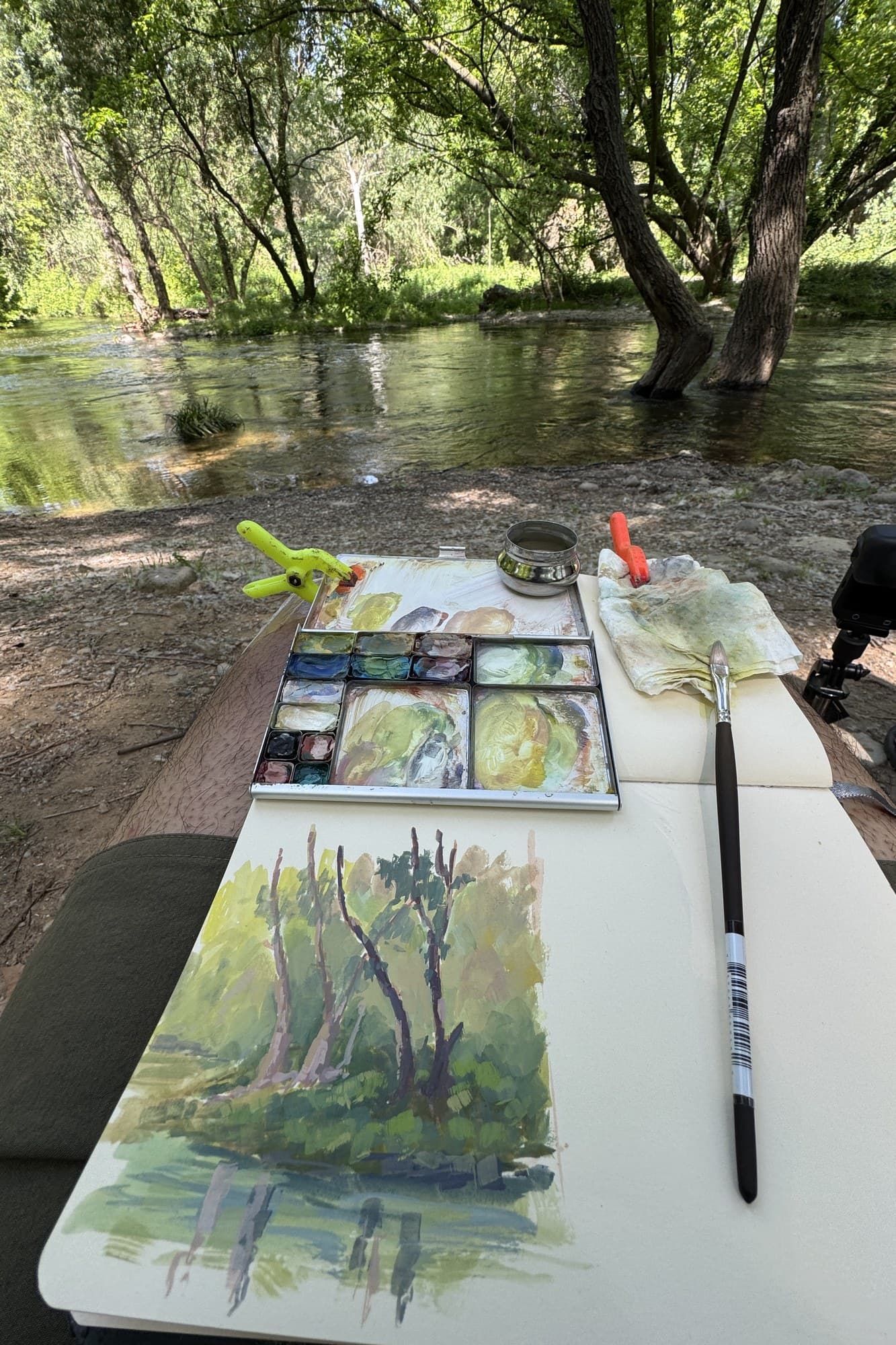
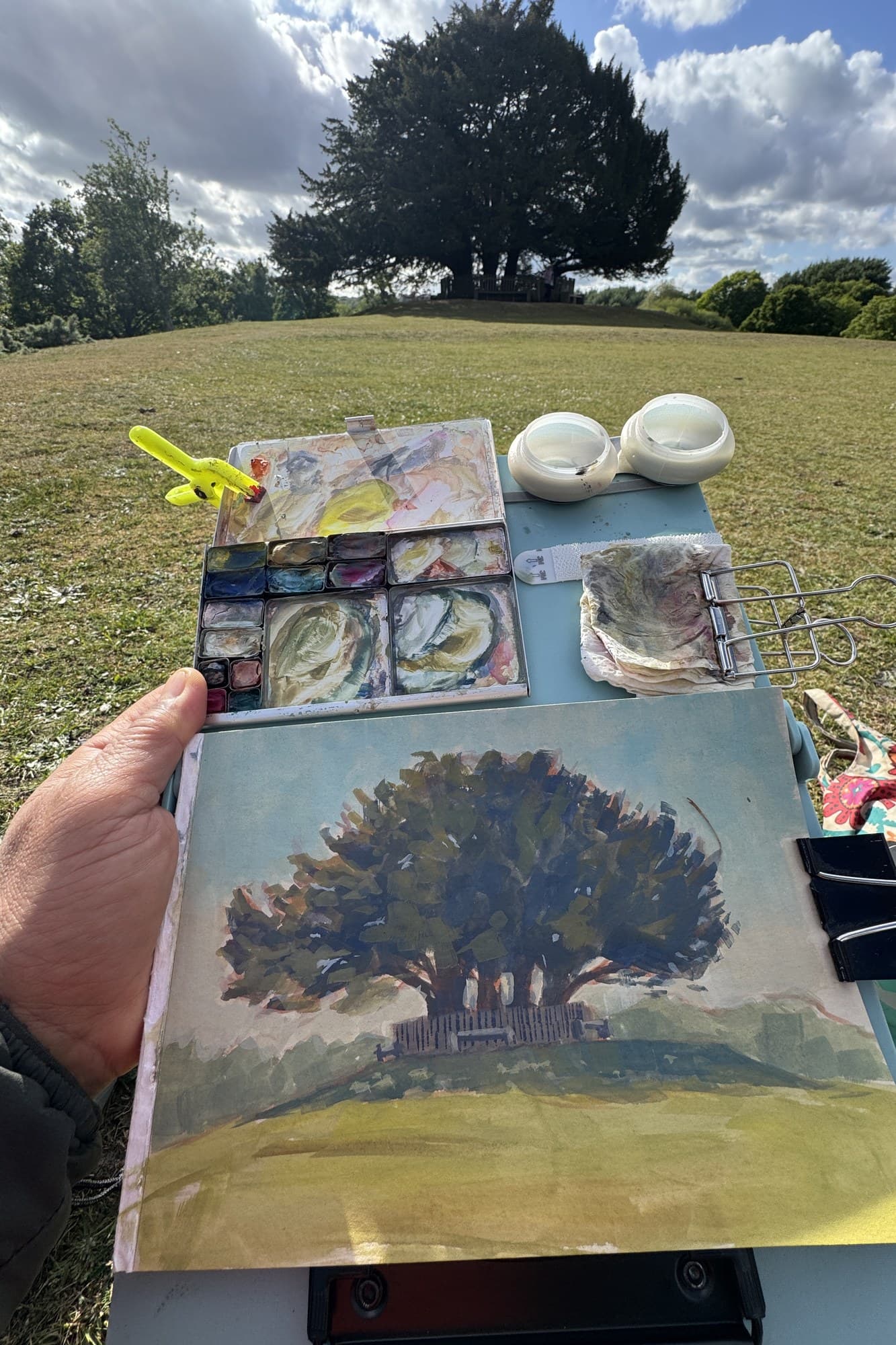
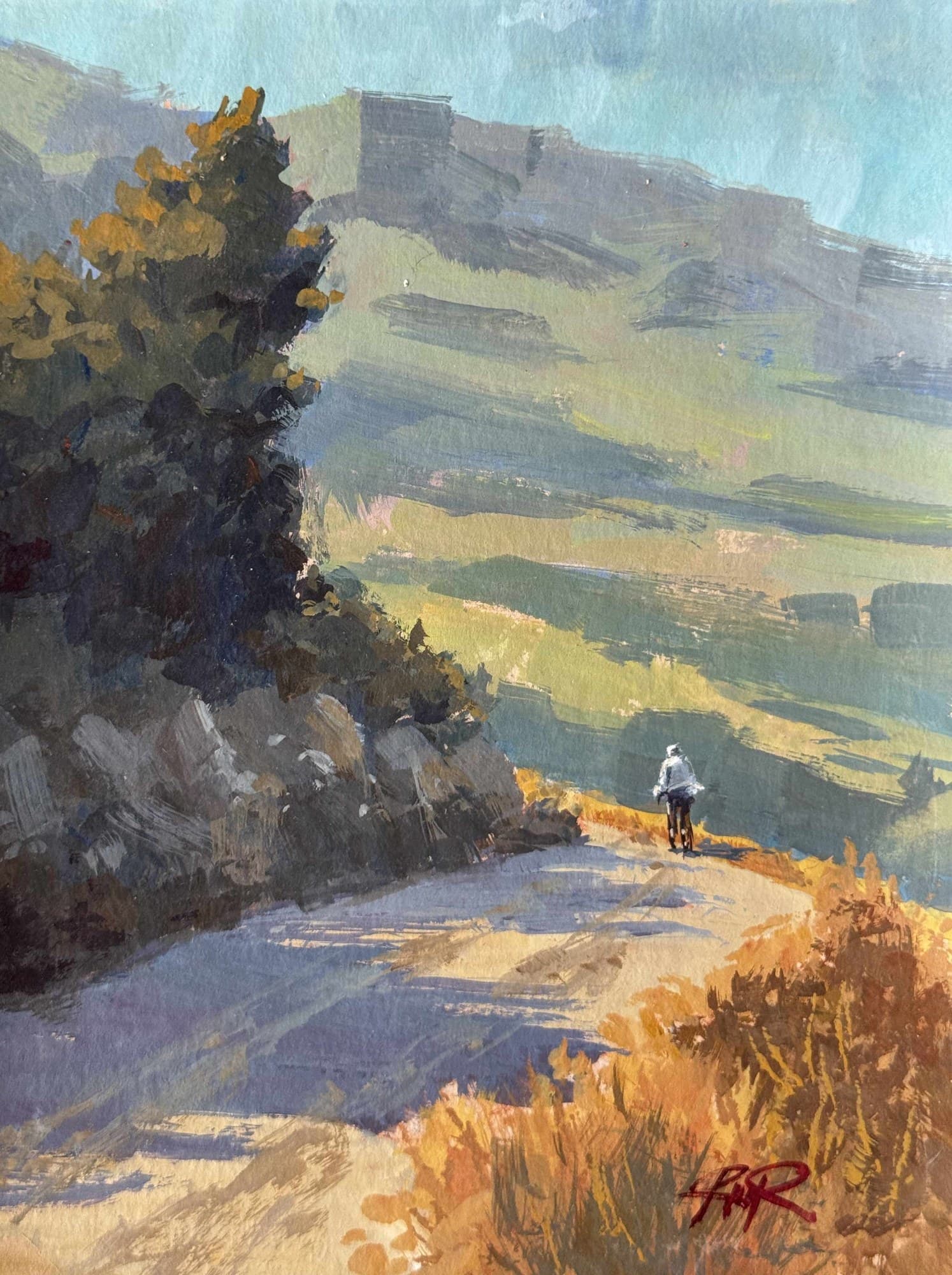
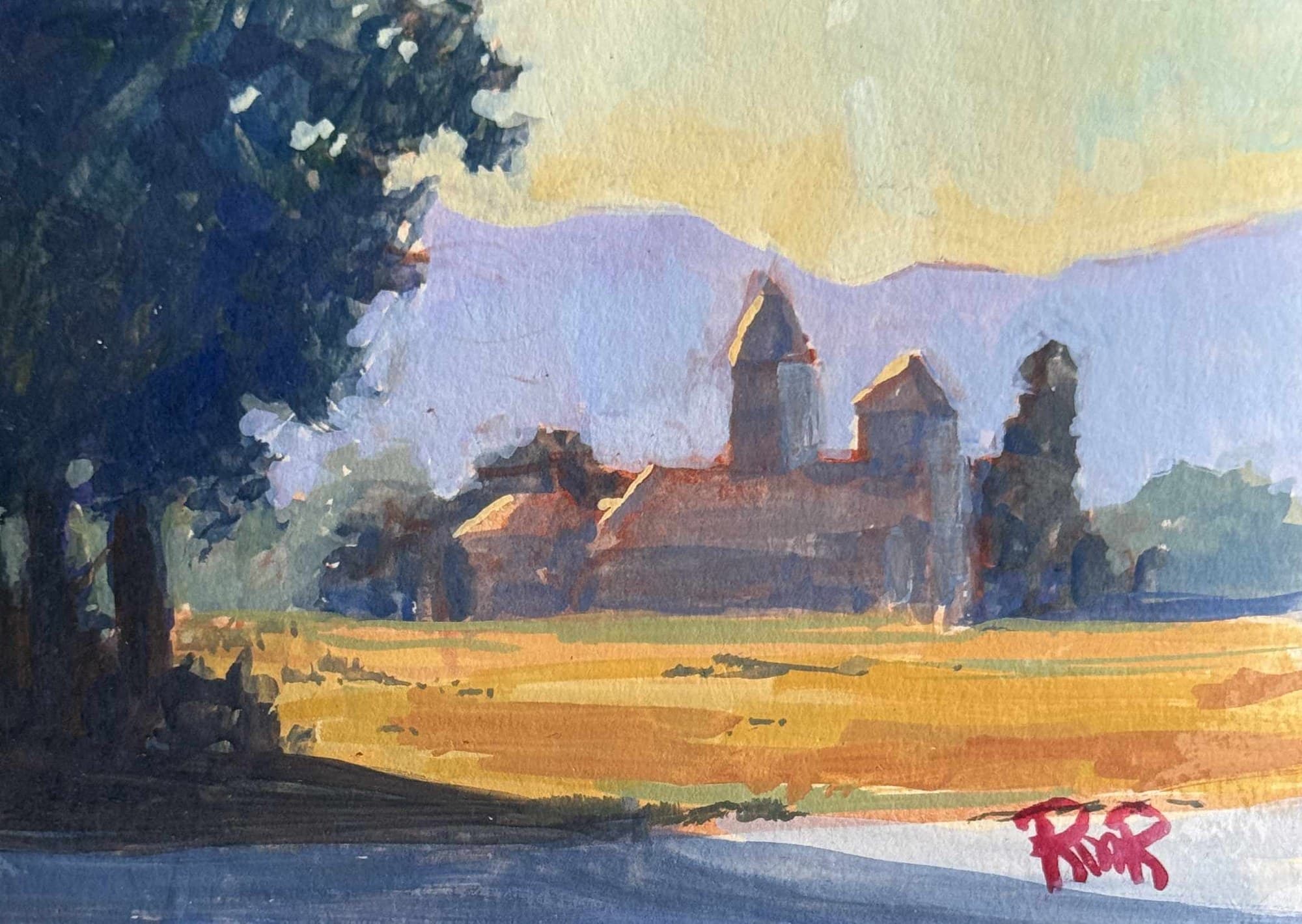
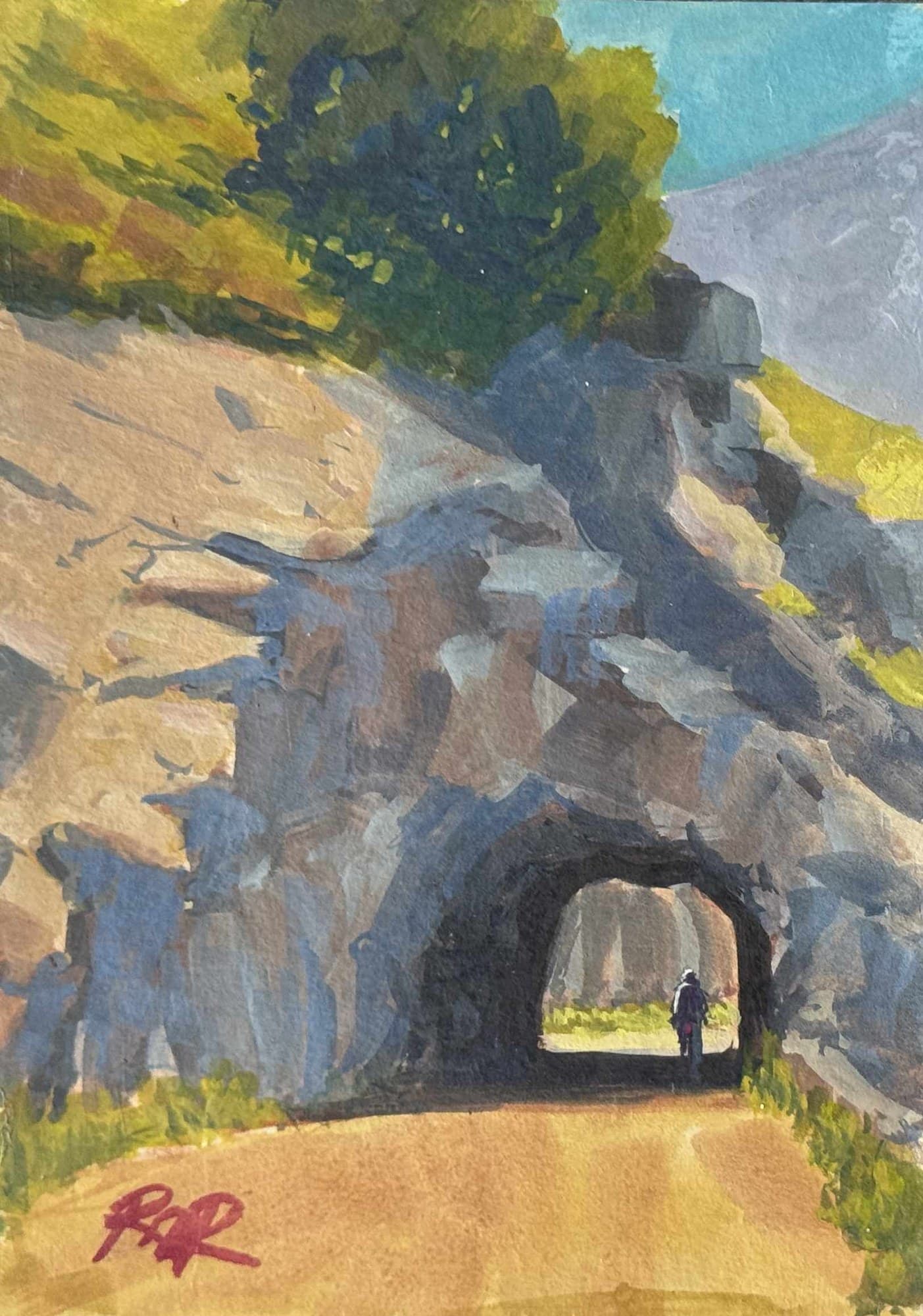
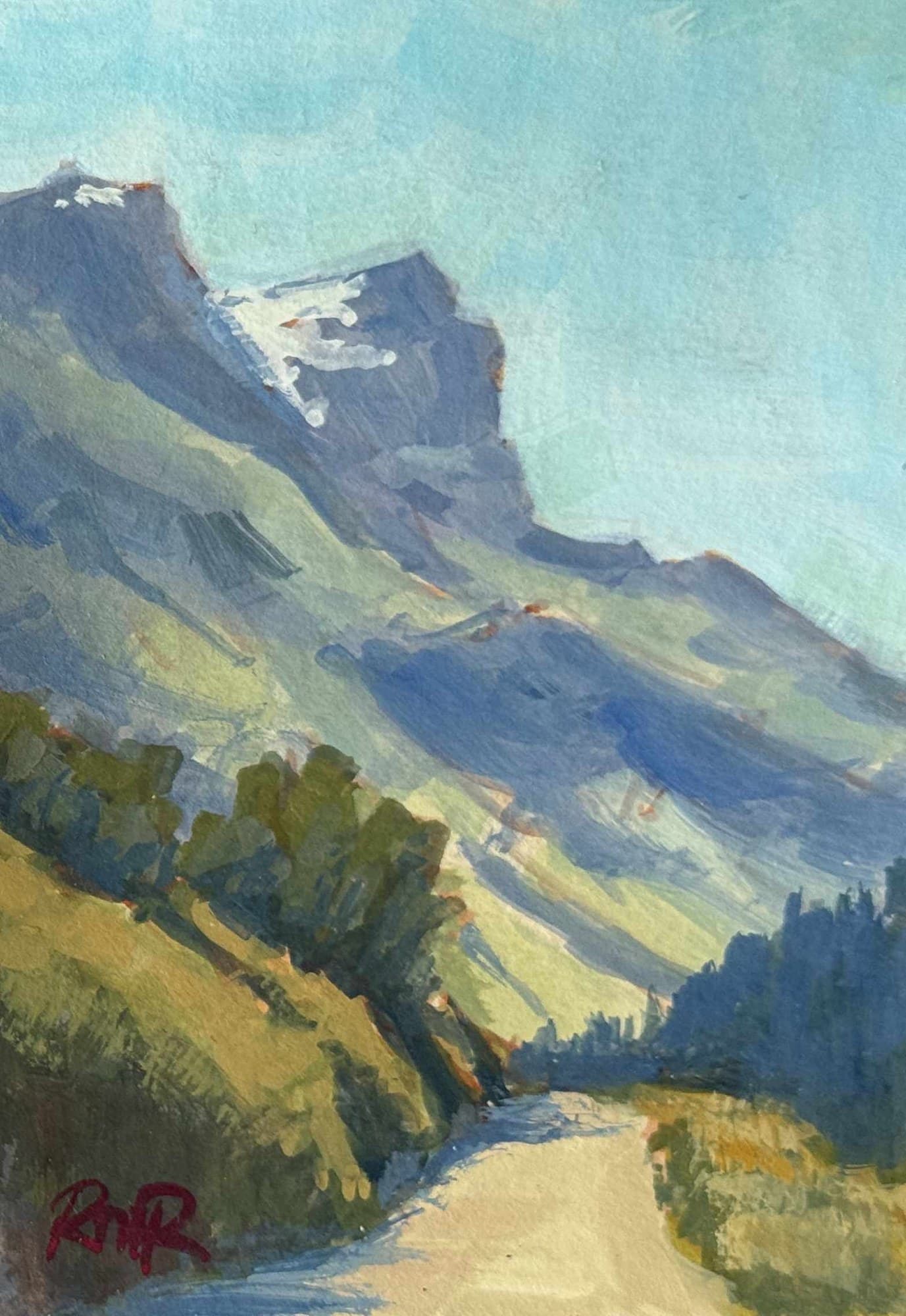
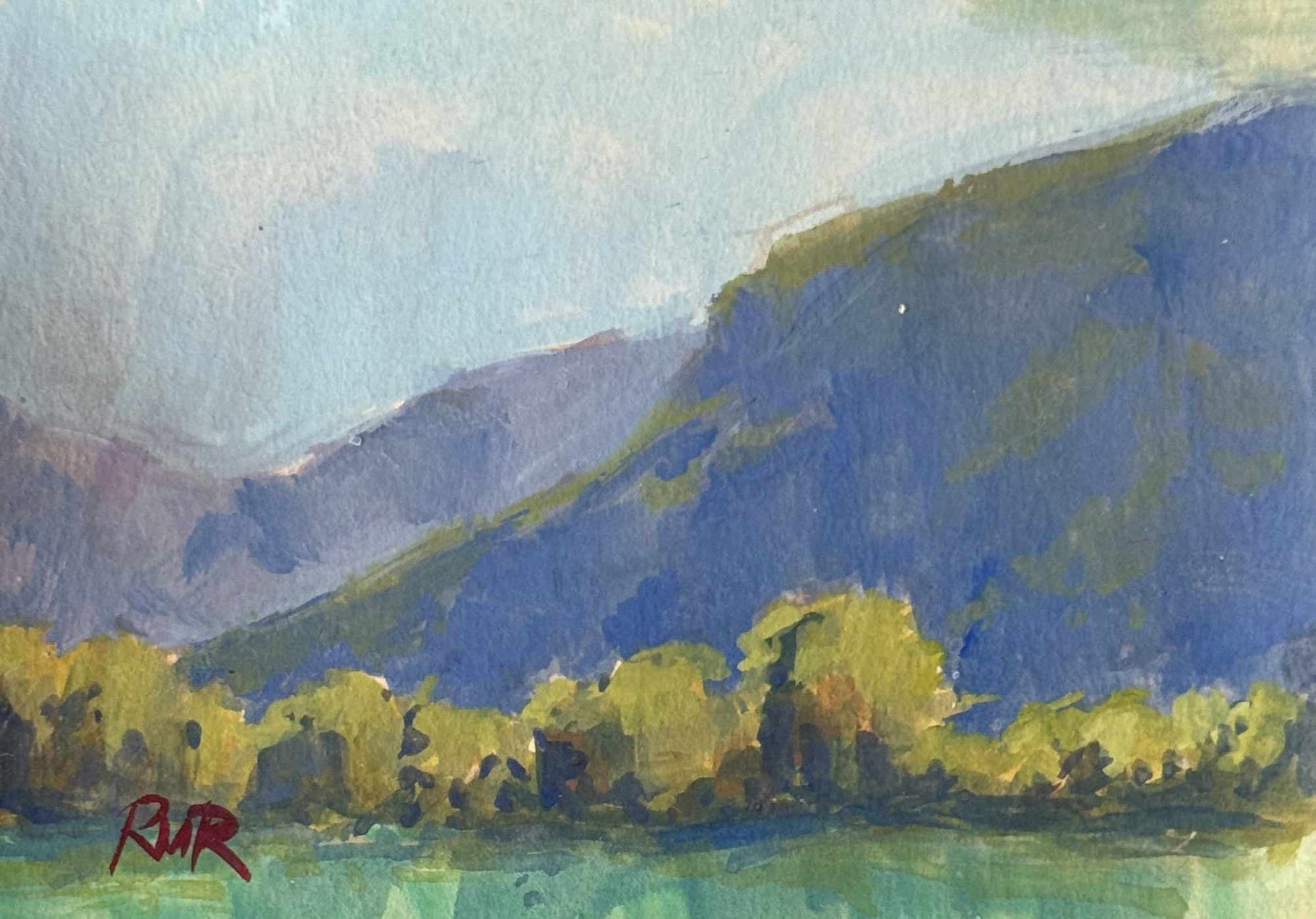
Before incorporating painting more seriously we did a lot of flyfishing by bike (#bikefishing), but it turns out there's not always trout water everywhere :) Taking a small watercolor kit or sketch kit on the other hand could be done anywhere and is a lot lighter than carrying waders. Early on I was inspired by the pen and wash work of Chris McNally, but eventually I wanted to find my own voice and experimented with more opaque mediums like oil until settling on gouache which has the best of both worlds of oil and watercolor. You can paint opaquely like oil paints but you have the advantage of a quick dry time and easy clean up without any solvents similar to watercolor.
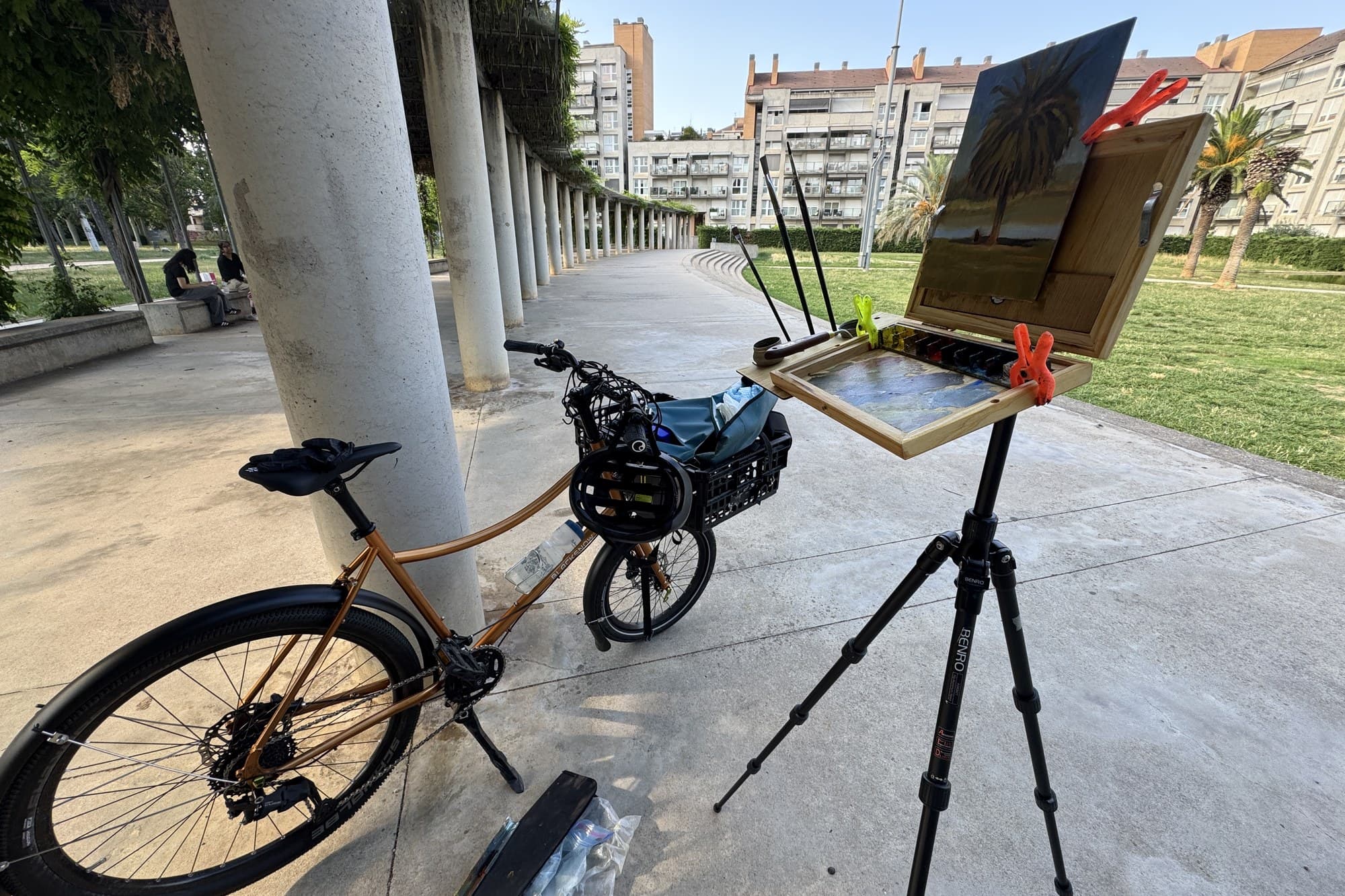
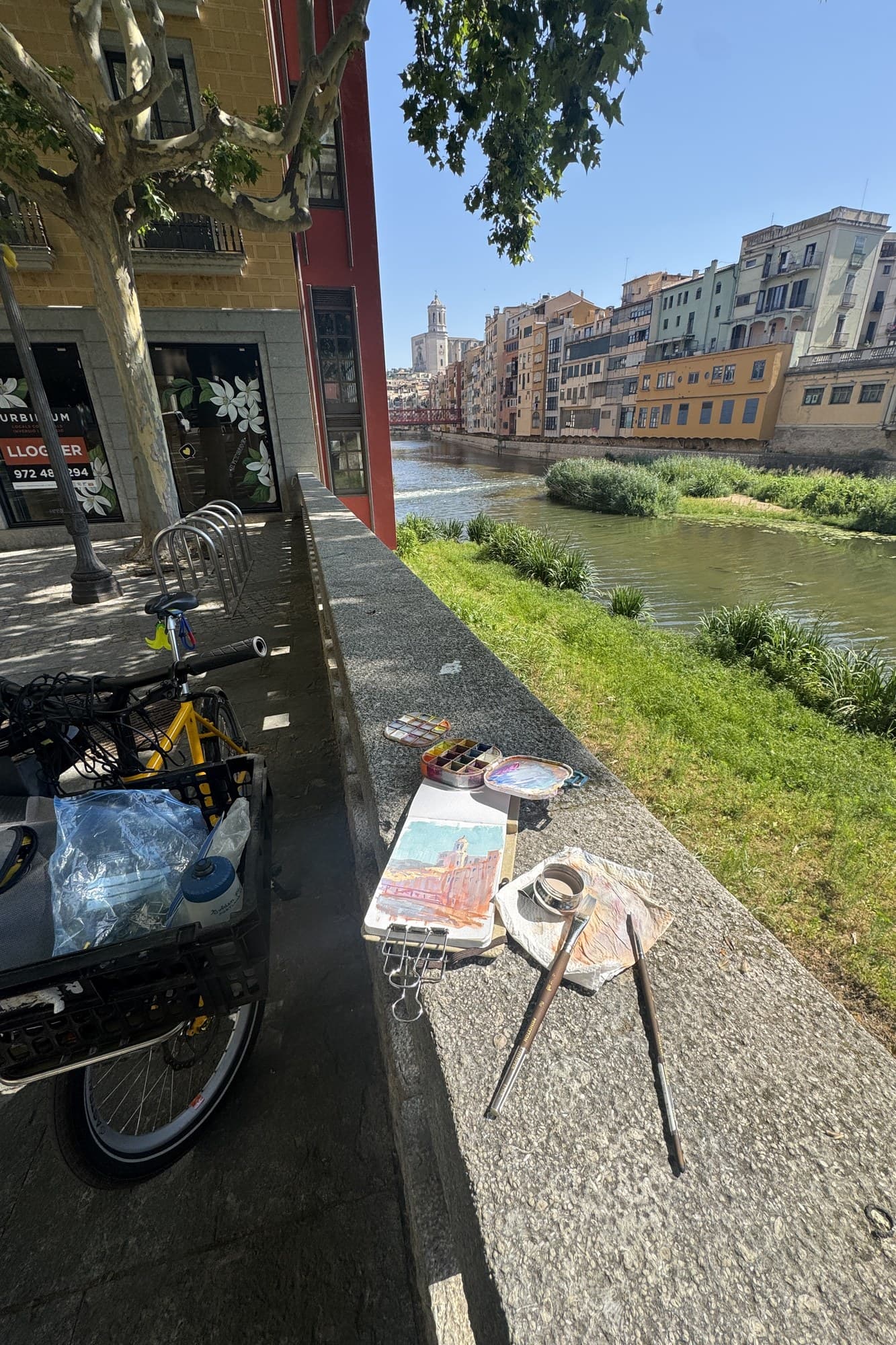
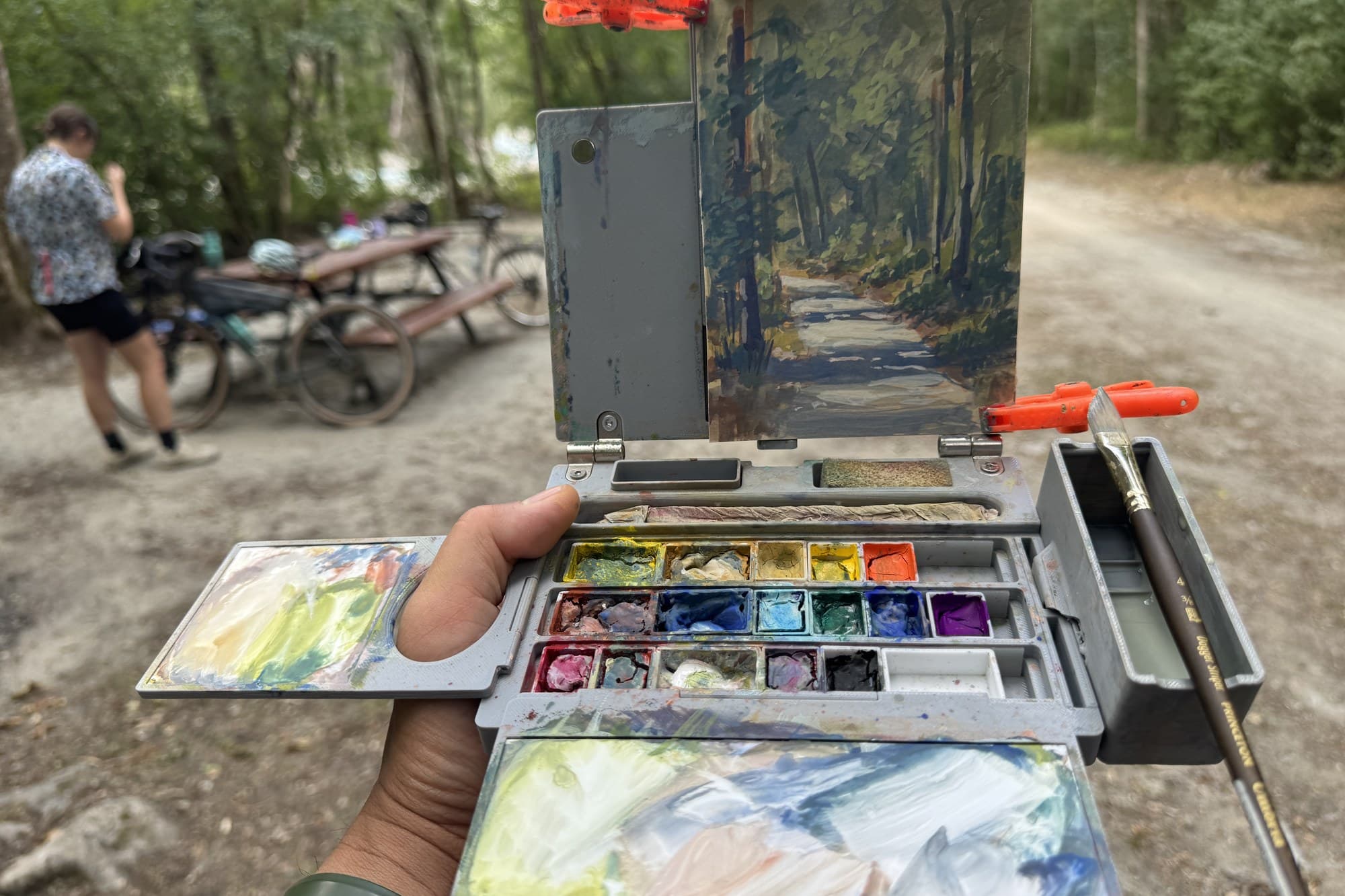
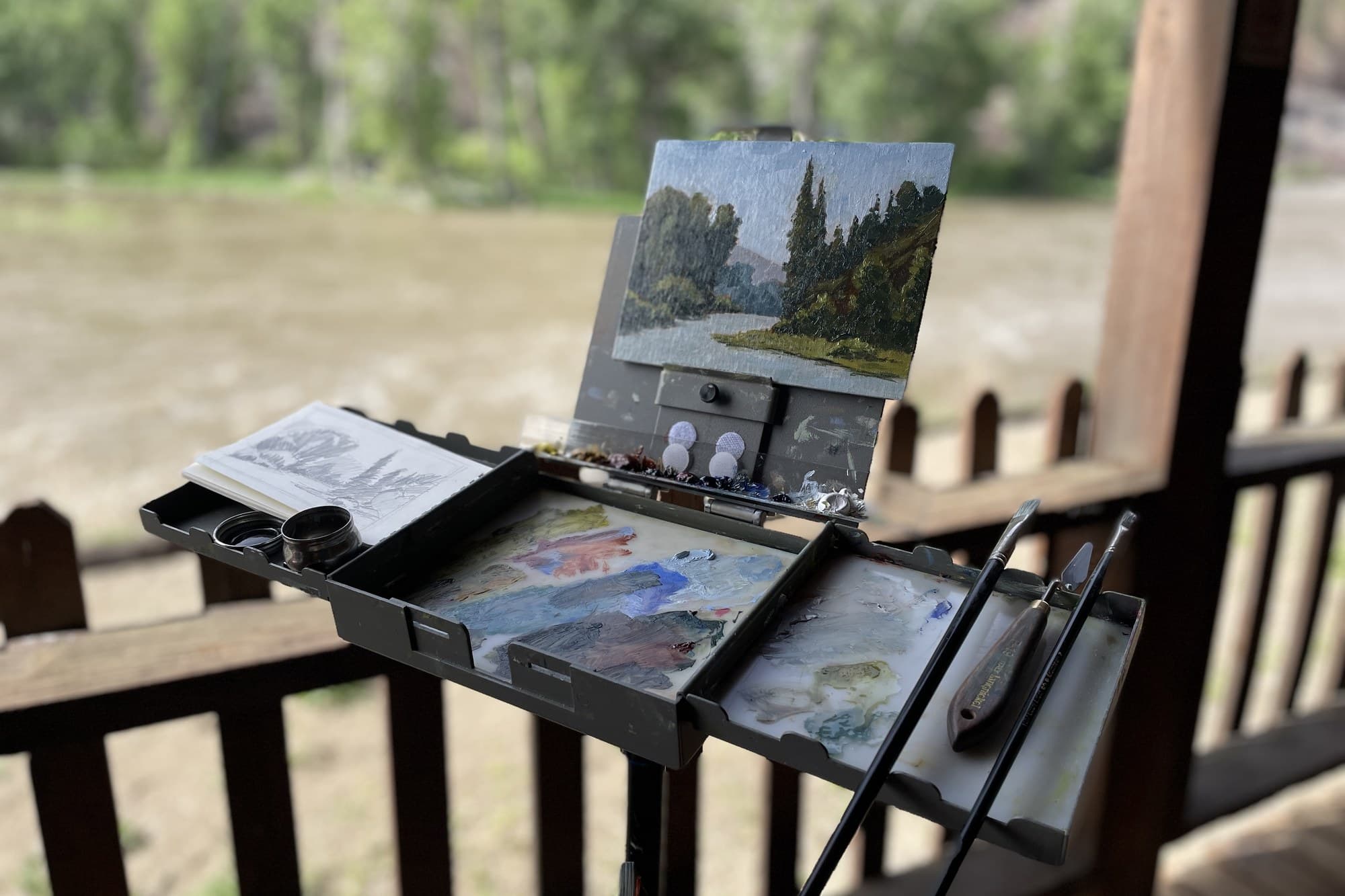
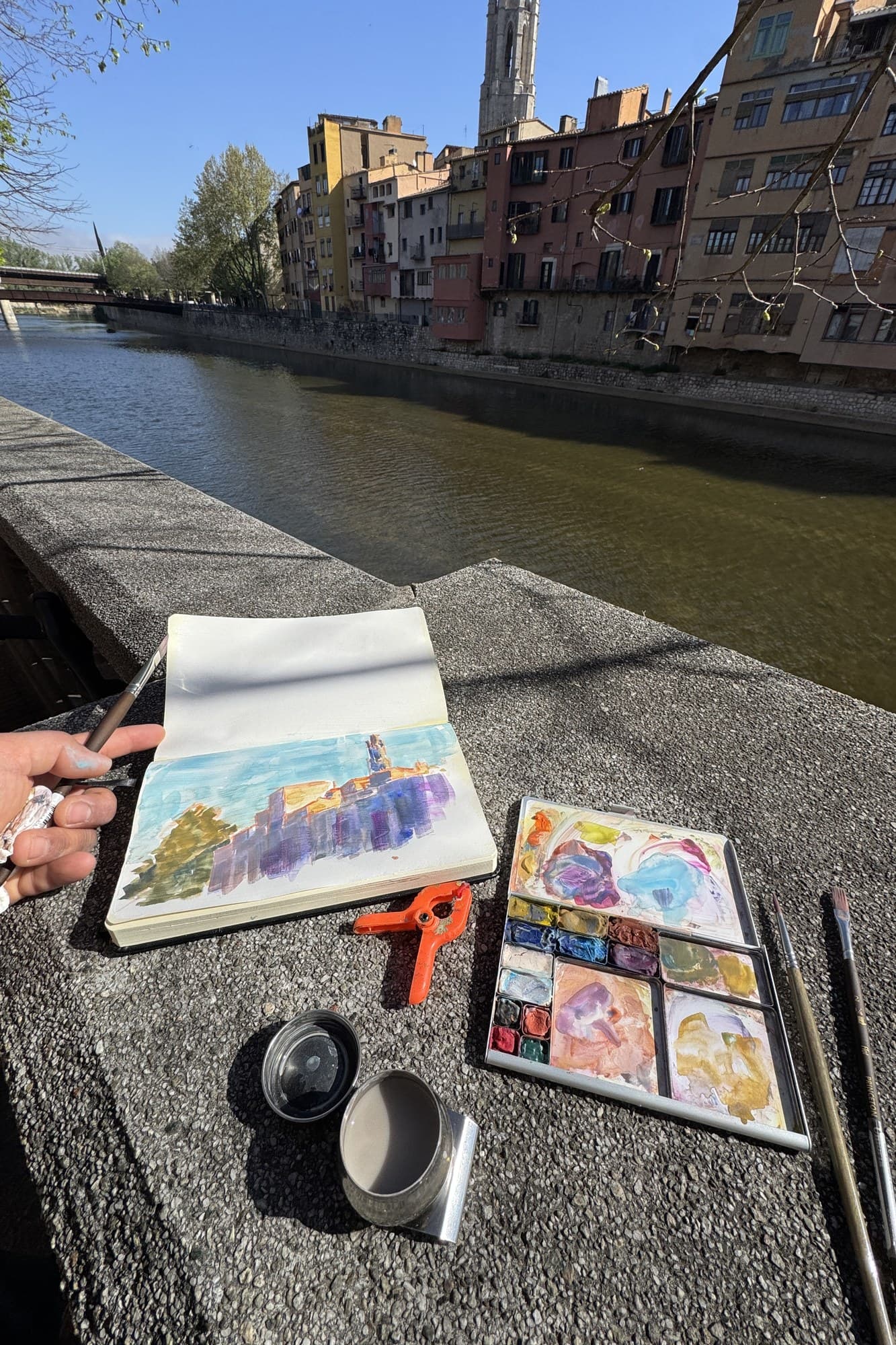
I've experimented with a ton of different kits to carry art supplies on a bike. Everything from super minimal clips on ArttoolKit palettes and sketchbooks to full blown metal pochade boxes and panels like the Strada Mini. For other painters out there, the lightest pochade box I've found that can take small panels, and can be used for oil and gouache or on a tripod and as a thumb box is the Leon Holmes line of pochade boxes. You know you've gone off the deep end when you weigh your art supplies to take it on a bike ride 🙂
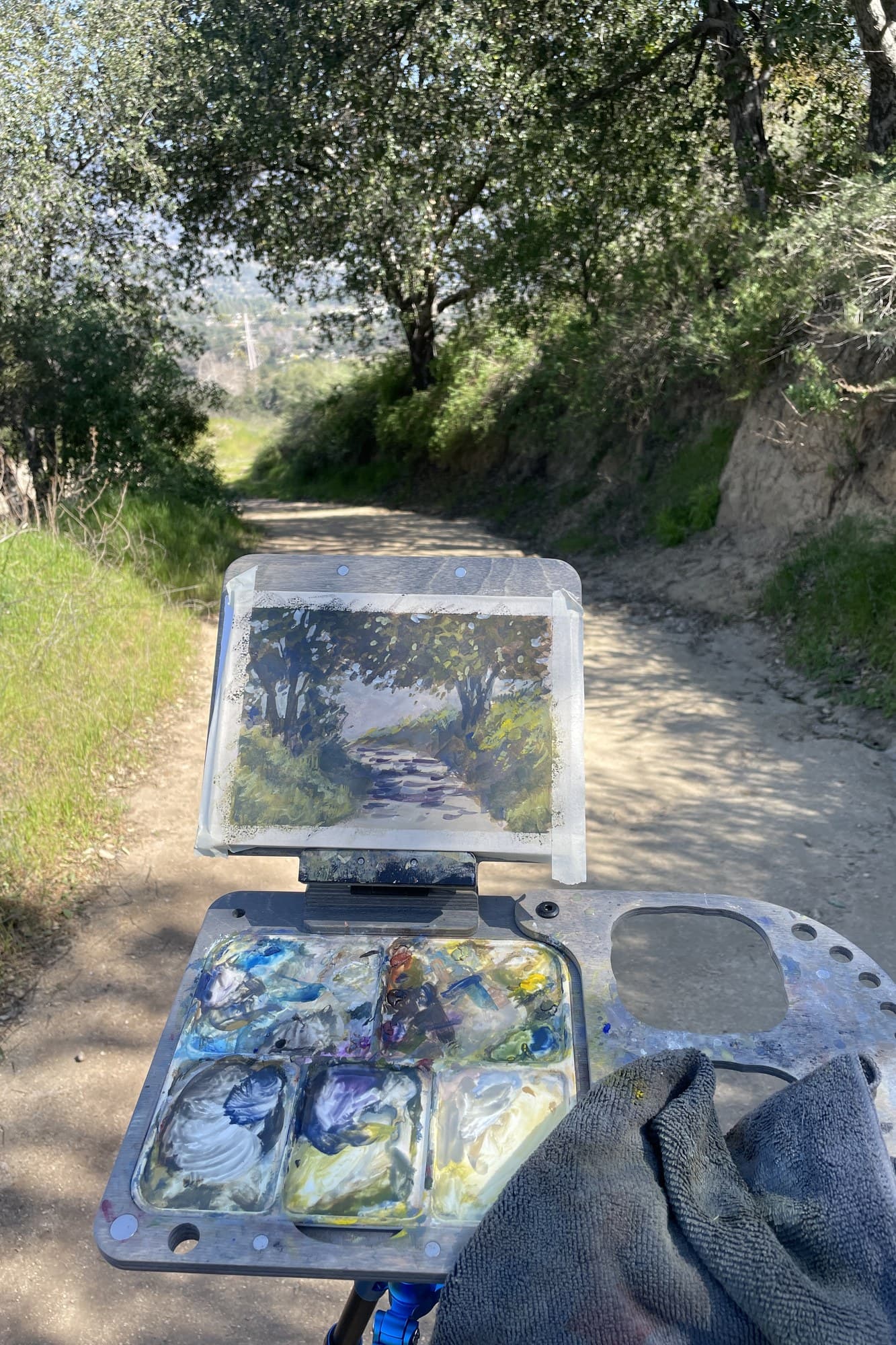
Generally, I like the experience of painting on a vertical panel or board better than a sketchbook, but with most pochade boxes you need a tripod which is heavy and impractical. What I've settled on currently is a 3D printed thumbbox that will hold small sheets of paper and panels. It allows me to have a small vertical painting surface without using a tripod. I also limit myself to small sizes like 6x8 or even smaller. This makes it easier to cover the entire surface, but have enough information if I want to make a bigger version in the studio.
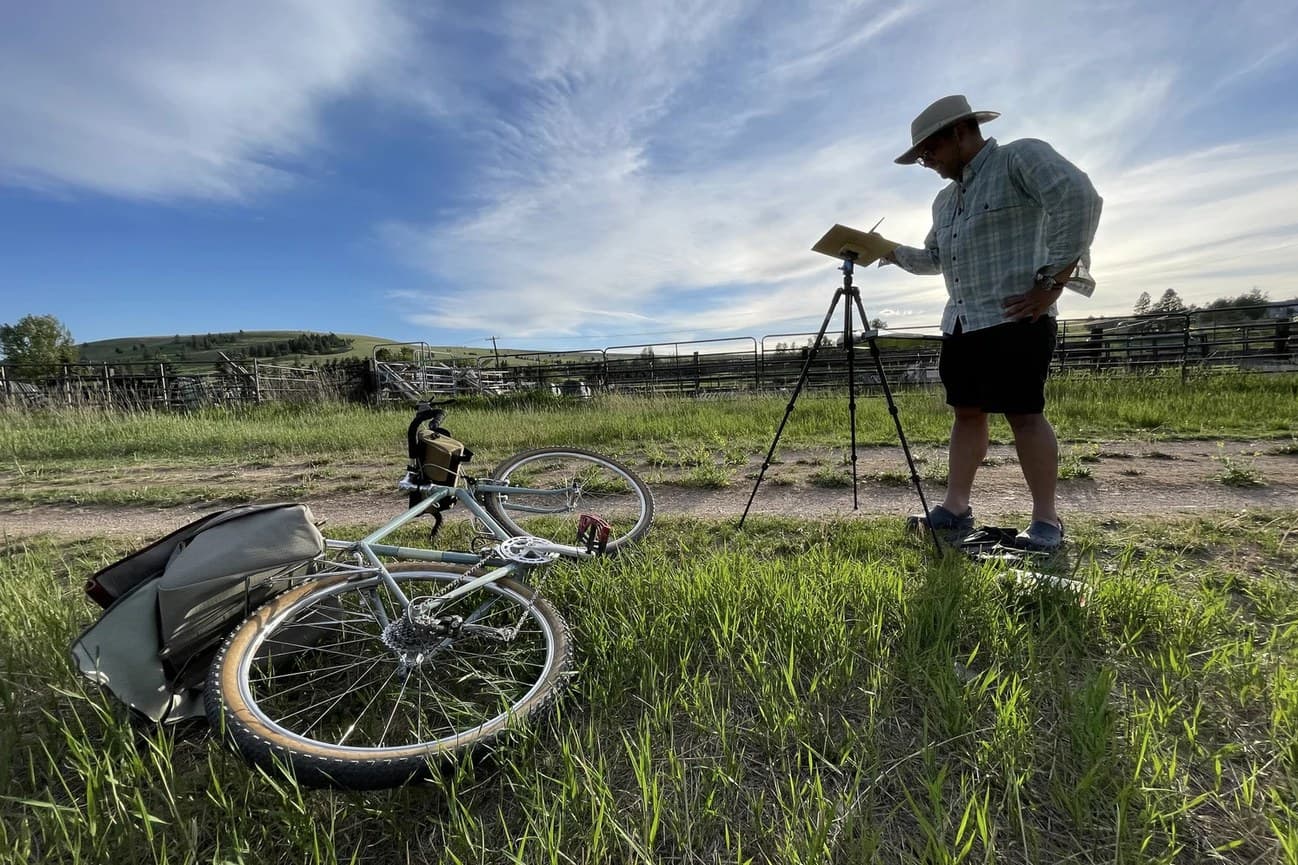
What happens when you stop to paint on a ride?
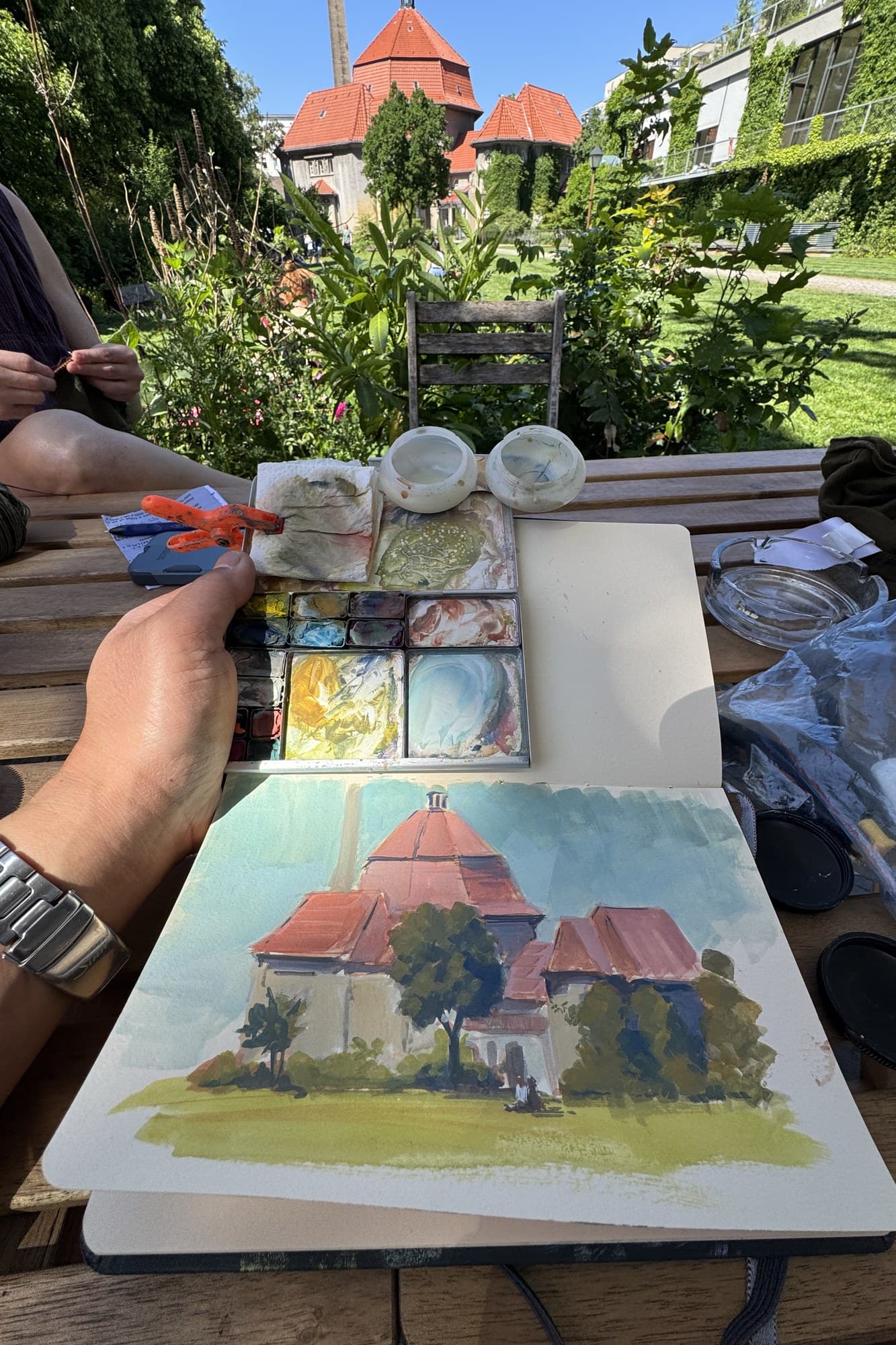
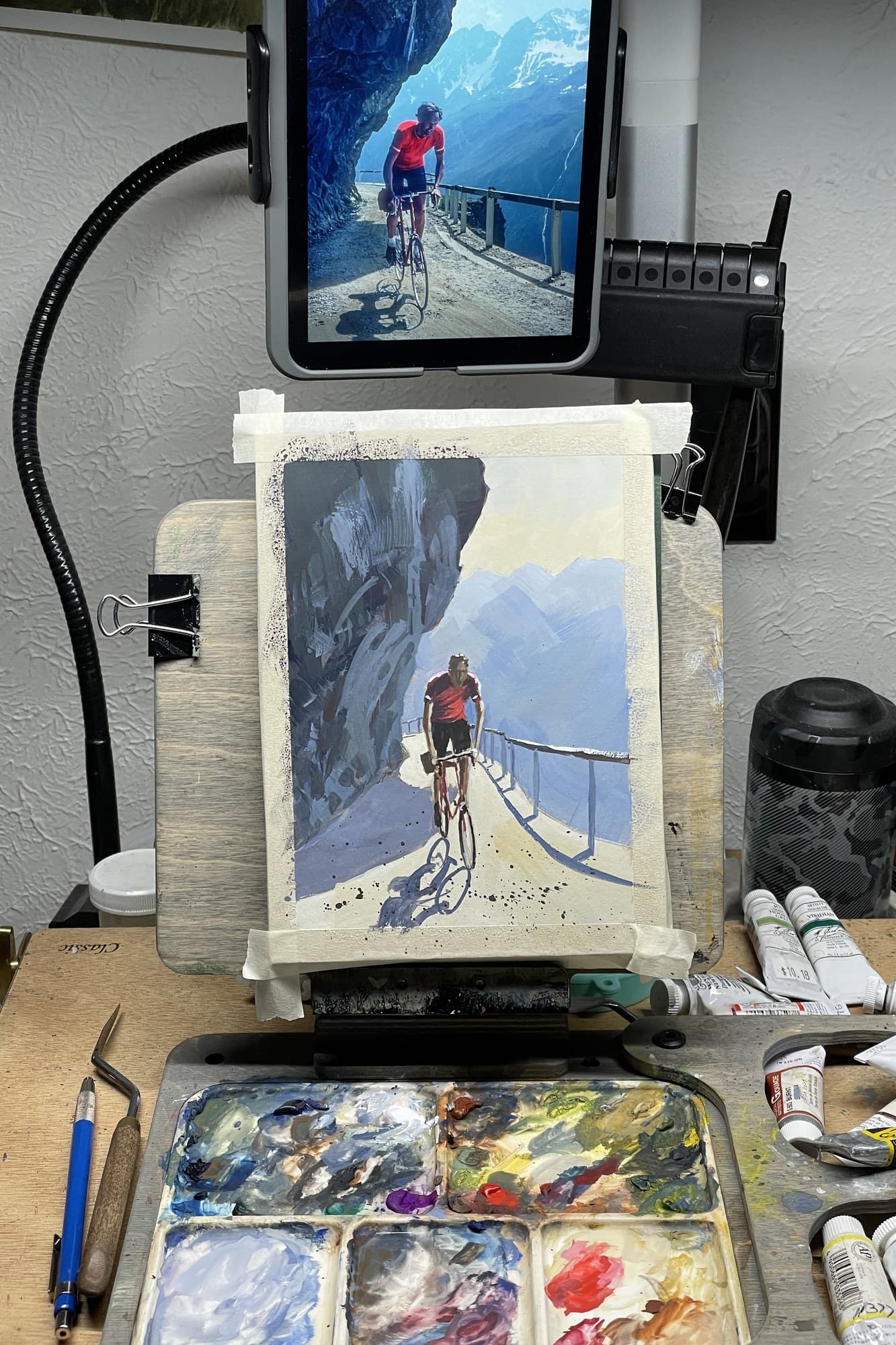
Ideally, I try to find a quiet stretch of road with some shade. I'll ditch the bike somewhere and pull out the painting gear as quickly as possible. #rideslowpaintfast :) Usually I take a few still photos with a phone since the light can change so quickly and it gives me a reference to work with later. Oftentimes the goal is to just get the color and value relationships on paper and not necessarily a complete painting. Cameras tend to distort reality and give inaccurate colors, so a quick sketch lets you capture the actual colors and what you felt at the scene.
A more ideal situation would be to tour to a destination and use it as a basecamp to do shorter rides with a focus on the art making.
Does painting shape where you ride, or does the ride shape the painting?
I always tend to carry some art supplies on a ride regardless where we go. If I'm going out with the expressed intention of painting the mileage is usually shorter and I have a rough idea of where I want to paint. In that sense painting dictates the bounds of the ride.
How has riding changed the way you actually paint, not just what you carry?
I don't think riding has changed the way I paint. The bike dictates what paint kit I want to take out. I think more accurately, painting has changed the way I ride. I love riding early in the morning or late afternoon when there's long shadows and a more interesting palette of colors on the landscape. I love riding where there's lots of atmospheric perspective so that tends to be in hilly or mountainous open spaces. Riding with a painting in mind also makes me more attentive and observant. I'm always looking for interesting shadow patterns or how trees or buildings can frame the landscape.
How do you keep one hobby from swallowing the other?
To be honest it's hard to combine hobbies on a bike sometimes. To quote Stranger Things, it's often a compromise and you tend to be "halfway happy." I found what works best for me is to have dedicated rides or outings where painting is clearly the primary priority and riding is secondary. Likewise, sometimes I'll focus on the ride but take reference photos for painting later while taking mental notes of what I'm seeing.
A similar situation occurred when we were doing a lot of fly fishing by bike. It was difficult to stop in the middle of a long ride to give ourselves permission to fish. The best compromise was to do the long miles to a basecamp and then do shorter excursion rides from a base with the expressed intention of focusing more on fishing.
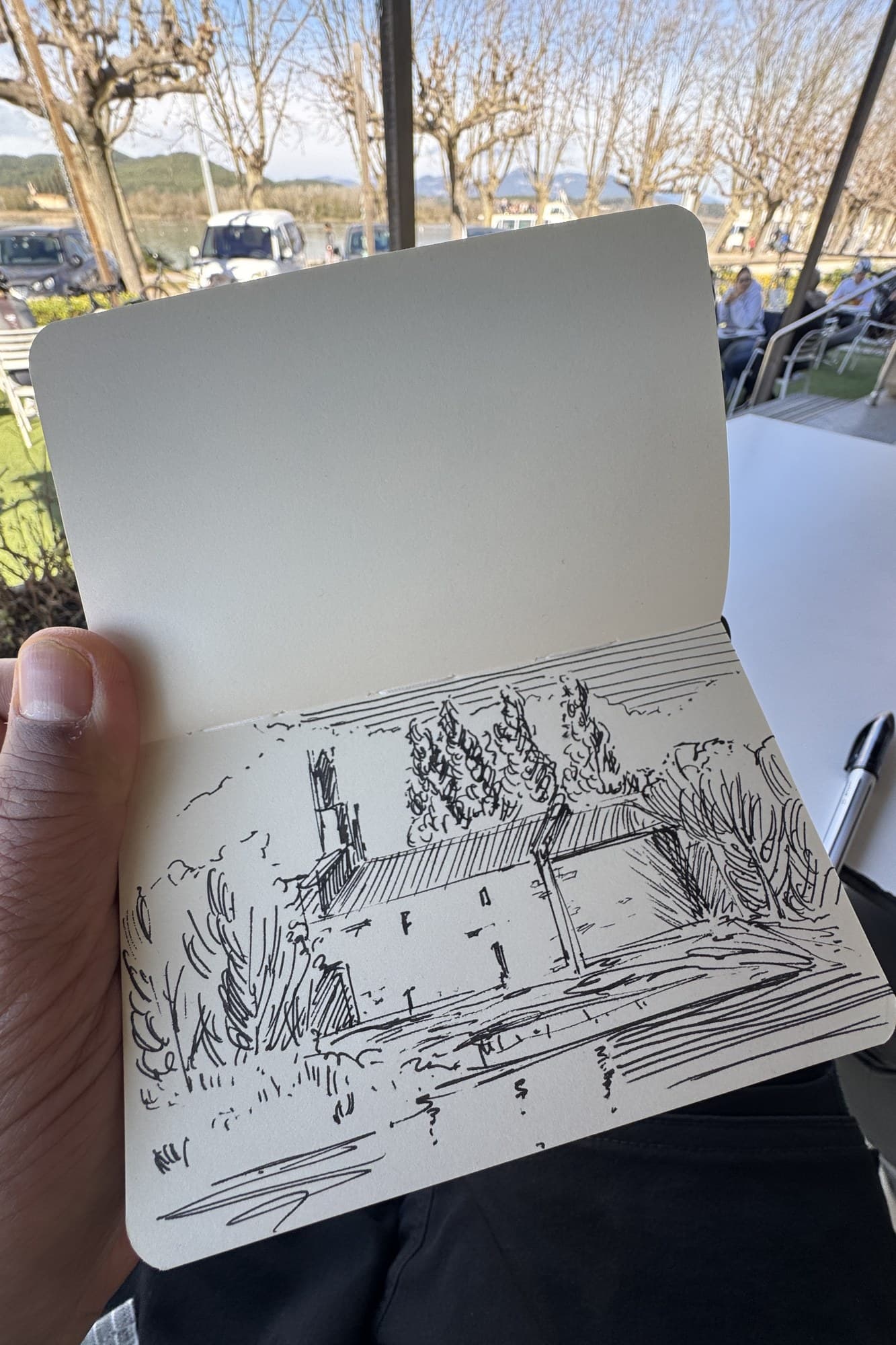
What does painting let you hold onto that a photo or video doesn't?
There are two things. First is a practical one. Photographs lie. They tend to flatten the sense of space and also don't show accurate color. Our eyes and brains have way more dynamic range and nuance to color than a camera or photo can capture. A photo may render the shadows in a tree as just dark and cool, but when in reality it's actually lighter and there is warm reflective light or that it's actually purple, etc.
On a more philosophical note, since painting is such a slow and deliberate act you remember so much more about the place you were. How hot it was. Were mosquitos biting your ankles. The uncomfortable rock you were sitting on. It's a snapshot interpretation of what you saw but also a crystallization of that concentrated stretch of just thinking and observing.
What would you say to someone who wants to bring another hobby onto the bike?
Depending on the hobby, it's a great way to further immerse yourself in the bike ride. Birding is another thing we do on rides. Not only are you engaged visually but you're also listening for familiar and unfamiliar calls. It's a great way to spice up old rides, but also makes you present on new rides rather than just counting miles down.
One big thing to know is the "halfway" happy paradox. Instead of weighting the hobbies 50/50 it's better to do some rides where the split is more 80/20 or even 90/10.
What are the practical steps for someone who wants to pair a hobby with their riding?
This is the fun part. I love taking hobbies and making them smaller and more bikeable. Small monoculars instead of binoculars. Gouache paint instead of oils. A tenkara rod instead of 5wt. fly rod. Regardless of whatever activity you choose there is no doubt a "travel-friendly" version of it and people have researched it before. Dive into those niche websites and fall down the rabbit holes. That is part of the fun.
There is also a wealth of ways to carry things on bikes these days. And if there isn't a solution that works for you, there are infinite resources to make one from 3D printing to DIY sewing projects. Honestly, sometimes half the fun is taking an unlikely hobby and making it work on a bike.
Thanks, Russ.
Make sure to check out Russ' painting IG at @thepedalingpainter