From Steamboat Springs, Colorado, Moots has been hand-building titanium bikes since 1981. Find out what Nicolas Joly thinks of the Routt CRD, the gravel racer that paved the way for Moots' new Routt.
Editor's note: Nicolas tested the Routt CRD before Moots overhauled its Routt lineup in fall 2026. The ride impressions are his; see the update at the end for what's changed.
I live and test bikes in Villard-de-Lans, France, the birthplace of MTB in France and home of the unofficial, but nevertheless first-ever, MTB World Championships in 1987. You could reasonably ask how that relates to this Moots review. The answer is terrain. The place is hilly and rocky, and very demanding in terms of ride quality, to the point that I ended up replacing my gravel bike with a hardtail a couple of years ago, even if most of my time is spent on double track and XC ski trails.
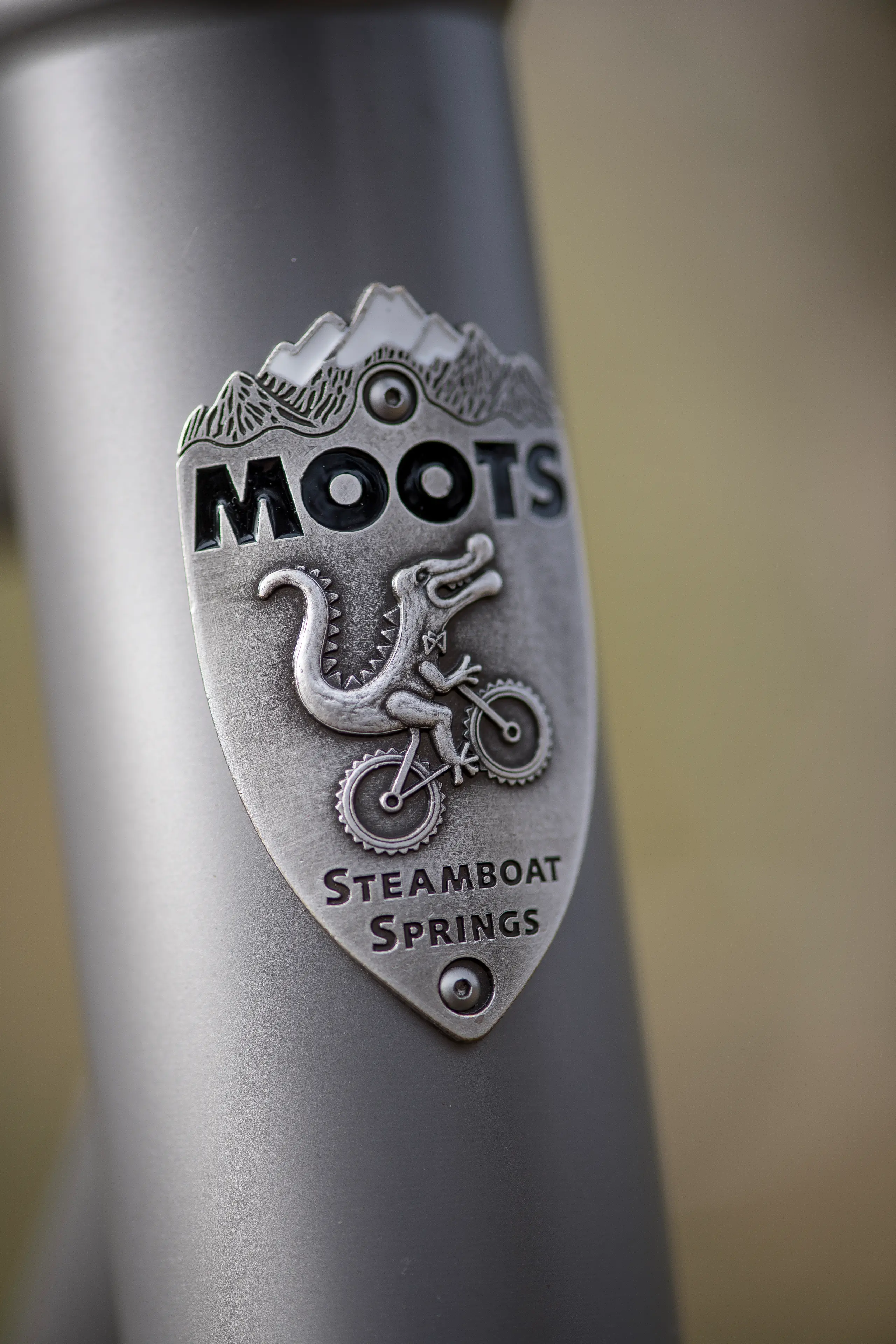
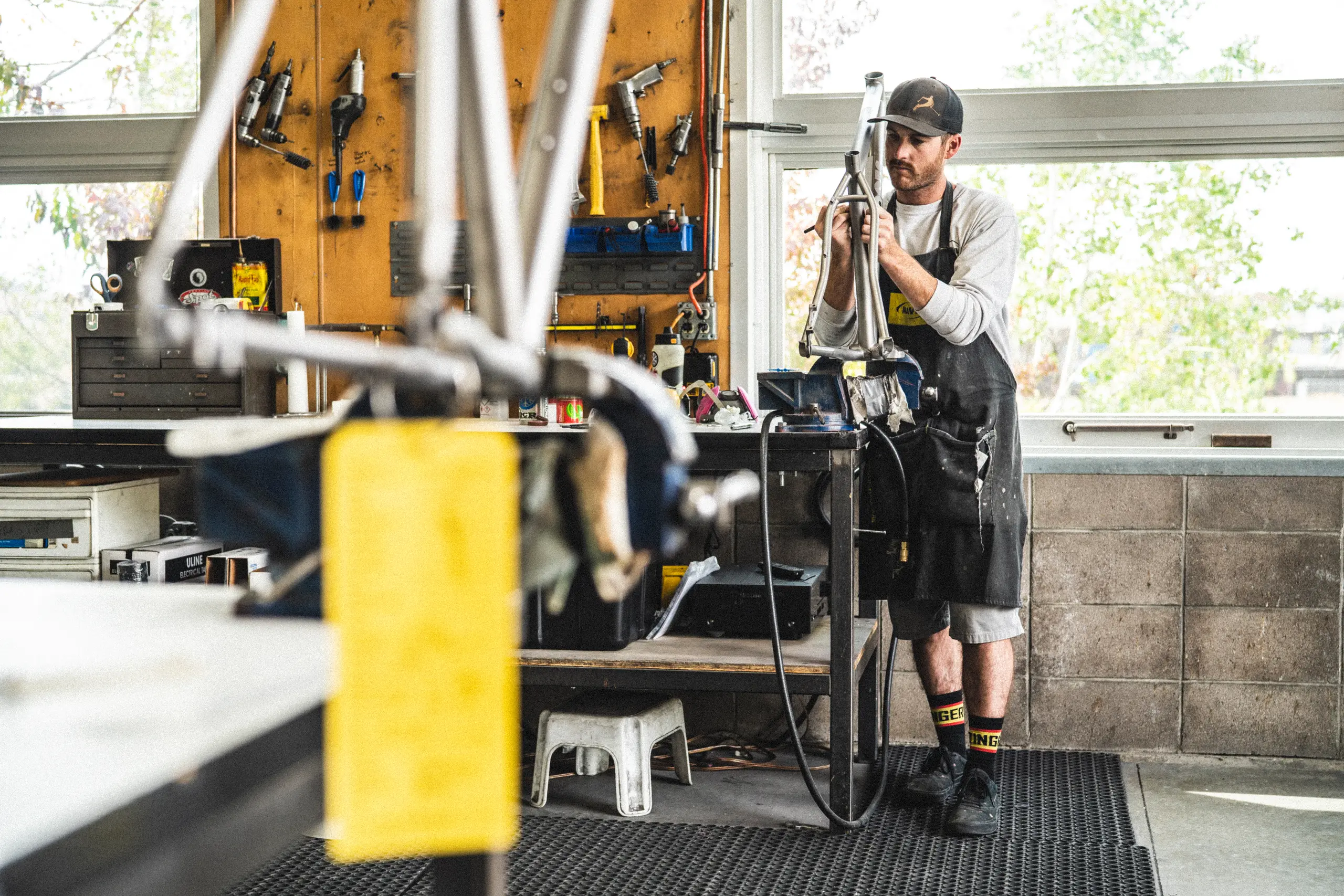
It’s no exaggeration to say Moots has a unique place in the firmament of the bike industry, and in the hearts of many of us. For a big part, that’s due to the magnetic appeal of bead-blasted titanium, the perfection of TIG welds, and the added spiritual value of a durable, handmade product.
But the other reason, and perhaps the main one, is that Moots is still as relevant today as when its team was battling for NORBA podiums. After 45 years of building frames in Steamboat Springs, Colorado, what Moots does better than most metal frame builders is adapt its offer to the leading trends without delay. Yes, the bikes may look classic or timeless, but never old or vintage.
And the Routt CRD is probably the best example of this constant pursuit of relevance, performance and seduction.
What is the Routt CRD?
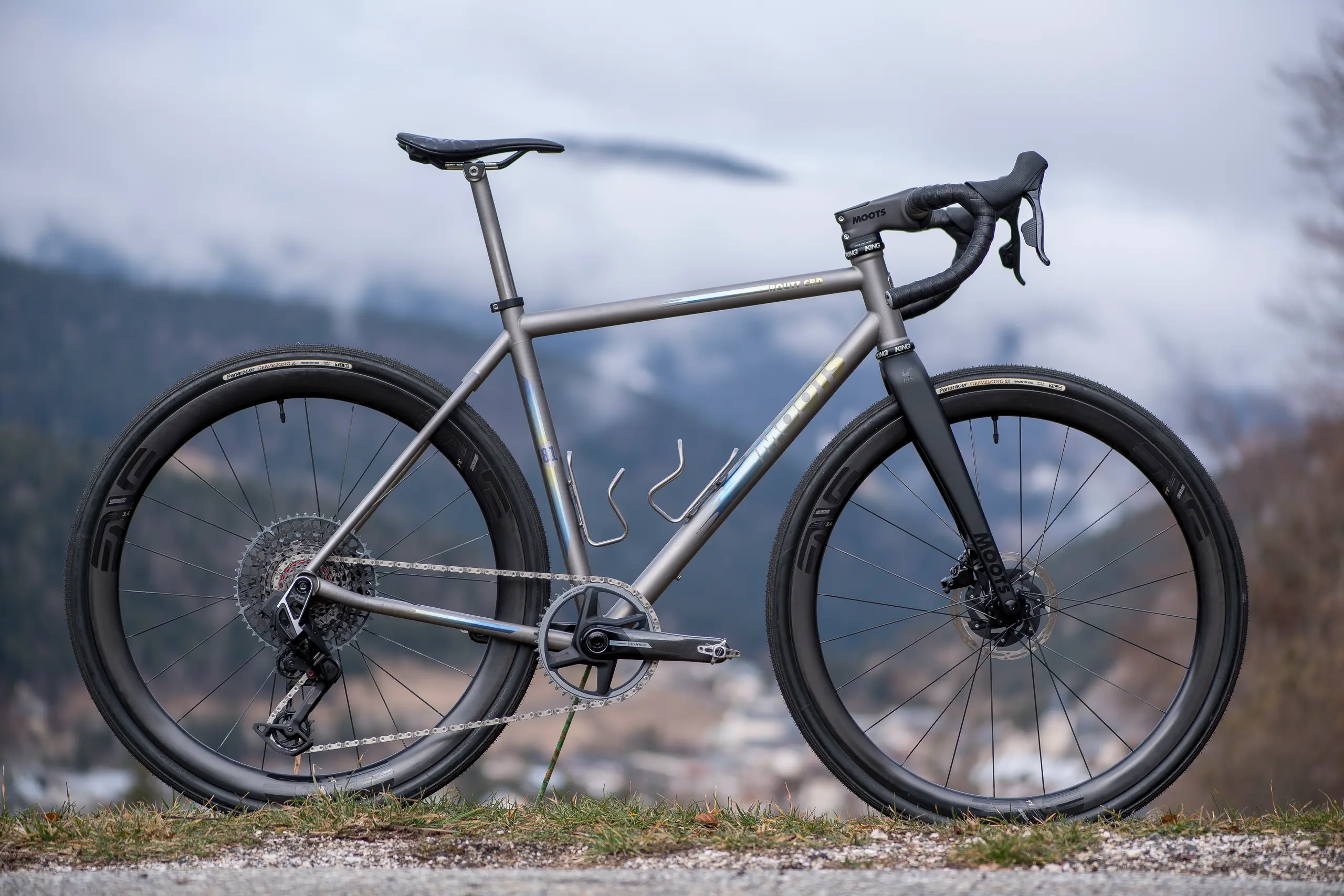
CRD stands for Complete Race Design. In other words, it's the most advanced gravel frame Moots has ever produced. It uses 3D-printed parts, a proprietary carbon fork, stem and bar for total integration, and the best tubing possible, which is of course double-butted to save weight, but even more to enhance ride feel… more on that later.
So, while this race pedigree could seem a bit elitist to BGDB readers, and it is the most refined Moots ever created, the CRD is nevertheless not that far in terms of experience (and totally identical in terms of craftsmanship) from the brand's three other gravel platforms, which aim to satisfy all types of riders.
Even if you are not looking for a super light, super expensive and streamlined titanium bike, you can learn here what makes Moots different from the others, and get a feel for whether one is made for you or not. If not, we have a few other gravel bikes worth a look.
Somewhere Between Classic and Aero
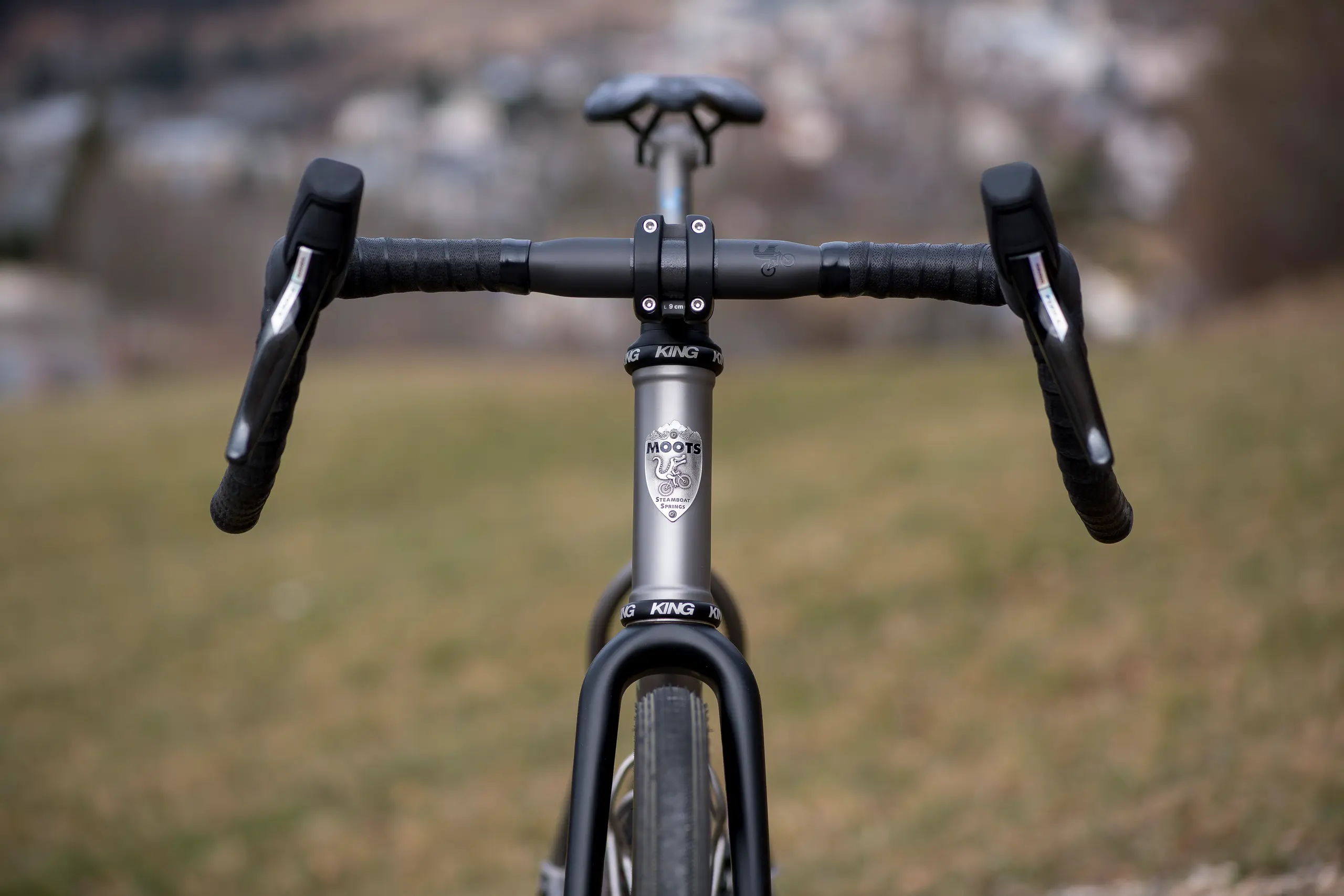
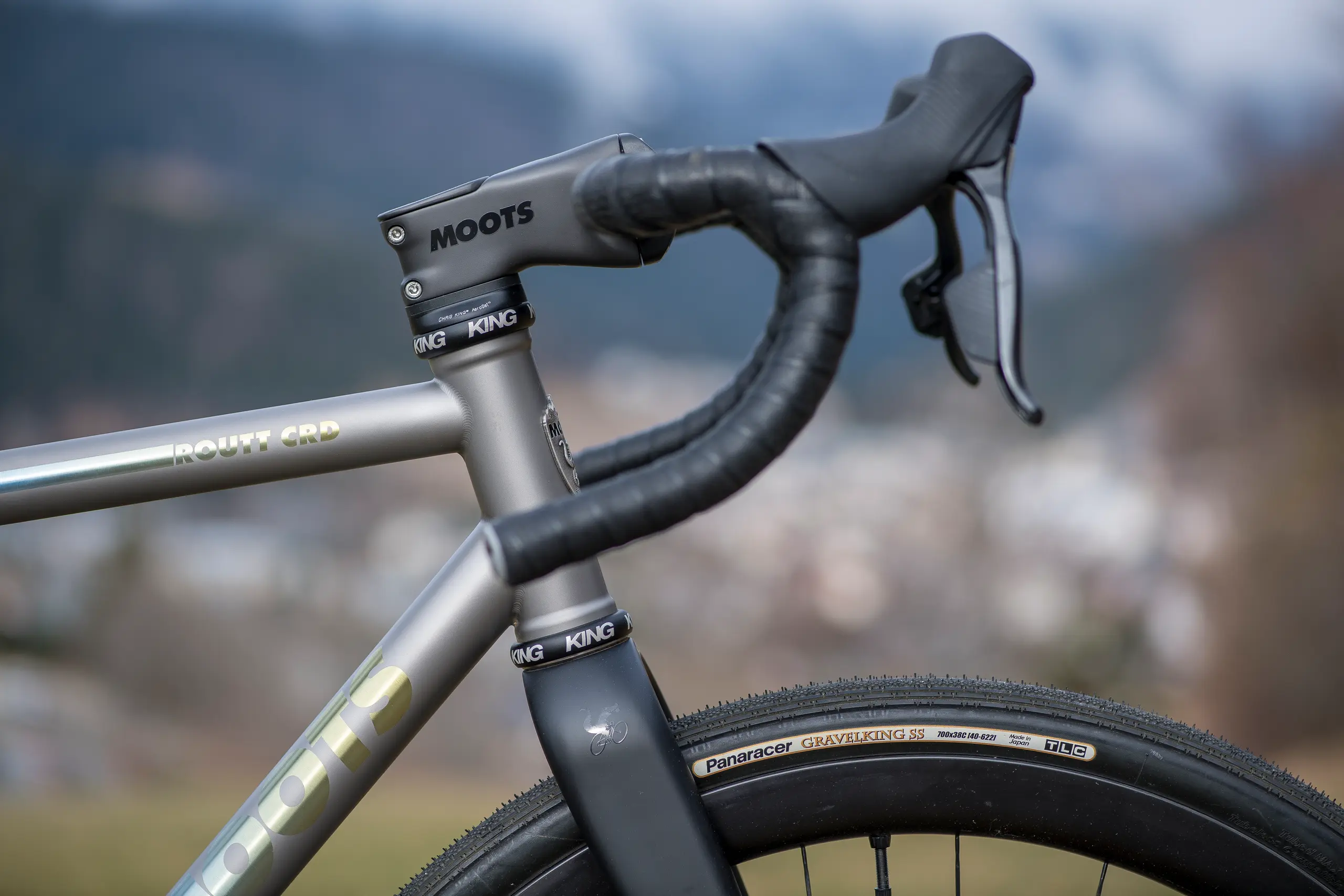
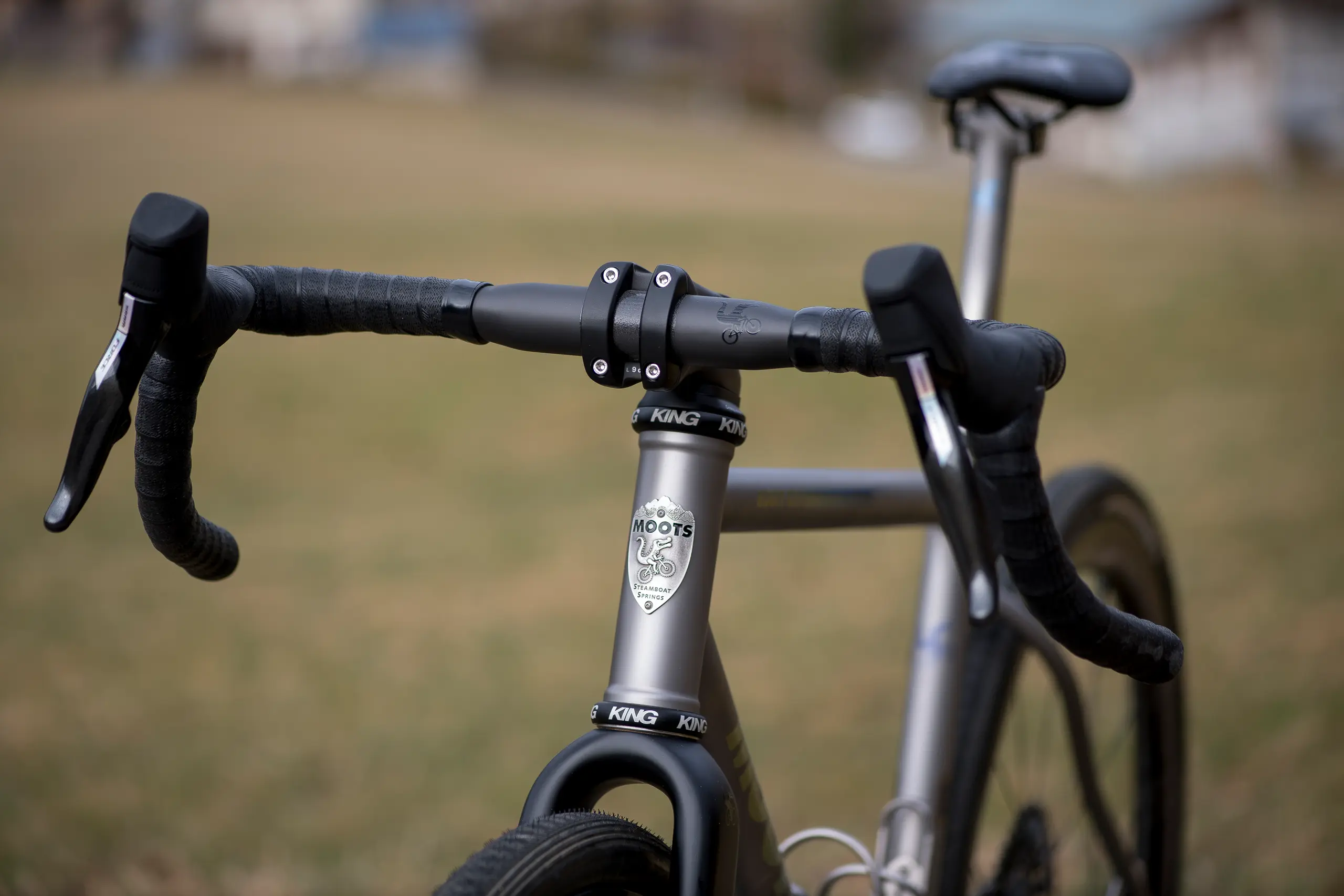
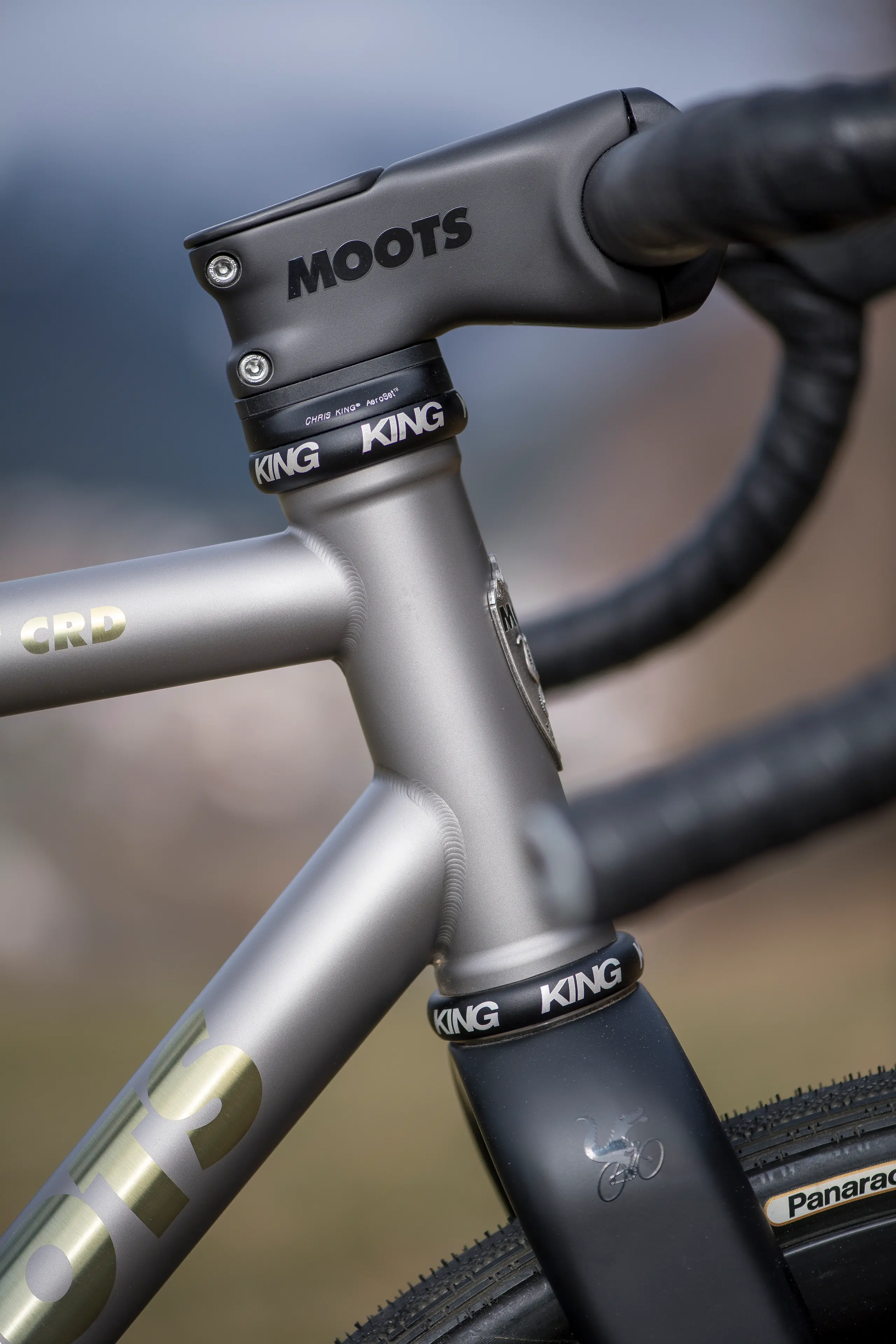
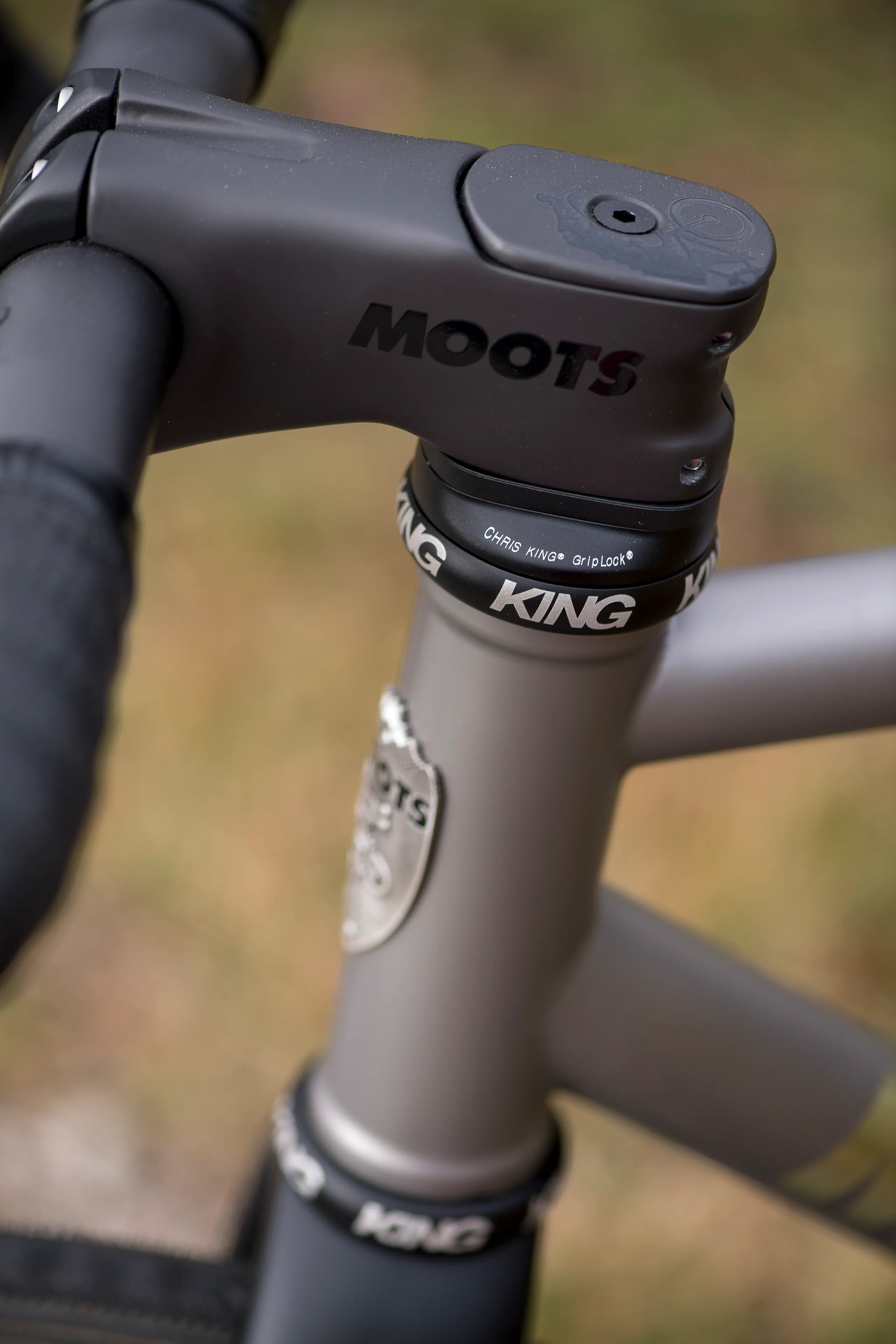
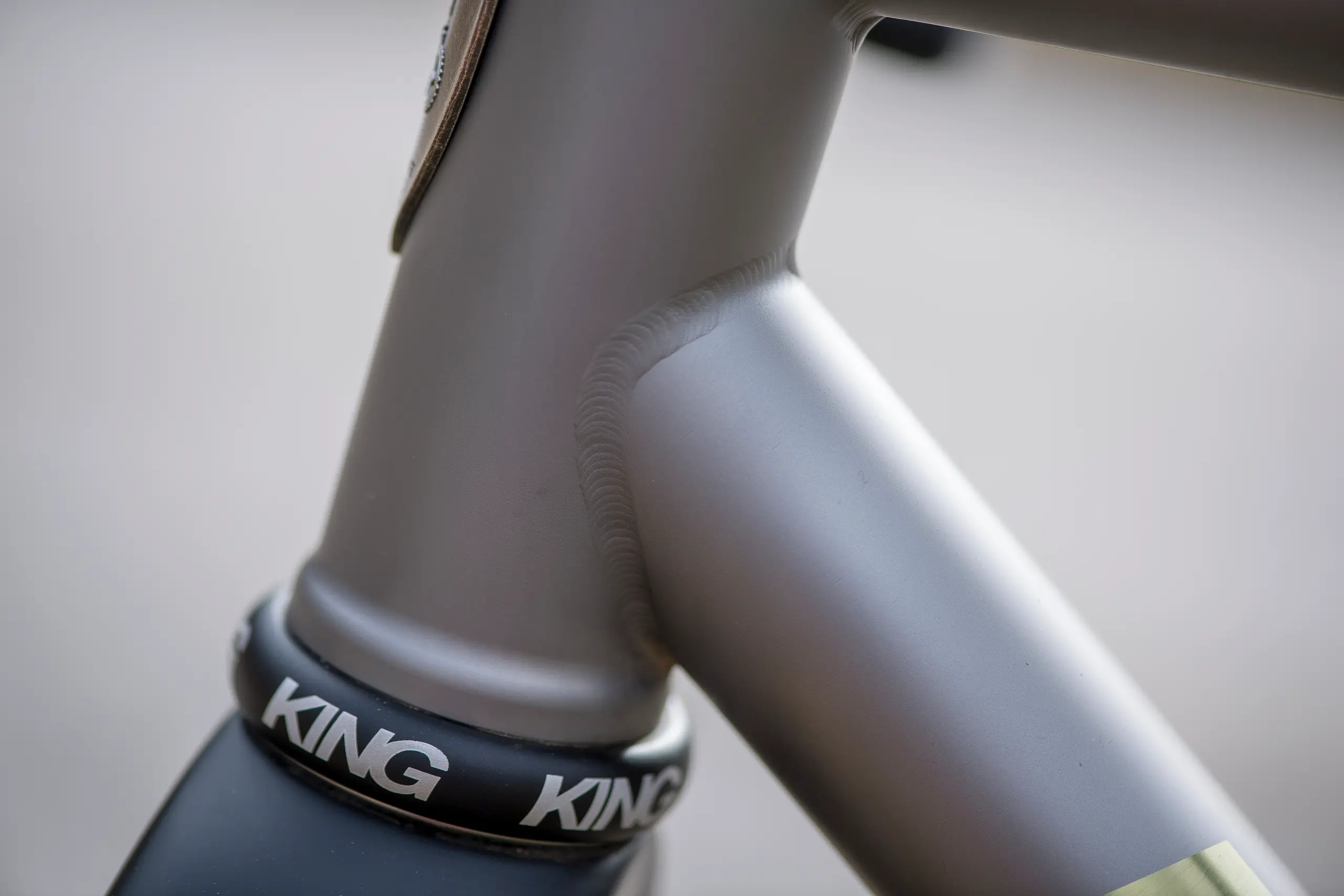
Having said that, the most visually distinctive feature of the Routt CRD is of course its integrated cockpit, which relies on the Chris King AeroSet headset and the massive Moots MOD stem. Together, they allow the brake hoses to run internally from lever to caliper, like on any premium carbon bike.
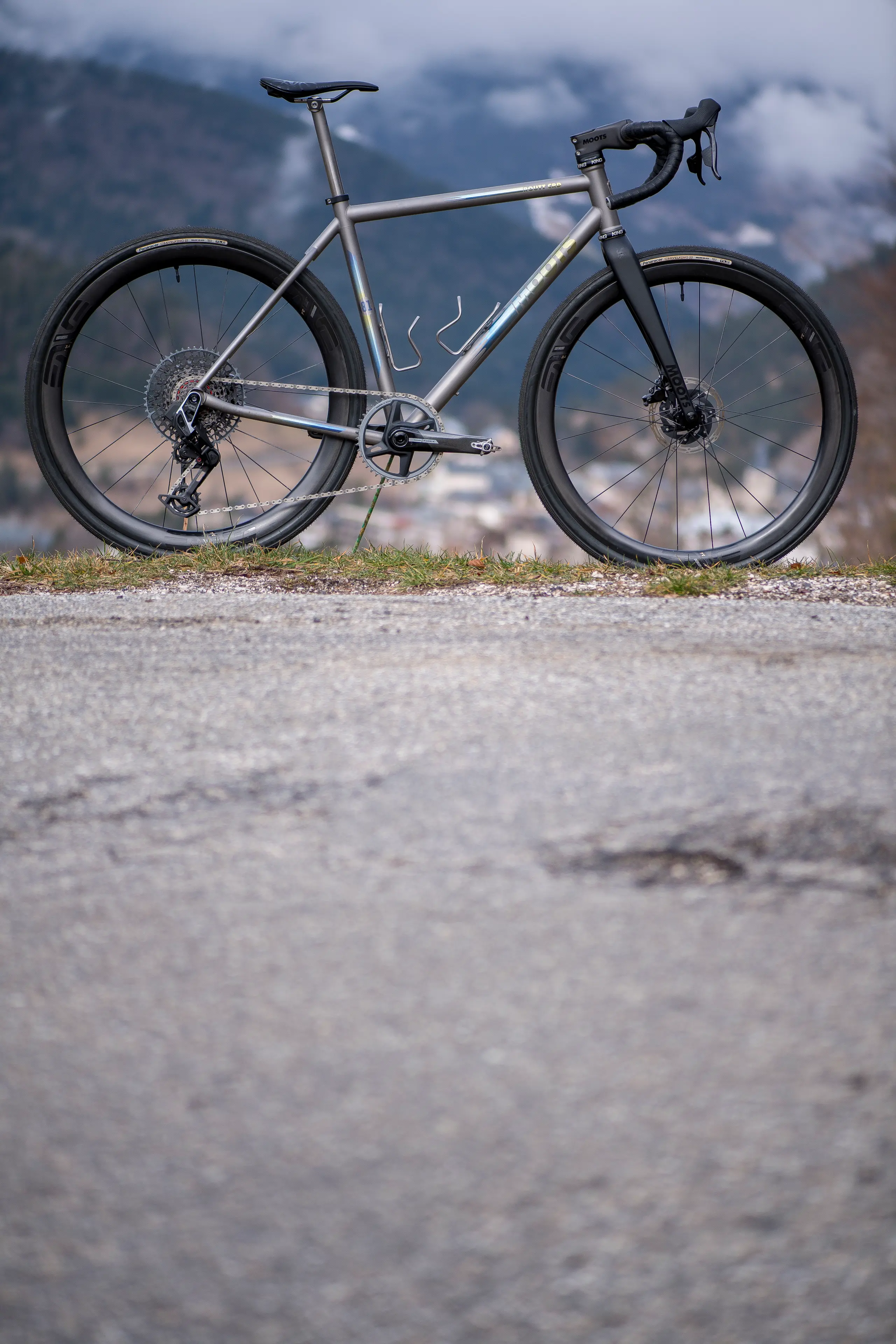
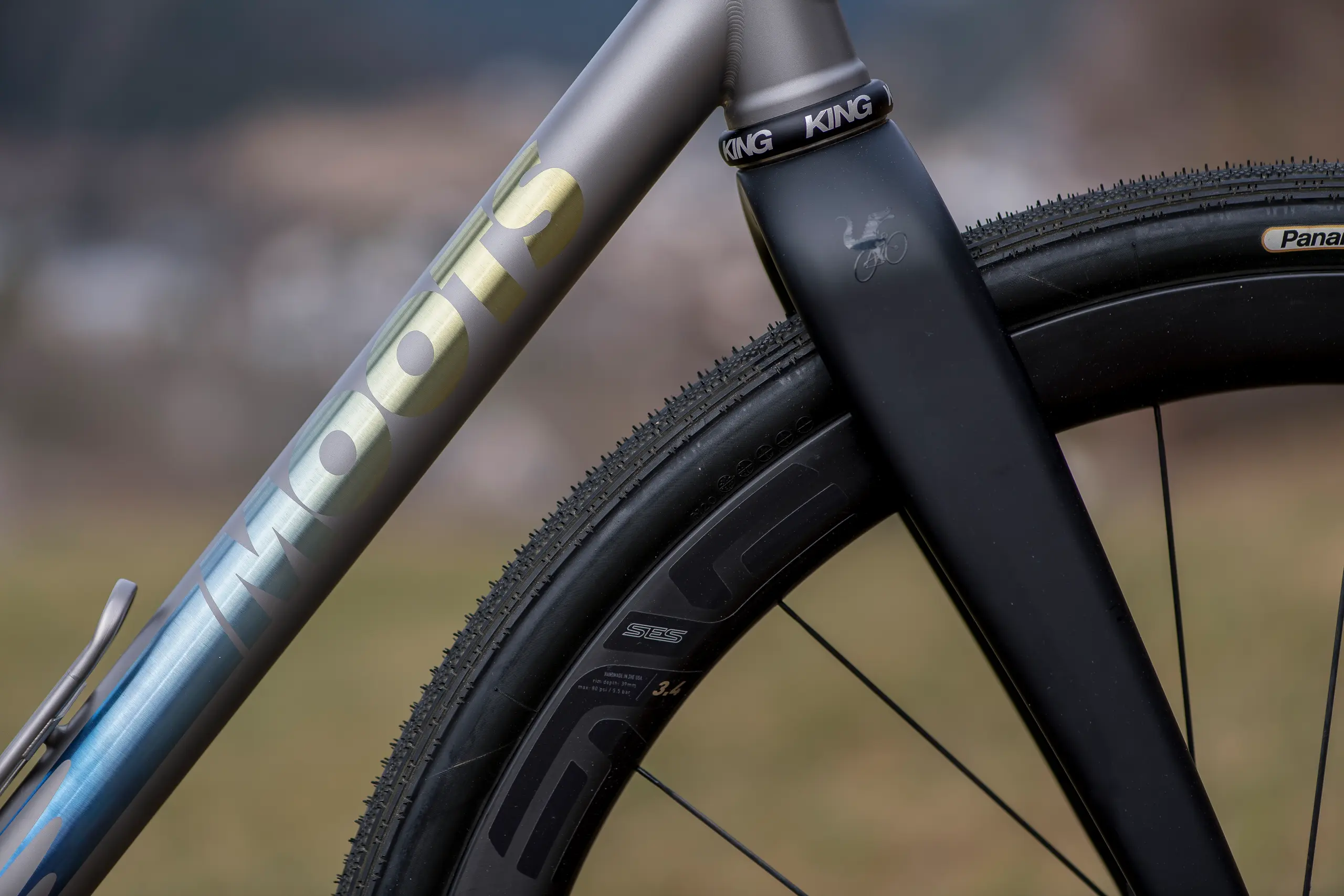
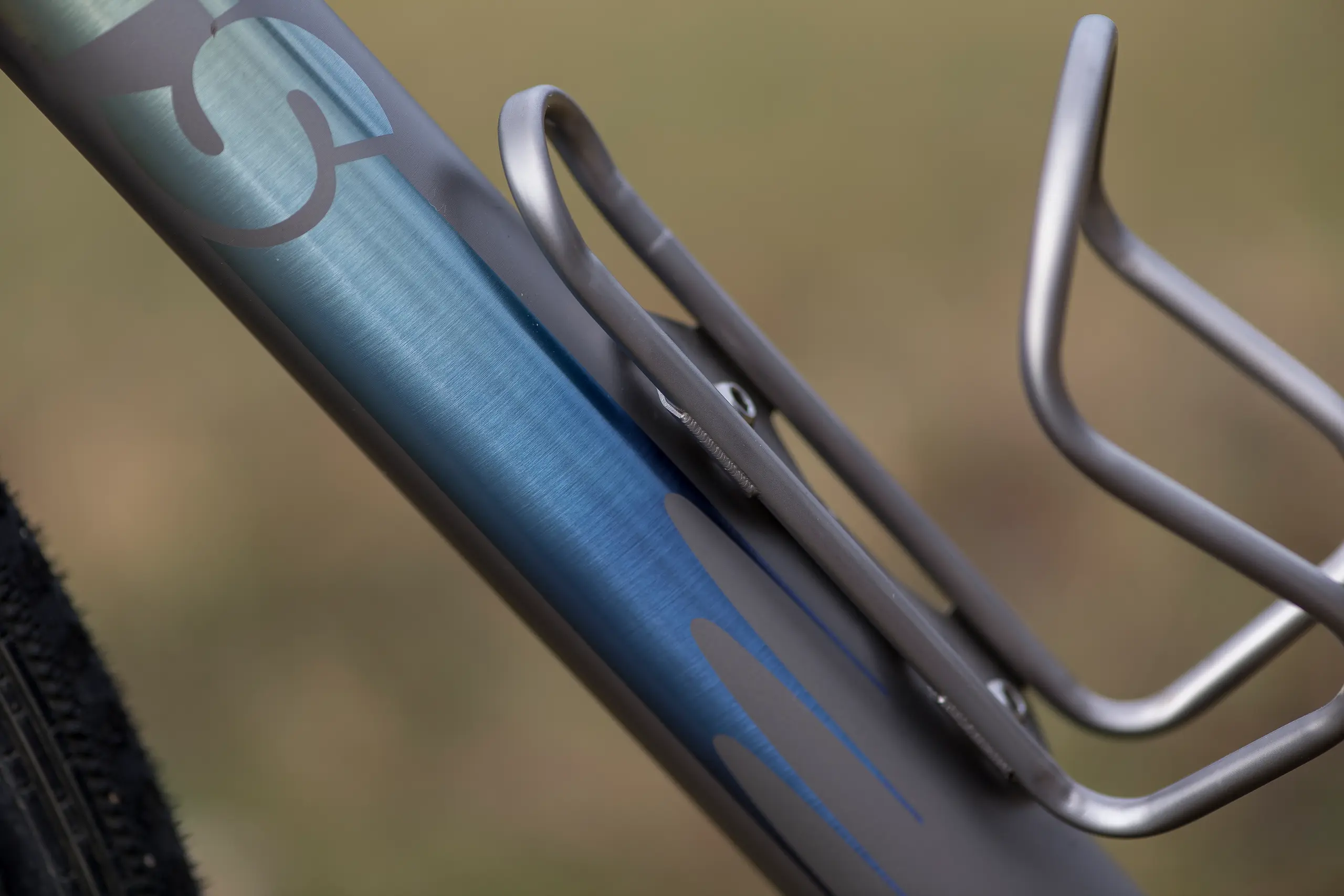
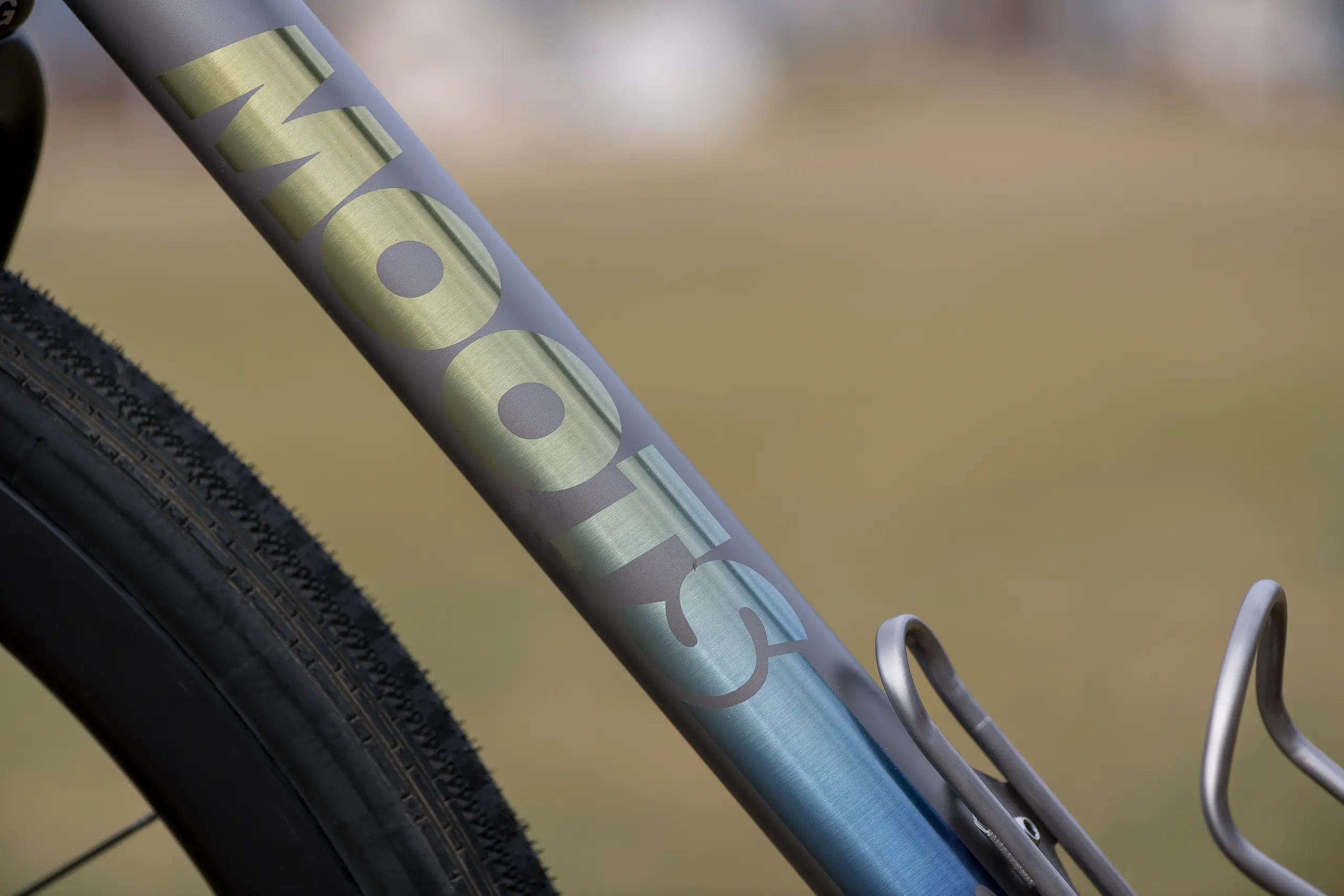
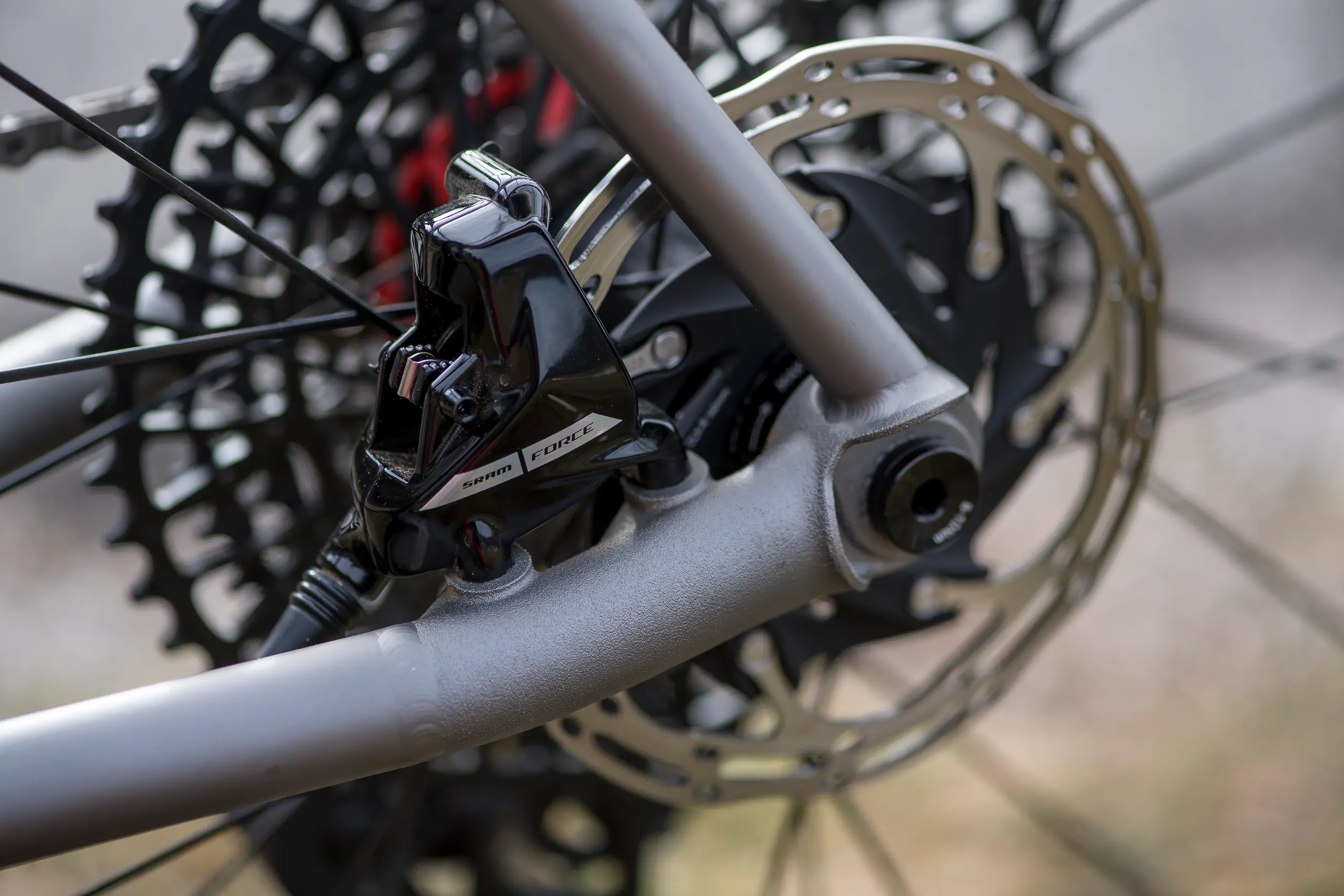
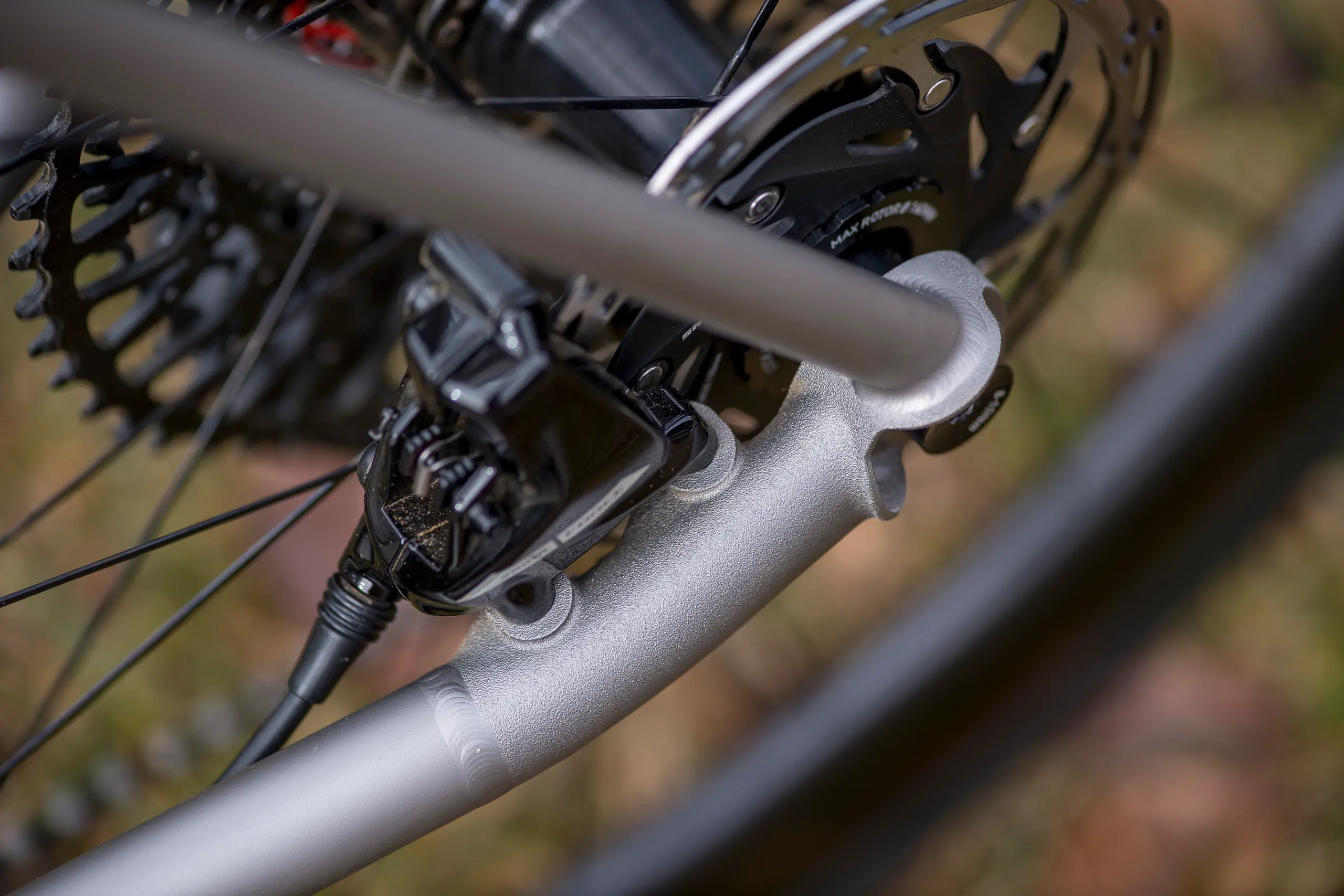
On the frame-building side, the CRD uses the latest technologies. Some parts of the frame, like the dropouts, are 3D-printed titanium, a sleeve allows the use of a standard 27.2mm seatpost in the 34.9mm seat tube, and the bottom bracket is a threaded T47. This particular bike also features the optional anodized finish, which is simply stunning.
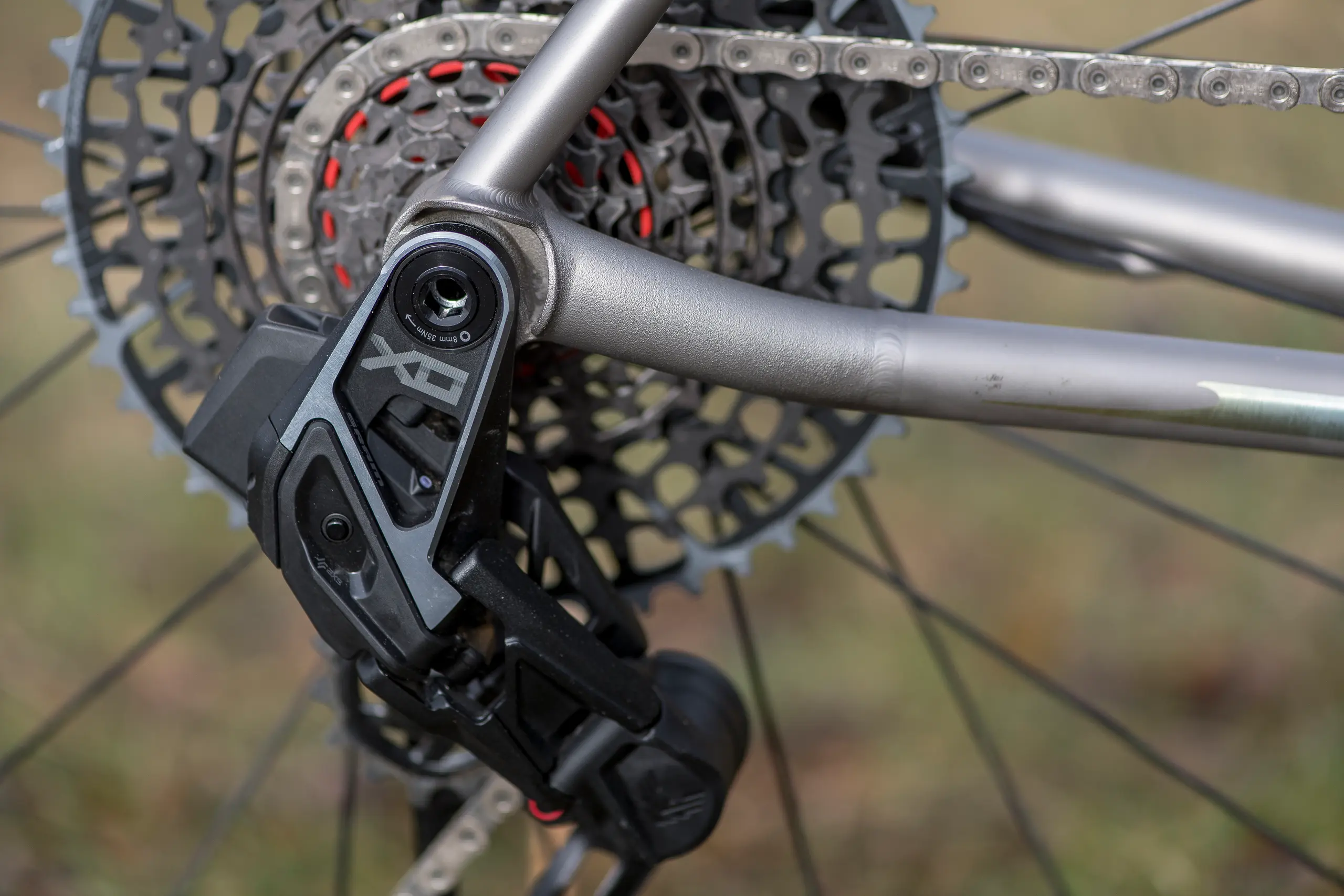
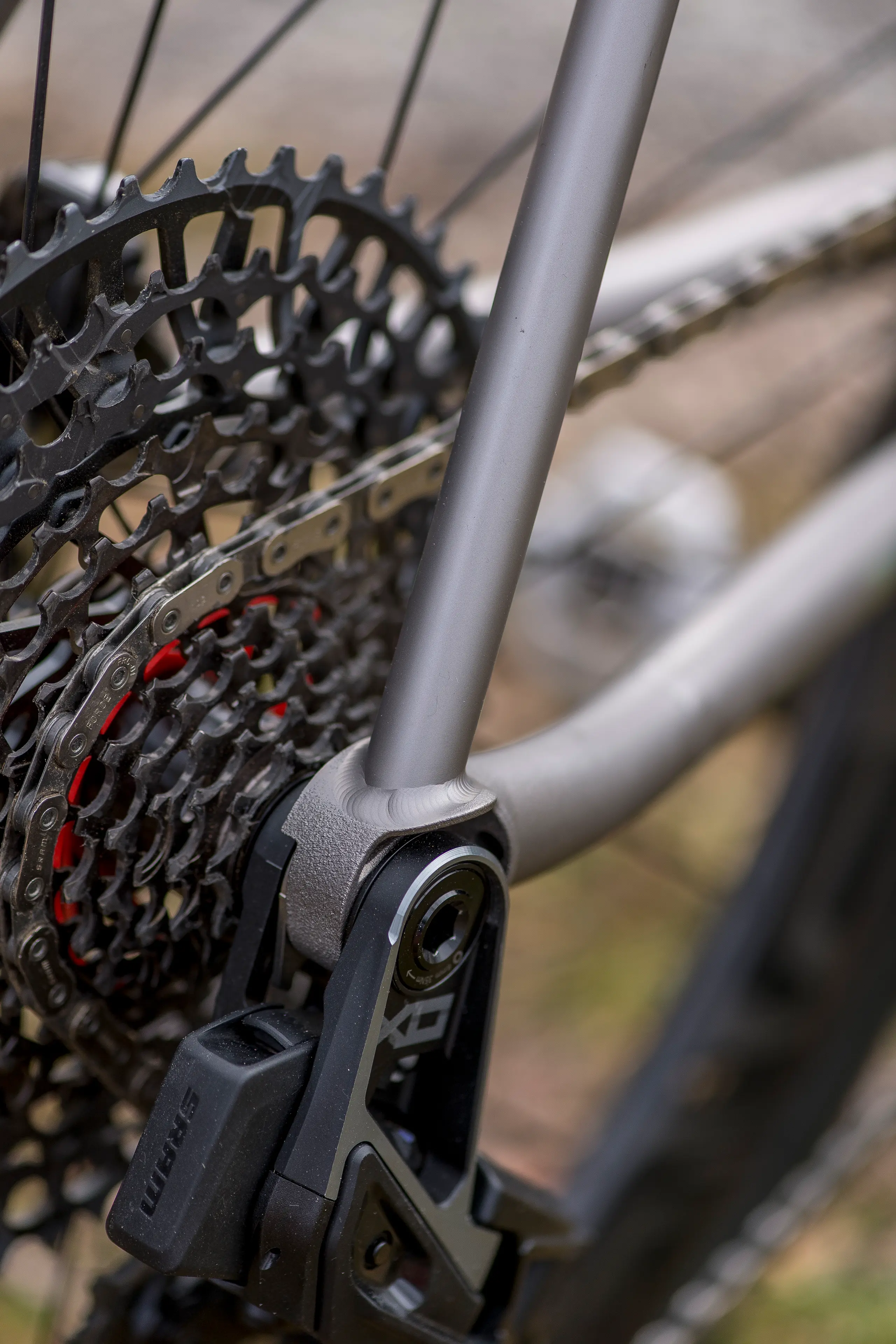
Nevertheless, the most important part is the RSL (Race Super Light) tubing, double-butted in house, which Moots keeps for its premium models. With UDH compatibility, it makes sense that all the builds are based on SRAM groupsets. My test bike was the previous version, mixing a mountain bike Type-T derailleur and 10–52 cassette with Force XPLR levers, brakes and chainring. It also had an Enve 3.4 wheelset, with a 25mm internal width (and 1,380g claimed weight).
Overall, the look could be polarizing. Maybe too futuristic for titanium aficionados, maybe too rounded for the aero camp. I was exactly in between, but nevertheless needed some time to adapt to this new silhouette, which I tend to appreciate more and more.

40 Seconds Off My PR
Given the reputation of the brand, the exceptional build and the price, our expectations were of course very high. And despite this huge anticipation, the CRD didn't disappoint!
So when I say my first feeling was how well the Routt CRD rolls and how easily it pedals, it's of course more about its ability to smooth the ride than how strongly it reacts to power input, especially on rough trails.
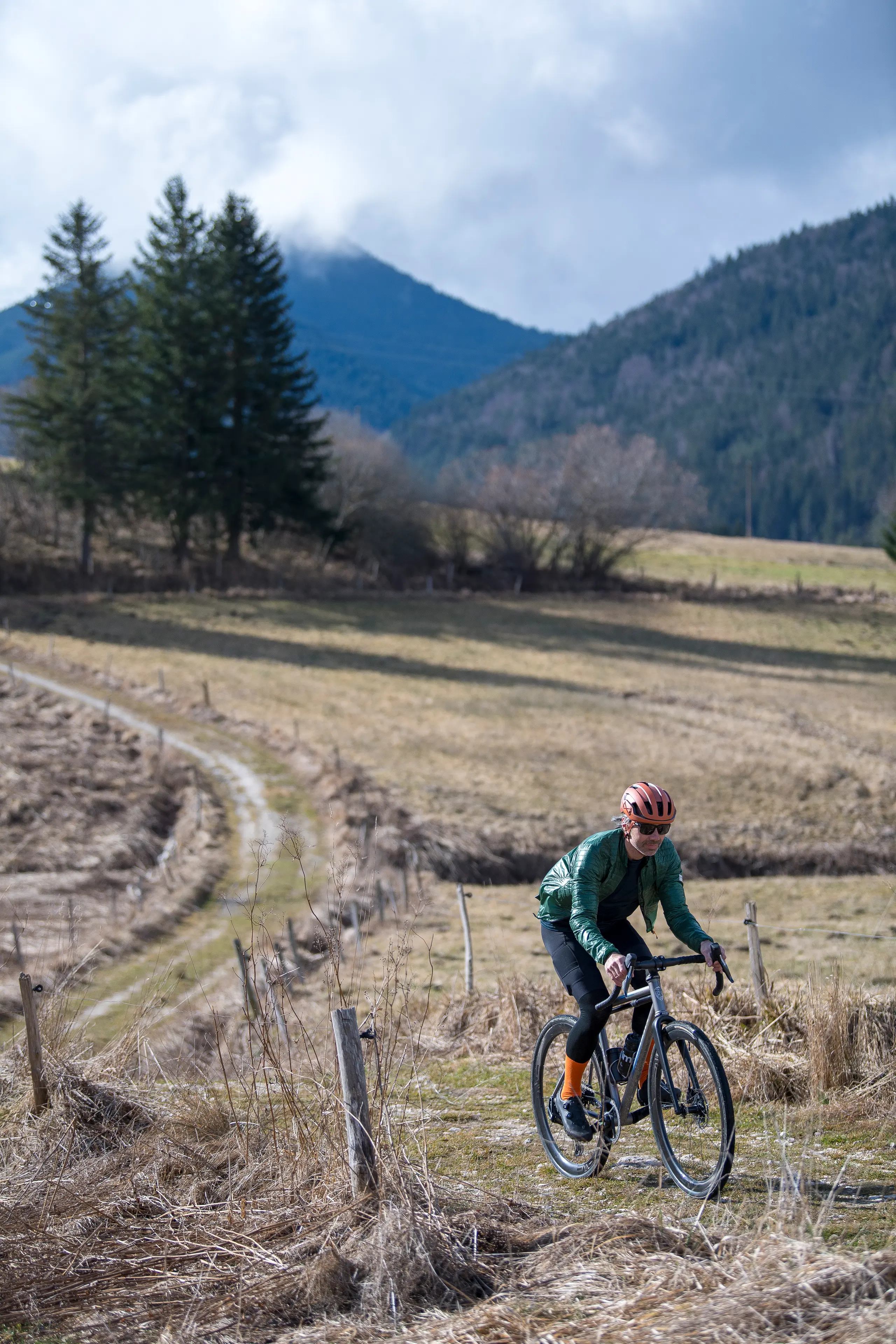
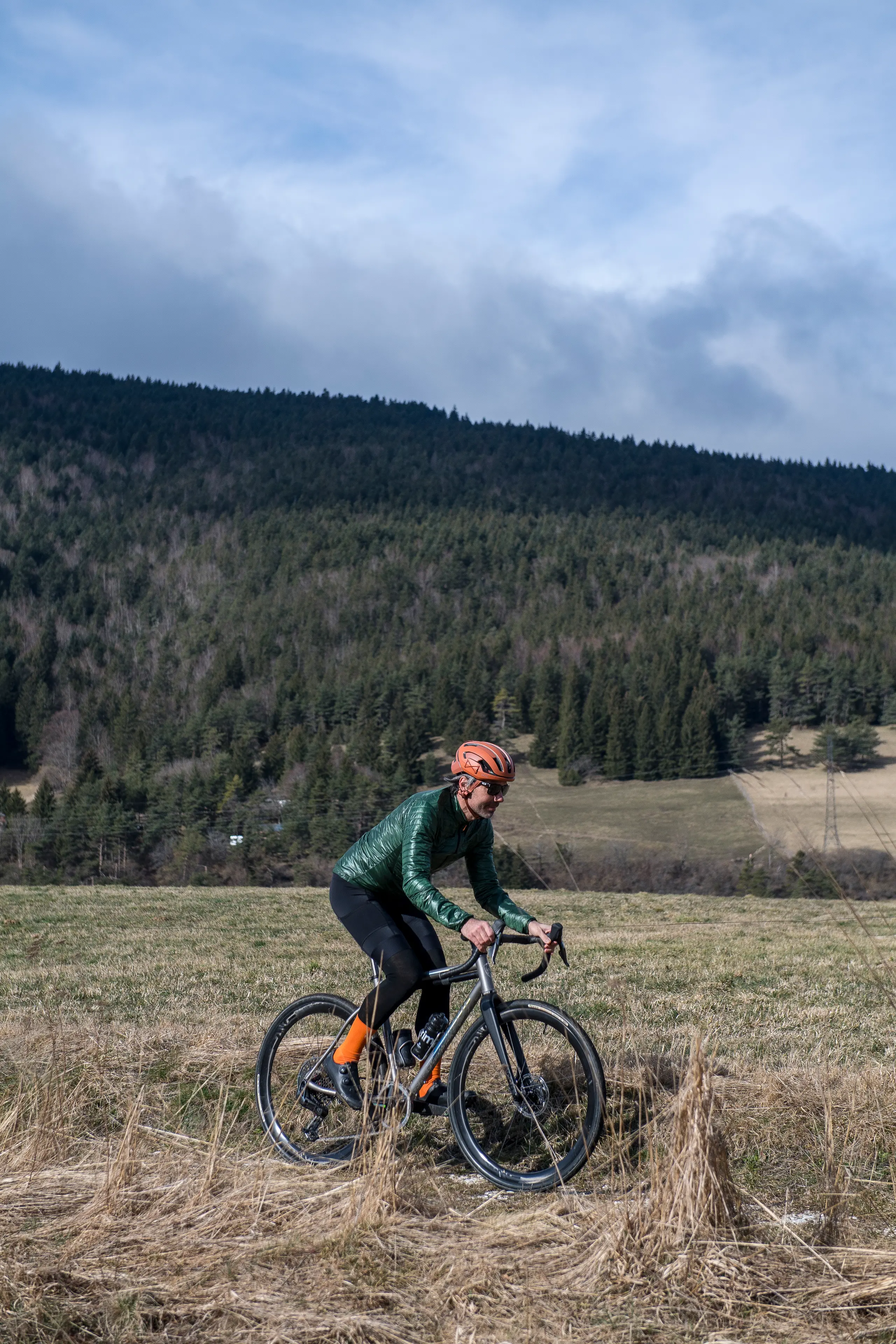
The most obvious trait of the CRD's character is its efficiency and its propensity to move forward, even on the lumpiest farm track. On one of my favourite short training climbs, a steep (9%) and rocky double track, I almost beat my PR, or at least was 40 seconds off it (on this 20-minute climb). I consider that almost my real PR, given it was February, my third ride of the year, and my PR here was set on 2.4-inch XC tires… while the CRD comes with 38mm tires.
Of course they were light, but on this particularly rough trail, I am pretty confident it was not an advantage.
This luxury bike is not at all a collector’s piece, but a tool aimed at performance
The more I transitioned between smooth and less smooth ground, the more it became apparent that the front of the bike is at once confidence-inspiring and less harsh than most other bikes, whatever the material. It's rather rare for an independent builder, but Moots provides its "own" fork (at least built to its spec by a third-party supplier, I guess), and while often overlooked, a fork is (almost) half of a frame. And this one is especially well tuned too. It is more forgiving than the Enve forks that come with most custom bikes (and most titanium bikes), for example, and makes the front end of the CRD as distinctive as the rear.
This translates into a very confident platform at high speed. And once again, despite tires that are relatively narrow by today's standards, this luxury bike is not at all a collector's piece, but a tool aimed at performance.
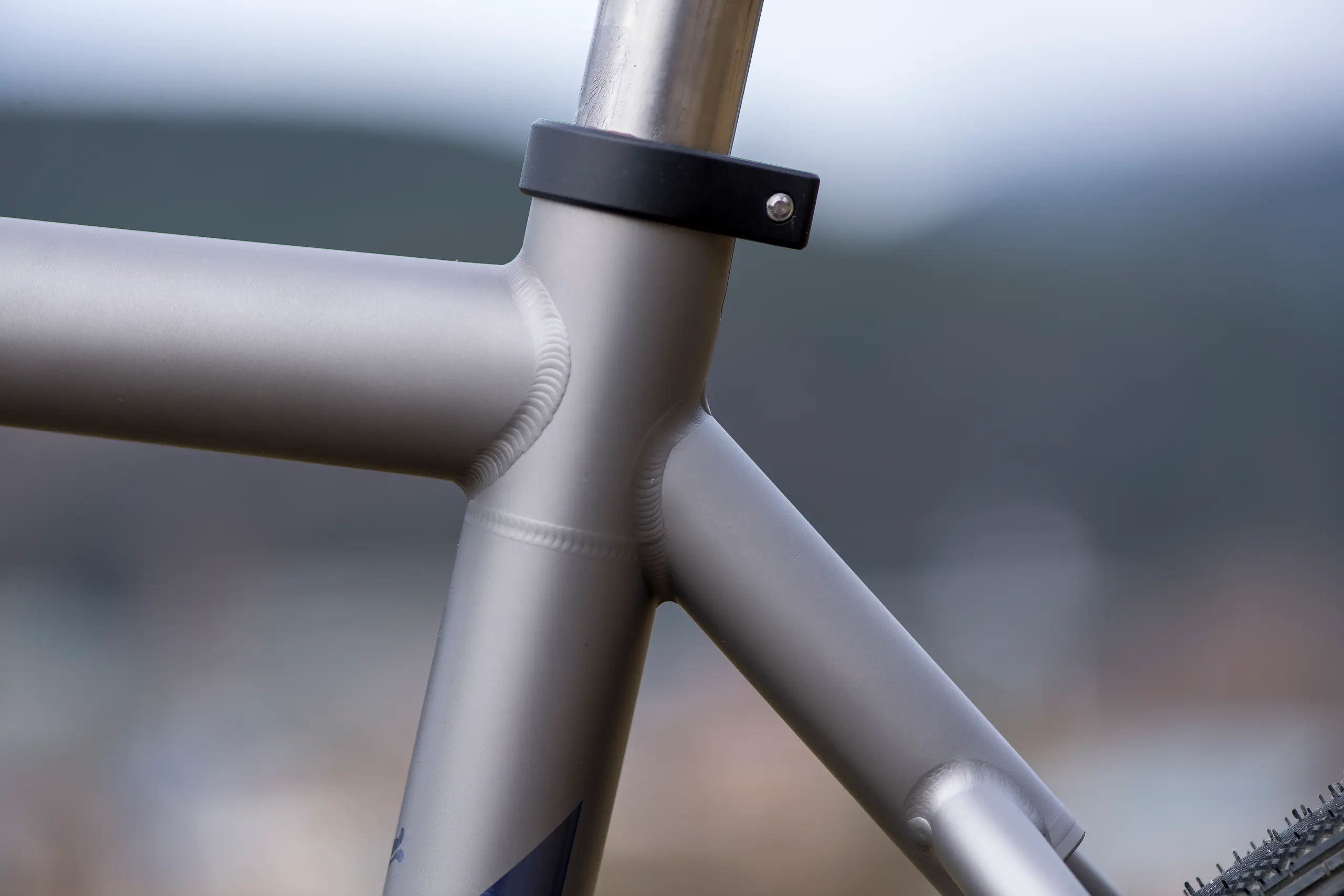
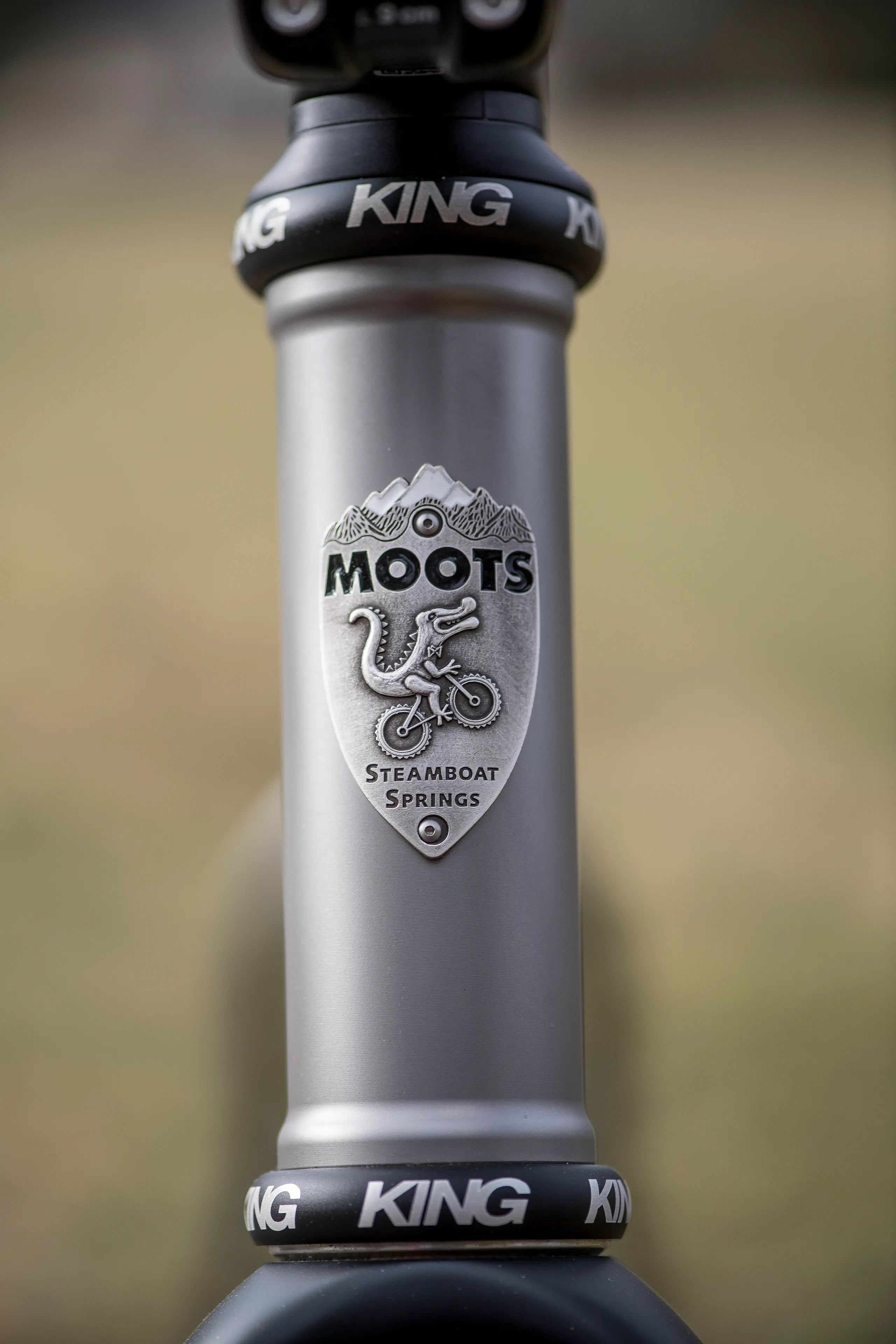
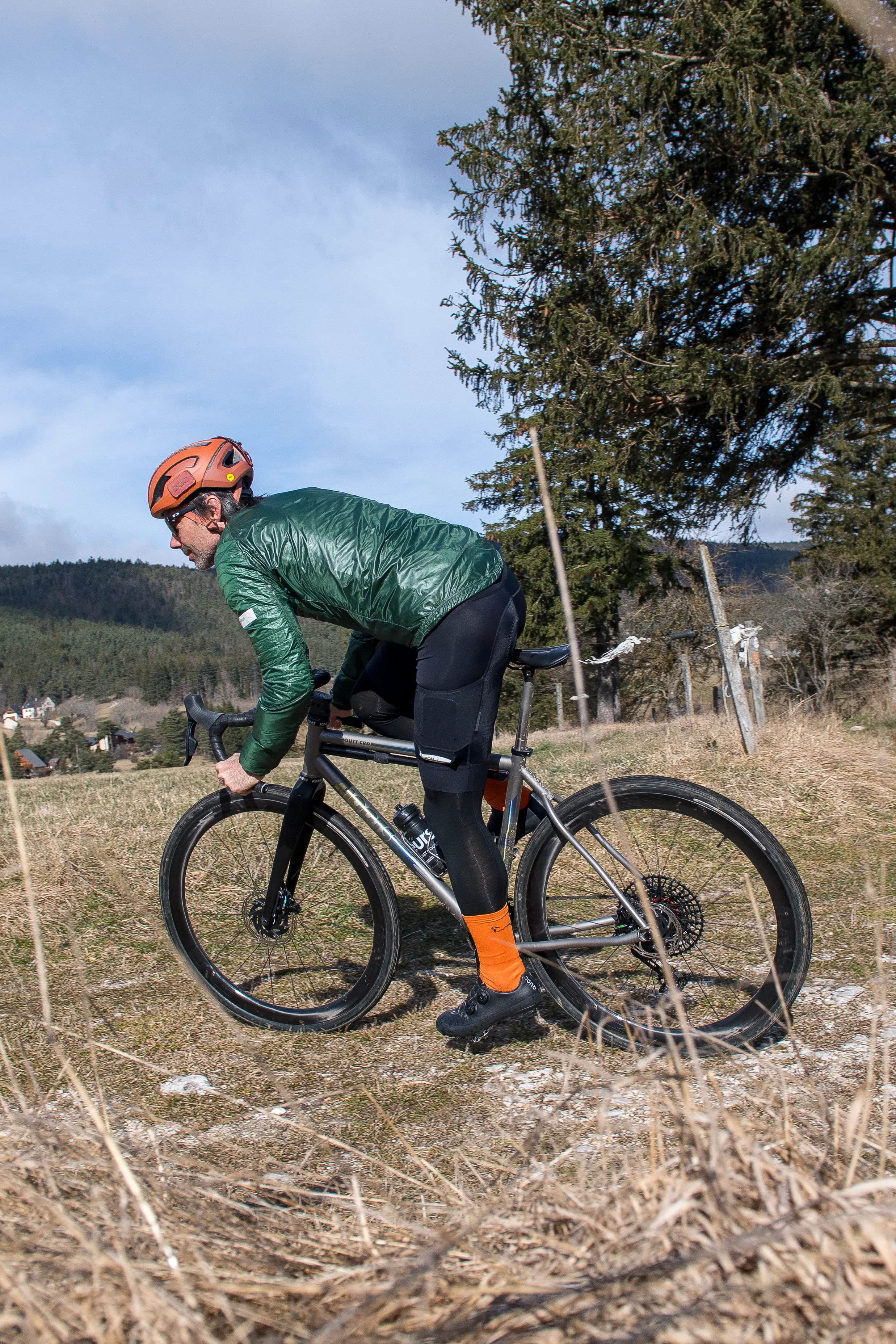
Regarding geometry, the frame is rather compact, and not at all long or low… more road-inspired than MTB. Even if the head angle is on the slack side (71.5° on a 54cm), it doesn't do much to change the CRD's roadie feel, which is aimed at providing a stable but reactive platform on high-speed race courses. By the way, that roadie feel, quick and reactive from the saddle, and its no-hands stability are the traits I personally love in gravel bikes. Back on flat and smooth gravel, the CRD flies, and really feels like a road bike on big tires.

In other words, the Routt CRD is more in the camp of carbon race bikes, with the distinction of feeling more balanced and composed without losing any speed. It's even a model of balance. It's almost as dynamic as the most dynamic carbon bike, almost as easy to pedal as the easiest steel bike, and almost as comfortable as the most comfortable titanium bike.
Despite not having equalled my PR, I could really see the Routt CRD replacing my hardtail for the type of riding I do. It would of course have to be mounted with 45mm tires. This maximum tire size could feel a bit on the low side today… but in my opinion at least, it's probably a good compromise so as not to kill the bike's dynamism and handling when the intended use is so well defined.
The King of Titanium Bikes
In the end, it's almost impossible to find a weakness. Each of its characteristics seems to have been wisely chosen to achieve a perfect balance between efficiency, speed, comfort and pleasure.
Of course, Moots doesn't provide any data about its tubing, but we have to admit there is some magic in it. Personally, having tested the Curve GXR Kevin and owned and ridden many other titanium bikes over the years, I would add that I'd never experienced this feeling before. It's probably what separates Moots from most other titanium makers, and in all honesty, on a blind test I would have bet on a steel frame given its springy nature, which isn't really typical of titanium.
And despite its refined racing pedigree, the CRD is an easy bike. Nothing radical, and even if it is aimed at racing, we would be pleased to ride it every day in almost every situation. Even the most die-hard racer could be surprised by the efficiency and weight of this bike.

To sum up, it has a level of performance similar to the very best carbon frames, with the added luxury of being far more reliable and care-free in terms of riding, crashing, cleaning, travelling and aging in general. On the other hand, it's around 50% more expensive than most carbon bikes intended for the same use. While it's not in my budget, I am nevertheless happy to report: Yes, it is worth its price (!), No, it's absolutely not like a mass-produced titanium frame, Yes, it really has something magical.
Part work of art, part heavy-duty tool, the Routt CRD is one of the very best gravel bikes I have ever had the chance to try, regardless of the material.
Update: The New Routt
Since Nicolas rode the CRD, Moots has reworked and consolidated its gravel line. The Routt, part of the range since 2013, is now designed around wider gravel tires. It's now built for 50mm tires with clearance up to 57mm. It also gets a redesigned carbon fork that routes the brake hoses through the head tube, an integrated cockpit, UDH dropouts and slightly longer 437mm chainstays.
The double-butted RSL tubing behind Nicolas's test bike is now a premium upgrade, the Routt RSL, due in early 2027. The standard Routt frameset is $5,499 USD, with complete builds from $9,999 USD.
Tire clearance was the one compromise Nicolas flagged. Moots appears to have heard the same thing.
Pros
- Rare balance of efficiency, speed, comfort and pleasure
- Springy ride that feels more like steel than typical titanium
- Forgiving Moots fork, confident at high speed
- Rolls and climbs remarkably well on rough ground, even on 38mm tires
- Care-free titanium, made in Colorado with a lifetime warranty
Cons
- Around 50% more expensive than comparable carbon race bikes
- 45mm max tire clearance (the new Routt goes to 57mm)
- Electronic drivetrains only