

Amber Nap’s first attempt at a bikepacking bike was a purple and yellow 1991 Bridgestone. Her second was a Kona Sutra LTD. Find out why the steel, drop-bar Sutra won her over, and where a 31 lb bike still makes itself known.
It started with a purple and yellow 1991 Bridgestone MB6 with updated components and flat bars that had presented itself to me. It was a clunker, if you will, and I absolutely loved the idea of it.
Emphasis on the idea.
After my first 40 km ride, I soon realized that as sick as the bike was, the alternative set-up was just not going to work for me. I needed to be more comfortable if I was ever going to spend hours, let alone days, in the saddle.
In my opinion, having a bike like that Bridgestone is more suited to someone who knows the ins and outs of a bike, and is able to modify it in ways that suit whatever style of biking they choose. I wanted a bike that had long-distance bikepacking comfort baked in.
So, what even is a bikepacking bike?
I haven't yet figured out the answer to that question, but so far I’ve learned that there really is no right answer. Everyone has their own preferences, their own idea of an adventure, and their own version of the perfect bike. I knew mine wasn't a Bridgestone MB6. I just had to figure out what it was.
Even getting to this point had been a journey. I have always bounced from hobby to hobby and sport to sport, before I eventually stumbled upon biking. I wasn’t entirely sure what that would entail, but I was determined to find my niche. I’d mountain biked in the past and enjoyed it, but I knew that it wasn’t quite my thing. I loved the time in the forest, but wasn’t a big fan of the short-lived ups and downs. Don’t get me wrong, I will always love a downhill thrill, just not every day.
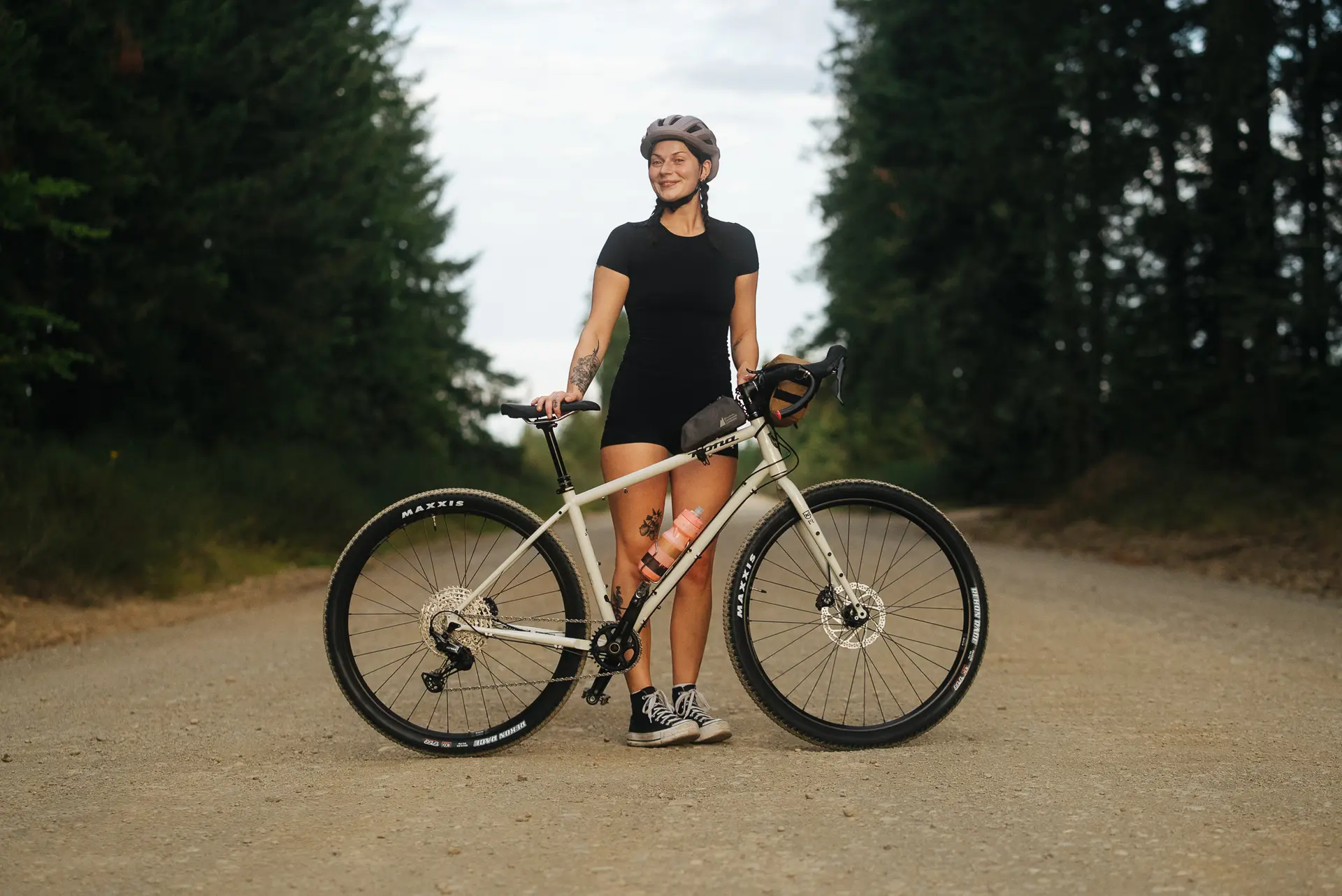
I learned that I find the most enjoyment in biking when I’m exploring, gallivanting, and cruising from place to place in a leisurely fashion. I just hop on my bike and see where it takes me for the day.
When I first heard about bikepacking, something clicked. It was a lightbulb moment. A style of biking that combines all of those things, with the addition of some long hauls, stubborn climbs and problem solving? Who doesn’t love a little challenge?
Finding “The One”
Beyond ‘not the Bridgestone,’ I didn’t know what I liked. I just hadn’t realized how many different aspects there are to choosing a bike, so I quickly got overwhelmed with choice.
I figured that the best way to find a comfortable bike without too much trial and error was to visit a bike shop. Crazy idea, right?
One of my biggest downfalls with trying new things is impatience. I just wanted to be out riding as soon as possible, with minimal guesswork, which I realize is a lot to ask when you don’t exactly know what you want.
Friends recommended Kona and Specialized as good options for getting into gravel riding, so those were the two I decided to test out. I brought my friend, Tom Powell, along for the ride to Comox Bike Co. Honestly, I think he was more excited than I was. He is an avid bikepacker, so I imagine the thought of sharing all of this knowledge with someone who has no previous experience or bias is pretty rare. Since he was so excited, I put all my trust in his choices.
The Kona Sutra LTD was instantly his first choice for me. I knew the steel frame appealed to me, but I was intrigued to try out the carbon Specialized Diverge too, just to feel out the difference. After trying both, the Kona had completely won me over. I remember saying “I could literally ride this bike forever.”
That statement still stands.
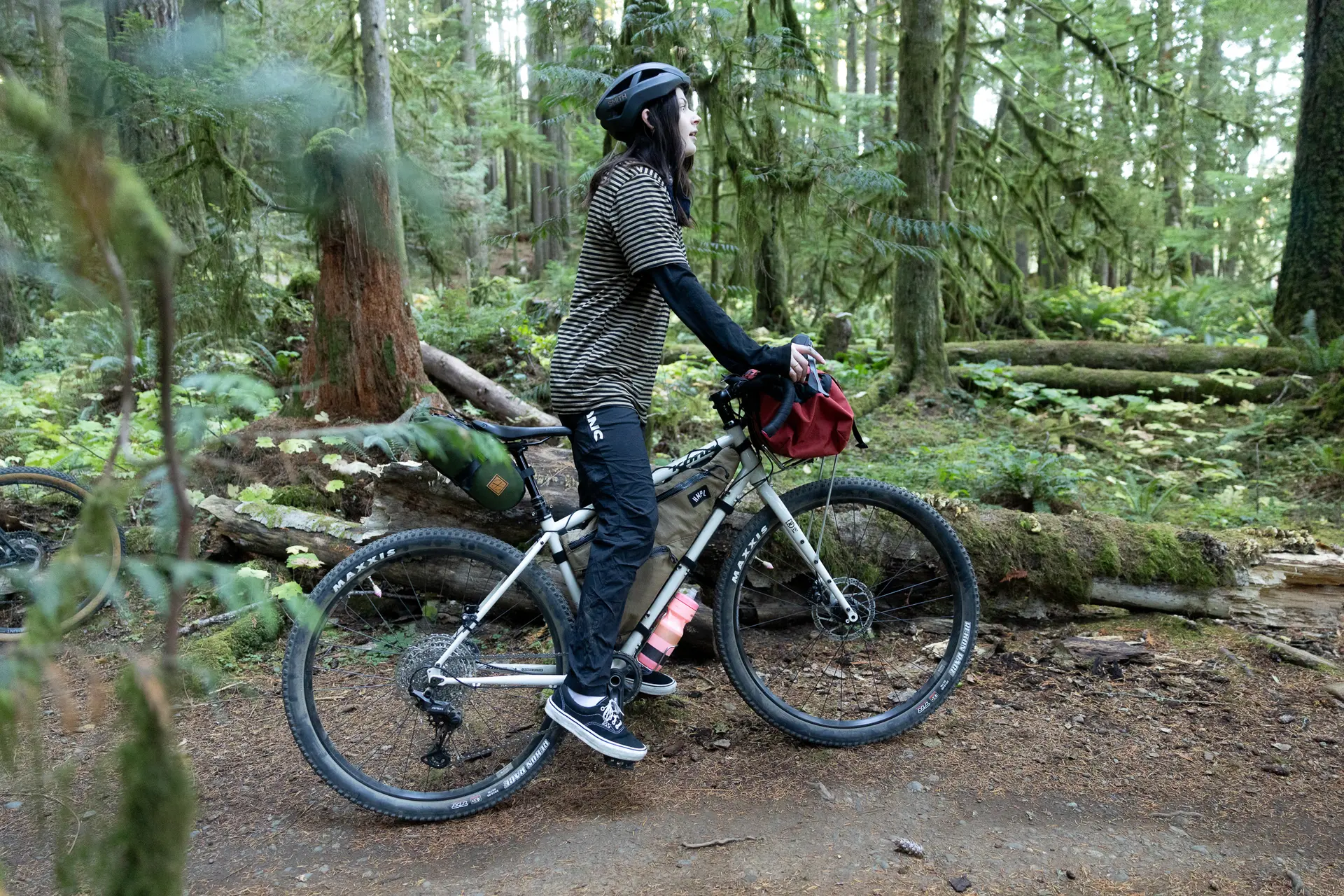
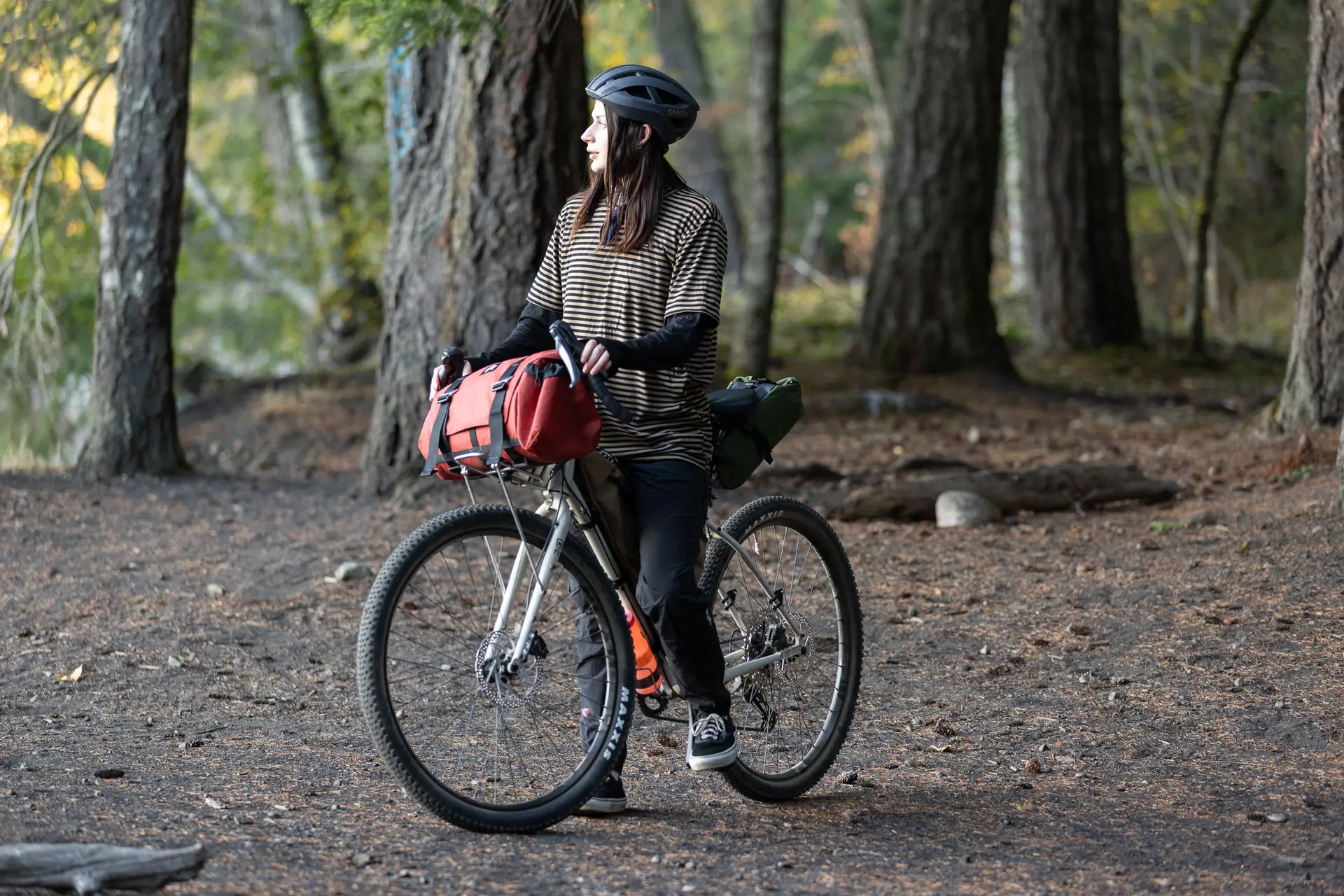
I thought about that bike every day for about a week until I fully committed. If I was going to do this whole bikepacking thing, I knew it had to be on that bike. I never thought that it was possible for a bike to be that comfortable. But here we are.
I immediately had a lot of appreciation for the steel frame. During my test ride the steel frame just felt so much more stable. I felt like I had more control than on the carbon frame, and for me personally that just made the experience so much less daunting, especially knowing that I would be riding fully loaded at some point.
It was an obvious choice for me as far as style goes, too. I just preferred the rustic look of it in comparison to a carbon frame. In time, I think I will also appreciate the added durability. It’s comforting to know it can also be repaired almost anywhere, by anyone with a welder.
“I could literally ride this bike forever.”
Cumberland to Quadra
My first real ride was when I started to appreciate the bike. For starters, I learned that I absolutely love drop bars. I hadn’t fully appreciated how helpful they would be for longer rides. There are so many different hand positions, something the Bridgestone’s flat bars never gave me. I found that to be really important in enduring some of the discomfort of being in the saddle for long periods of time.
My first official bikepacking trip was my first time riding fully loaded. I covered just short of 90 km in a day, from Cumberland to Quadra Island.
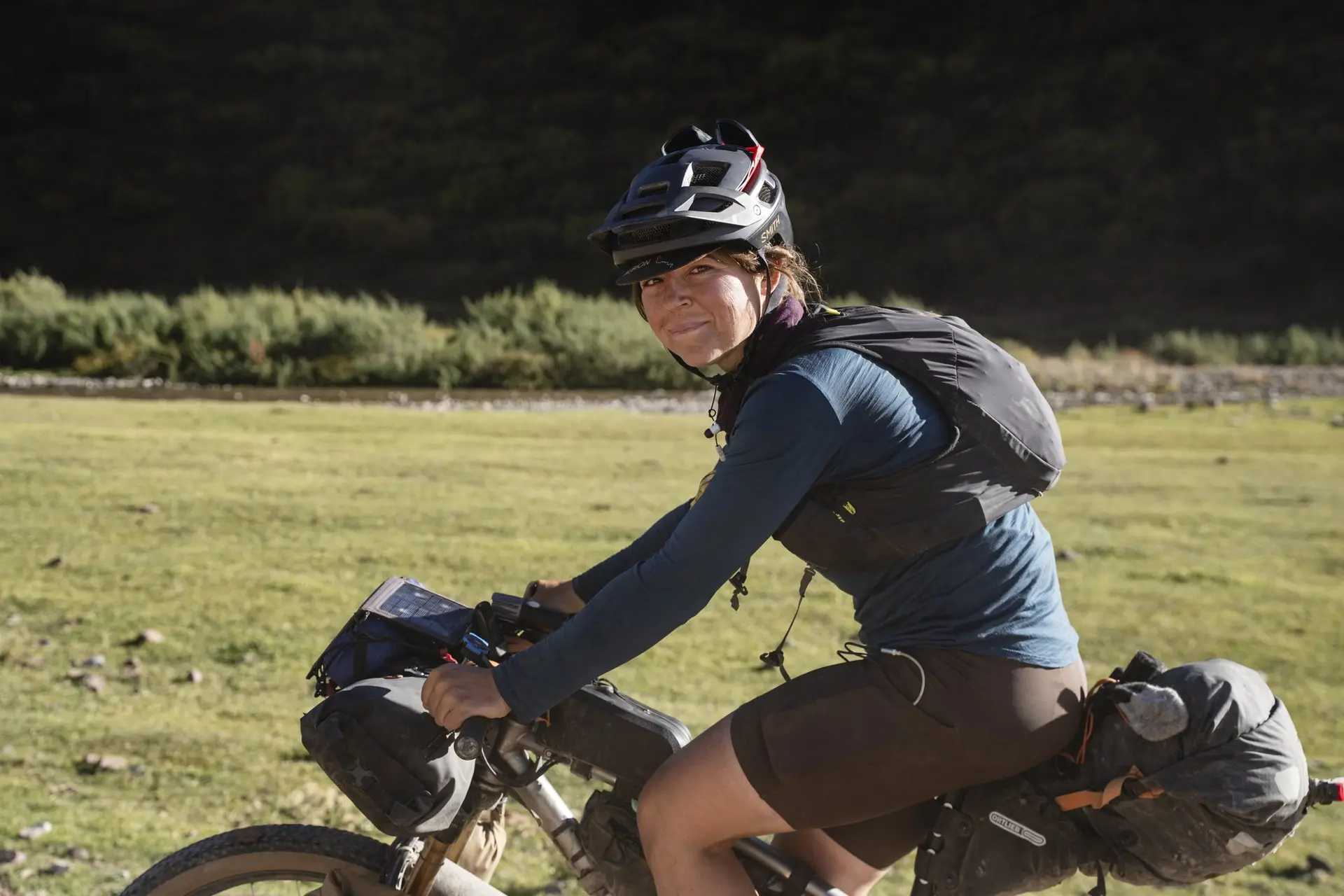
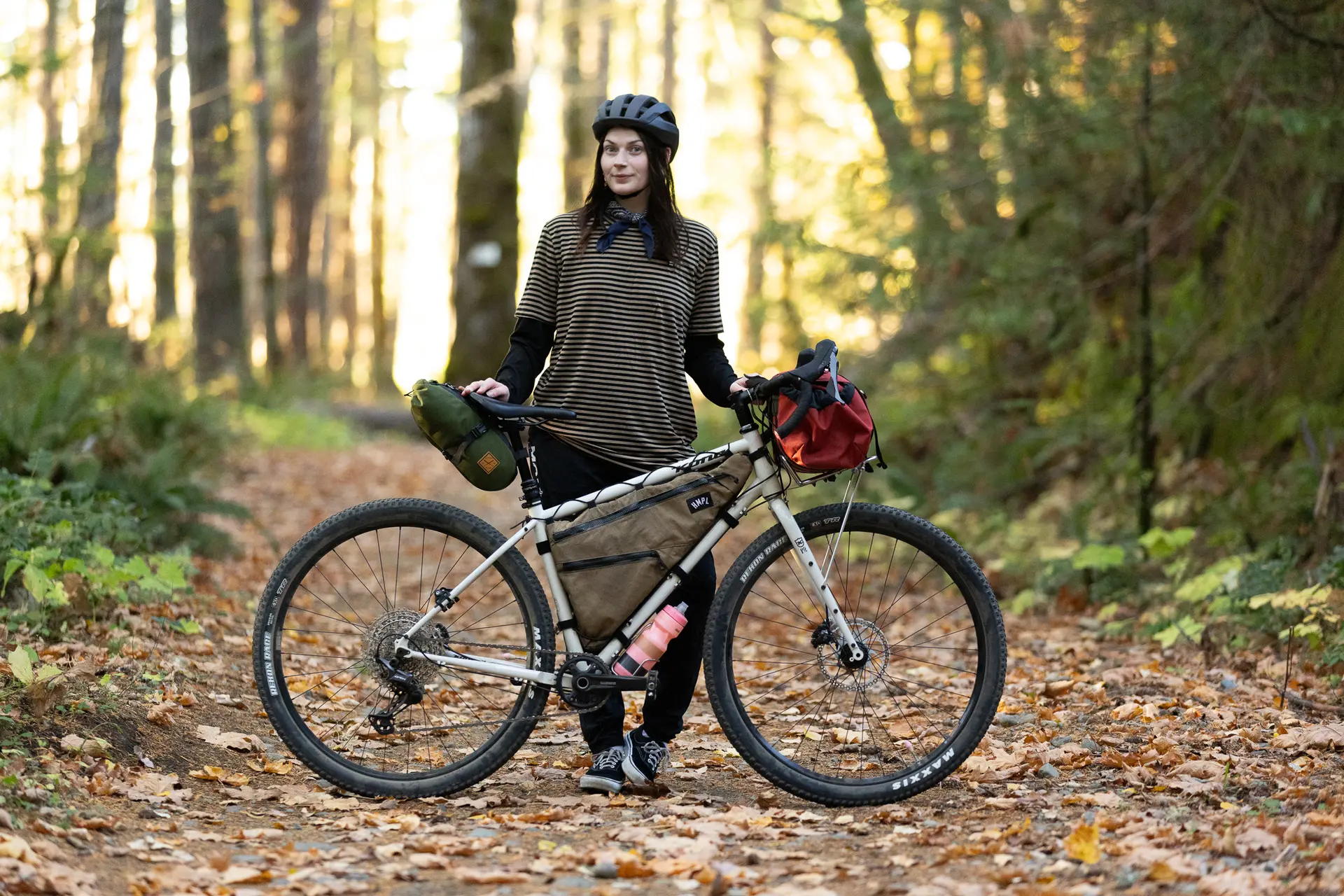
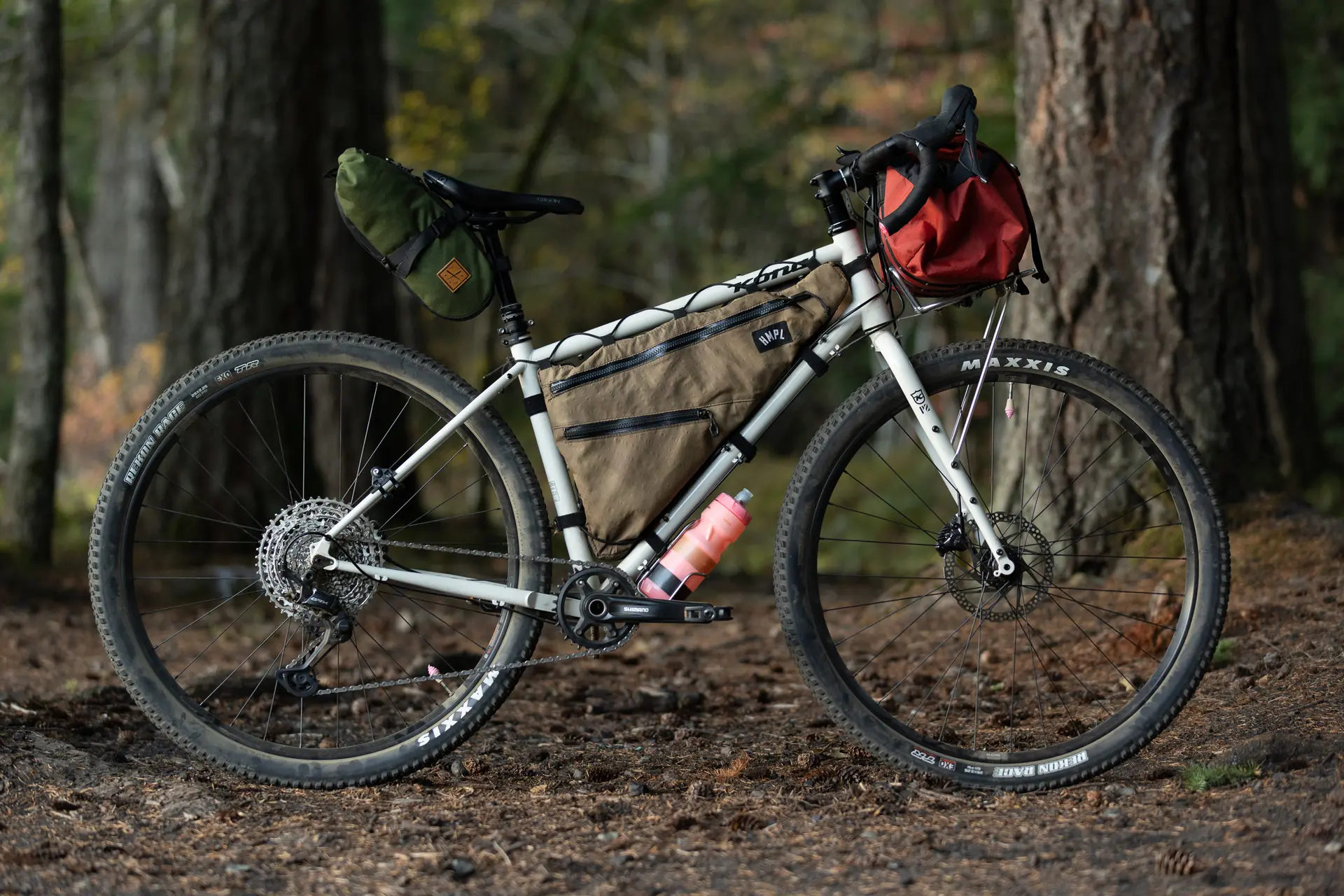
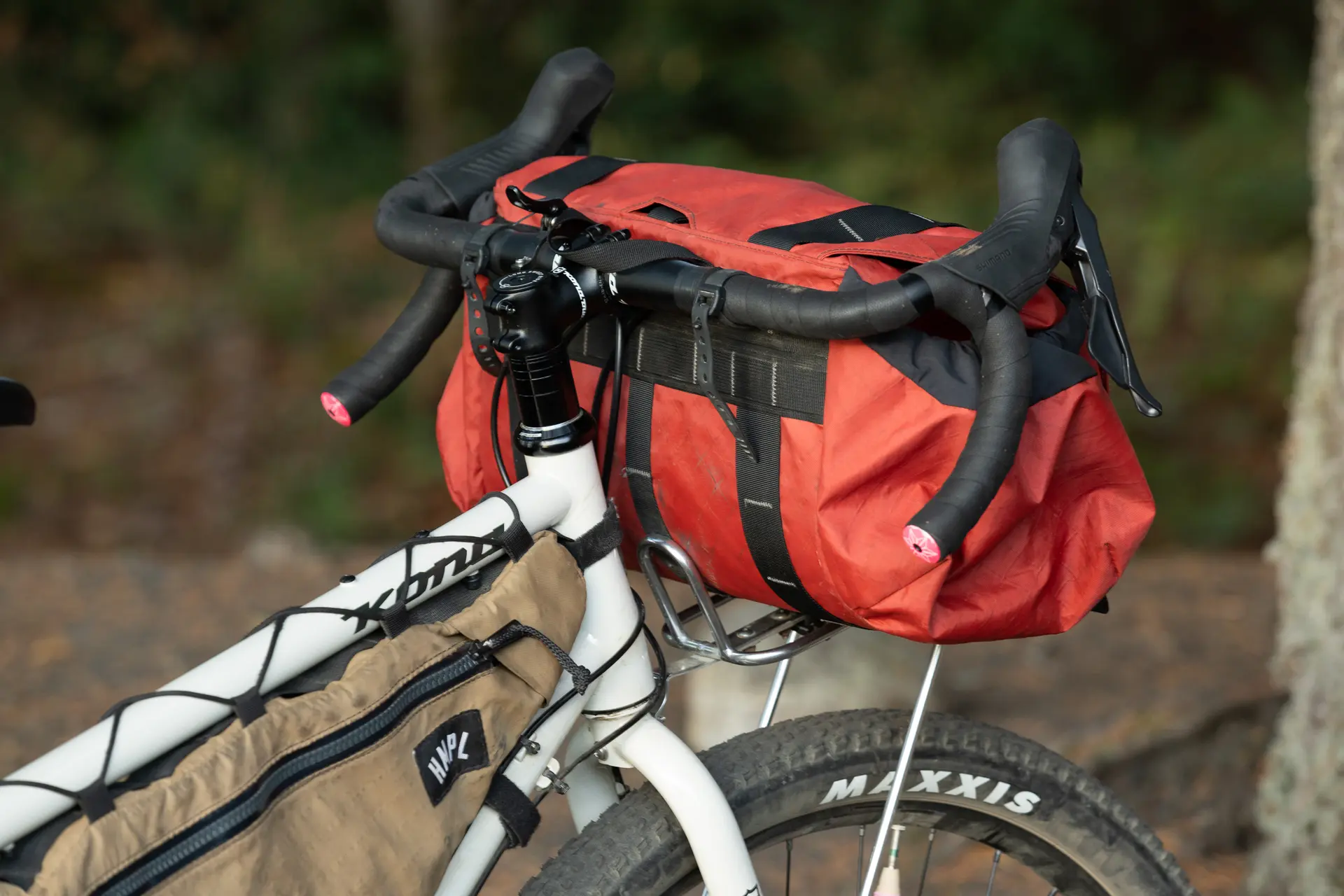
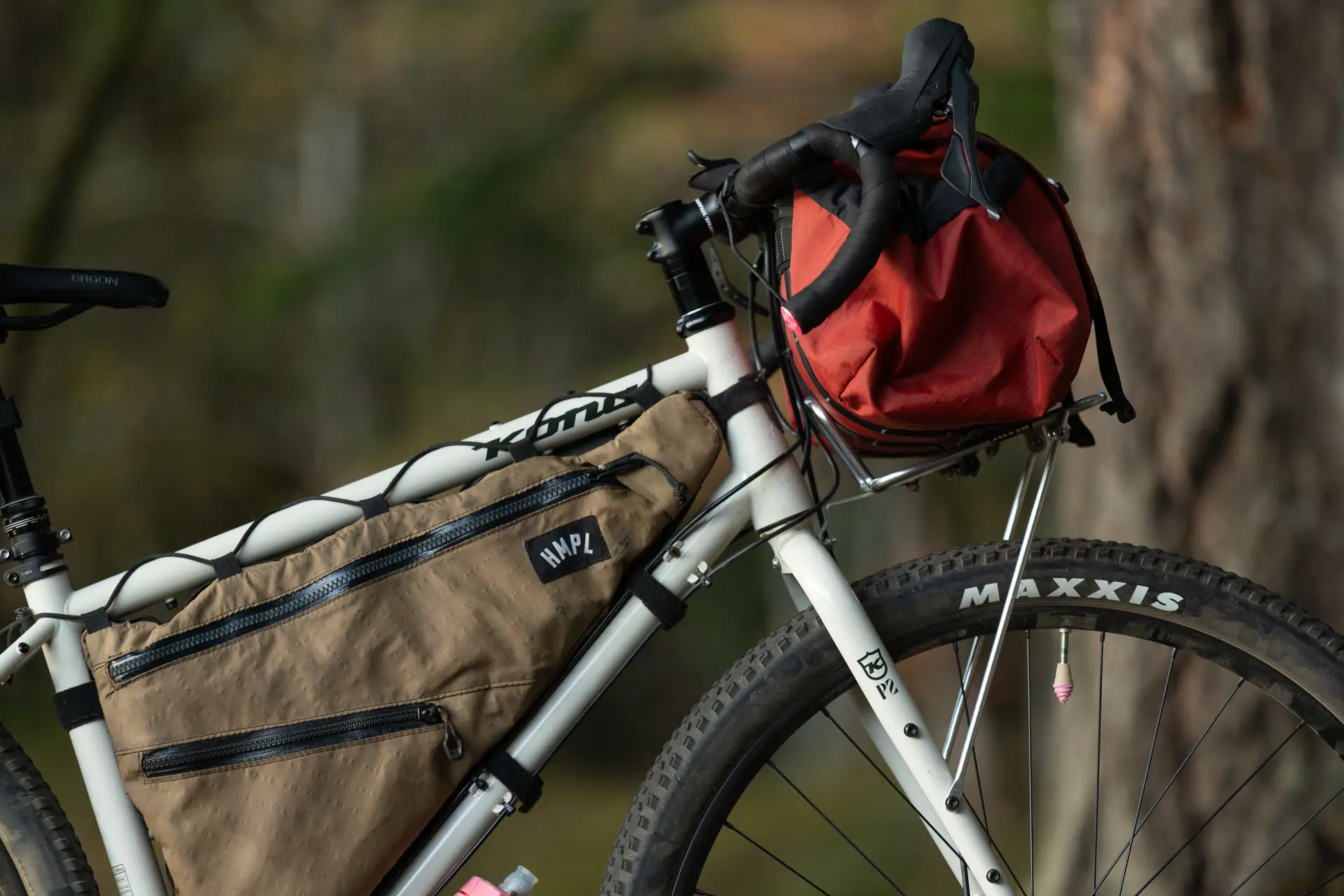
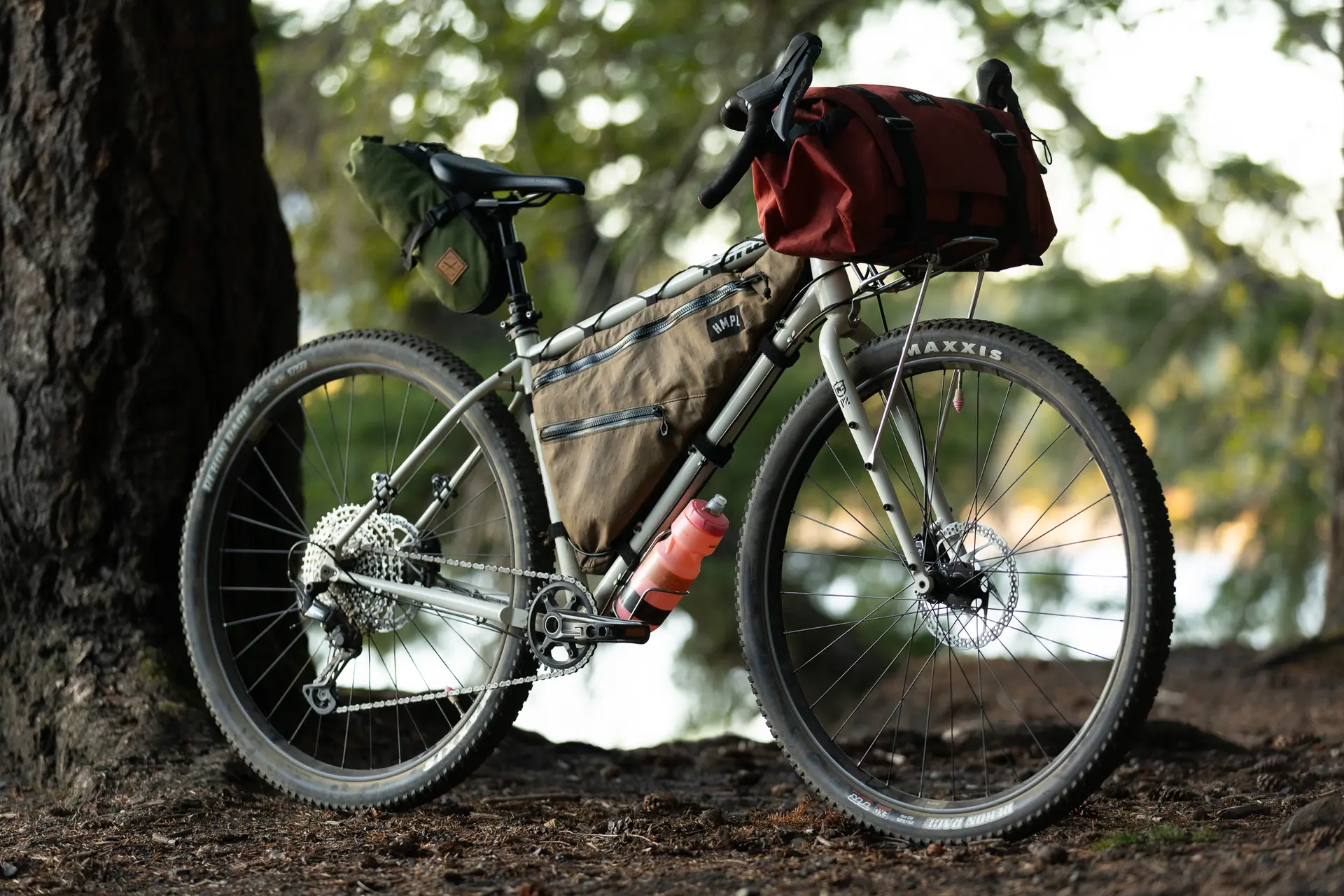
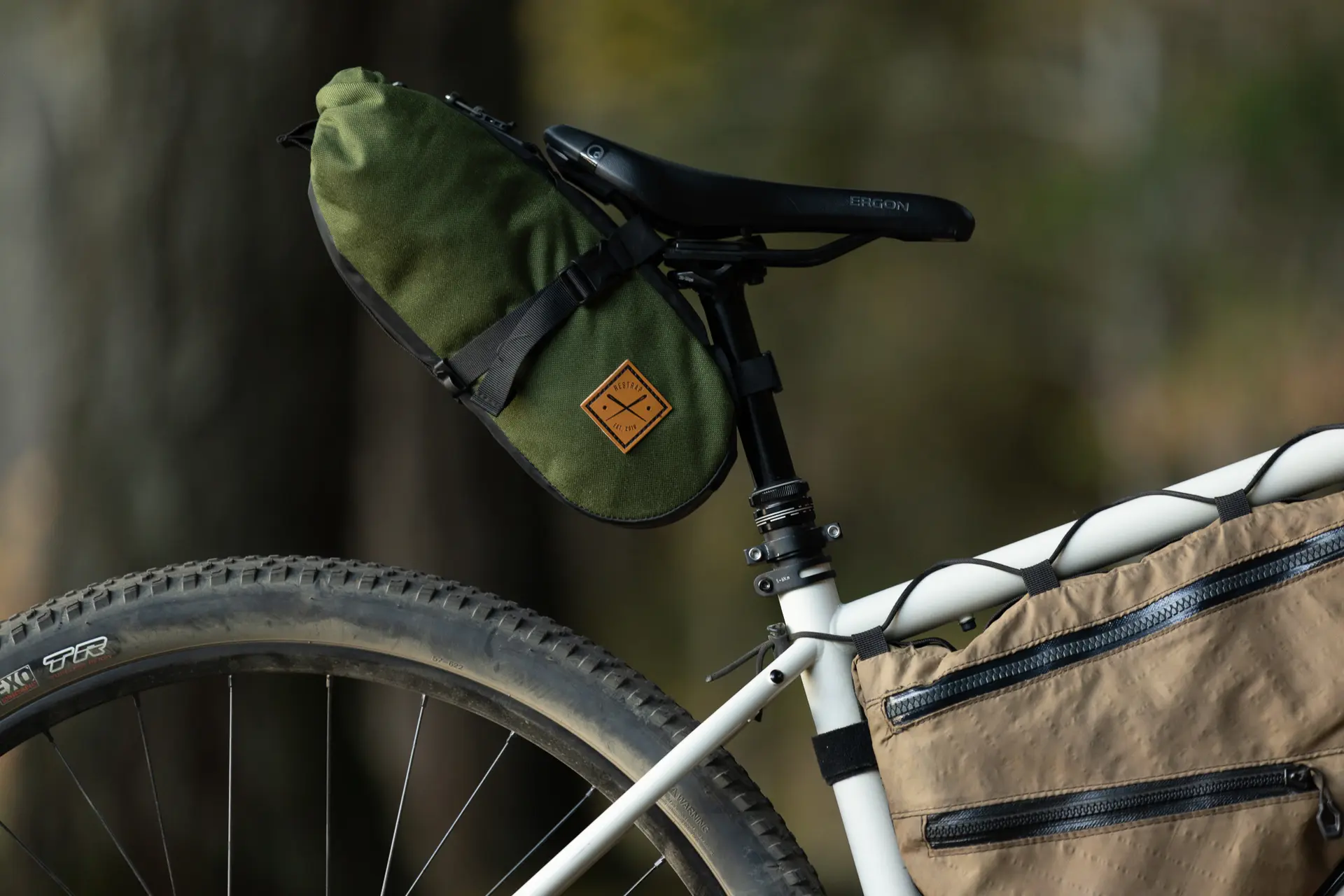
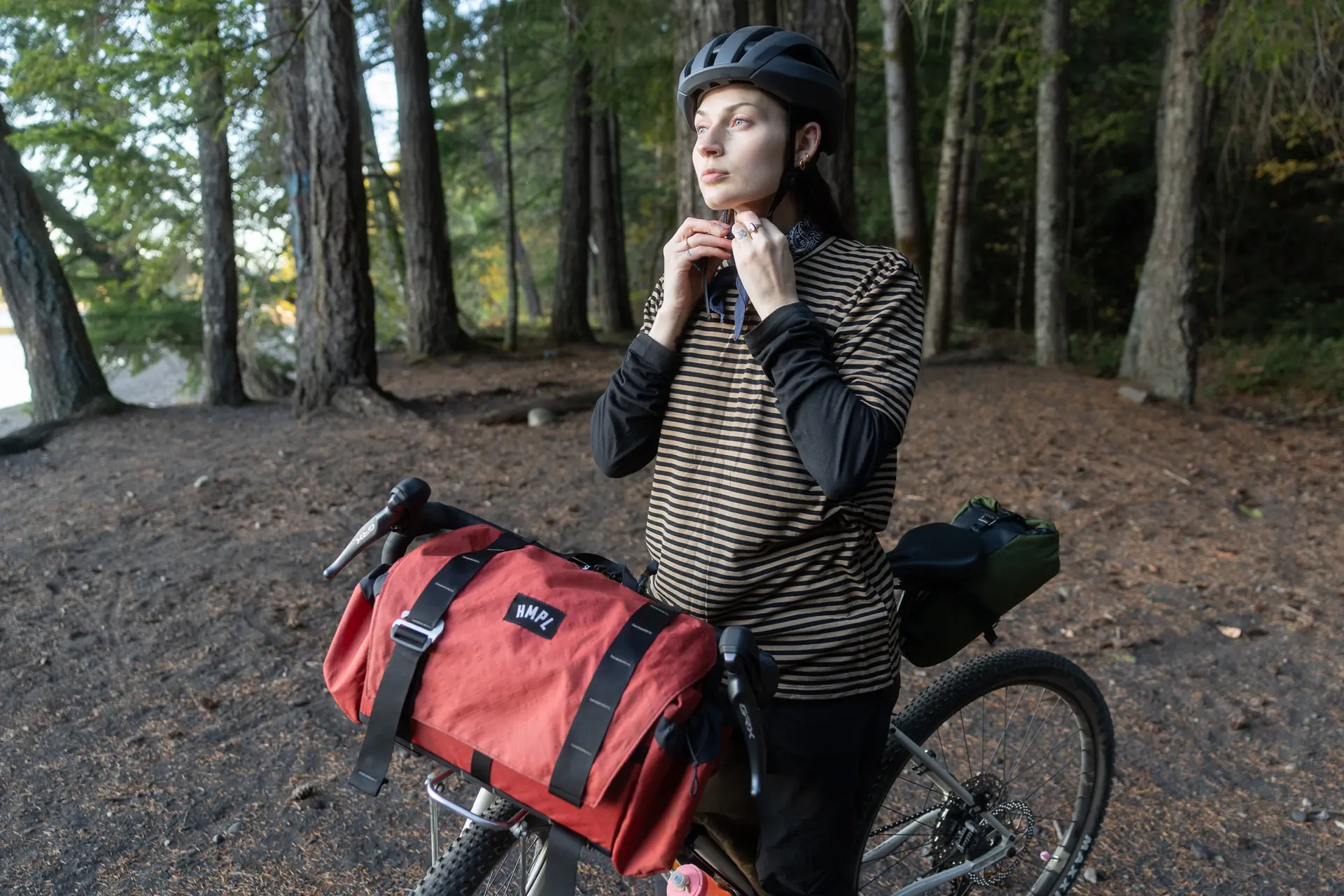
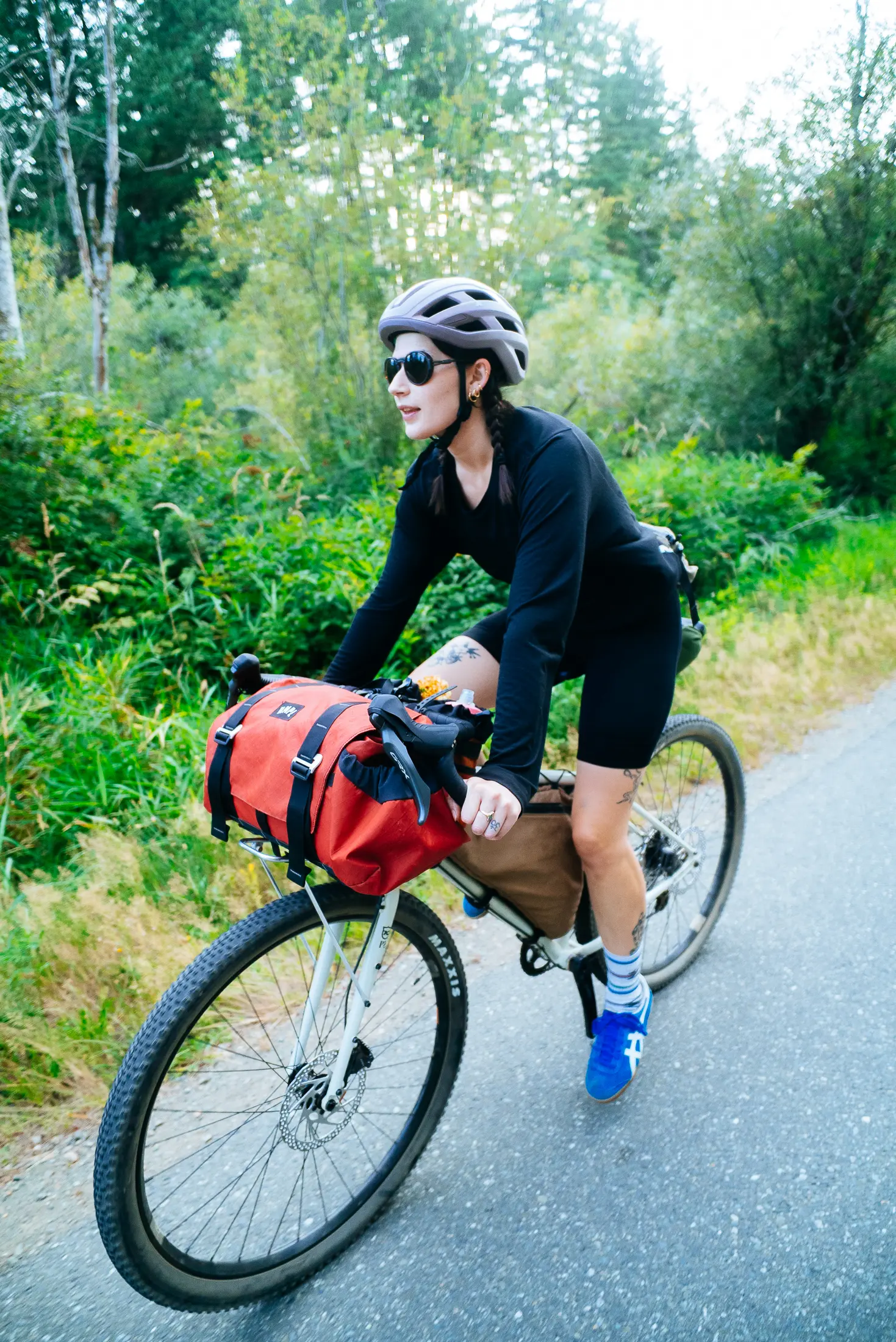
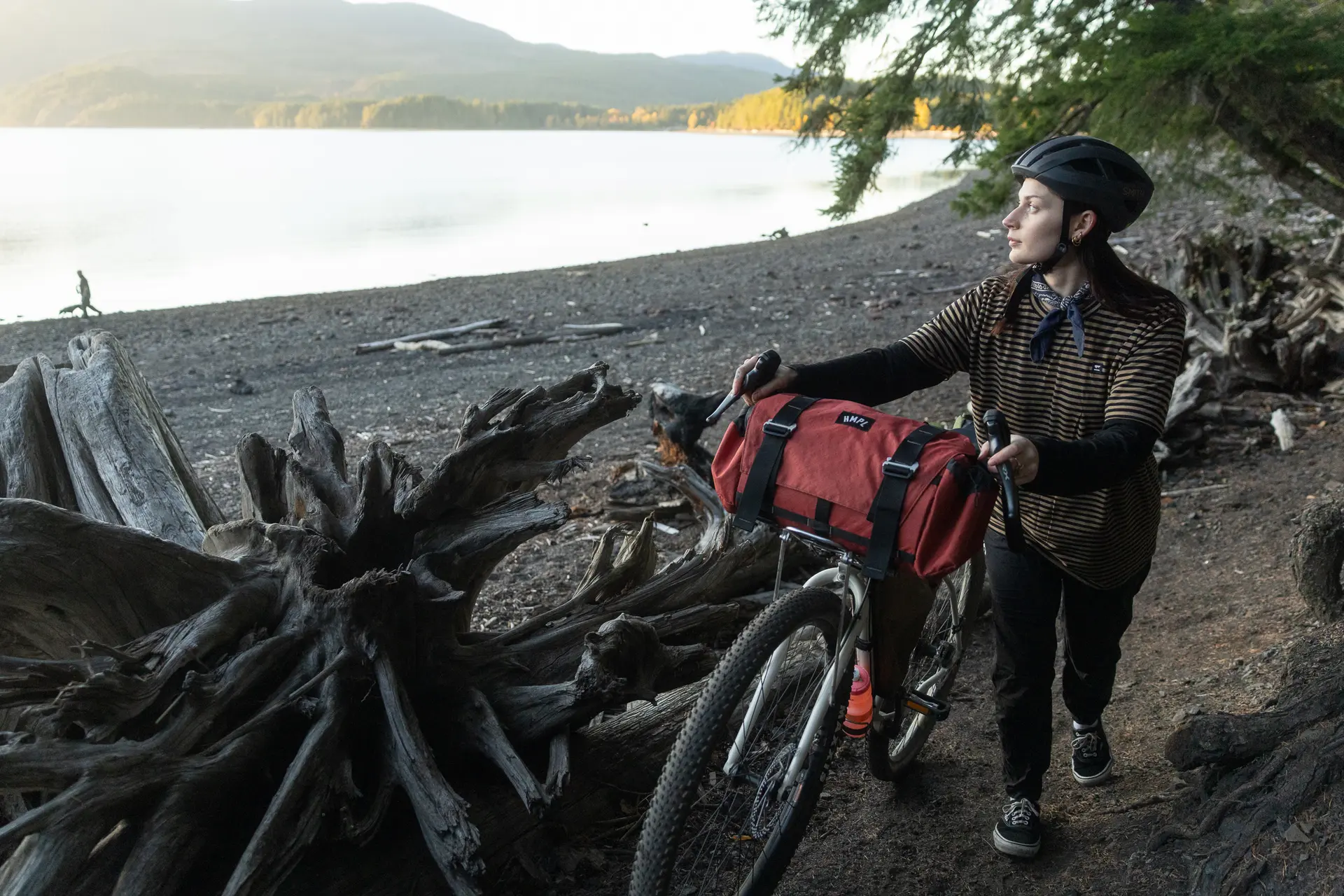
Tom and I packed up all the essentials the morning of, and headed out late afternoon, hoping to get there before dark. My bikepacking set-up consisted of a full frame bag, a bar bag, a seat bag and two bottle bags on my handlebars for things I wanted easy access to while riding. Everything fit well and I had lots of room to spare.
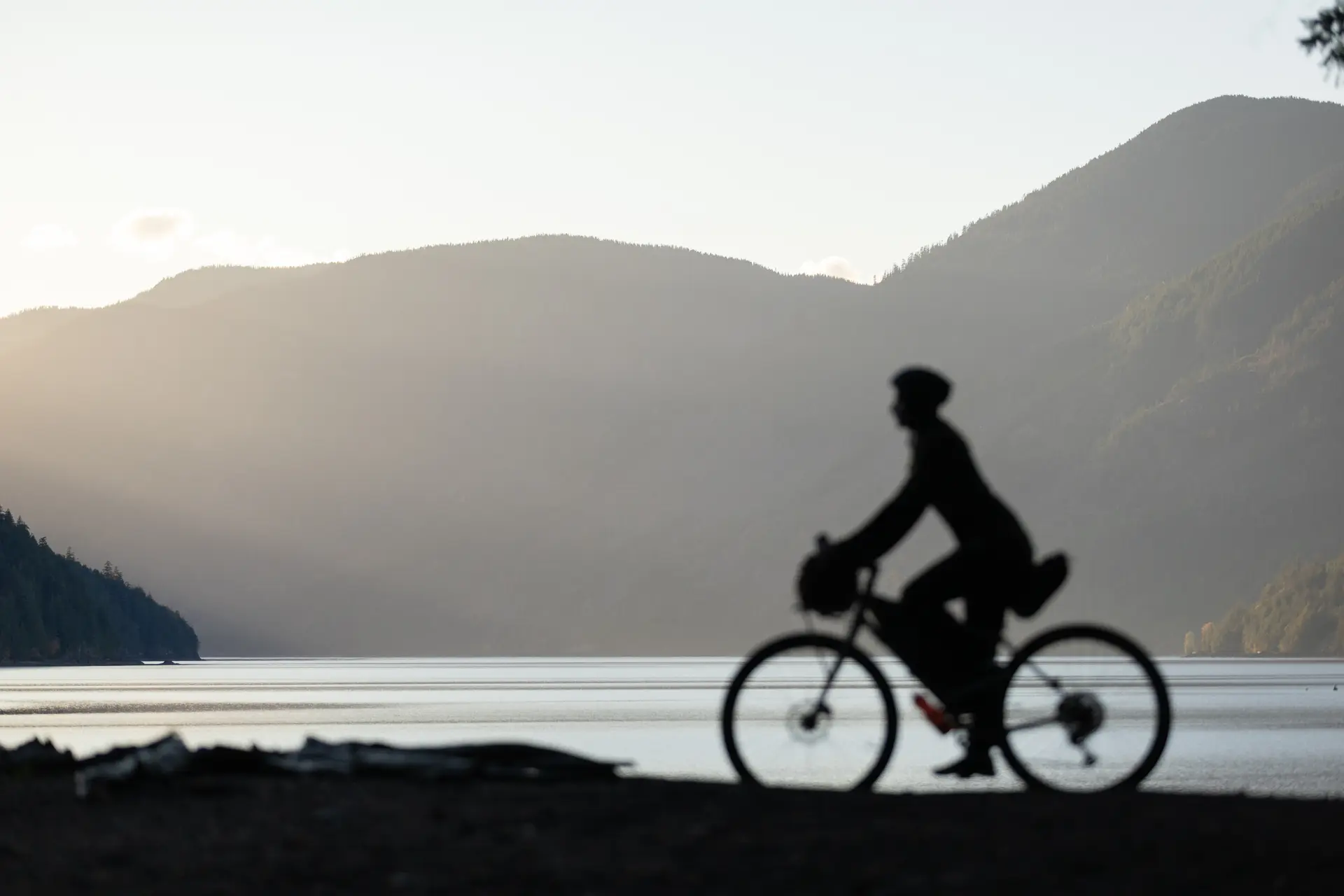
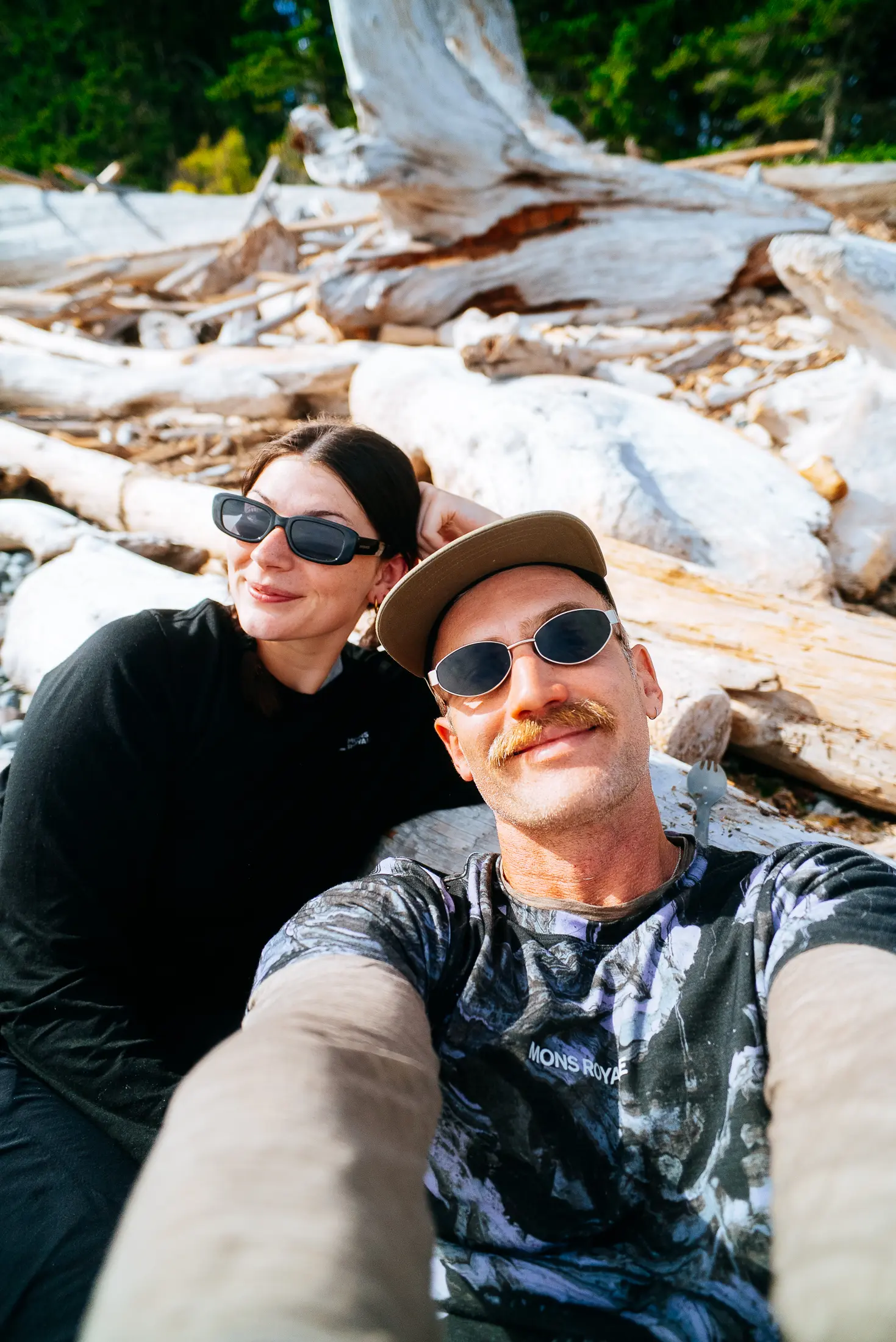
During our trip we rode a combination of gravel and road through farmland, residential areas, highway, and logging roads. We stayed a night in Quadra at the We Wai Kai Campsite, roughly 10 km from the ferry terminal. The sun just started to set as we arrived, but we managed to set up our camp just before it was fully dark. After fully unloading, we rode down to the Heriot Bay Inn for dinner and a much-needed pint. The following morning consisted of coffee, good food, and a little thrifting before heading back home.
[Editor’s note: Never done an overnighter? Mattie’s guide to a midweek bikepacking overnighter breaks down how to plan your first one.]
I’ll give the bike some credit, too. I don’t think I would’ve felt as confident and stable fully loaded if I were on another bike. The trade-off for that stability is weight. My Sutra LTD comes in just over 14 kg before any bags go on. So depending on whether you plan to do a lot of climbing or hike-a-bike, that might be a deterrent.
Everything gets put into perspective when you’re in the saddle for five-plus hours. You start to notice all the little things you normally wouldn’t on shorter rides. One of my biggest struggles, then and now, has been seat position. It’s pretty crazy how much a tiny adjustment forward or backward, or a slight change in angle, can make. And, of course, your bum needs a little bit of conditioning on its own, hence my continuous struggle.
I’m not a handy person by any means, but I found it super easy to adjust everything to my liking. A quick Google search, help from Tom, and a little bit of tinkering. Slowly but surely, I got my bike feeling just right.
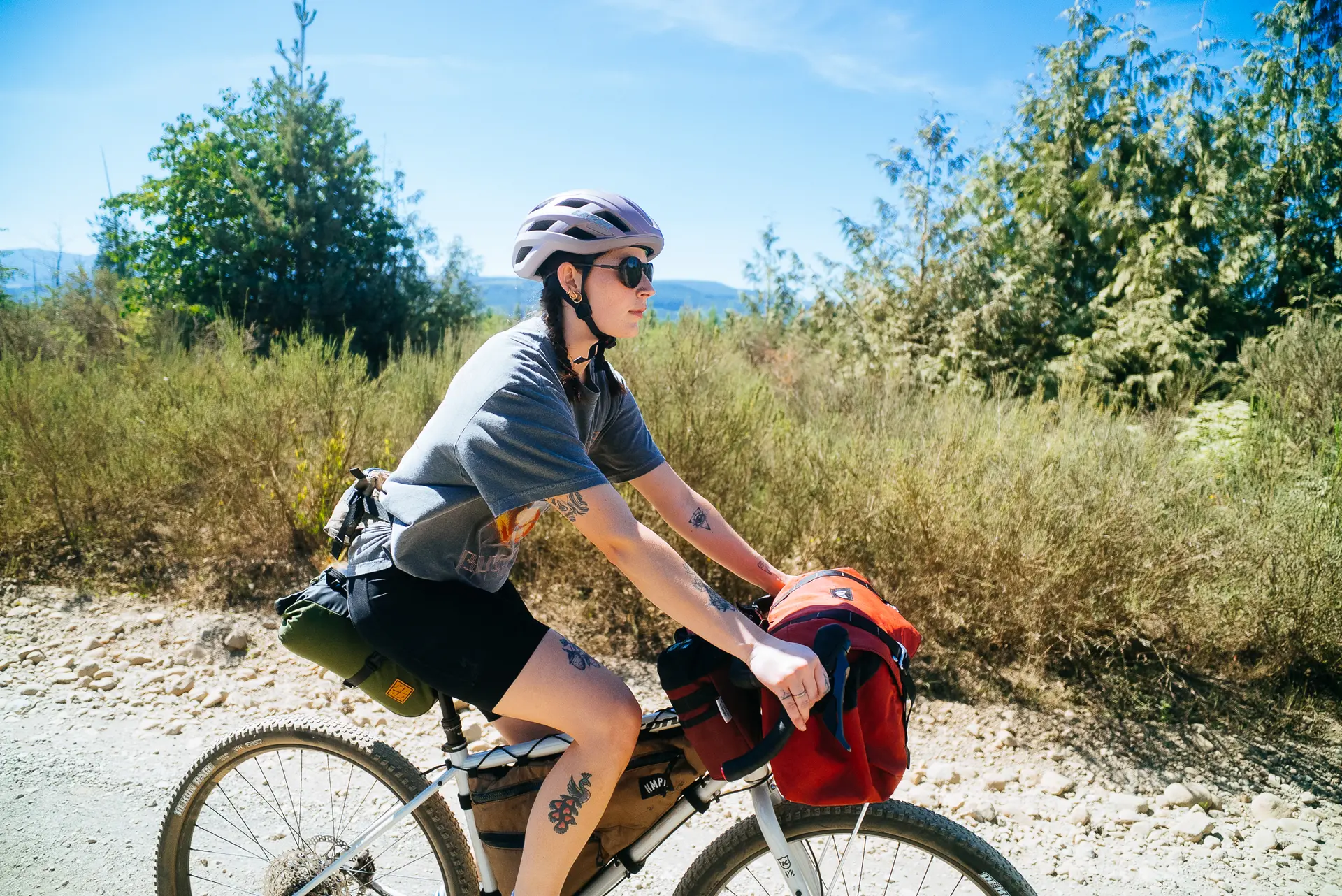
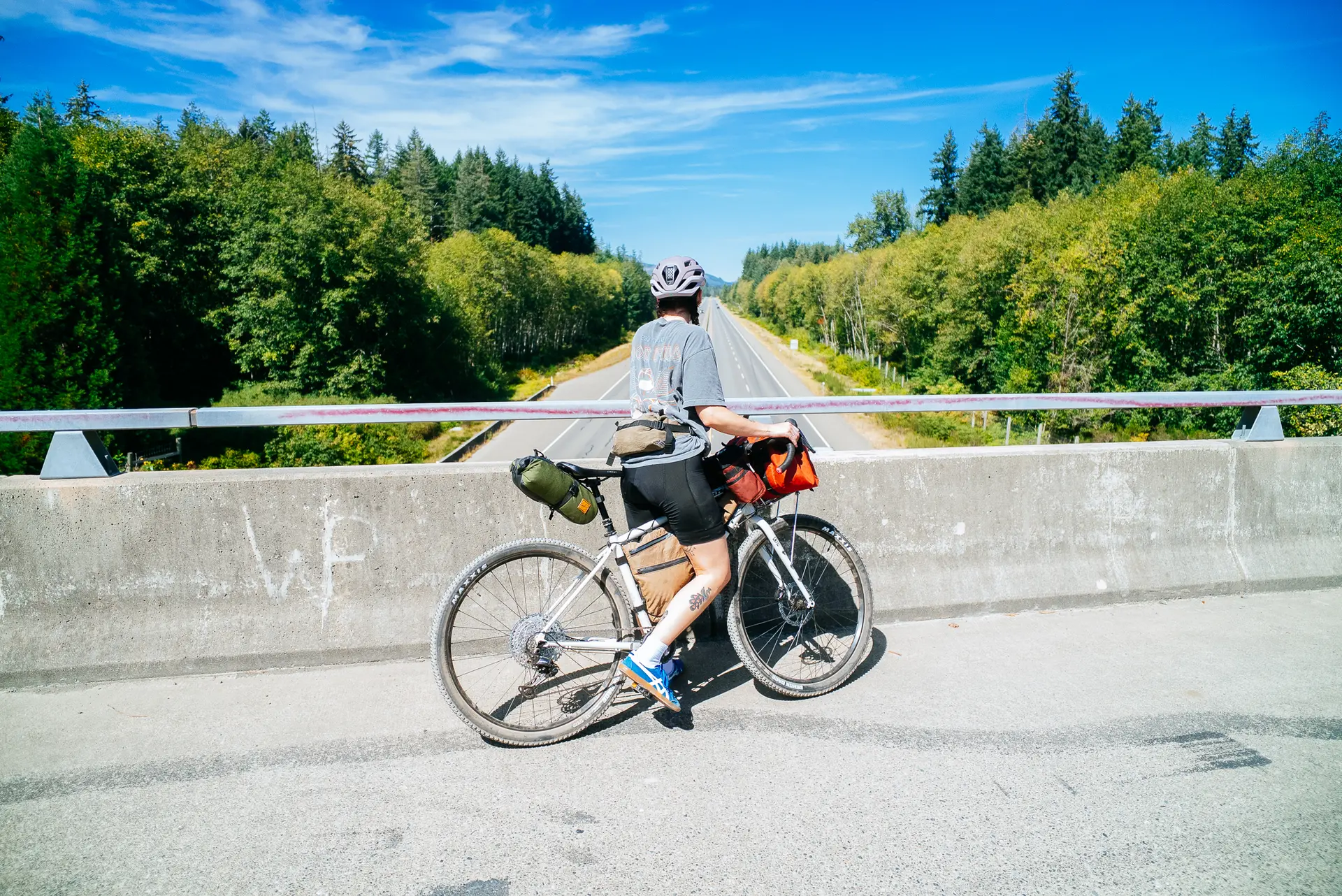
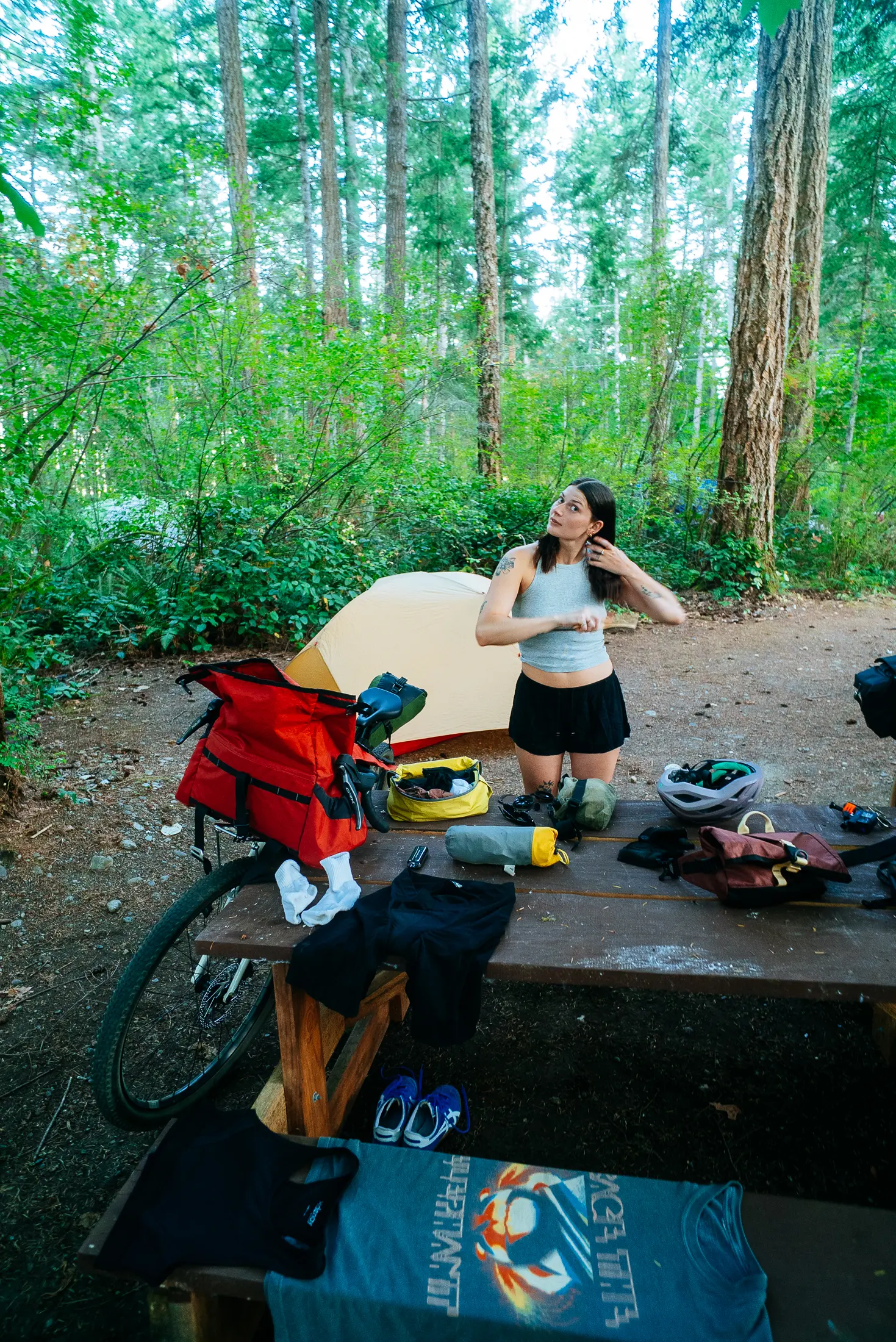
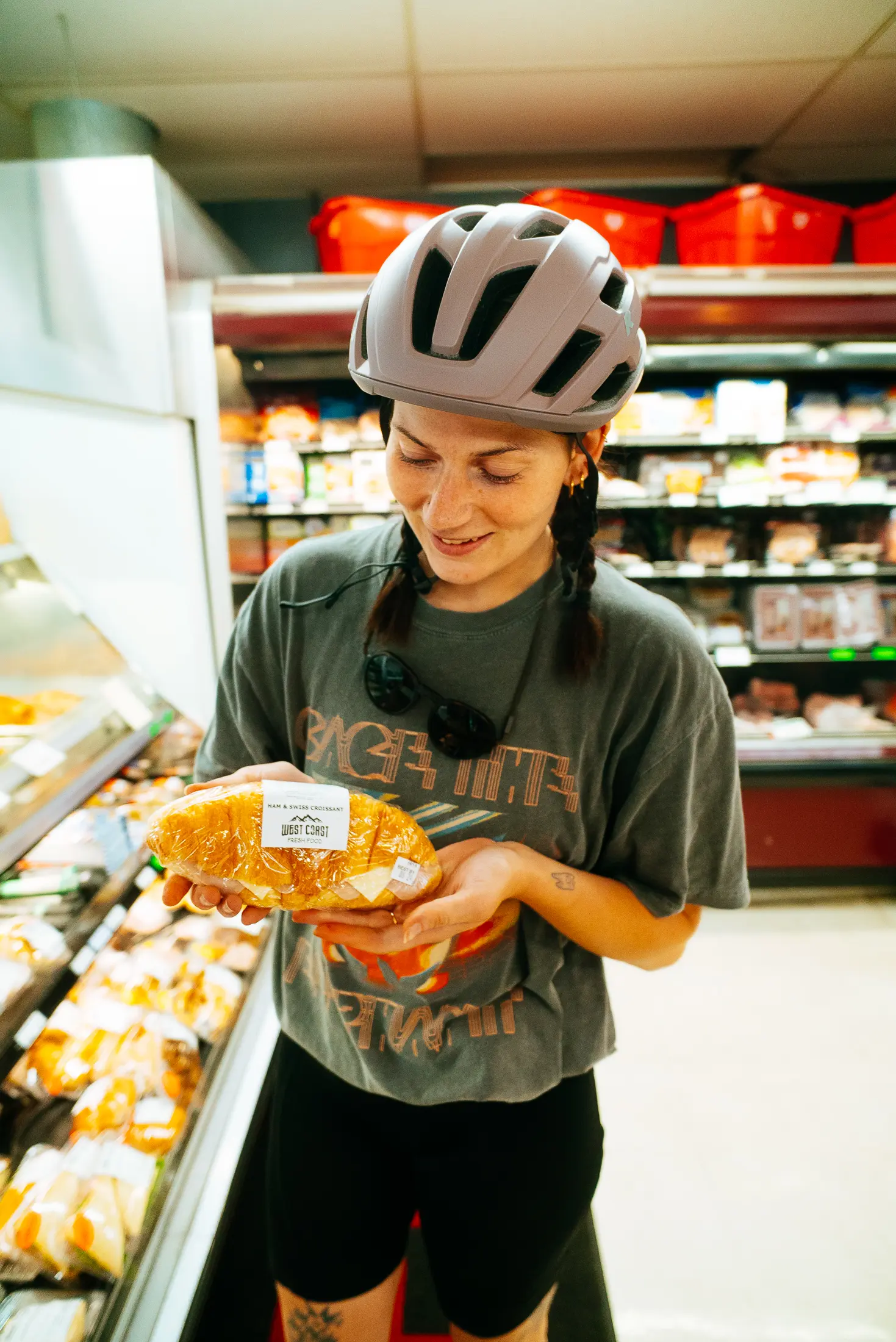
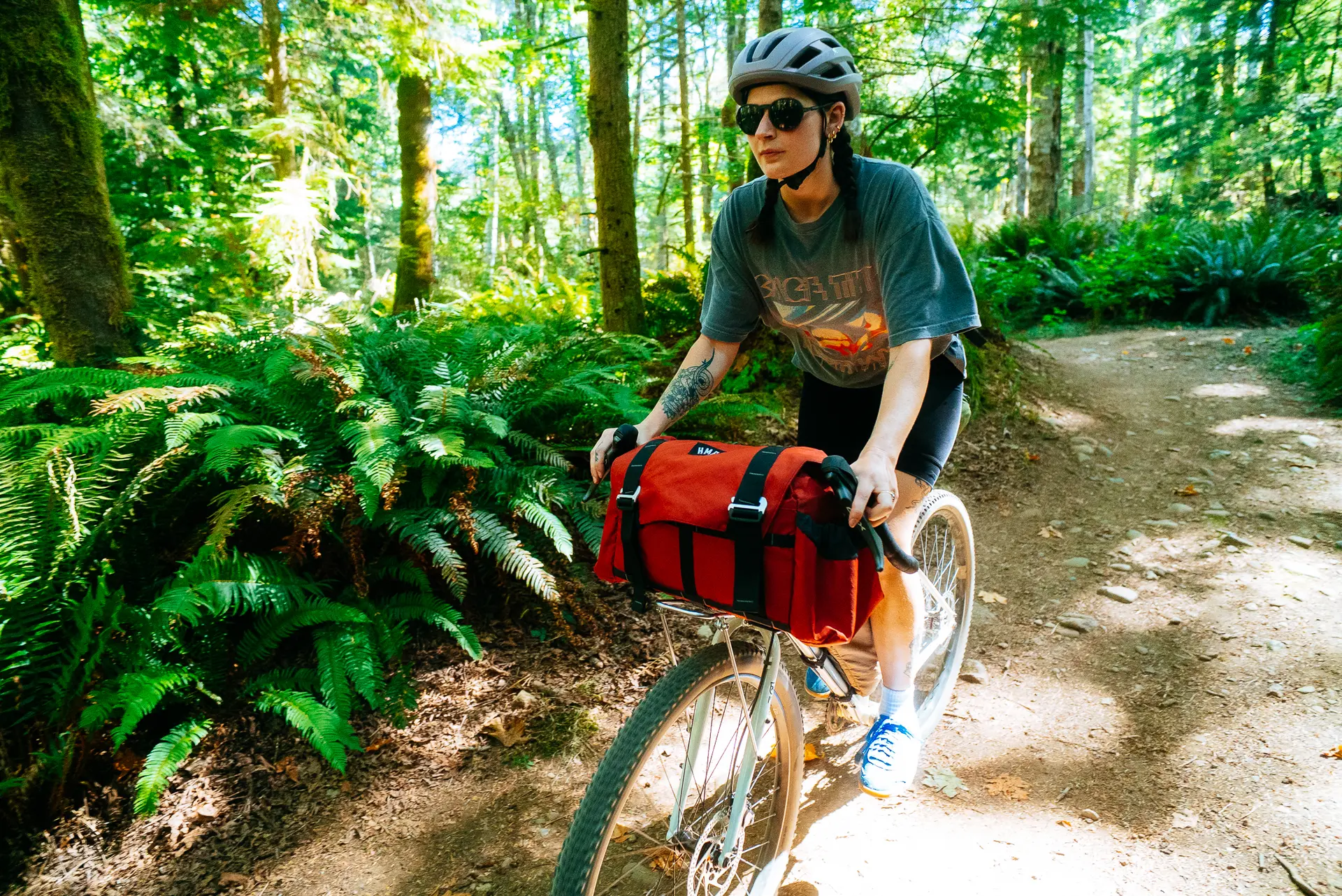
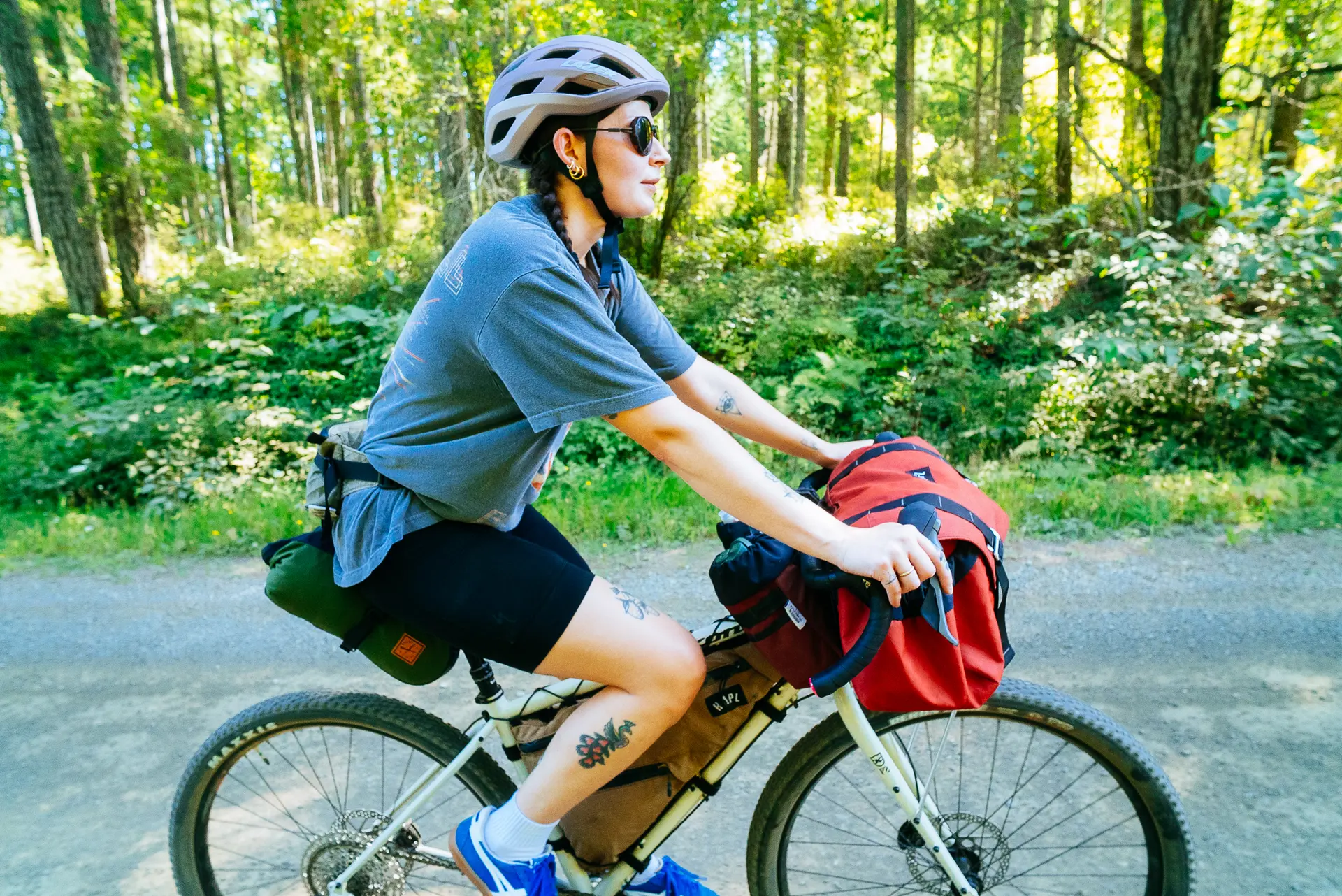
I keep a multi-tool in my frame bag, and it does just about everything I need. It also fits the bolts on the bike’s many mounts, which makes it simple to add racks, bags, bottle cages, and other gear. I’ve found it really handy to have so many options for my setup while I’m figuring out what works best for me and my different adventures.
The Sutra LTD Build
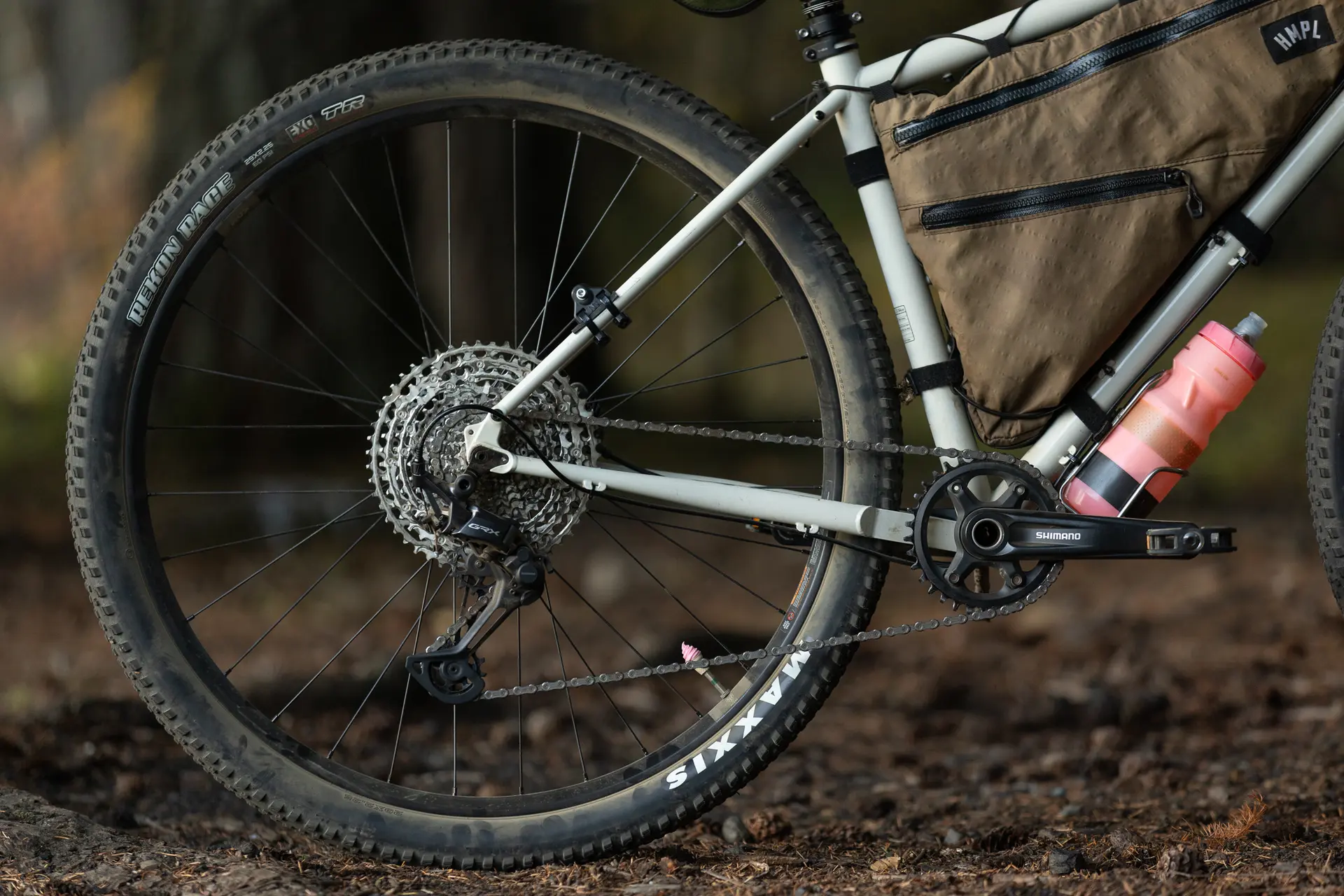
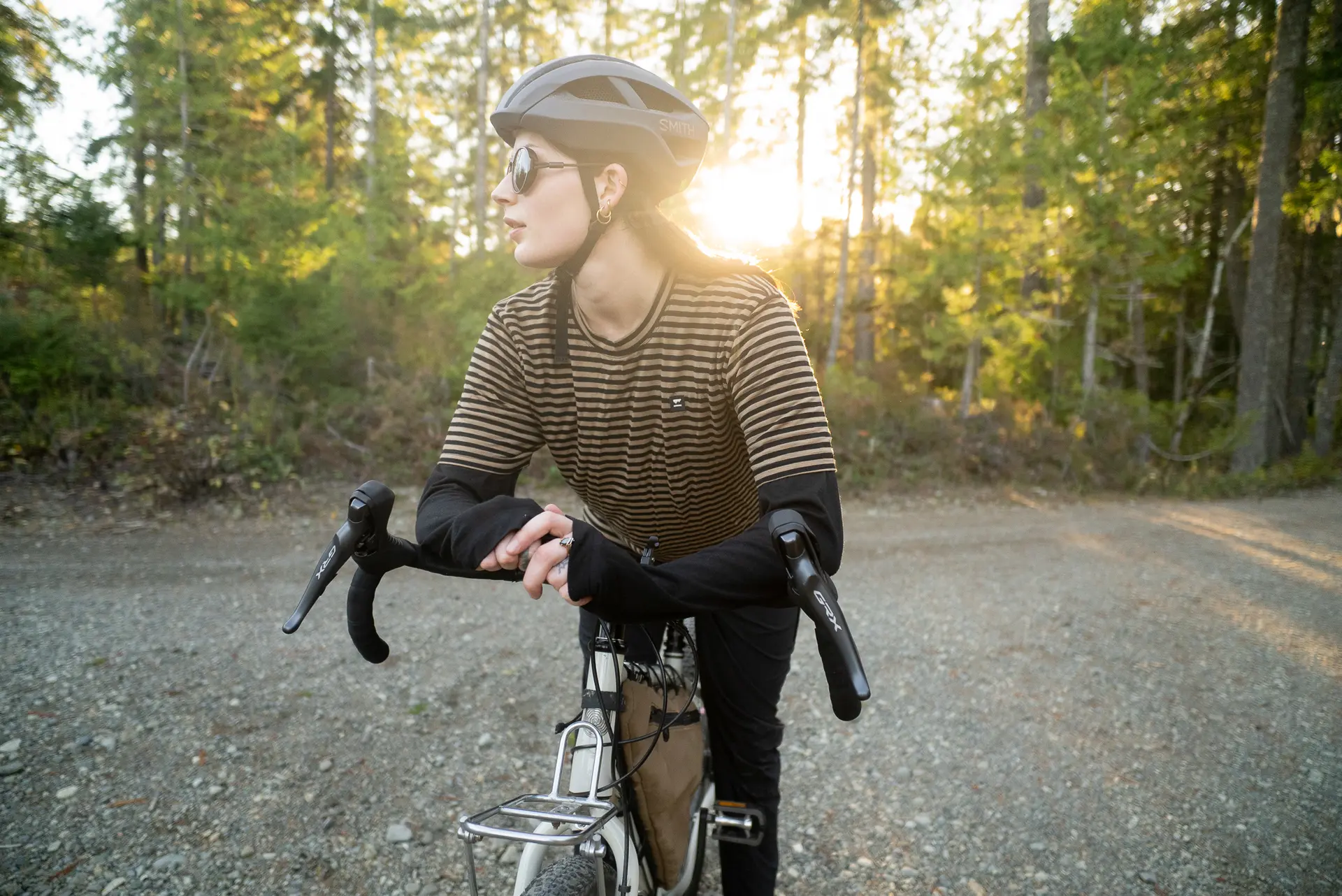
The 2025 Kona Sutra LTD comes in two builds. One runs SRAM Rival 1 ($2,299 CAD) with an 11-speed, 11-42t cassette. The other pairs Shimano GRX shifting with a Deore 10-51t 12-speed cassette, which gives you a lower climbing gear. I have the GRX version ($2,899 CAD), and it has been great to me so far.
After a couple of rides, the shifting wasn’t as crisp as I expected for a new bike, which threw me off at first. I’ve since learned that new shift cables and housing can lose tension during the break-in period, which is completely normal. After a few tweaks at the barrel adjuster, the shifting has been smooth as butter. Sometimes I don’t even notice I’ve changed gears. Just because your bike is new doesn’t mean everything is perfectly dialed straight out of the box.
Both builds come with a dropper post, which lets you lower the seat with the push of a lever so you can get your weight low and back on steep descents. When I test rode the SRAM Rival version, the dropper lever was built into the left shifter, right by the brake. The GRX version doesn’t have that, so I had to get my friend Warren, who works for Beaufort Cycles, to install a separate lever. It was pretty finicky in terms of placement and setup. Mine is mounted on the bars by the stem, which isn’t ideal because I need to ride one-handed to use it.
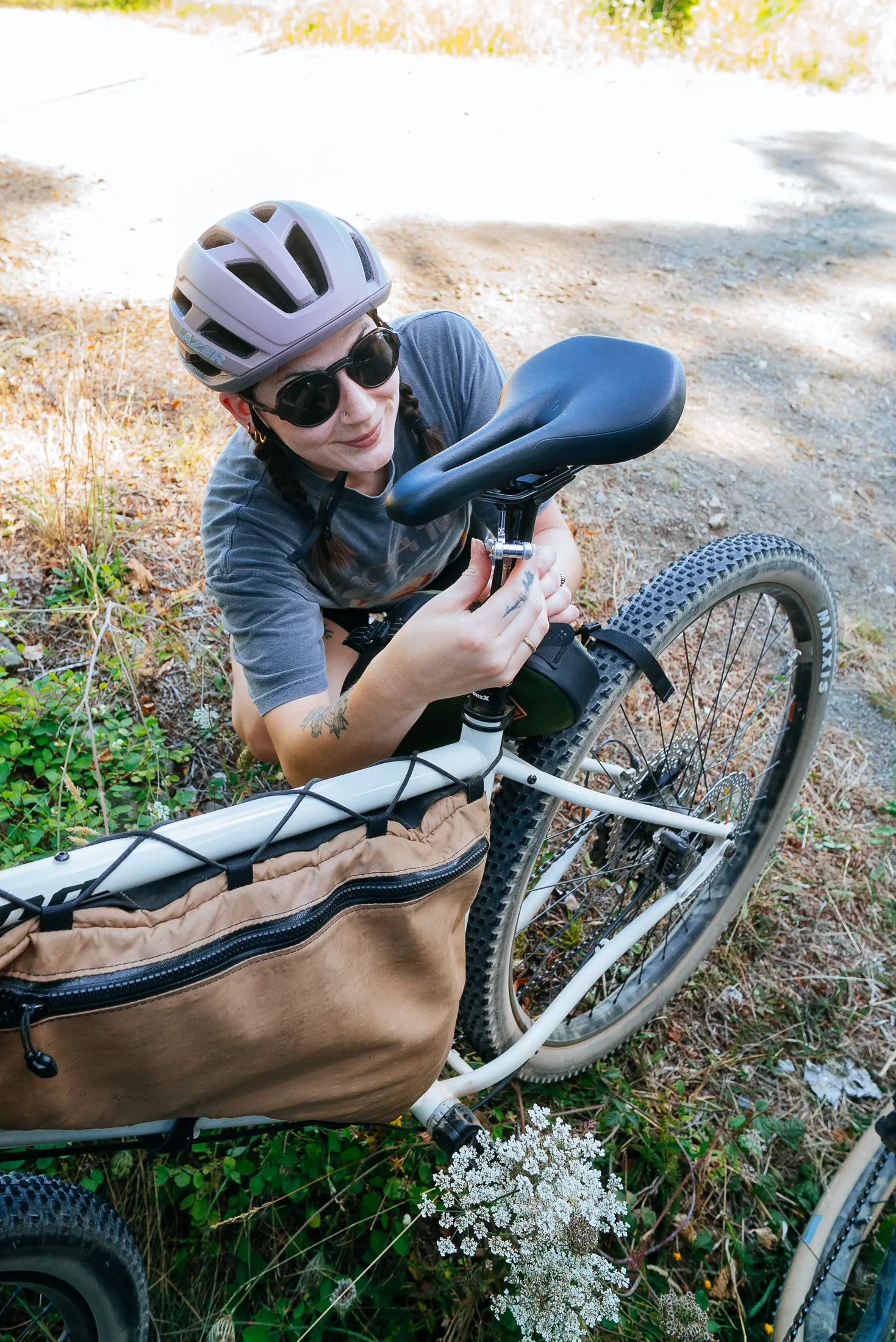
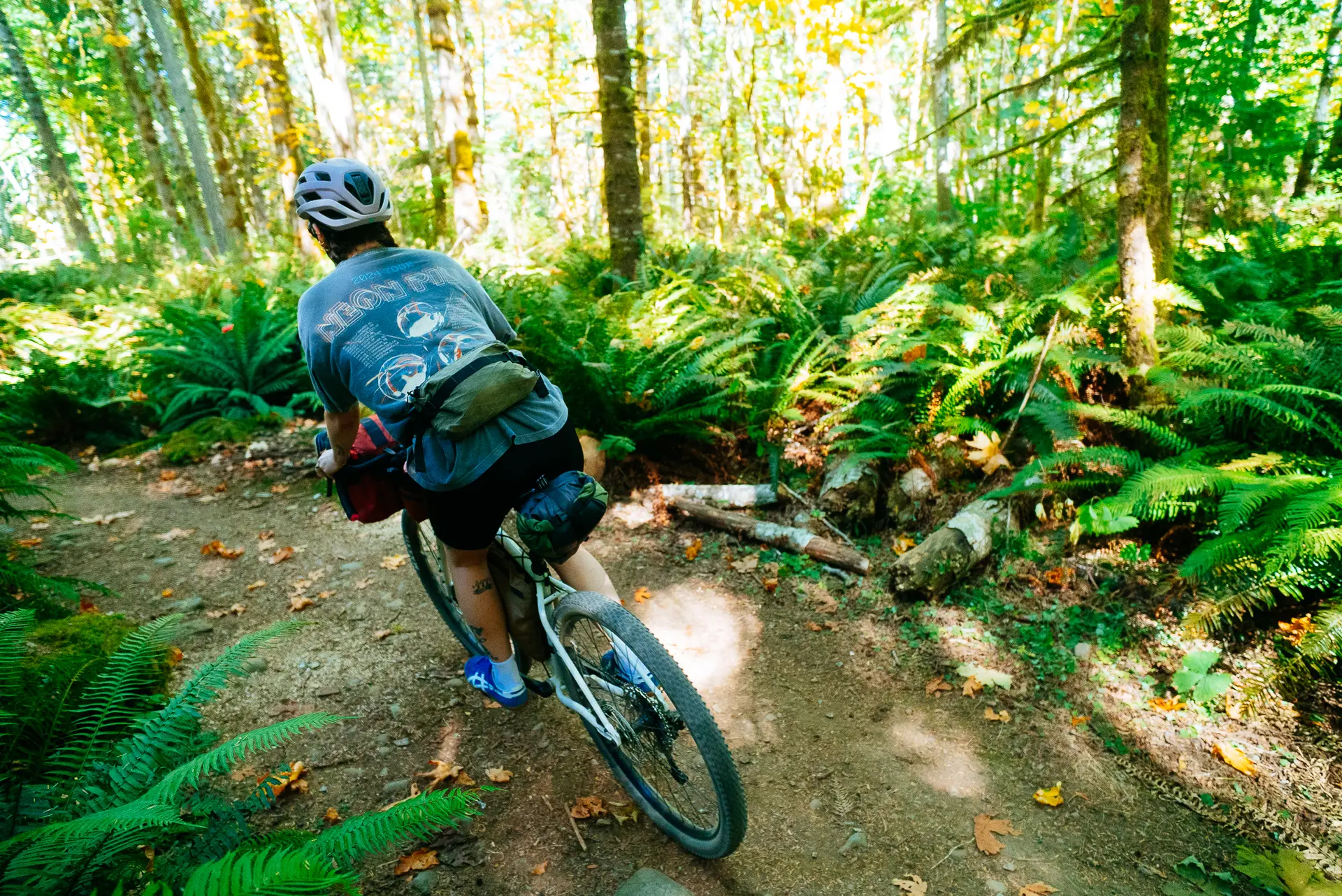
At first, the dropper mostly made getting on and off the bike easier. I was still unsure what the bike was capable of, and I figured I’d never use it for what it was intended for.
Gone Racing
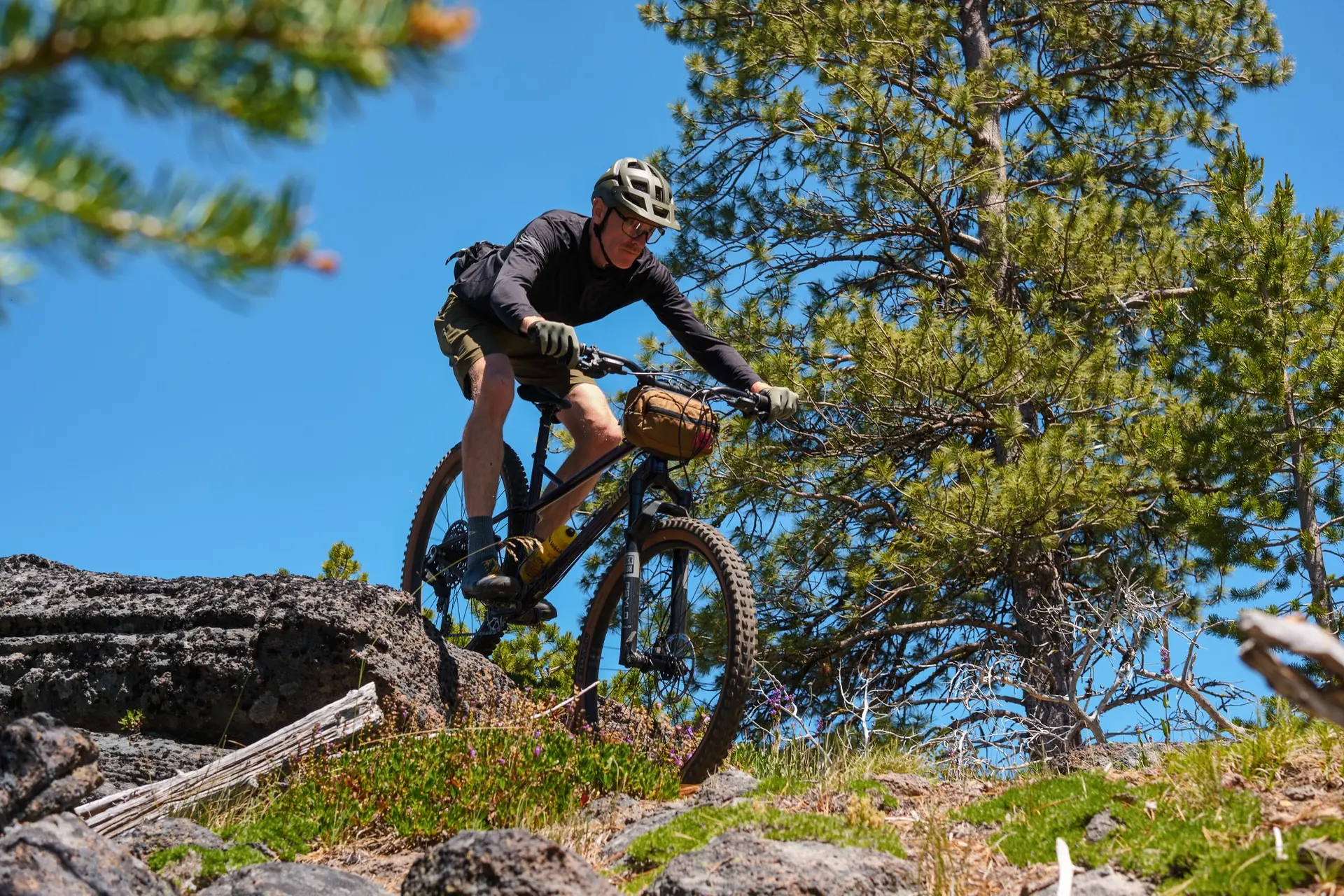
I recently did my first-ever bike race, the Danger Cat Alley Cat hosted by Laneway Coffee. An alley cat is a checkpoint race where you choose your own route between stops. We raced in the pouring rain (bold move), and the course included some mountain bike trails. It was messy, with tires sloshing through puddles. The dropper post made a huge difference in both safety and comfort. I didn’t buy this bike with the intention of riding trails, but I was so pleasantly surprised at how easily I made it down, especially on drop bars. I’m so glad I got to share that experience with the Kona. It showed me this bike can handle some of Cumberland’s blue flow trails.
Not the Bridgestone
I bought the Kona Sutra LTD to get into bikepacking. What I didn’t expect was how much it would open up riding for me.
I’m still learning and figuring out what type of cyclist I want to be, and the Kona lets me explore different styles of riding along the way. From road to gravel to Cumberland’s trails, it has handled everything I’ve asked of it so far.
Will this bike be for everyone? Probably not. If you plan to do a lot of climbing or hike-a-bike, the weight will make itself known. But for a beginner, something as versatile and forgiving as the Sutra LTD is a fantastic place to start.
If you’re still asking what even is a bikepacking bike, the answer might be as simple as finding a bike that makes you want to get out and ride. For me, that’s the Kona Sutra LTD.
Pros
- Steel frame feels stable and in control, especially fully loaded
- Drop bars give lots of hand positions for long days in the saddle
- Lots of mounts for racks, bags, and bottle cages
- Steel is durable and can be repaired almost anywhere
- Stock dropper post adds safety and comfort on descents
- Visually appealing for an entry-level bike
Cons
- Heavy at 14.1 kg (31 lb), which you'll feel on long climbs and hike-a-bike
- GRX build has no integrated dropper lever, and the add-on lever was finicky to set up
- Geometry is geared toward gravel and trails; road riding can feel sluggish