Outer Shell Mega Bar Bag: Strap It. Stuff It. Send It.


In the world of bikepacking, the area above the front wheel is prime real estate for carrying your gear—and there are plenty of products out there competing for that spot.
You've got your classic handlebar rolls, the OGs of bikepacking gear; racks and baskets drawing on a long history of bike tourers and grocery shoppers; and then there are the handlebar cradles, like this one from Rogue Panda. If none of these styles pique your interest, we can now look towards the another category of front carriers: the top loaders.
These bags usually strap onto your handlebars, rest against your head tube or front rack, and come in a variety of sizes. The only trouble with many of the top loaders out there, particularly the larger ones, is that they inevitably sag and drag on your front wheel, which means they can need the support of a front rack to keep them fully functional. But what if the bag had an integrated, internal rack? Well that's exactly what the clever folks at Outer Shell have implemented in their Mega Bar Bag.
About Outer Shell
Based in San Francisco, Outer Shell have been making bike bags since 2015. All their products are made in house with a focus on durability and sustainability. As they mention in their company info, they want their gear to last when you're out in the backcountry and this ethos can be seen in the fabrics they use, the fewer number of seams in products and backed up by their lifetime warranty. Their sustainable focus is seen both in the chosen materials and their locally local manufacturing processes. All their fabrics are made from recycled plastics and their waterproofing boasts a lack of both perfluorinated compound (PFCs) and volatile organic compounds (VOCs).
Outer Shell follows a similar origin story to many bikepacking companies and began with founder, Kyle, making bags for himself to explore and experiment with his own design ideas that were lacking in the wider market. This original design ethos can still be seen ten years later and is exemplified by the integrated support structure in the Mega Bar Bag. The name Outer Shell reflects the company's broader philosophy of a unity between objects and events, just as they want riders to connect with their environment, assisted by gear that helps them get there and keeps them out there.
Strapping On
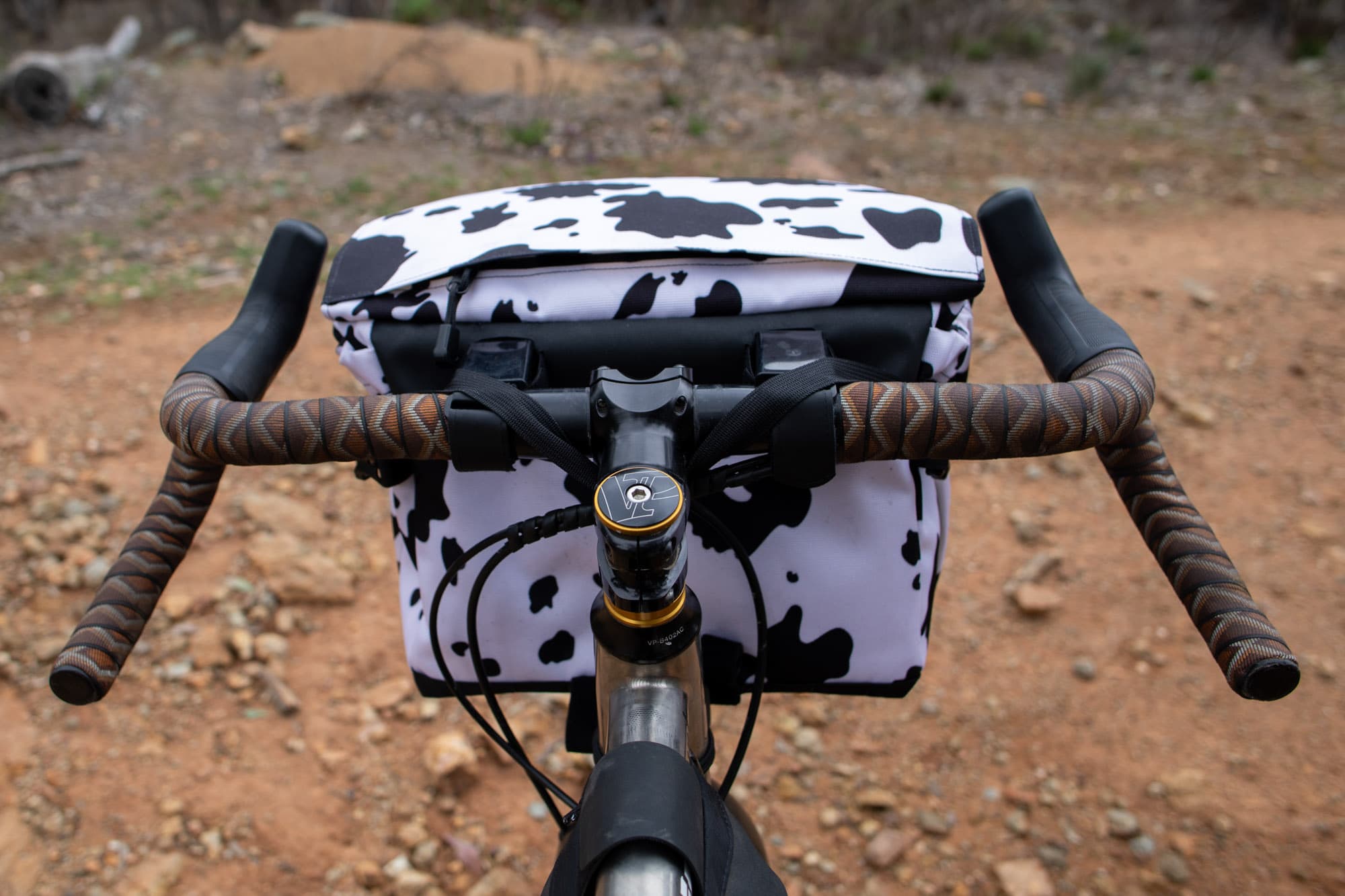
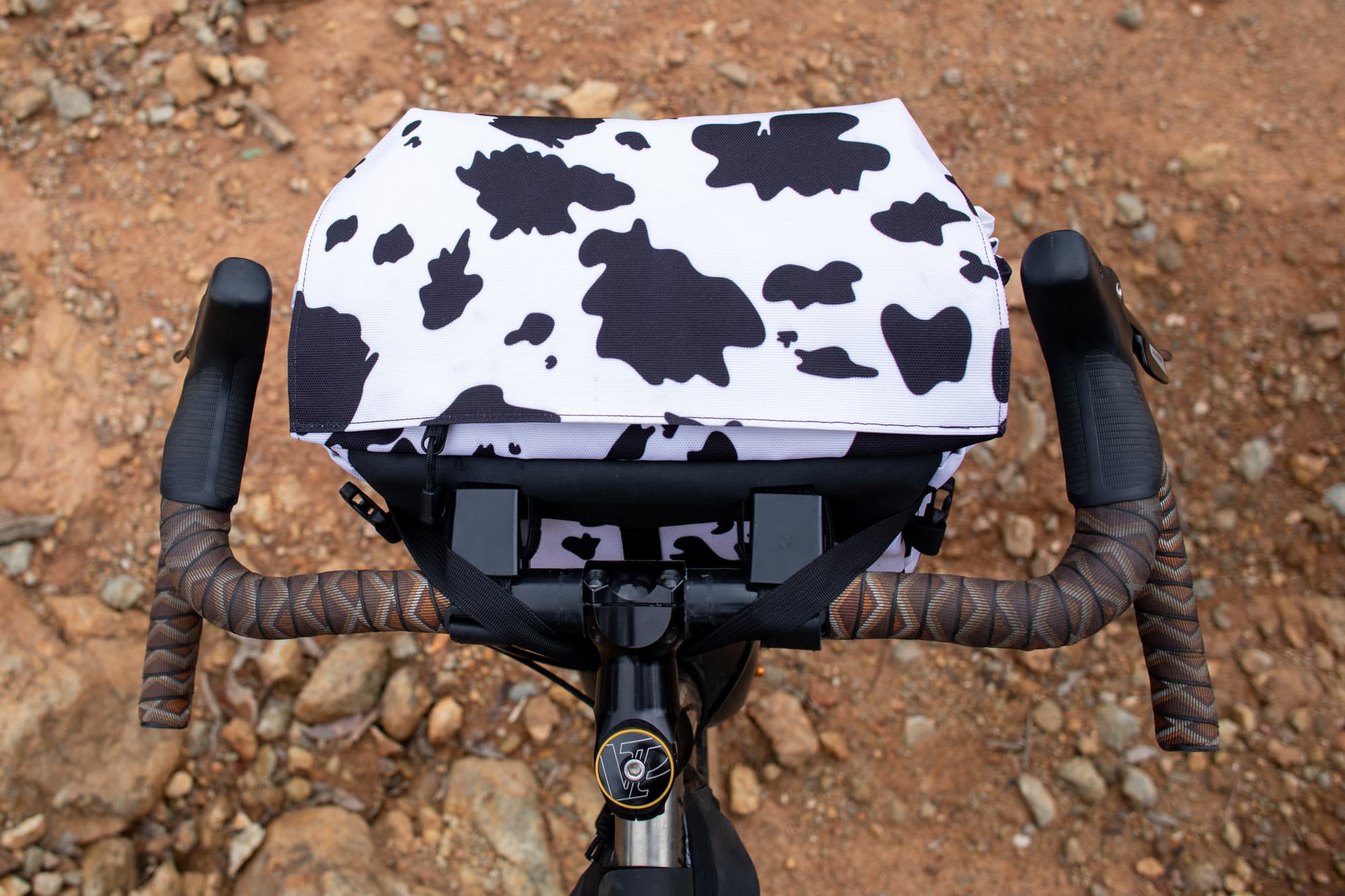
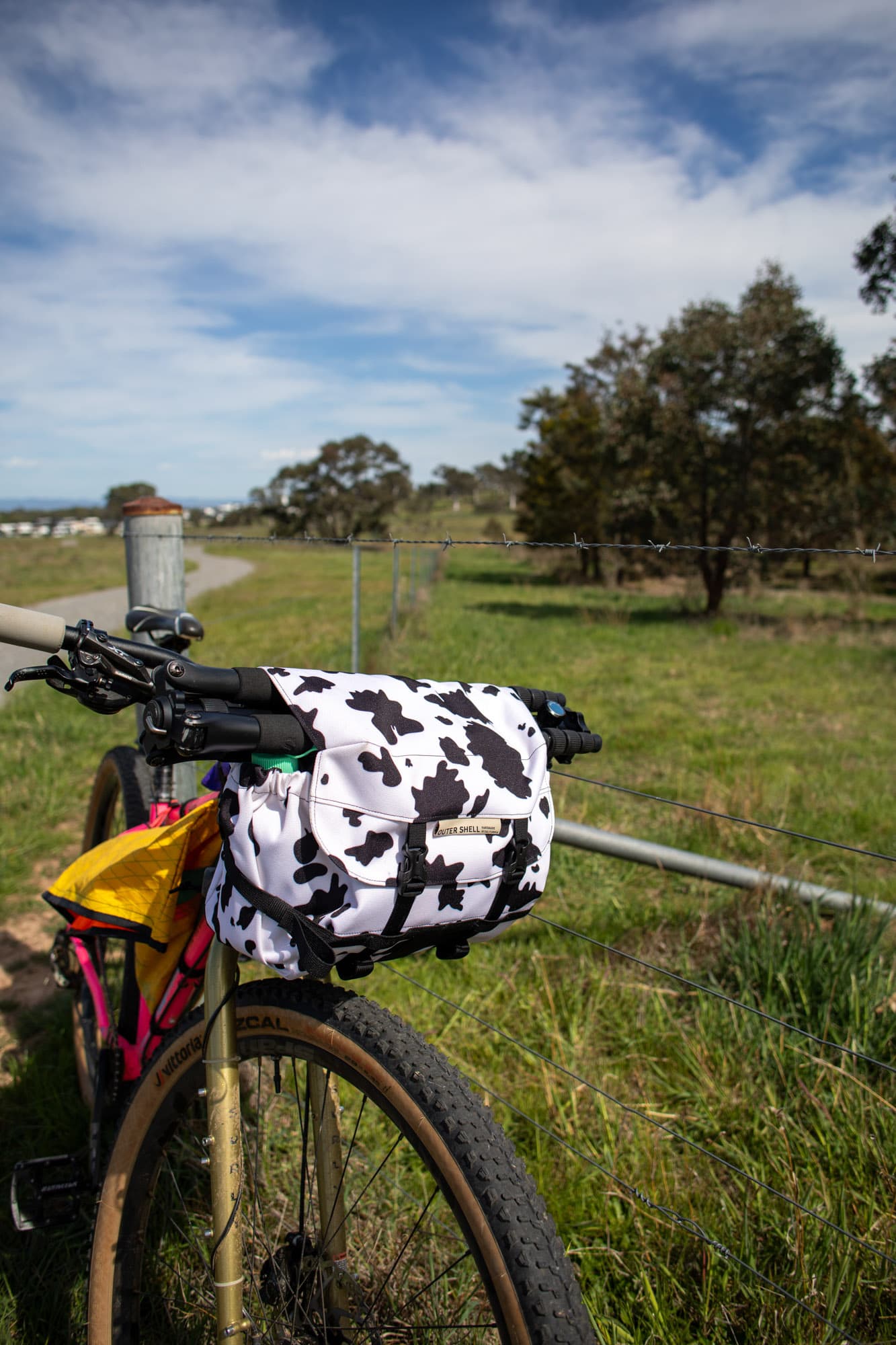
One aspect of bikepacking bags and gear is simplicity and the Mega Bar Bag ($285 USD) is about as simple as it comes in the installation arena. There are two Velcro straps that attach to your handlebars either side of the stem, these straps pass through a pair of injection molded spacer blocks keeping the bag off the bars. On the rear of the bag is a stretchy elastic loop that passes behind your head tube, coupled with some foam spacers, this secures the bag to the front of your bike.
In addition to these two points of contact, there is also an 'anti-sag' strap that passes from either side of the Mega Bar Bag, over your handlebars and under the stem. This can be cinched tighter and helps with keeping the bag up and above your front wheel. If you still want more security, and if you have clearance, there are two further Velcro straps that can secure the bag to the fork crown.
The beauty of the bag is that it is designed to be stable without a rack, but if you were using a rack there are plenty of webbing loops under the bag to fit a strap through to attach to a rack. There are also instructions on the Outer Shell website for fitting rack struts or a diving board to the Mega Bar Bag.
Clever Design. Hardy Construction.
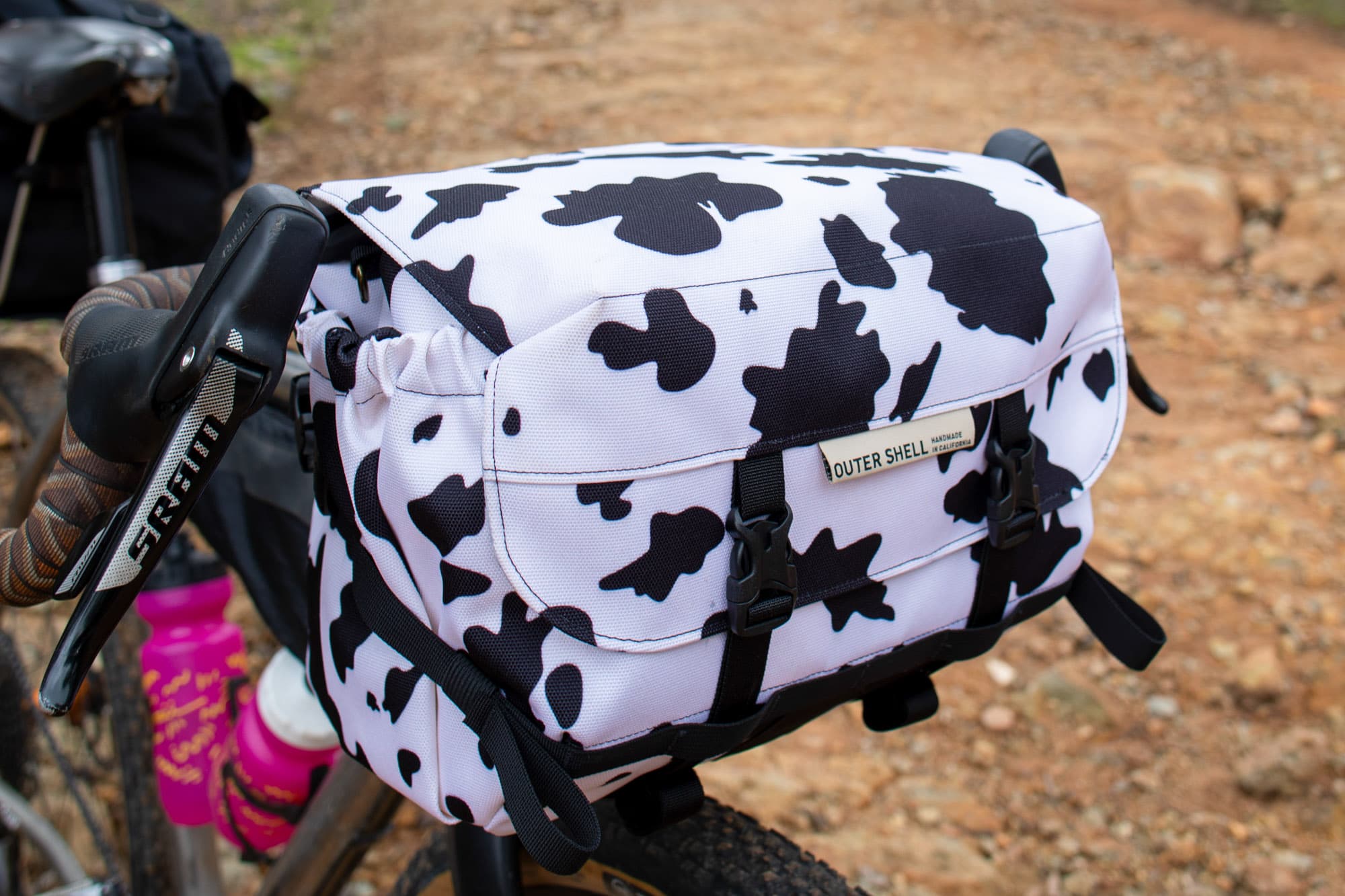
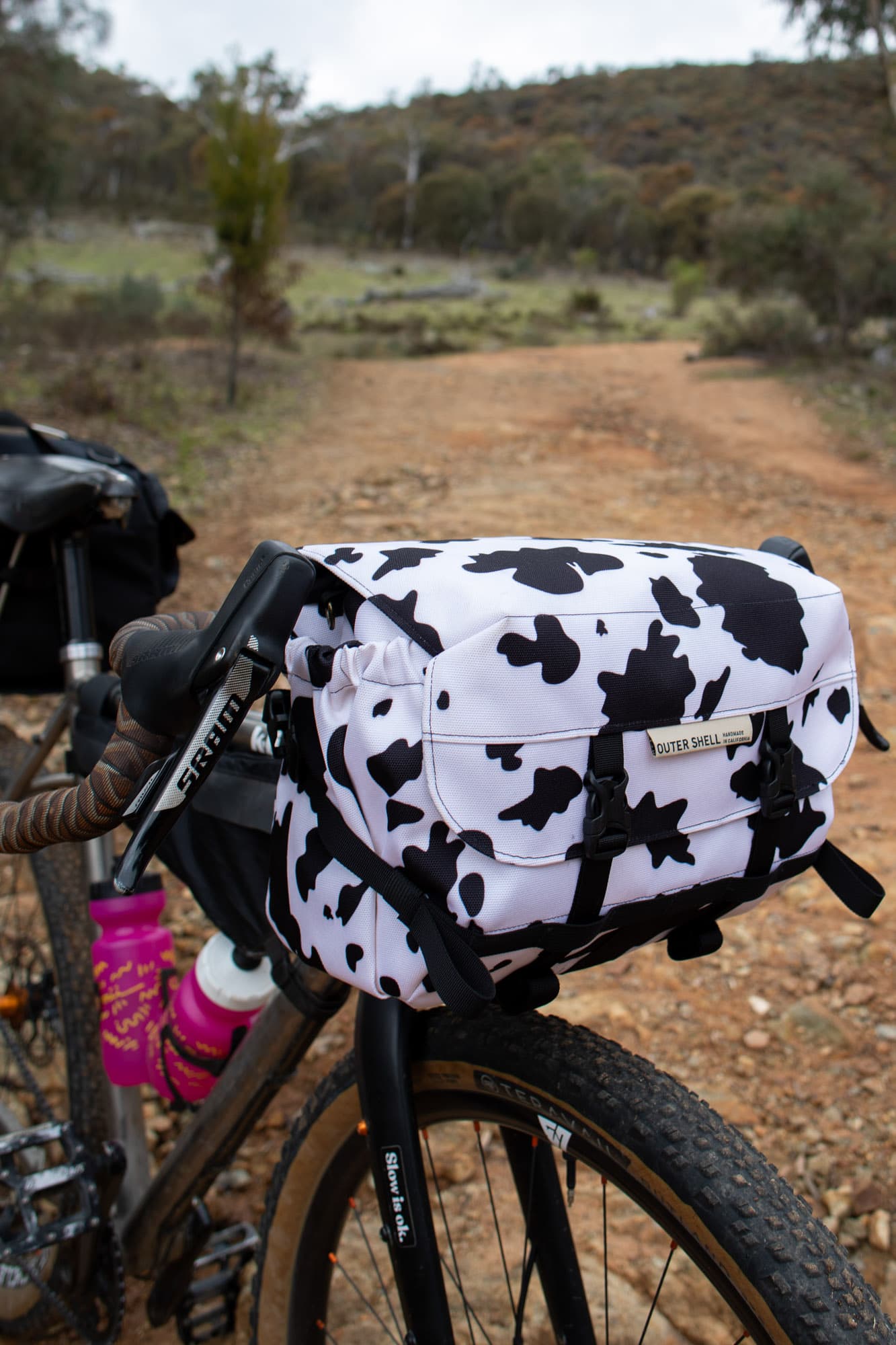
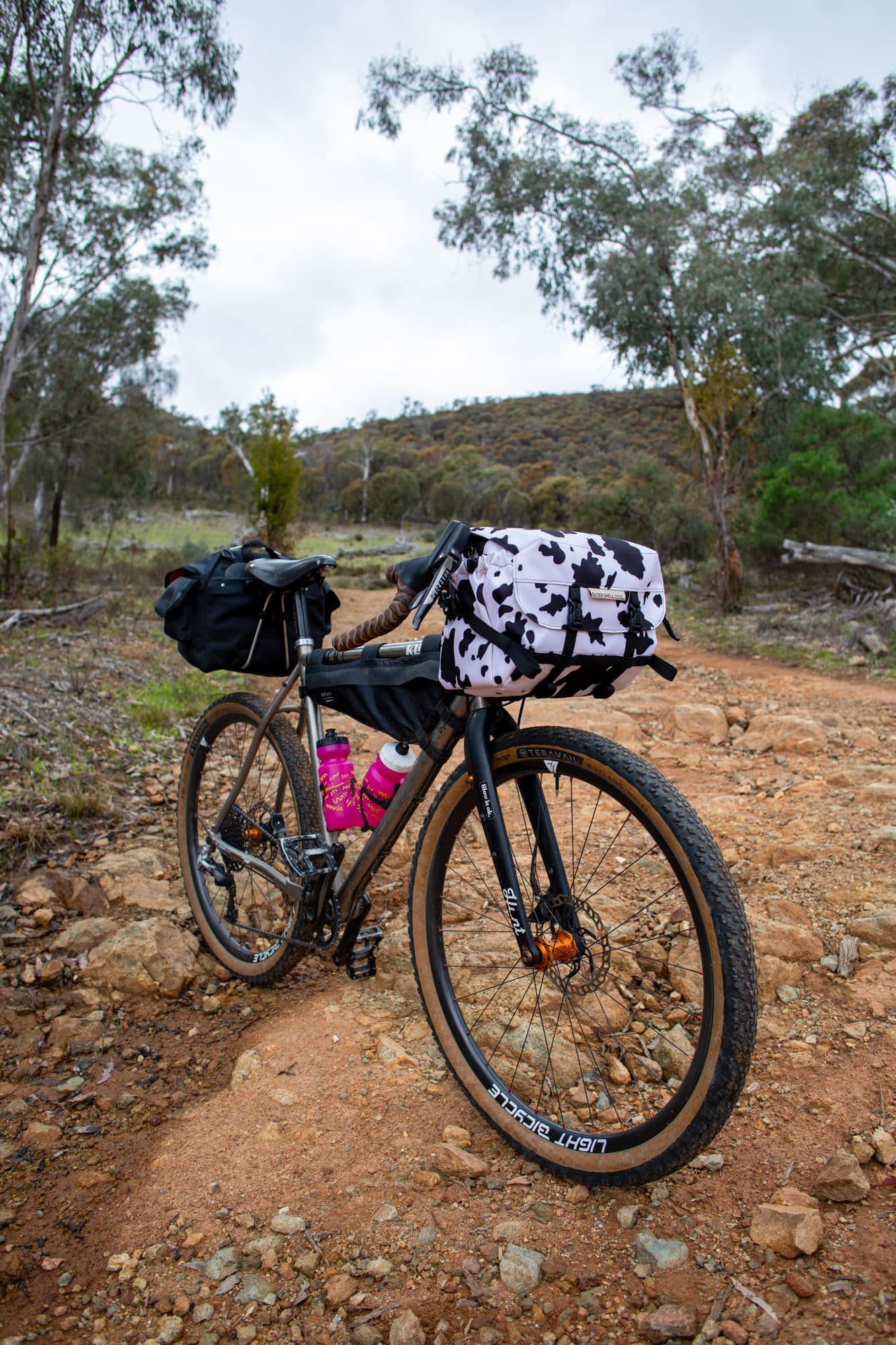
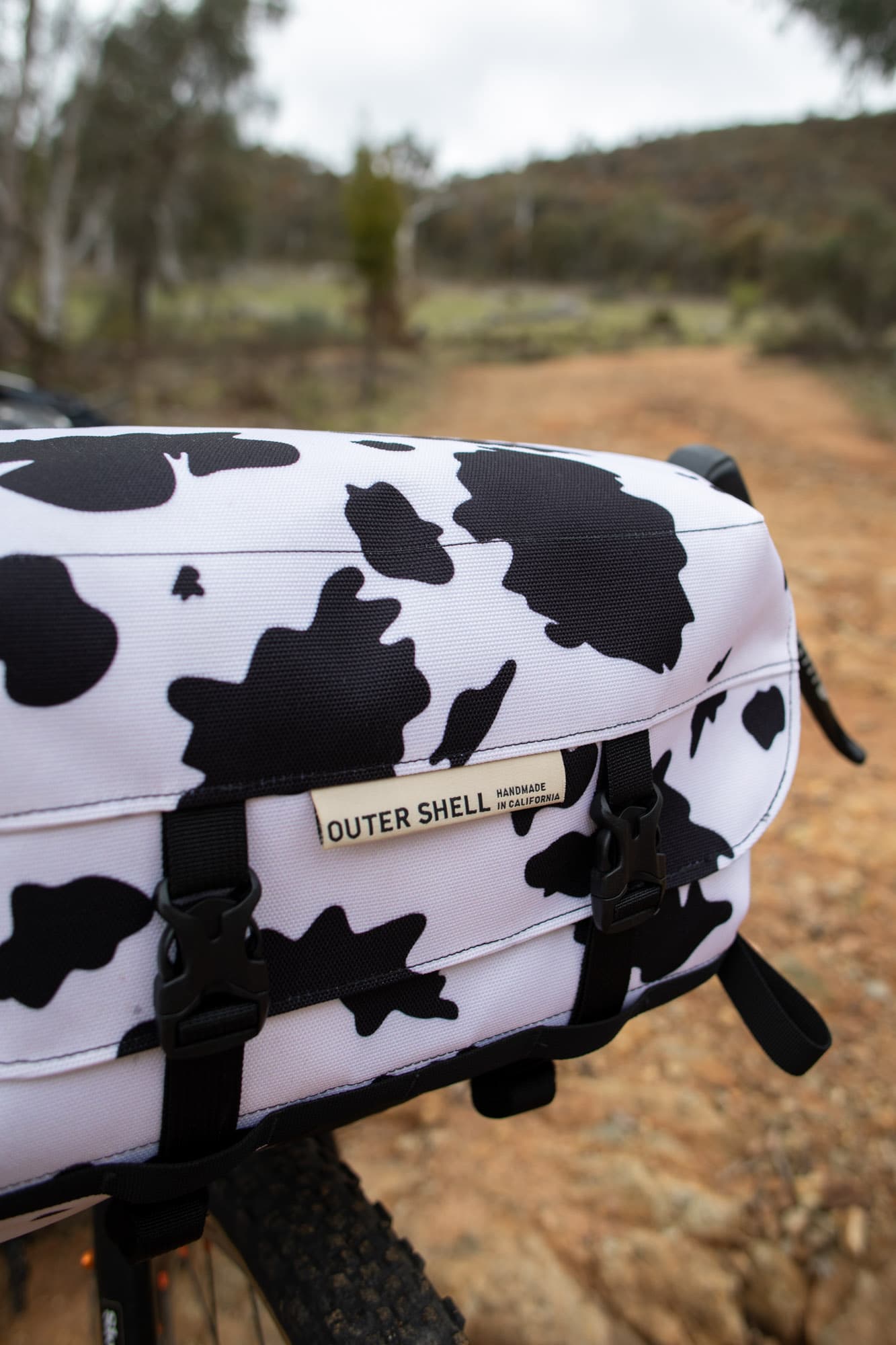
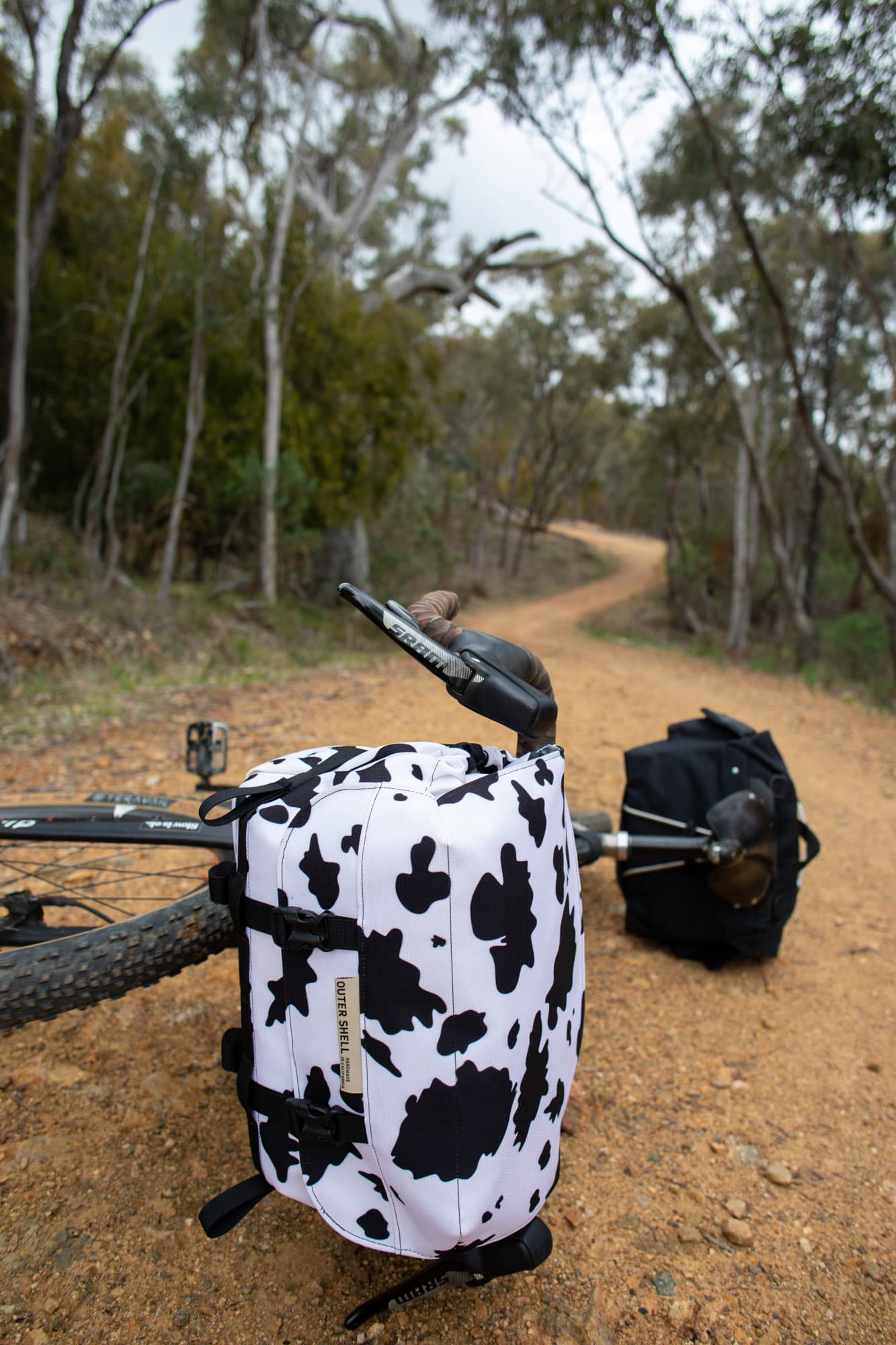
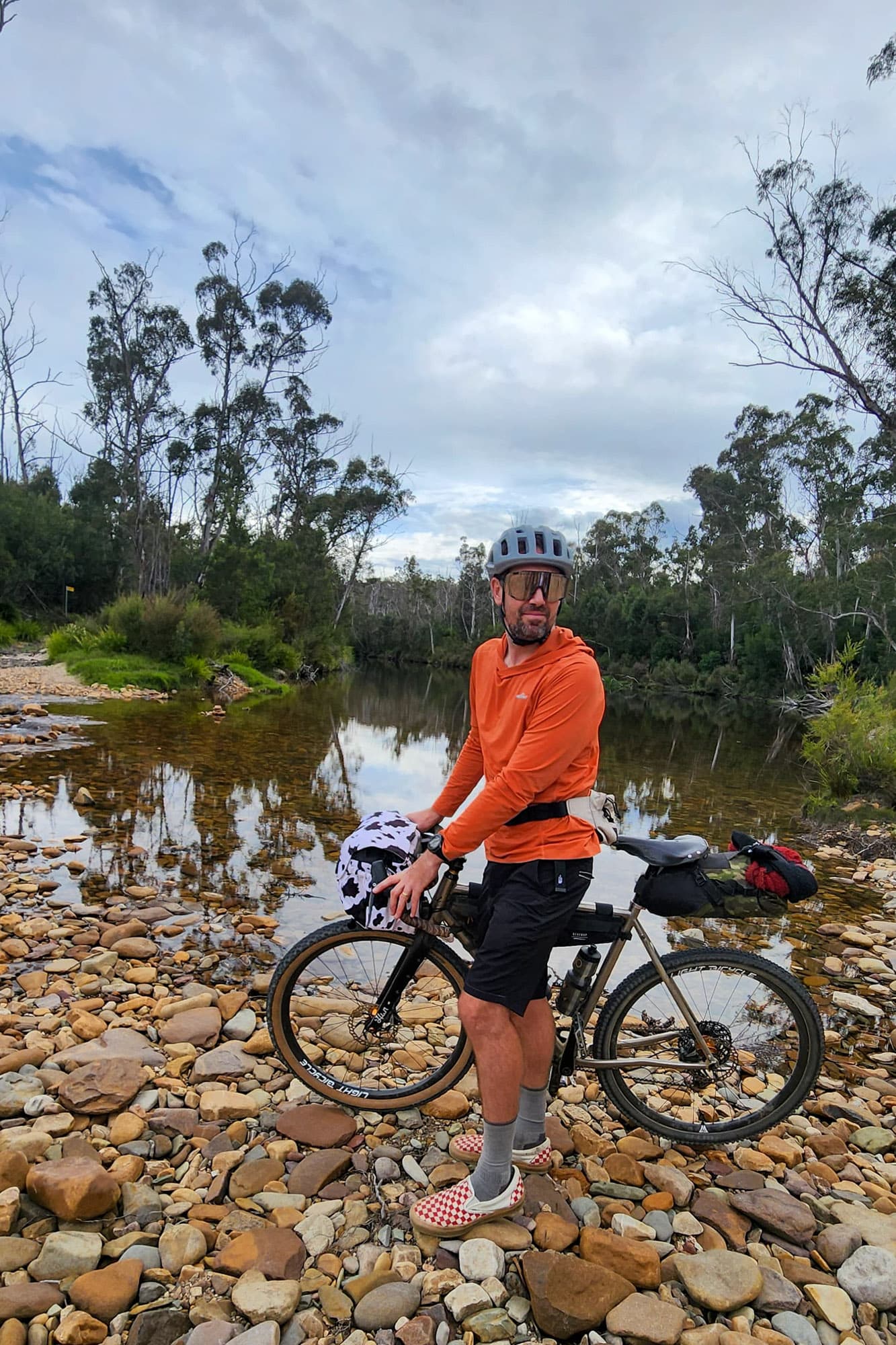
While the bag I received is finished in a rather classic but bold, dairy cow-camouflage print, there are currently eight other colours and patterns to choose from, including a basic black, outdoorsy olive and luscious leopard print. You can order with two different outer materials: weather-resistant 1000D Cordura, or ECOPAK EPLX600 with RUV laminated film backing and DWR finish. Both versions have laminated weather-proof ECOPAK EPLX200 liners.
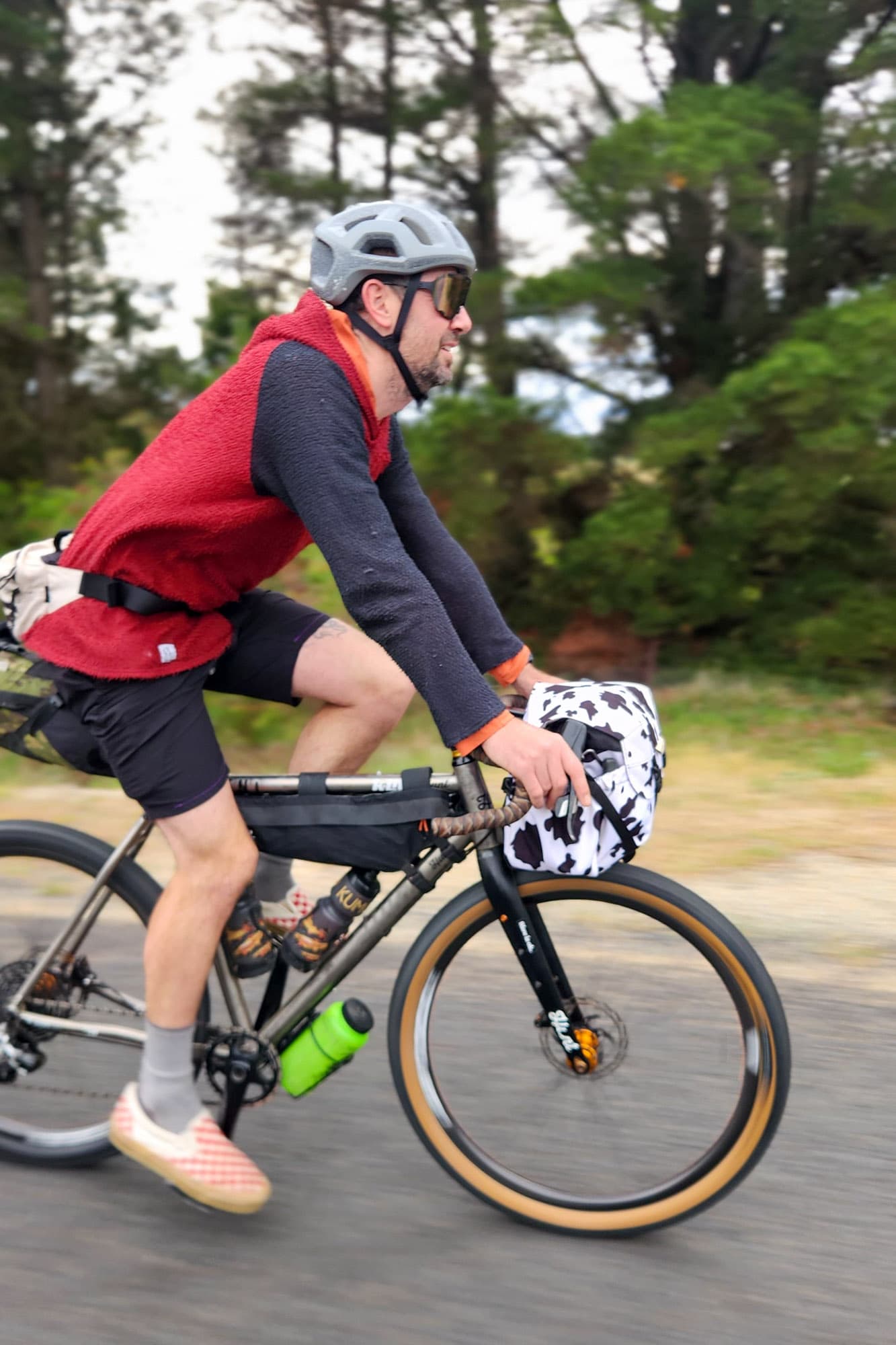
The main feature of the Mega Bar Bag that really helps it stand out—aside from my cow print—is the internal frame. This 3D aluminium structure is sewn in between the fabric layers and runs from the back, under the bottom and slightly up the front. The handlebar straps run through the internal frame, keeping the bag secure to the bars and helping with the stability, then the shape continues to hold the bag up and above the front wheel. This design certainly helps with peace of mind as wheel rub is one of the major concerns of dangling bags over the front wheel
As the name suggests, the Mega Bar Bag is a BIG bag. Fully expanded its whopping 18L. There is a zippered pocket in the top flap and stretchy pockets either side of the main compartment. The top flap is nice and long to secure bulkier items like sleeping pads, tent poles, or skateboard, whatever tickles your fancy.
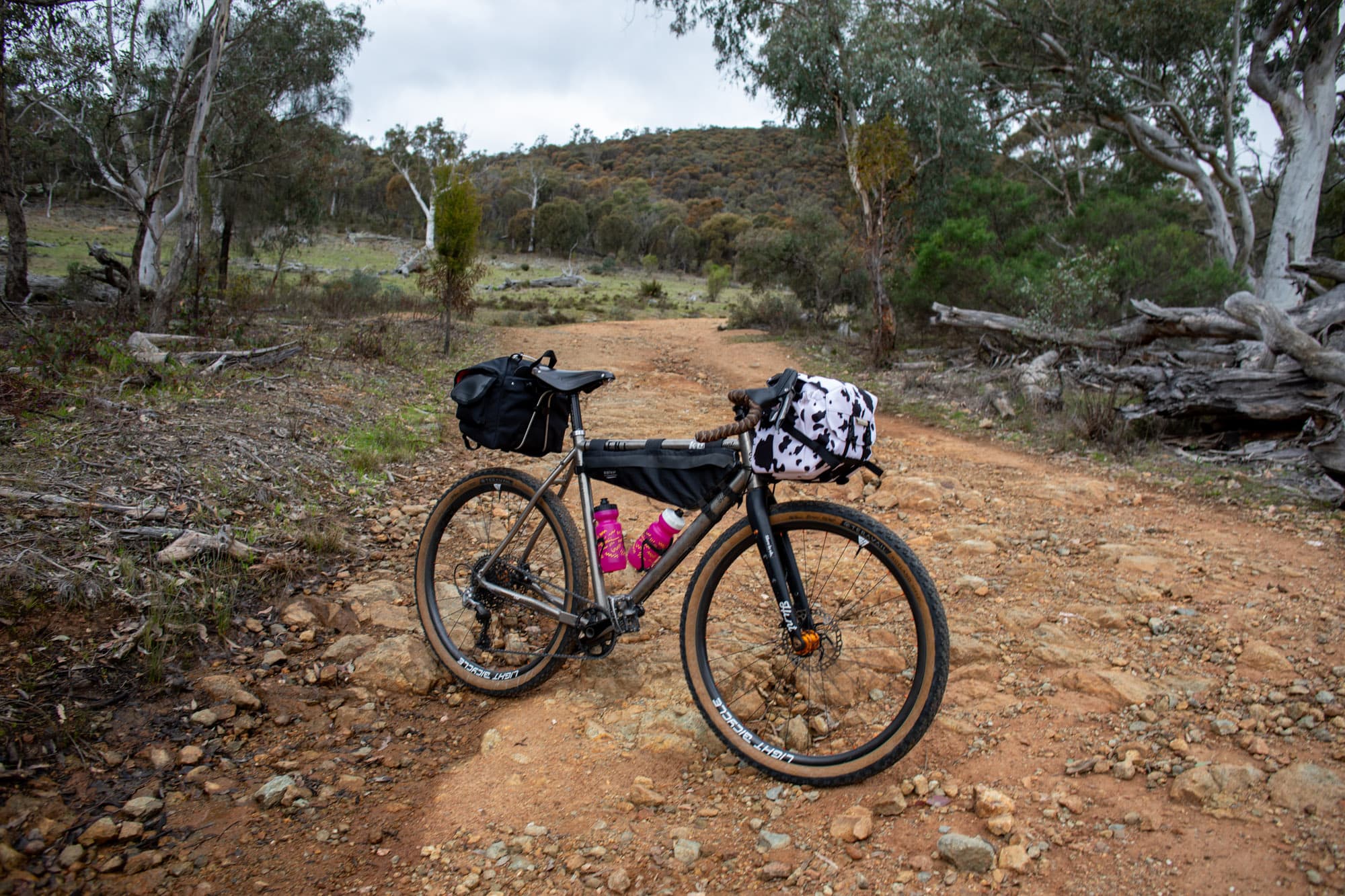
Rather than being box-shaped the front of the bag angles up a bit to help fit above the front wheel and over the rear if you're running it as a saddlebag. There is also extra fabric running down the centre of the bag's base which acts as a skid plate in case you're running things a little tight and a lack of clearance above your tyre.
Loading it to the Top
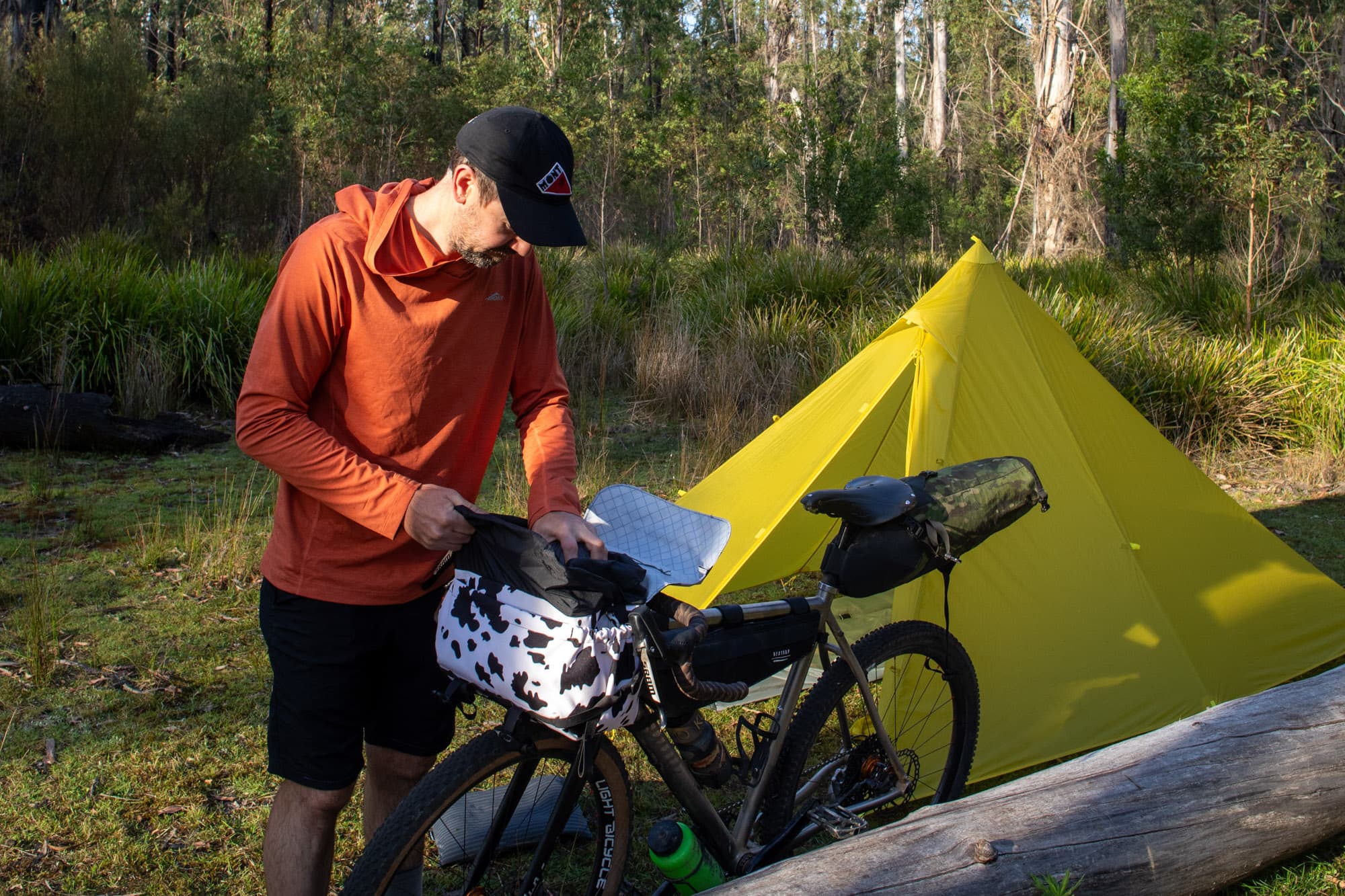
When it comes to packing a bag, I always appreciate a large and easily packable central area, the Mega Bag offers this in spades. The central packing space is closed up by a stretchy drawcord and easily swallowed up my sleeping bag, cooking gear, sleeping mat and more. The stretchy pockets on the sides were large enough for water bottles, but as the anti-sag strap runs over the pockets, I found that they weren't super easy to access while on the go, so instead I used the storage for my emergency can of coke and extra snacks.
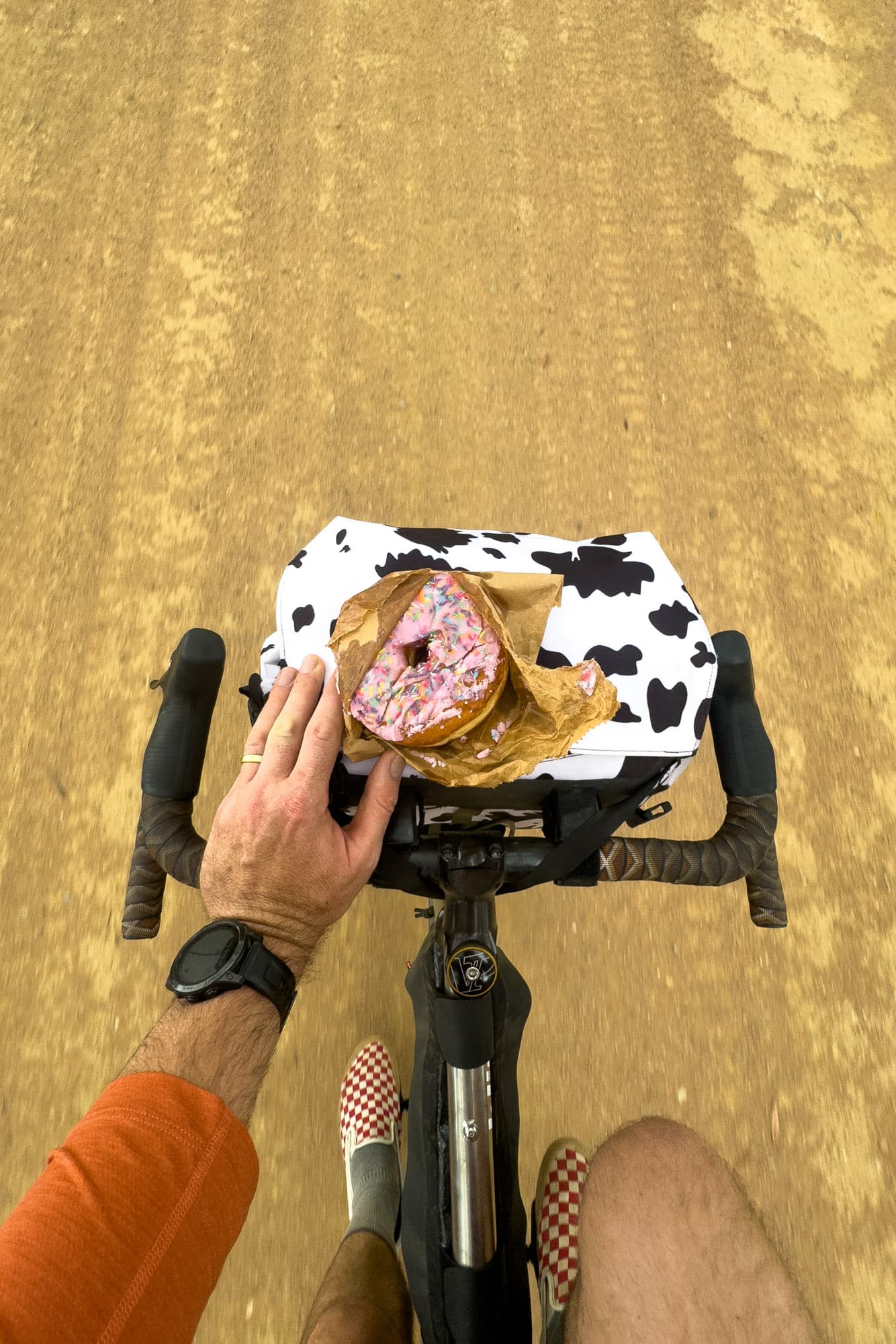
The top loader flap pocket, albeit a mouthful, was far more accessible while riding and is much bigger than I expected for a flap pocket—it was even able to hold my coveted frosted donut.
Trail Testing
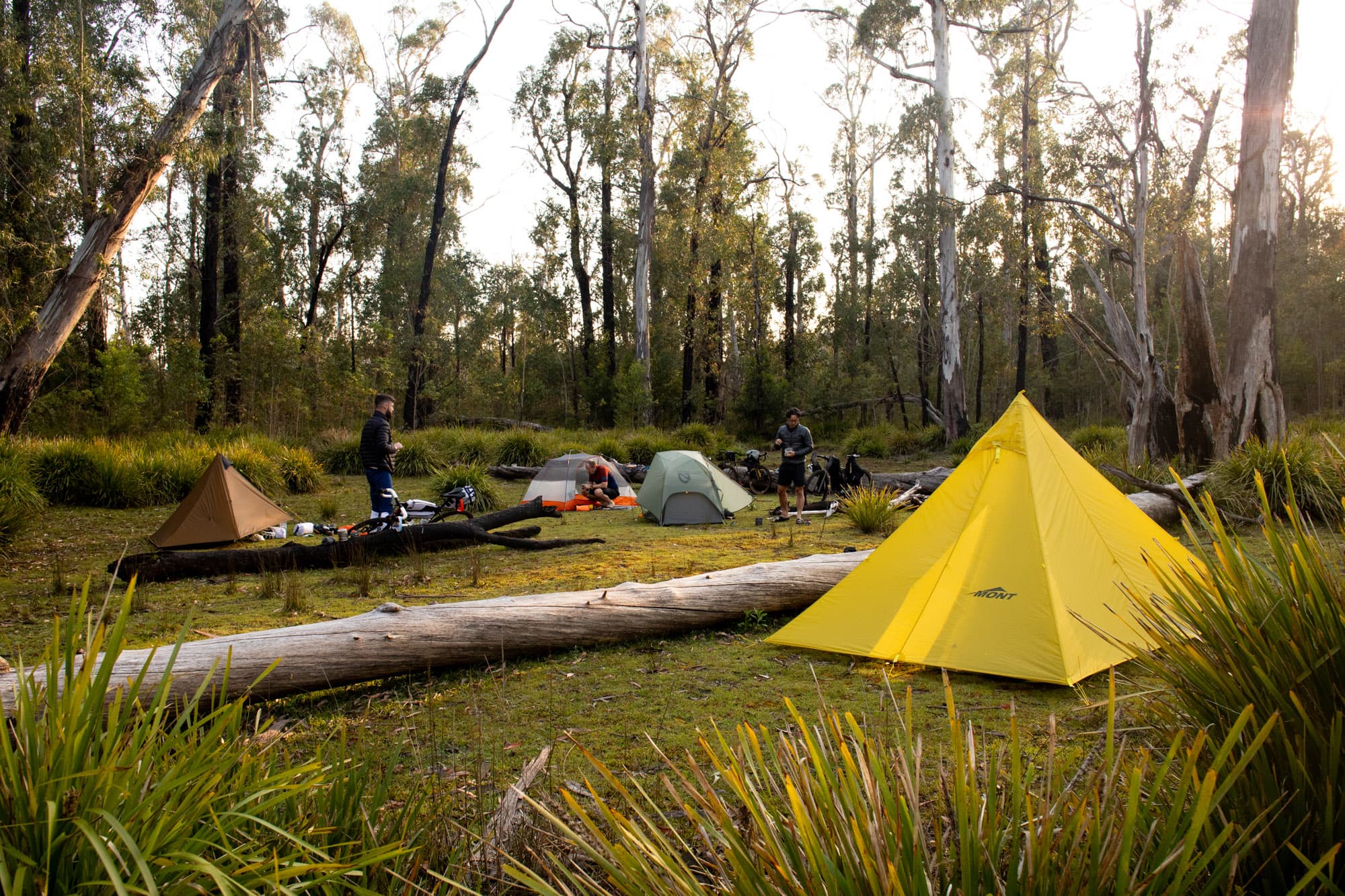
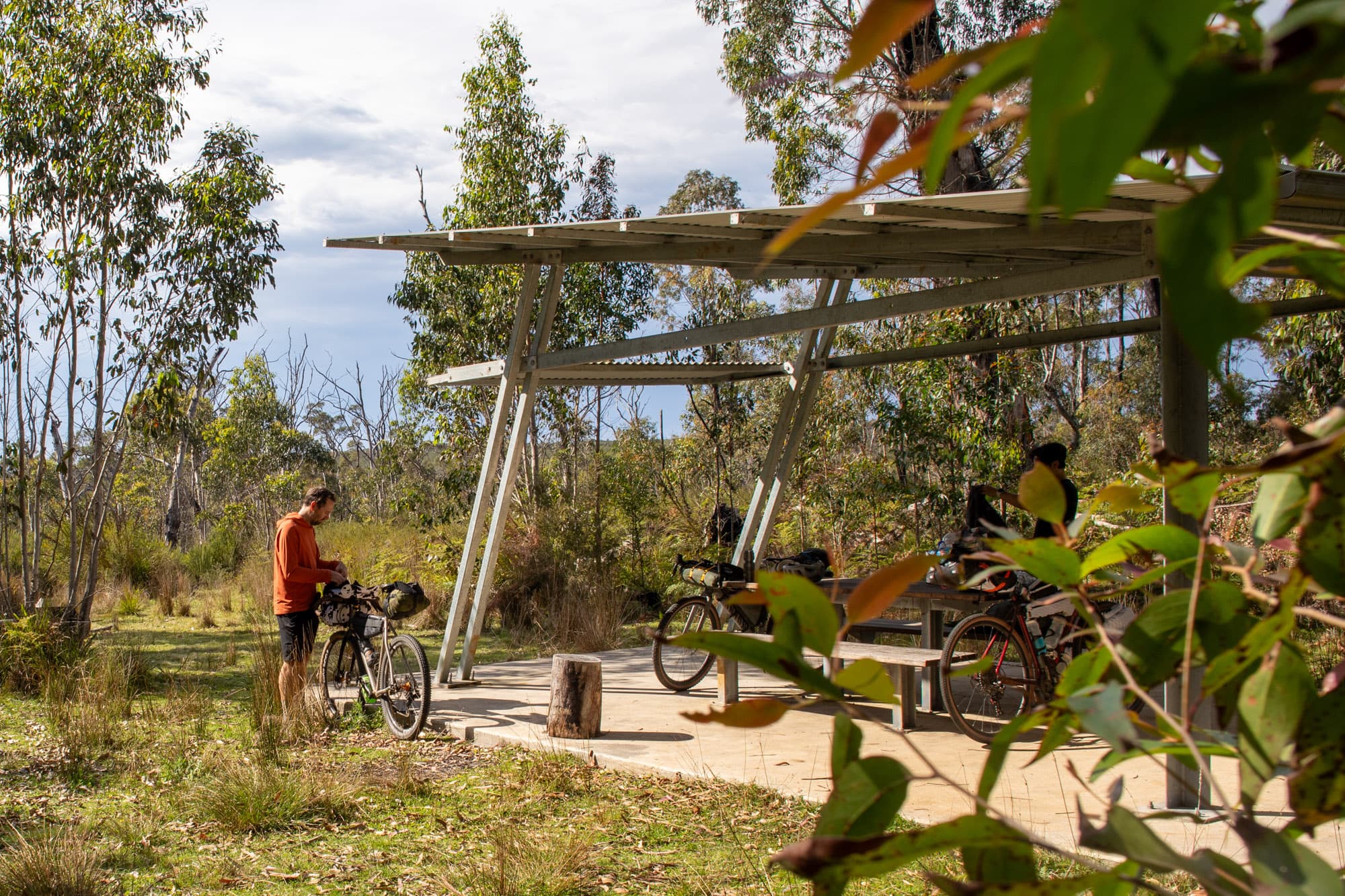
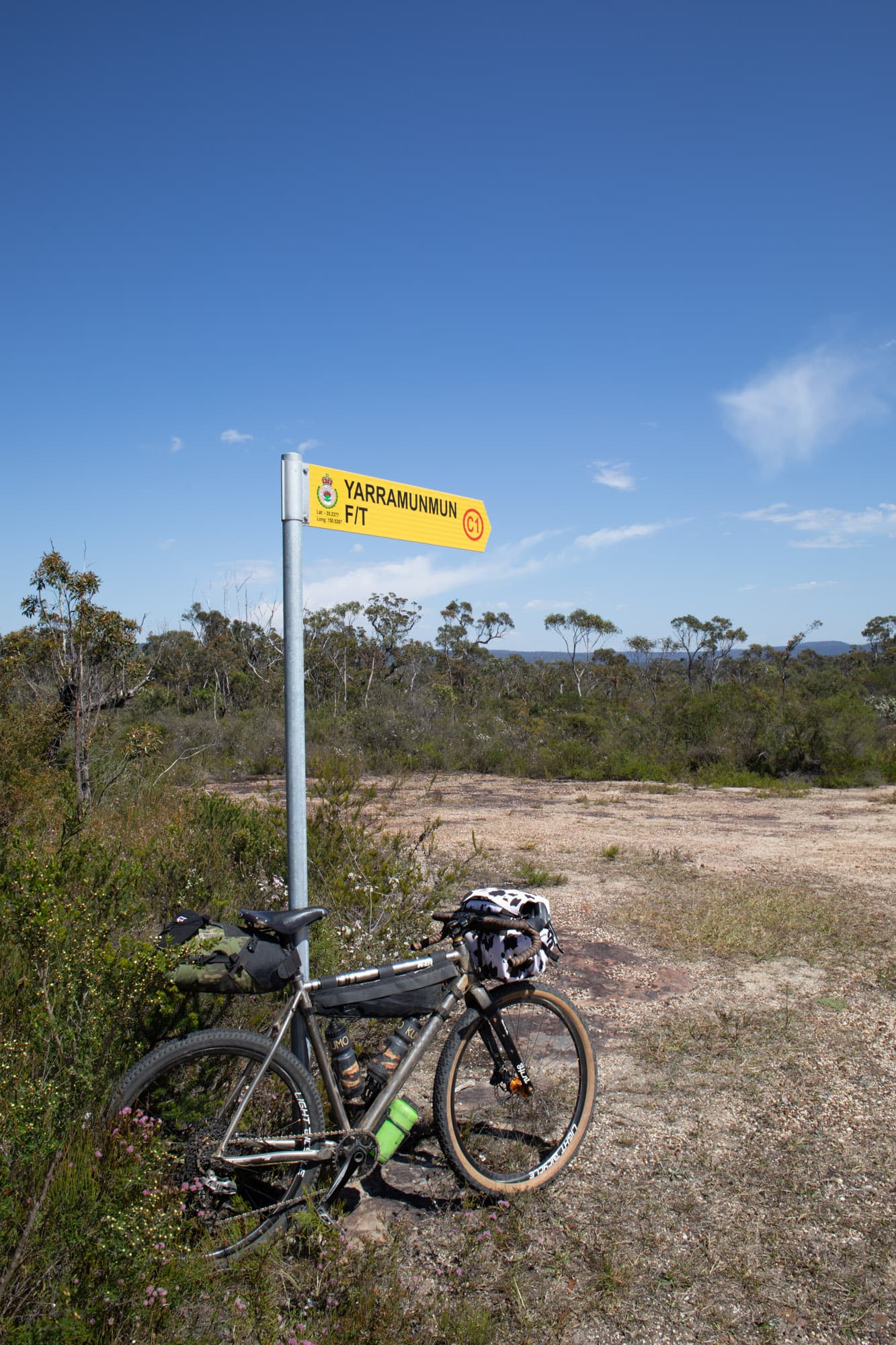
While I tested this bag out on a series of shopping errands, commutes and rides about town, its major test was Attack of the Buns, a 325 km route south of Sydney, Australia that skirts through a number of National parks on everything from smooth pavement to rowdy, rocky trails. Fully loaded for three days of rugged riding and camping I was able to truly put the Mega Bar Bag through its paces. While I was blessed with great weather, and wasn't able to test wet weather-resistance the hardy 1000D Cordura fabric stood up to its share of arguments with the tough Australian bushes, branches, and dirt.
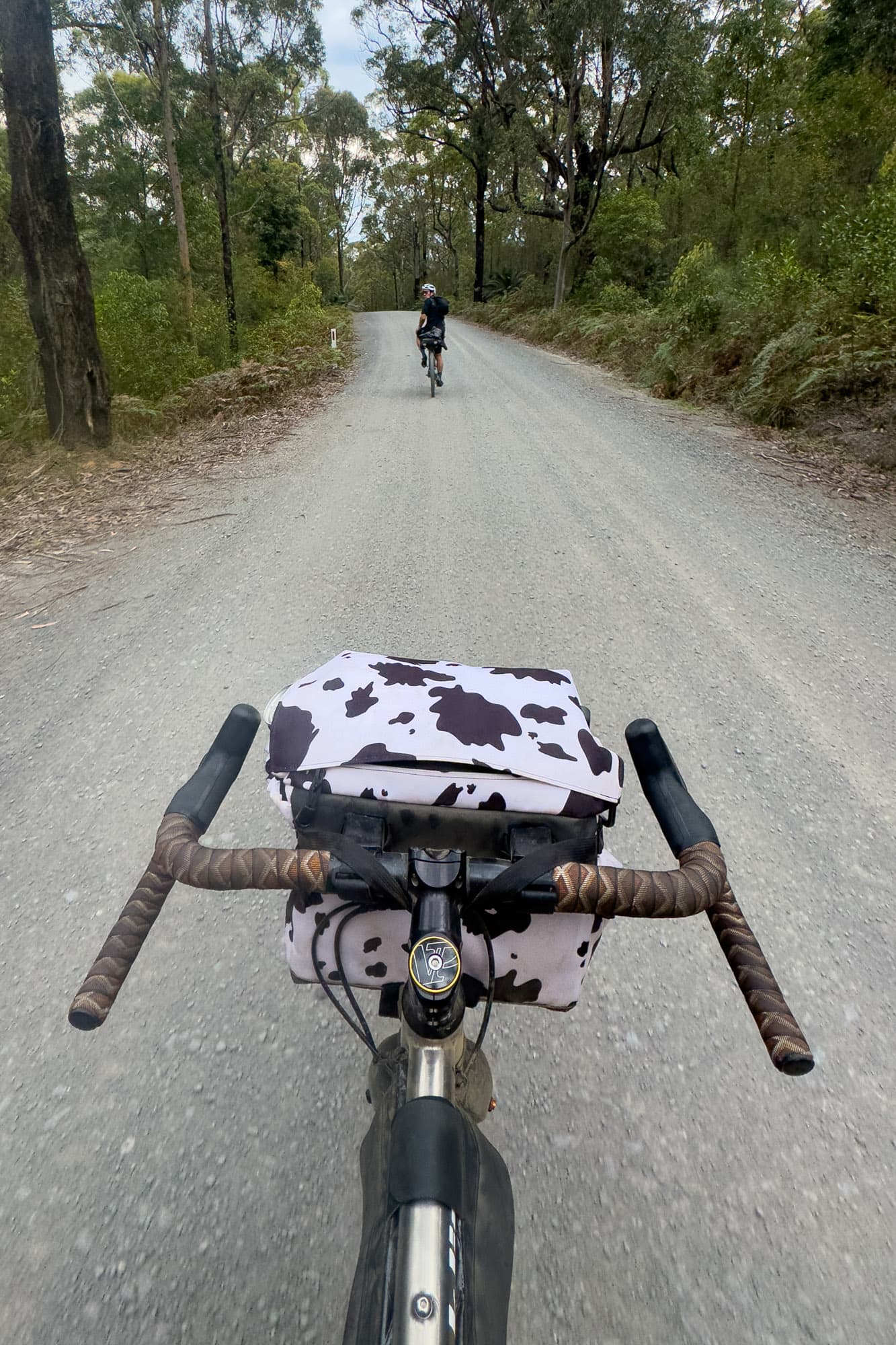
When riding, the handlebar spacers offered plenty of room gripping the tops behind the bag, which is often a problem with large bar bags, however the drop bars on my gravel bike are quiet narrow and found that there wasn't much space to attach my Garmin up front in a way that wouldn't impact opening the bag. There was just enough space for me to grip the bars on the brake hoods, but you'll want to be mindful of how wide your bars are and need to be if you're planning on using the bag with drop bars. This isn't a problem when using flat bars,
And how did the bag handle the rough 'n' rowdy trails? On the whole, the Mega Bar Bag performed admirably with little to no sway at all. Over fast rocky descents, the bag did bounce a little with the elastic head tube attachment stretching and allowing this movement. With carbon forks and narrow clearance on my gravel bike, I was unable to use the fork crown straps. I reckon that if I could, this would have limited this movement considerably. There were a couple of times I heard the dreaded “zzt-zzt” when the bag rubbed the wheel, probably a combination of over packing and a slightly smaller than recommended wheel clearance. I didn't encounter any tyre rub when I loaded it up even heavier on my mountain bike, but had a generous amount of tyre clearance.
Rugged, Stable and Spacious
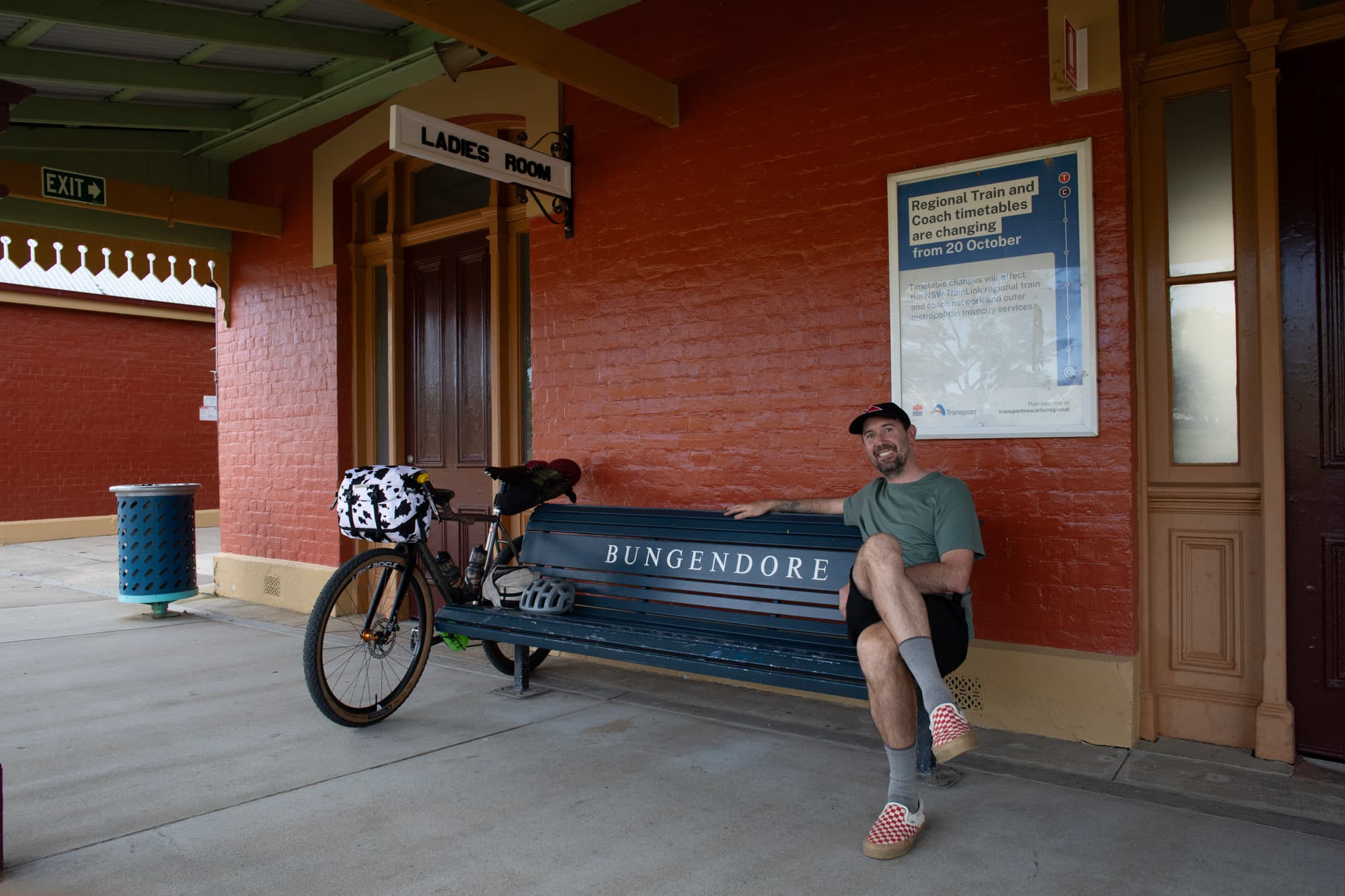
Overall I was super-impressed with the Mega Bar Bag for a variety of reasons. I appreciate a bag that can be used across multiple bikes and for a variety of scenarios and this bag is equally comfortable hauling home groceries as it is carrying camping gear into the wilderness. The storage is capacious, the materials rugged and the attachments secure and stable. If I was to continue using the bag exclusively on my gravel bike, I might well look at swapping out the elastic bungee on the head tube for a less stretch strap, but otherwise I'd be confident it'd continue doing the job it's made for—getting me out there and keeping me out there.
Pros
- Capacious 10-18L front storage
- Sustainably made in San Francisco
- Aesthetically appealing profile and materials
Cons
- Extra stability comes with extra weight
- Side pockets blocked a biot by anti-sag strap